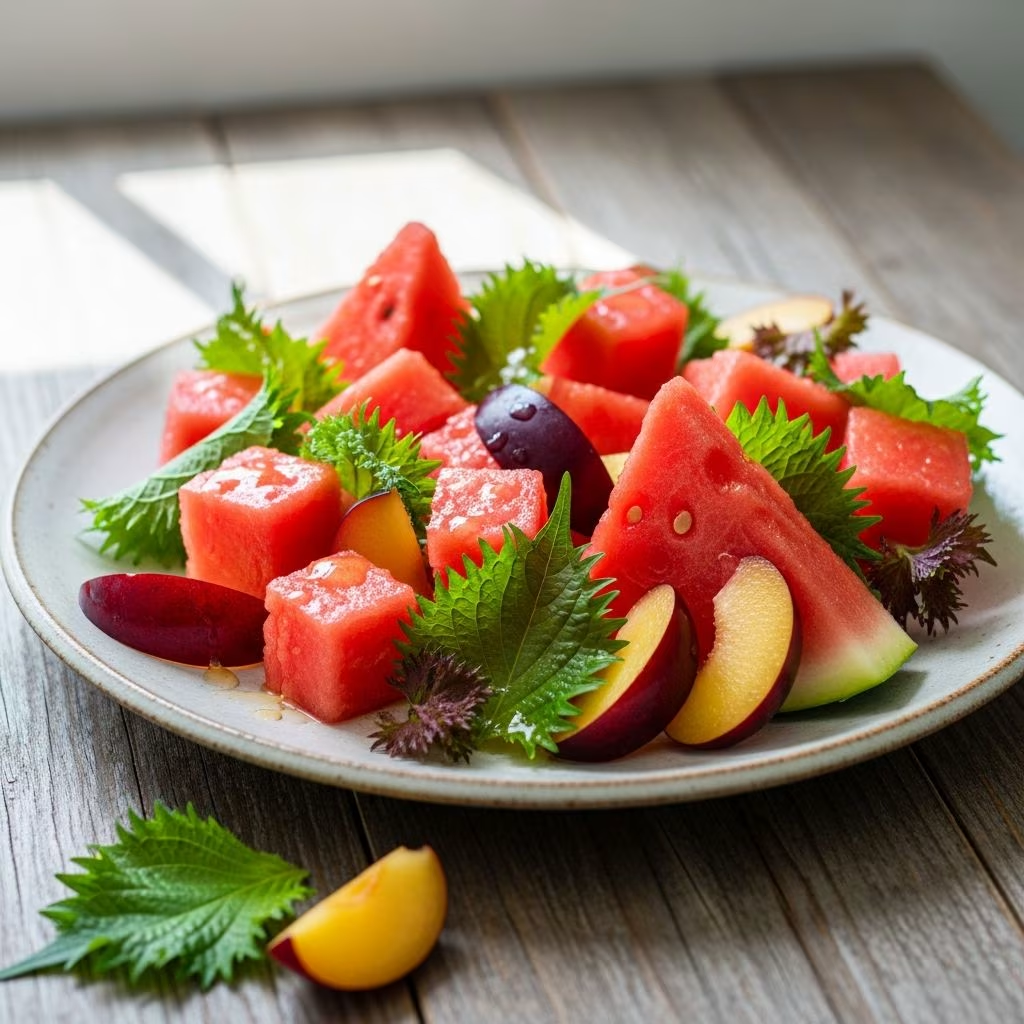
When the temperature climbs and the sun beats down relentlessly, there’s nothing quite like a cool, refreshing salad to restore balance to your meal. The combination of watermelon, shiso leaves, and plums represents one of the most exciting culinary marriages of seasonal ingredients, bringing together the sweetness of ripe watermelon, the aromatic complexity of Japanese shiso, and the bright tartness of fresh plums. This salad transcends the ordinary fruit bowl experience by introducing an Asian-inspired dressing that elevates each component into something greater than the sum of its parts.
Understanding the Star Ingredients and Their Culinary Roles
The foundation of this dish rests on three primary ingredients that each bring distinct characteristics to the plate. Watermelon provides a crisp, hydrating base with natural sweetness that balances the other flavors without overwhelming them. Shiso, a Japanese herb with a complex profile combining hints of mint, anise, and citrus, adds an unexpected aromatic dimension that transforms an otherwise conventional fruit salad into something sophisticated and memorable. Plums contribute a nuanced tartness and subtle earthiness that prevents the dish from becoming monotonously sweet.
Each ingredient plays a specific role in the overall flavor architecture. The watermelon acts as a cooling agent, the shiso provides aromatic intrigue, and the plums deliver textural contrast while brightening the flavor profile. Together, they create a harmonious balance that makes this salad particularly suited to warm weather gatherings.
Essential Components for Building Your Salad
Primary Ingredients
- Four cups of seedless watermelon, cut into one-inch cubes for consistent texture and easier consumption
- One cup of cucumber, diced to add freshness and structural variety
- Three medium plums, either red or black varieties, sliced or cubed according to preference
- Six to eight fresh shiso leaves, either chopped or cut into ribbons for visual appeal
- Three scallions, sliced diagonally to maximize visual presentation
- One-quarter cup of fresh cilantro, chopped for an herbaceous brightness
The Dressing Foundation
The dressing serves as the unifying element that brings all components into cohesive harmony. This Asian-inspired combination relies on sesame oil for its nutty richness, lime juice for brightness, and a touch of honey to round out the flavors without adding excessive sweetness.
- One and one-half tablespoons of fresh lime juice
- One and one-half tablespoons of honey or agave nectar
- One teaspoon of toasted sesame oil
- Two teaspoons of shoyu or high-quality soy sauce
- One-half teaspoon of finely minced fresh ginger
- Sea salt and freshly cracked black pepper to individual preference
Optional Garnish Elements
- Toasted sesame seeds for nutty flavor and textural crunch
- Jalapeño slices to introduce gentle heat
- Nigella seeds for their distinctive smoky, oniony notes
- Pine nuts or pumpkin seeds for additional textural interest
Step-by-Step Preparation Method
Creating this salad requires minimal technical skill, making it accessible to cooks of all experience levels. The entire preparation process typically requires no more than fifteen minutes from start to finish, making it ideal for spontaneous entertaining or quick weeknight meals.
Preparing the Fruit and Vegetable Components
Begin by cutting your watermelon into one-inch cubes, removing any seeds and ensuring uniform sizing for visual consistency. The cucumber should be diced into pieces roughly matching the watermelon cube size. For the plums, slice them into thin wedges or cut them into cubes, depending on your textural preferences. The goal is to create pieces that combine easily without breaking down or creating excessive juice.
Prepare the shiso leaves by either chopping them finely or rolling them tightly and slicing them into thin ribbons. The ribbon technique produces a more elegant presentation, while chopping distributes the flavor more evenly throughout the salad. Slice your scallions at a diagonal angle, which not only looks more refined but also maximizes their surface area for flavor distribution.
Combining and Dressing
In a medium mixing bowl, combine the watermelon, cucumber, plums, scallions, cilantro, and most of the shiso leaves, reserving some for garnish. In a separate smaller bowl, whisk together all dressing components: lime juice, honey, sesame oil, soy sauce, and minced ginger. Taste the dressing before adding it to the salad, adjusting the balance of sweet, salty, and acidic elements according to your preferences.
Pour the dressing gently over the fruit and vegetable mixture. Using a light hand, toss everything together to distribute the dressing evenly without crushing the delicate watermelon or plum pieces. The gentle mixing preserves the textural integrity of each component while ensuring every bite contains balanced flavors.
Seasoning and Finishing Touches
Taste the assembled salad and adjust seasoning with additional salt and pepper as needed. Remember that the soy sauce already contributes significant saltiness, so proceed with caution before adding more. Top with toasted sesame seeds, reserved shiso ribbons, and any additional garnishes you’ve chosen. The garnishes serve both aesthetic and flavor purposes, adding visual interest while providing textural contrast.
Flavor Profile and Sensory Experience
This salad creates a complex sensory experience that unfolds across multiple dimensions. The initial taste impression combines the refreshing sweetness of watermelon with the bright citrus notes from lime juice and shiso. As you continue eating, the sesame oil’s nutty undertones become apparent, while the soy sauce adds subtle umami depth. The plums contribute a tart counterpoint that prevents the salad from becoming cloying, while the cucumber adds structural freshness.
The textural experience ranges from the crisp crunch of sesame seeds to the tender juiciness of watermelon. The aromatic qualities of shiso, cilantro, and ginger create an olfactory component that enhances the overall eating experience. If you choose to include jalapeños, they introduce a warming sensation that contrasts beautifully with the cool fruit base.
Seasonal Timing and Selection Considerations
The beauty of this salad lies in its alignment with natural seasonal availability. Watermelons reach peak quality during mid to late summer when farmers’ markets overflow with varieties of different sizes and colors. Similarly, plums achieve their optimal flavor balance during late summer, offering a range of colors from golden to deep purple.
When selecting watermelon, choose one that feels heavy for its size and produces a hollow sound when tapped, indicating adequate water content. Plums should yield slightly to gentle pressure but still maintain firmness. Fresh shiso leaves are ideally used within a day or two of purchase, though they can be wrapped in damp paper towels and refrigerated for several days.
Nutritional Considerations and Health Benefits
Beyond its delicious flavor profile, this salad offers meaningful nutritional value. Watermelon contains lycopene and citrulline, compounds associated with cardiovascular health and hydration support. The shiso leaves contribute antioxidants and essential oils with potential anti-inflammatory properties. Sesame oil provides lignans, which research suggests may support cellular health. The lime juice contributes vitamin C, supporting immune function.
This salad is naturally vegan and gluten-free when prepared with appropriate soy sauce alternatives, making it inclusive for various dietary preferences. The high water content from watermelon and cucumber makes it an exceptionally hydrating dish, particularly valuable during hot weather months.
Serving Suggestions and Presentation Ideas
This versatile salad adapts well to different serving contexts. As a standalone side dish, it pairs beautifully with grilled protein, particularly fish or chicken. For a more substantial meal, serve it over chilled sushi rice with avocado slices and edamame beans to create an Asian-inspired poke bowl variation. The salad also works as a sophisticated starter course at formal dinners or as a refreshing component of a larger summer spread.
For presentation, arrange the components on a large platter rather than a traditional bowl, allowing guests to appreciate the visual contrast between the pale pink watermelon, ruby plums, and vibrant green herbs. The jewel-toned appearance of this salad makes it particularly photogenic for those documenting their meals.
Storage and Make-Ahead Strategies
While this salad tastes best consumed immediately after assembly, you can prepare components in advance. Cut watermelon and plums up to four hours ahead, storing them in separate airtight containers to prevent flavor transfer. Prepare the dressing a full day in advance, allowing flavors to meld and develop. The shiso leaves should be cut or ribboned no more than an hour before serving to preserve their aromatic qualities.
Assemble the complete salad only when ready to serve, as the fruit will gradually release moisture that dilutes the dressing. If preparing for a gathering where timing is uncertain, keep components separate until the last possible moment, then combine quickly before serving.
Variations and Creative Adaptations
The fundamental framework of this salad tolerates numerous creative interpretations. Substitute or supplement watermelon with other melons such as honeydew or cantaloupe for different flavor profiles. Replace traditional plums with other stone fruits like peaches, nectarines, or apricots. For those unable to source fresh shiso, Asian mint or Thai basil offers somewhat similar aromatic qualities, though the flavor profile will shift accordingly.
Protein additions can transform this from a side dish into a complete meal. Grilled shrimp, pan-seared tofu, or crispy halloumi cheese introduce textural contrast and satisfy. Nuts like pistachios or cashews add richness and crunch. Different vinegars, such as rice vinegar or pomegranate molasses, offer alternative dressing bases while maintaining the essential Asian-inspired character.
Common Preparation Questions
How far in advance can this salad be prepared?
Individual components can be prepped up to several hours ahead, but the assembled salad is best served within thirty minutes of combining. The longer watermelon sits in dressing, the more it releases moisture, potentially creating a watery consistency.
Can this salad be made without shiso leaves?
Yes, though the distinctive aromatic element will be lost. Asian mint, Thai basil, or even fresh mint can provide alternative herbaceous notes. However, the salad will taste notably different from the original intended flavor profile.
Is sesame oil essential, or can other oils substitute?
Toasted sesame oil contributes distinctive nutty complexity that’s difficult to replicate exactly. However, a combination of neutral oil and a small amount of sesame oil can approximate the effect if needed.
How should this salad be stored if leftovers remain?
Keep components separate in airtight containers for up to two days. Reassemble when ready to consume, using fresh dressing if the original has been absorbed.
References
- Lycopene and Cardiovascular Health in Watermelon — U.S. National Institutes of Health. 2024. https://www.ncbi.nlm.nih.gov/pubmed
- Sesame Oil Lignans and Cellular Health — American Journal of Clinical Nutrition. 2023. https://academic.oup.com/ajcn
- Vitamin C and Immune Function — Harvard T.H. Chan School of Public Health. 2024. https://www.hsph.harvard.edu/nutritionsource