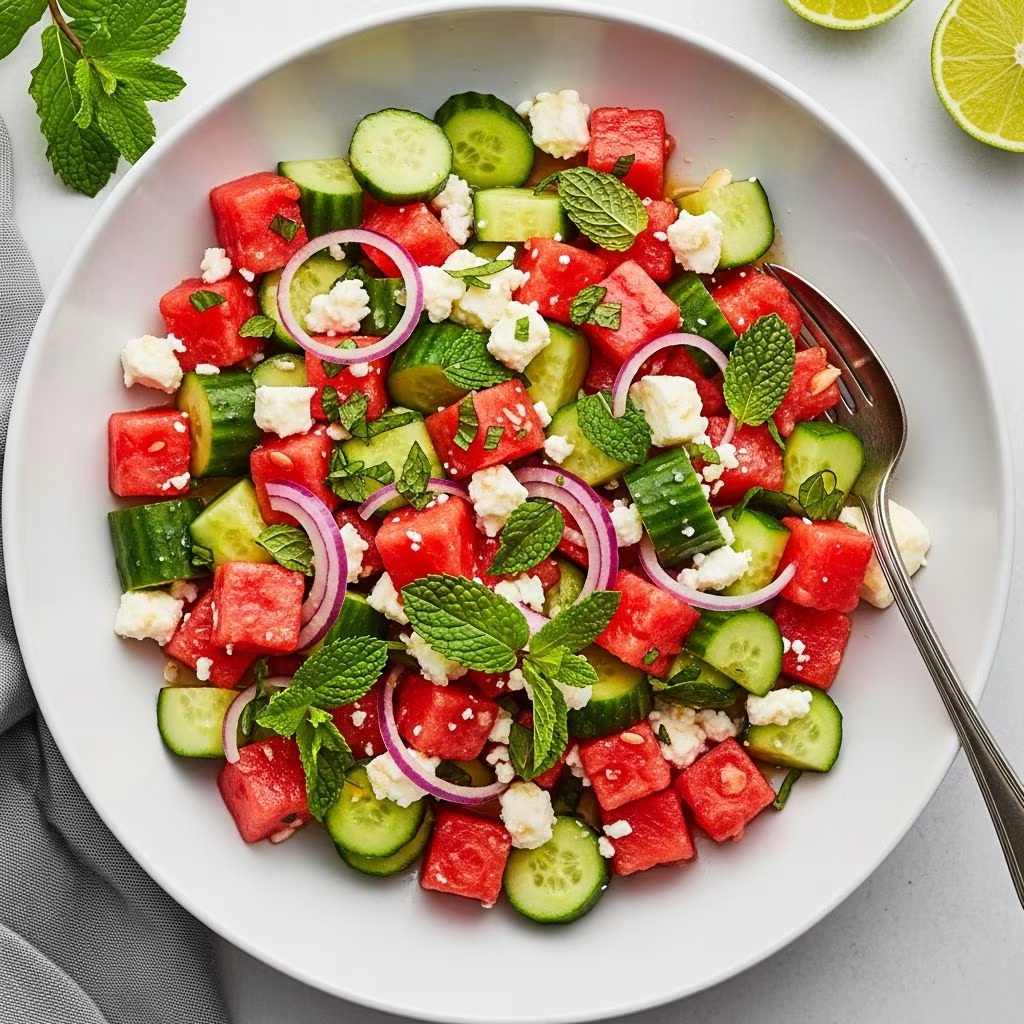
When temperatures rise and the sun lingers longer in the evening sky, there’s nothing more satisfying than a crisp, hydrating salad that celebrates the season’s best produce. The combination of watermelon and cucumber represents one of summer’s most naturally harmonious pairings—two juicy fruits that together create a dish that’s both nutritionally beneficial and genuinely crave-worthy. This guide explores everything you need to know about assembling, seasoning, and serving these vibrant salads that have become synonymous with warm-weather entertaining.
Understanding the Core Components
The foundation of any excellent watermelon and cucumber salad begins with selecting quality ingredients. Each component plays a distinct role in creating the final flavor profile and texture experience.
Watermelon: Selecting and Preparing
Choosing a ripe watermelon involves several sensory checks. Look for a melon that feels heavy for its size, has a deep color without soft spots, and produces a hollow sound when tapped. The flesh should be vibrant pink or red, and seedless varieties often provide a more convenient option for salad preparation. Once selected, you have multiple cutting options: traditional cubes provide uniform presentation, while a melon baller creates elegant spheres that add visual interest to the dish. Some cooks prefer scooping the flesh into bite-sized portions using a small ice cream scoop, which eliminates the need for additional chopping while maintaining consistent sizing.
Cucumbers: Variety and Texture
The cucumber choice significantly impacts the final salad’s texture and flavor profile. English or hothouse cucumbers offer a sweeter taste and thinner skin that doesn’t require peeling, making them ideal for refined presentations. Standard American slicing cucumbers work equally well but benefit from peeling and seed removal to prevent excessive moisture in the finished dish. The cucumber’s crisp texture provides essential contrast to the watermelon’s juiciness, creating a multi-dimensional eating experience with each bite.
Cheese and Savory Elements
Feta cheese has become the traditional choice for watermelon salads, and with good reason. Its crumbly texture, salty profile, and subtle tang create a perfect counterpoint to the fruit’s natural sweetness. The salt in feta also enhances the watermelon’s inherent flavors, making each component taste more intensified and vibrant. Some variations incorporate red onion slices to add a sharp bite and additional textural element to the overall composition.
Fresh Herbs: The Flavor Multiplier
While watermelon and cucumber form the salad’s foundation, fresh herbs elevate it to something truly memorable. Different herb selections can dramatically alter the dish’s character and personality.
Mint: The Classic Choice
Mint stands as the most traditional herb pairing for this salad style. Its cool, refreshing qualities complement the hydrating nature of both fruits, while its slight sweetness echoes the watermelon’s flavor without overshadowing it. Approximately 15 torn or roughly chopped mint leaves per serving provides adequate flavor without making the herb taste medicinal or overwhelming.
Basil: Adding Complexity
Fresh basil brings an aromatic dimension that shifts the salad from simple refreshment to sophisticated side dish. Sweet basil varieties work best, as they won’t compete aggressively with the fruit flavors. When combined with mint in roughly equal proportions, basil creates a more herbaceous profile that pairs beautifully with Mediterranean-inspired main courses.
Cilantro: The Spicy Alternative
Cilantro introduces a peppery, slightly citrus-forward note that appeals to those seeking a more adventurous flavor profile. When paired with jalapeño peppers, cilantro creates an entirely different salad character—one that coordinates well with grilled meats and southwestern-inspired dishes. Roughly one-quarter cup of chopped cilantro balances the other components without dominating the palate.
Dressing Fundamentals
The dressing serves as the crucial element that marries all components into a cohesive dish. Most successful watermelon cucumber salad dressings follow a simple formula that lets the ingredients’ natural qualities shine through.
Oil-Based Vinaigrettes
A basic vinaigrette combining quality extra virgin olive oil with citrus juice creates an ideal dressing for this style of salad. The standard ratio involves three parts oil to one part acid, though personal preference often dictates adjustments. Lime juice brings a tropical brightness, while lemon juice provides a more classic brightness. Some recipes incorporate honey or a pinch of sugar to balance the fruit’s sweetness with acidic components, creating a more nuanced flavor profile.
Honey-Lime Combination
A popular variation mixes honey with lime juice and olive oil, creating a slightly sweet dressing that complements rather than contrasts with the watermelon’s natural sugars. Approximately two tablespoons of honey, two tablespoons of fresh lime juice, and one to two tablespoons of high-quality olive oil, combined with a pinch of sea salt, produces enough dressing for a substantial salad serving four to six people.
Seasoning Considerations
Salt plays a crucial role in amplifying flavors within the salad. The sodium in salt actually enhances the perception of sweetness in watermelon while bringing forward subtle notes that might otherwise remain masked. Black pepper adds a subtle spice that creates complexity without heat. Some cooks add a pinch of sugar or maple syrup to the dressing itself, though this step becomes unnecessary if honey already appears in the formula.
Assembly and Service Strategies
The order in which components combine impacts both flavor development and structural integrity of the finished salad.
Timing the Dressing Application
Most watermelon cucumber salads benefit from being dressed immediately before serving. This timing prevents the fruit from releasing excessive liquid into the dressing, which would create a watery pool rather than a cohesive dish. However, the dry ingredients—watermelon, cucumber, and herbs—can be combined earlier in the day and refrigerated until serving time, with the dressing added only as guests arrive or just before the meal.
Plating and Presentation
Serving the salad on a large platter rather than individual plates creates a more casual, inviting presentation that encourages guests to serve themselves. The visual appeal of vibrant watermelon pink, deep green cucumber skin, and white feta crumbles distributed across a bed of fresh herbs creates an inherently photogenic dish. For more formal occasions, individual bowls or stacked presentations on small plates elevate the dish’s elegance.
Variations and Flavor Combinations
While the classic combination of watermelon, cucumber, feta, mint, and lime dressing remains timeless, numerous variations deserve exploration.
Spicy Iterations
Adding jalapeño or serrano peppers introduces heat that contrasts intriguingly with the fruit’s sweetness. Between one-quarter and one full pepper, finely chopped, generally provides adequate spice without overwhelming diners sensitive to heat. This variation particularly suits summer cookouts where grilled proteins and spicy side dishes dominate the menu.
Creamy Additions
Incorporating avocado creates a salad with additional nutritional density and creaminess. The avocado’s mild flavor doesn’t compete with other elements, while its rich texture adds satiation to what might otherwise feel like a purely refreshing dish. Approximately one-quarter to one-half of a ripe avocado per serving maintains proper proportions.
Arugula and Greens
Some preparations incorporate fresh arugula or mixed greens as a base, transforming the watermelon cucumber combination into a more substantial salad format. The peppery qualities of arugula complement the fruit while adding nutritional elements and transforming the dish from a simple side into a light main course option.
Storage and Make-Ahead Considerations
Understanding proper storage techniques extends the salad’s usability across multiple meals.
Refrigeration Guidelines
Undressed components keep well in airtight containers for up to five days, though watermelon gradually loses its texture and becomes mushy over extended periods. The cucumber and watermelon should be stored separately from the dressing to prevent moisture accumulation. Feta cheese, herbs, and any prepared dressing components maintain their qualities in sealed containers for similar timeframes.
Make-Ahead Strategy
For entertaining purposes, prepare all components individually in advance, storing them in separate containers. Assemble the salad no more than an hour before serving, applying dressing only immediately before the meal. This approach ensures optimal texture and flavor while dramatically reducing day-of preparation stress.
Nutritional Profile and Health Benefits
Beyond taste appeal, watermelon and cucumber salads offer legitimate nutritional advantages. Both watermelon and cucumber contain approximately 90 percent water, making them excellent choices for maintaining hydration during hot months. Watermelon provides lycopene, a powerful antioxidant also found in tomatoes, while cucumber offers silica and various B vitamins. The combination supports digestive health while remaining low in calories, making these salads suitable for virtually any dietary preference.
Serving Suggestions and Pairing Ideas
These salads shine alongside specific main courses and at particular occasions.
Grilled Proteins
The bright, refreshing qualities of watermelon cucumber salad make it an ideal companion to grilled chicken, fish, or vegetarian options. The salad’s hydrating properties and light nature provide balance to the heavier, more substantial qualities of cooked proteins.
Summer Entertaining
Whether hosting casual backyard gatherings or upscale al fresco dinners, watermelon cucumber salads adapt seamlessly to the occasion. Their visual appeal photographs beautifully for social media, while their familiar flavor profiles appeal to diverse palates and dietary preferences.
Common Questions and Troubleshooting
What if the salad becomes watery?
Watery salads typically result from extended contact between cut fruit and dressing. Solve this issue by dressing only immediately before serving or by salting the salad components lightly in advance to allow natural juices to express and drain slightly.
Can this salad be made ahead for a crowd?
Absolutely. Prepare all components individually and combine just before serving. This approach maintains optimal texture while allowing maximum flexibility in entertaining timelines.
What cheese alternatives work if feta isn’t available?
Ricotta salata, cotija, or aged goat cheese provide similar salty-tangy qualities, though each brings its own distinctive character to the finished dish.
References
- Watermelon Salad with Cucumber and Mint — Know Your Produce. https://www.knowyourproduce.com/watermelon-salad-with-cucumber-and-mint/
- Watermelon Salad with Feta, Cucumber and Mint — The Mediterranean Dish. https://www.themediterraneandish.com/watermelon-salad-with-cucumber-feta/
- Refreshing Cucumber Watermelon Salad — Naive Cook Cooks. https://www.naivecookcooks.com/refreshing-cucumber-watermelon-salad/
- Watermelon Cucumber Salad — The Modern Proper. https://themodernproper.com/watermelon-cucumber-salad
- Cucumber Watermelon Salad — Allianna’s Kitchen. https://www.alliannaskitchen.com/cucumber-watermelon-salad/
- Cucumber Avocado Watermelon Salad — Heartbeet Kitchen. https://heartbeetkitchen.com/cucumber-avocado-watermelon-salad/