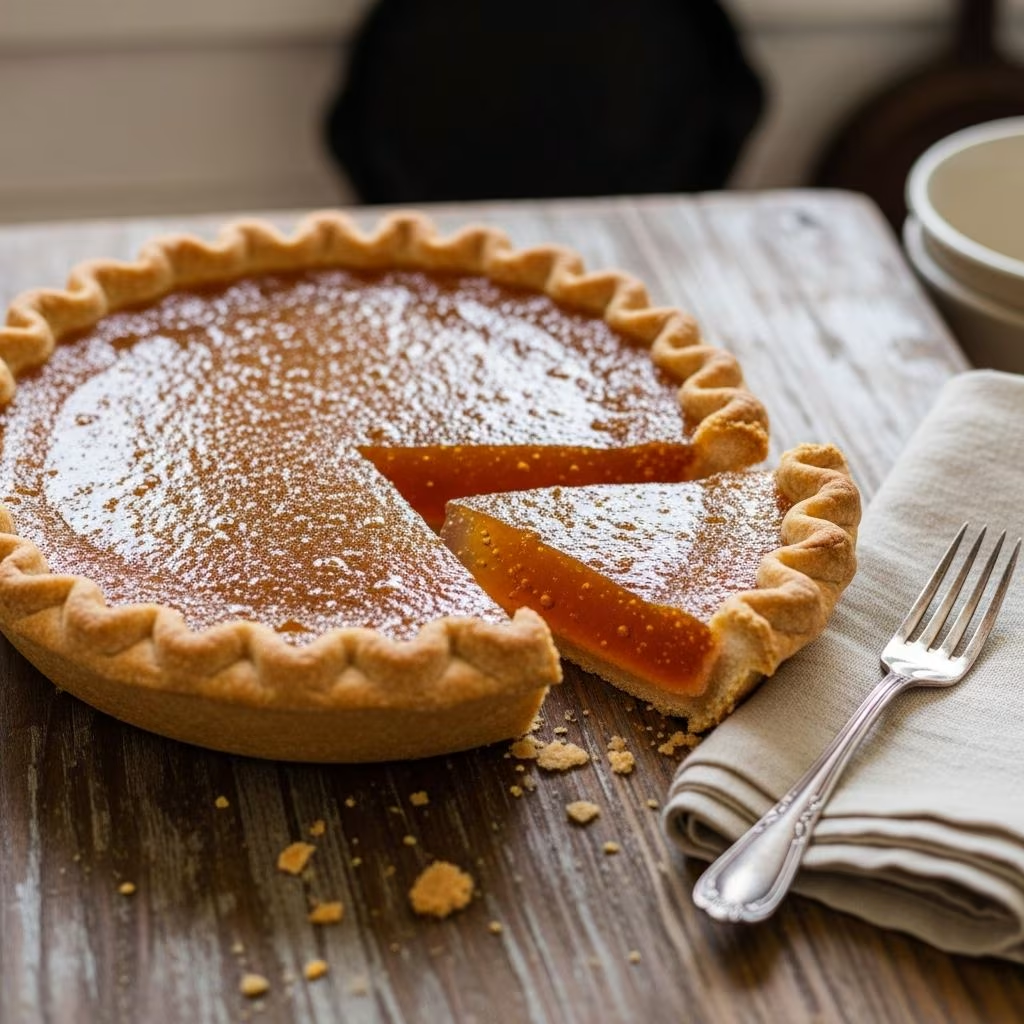
Water pie stands out as a unique dessert where water serves as the primary ingredient, transforming through baking into a creamy, custard-like filling. This simple pie relies on flour’s starch to thicken the mixture, creating a translucent treat flavored subtly with sugar, butter, and vanilla.
The Real Origins of Water Pie
Contrary to popular belief, water pie predates the Great Depression by decades. The earliest documented recipes appear in the 1880s, such as a ‘Cold Water Pie’ in a California newspaper, described as a custard substitute when milk was scarce. It called for flour, sugar, egg, butter, nutmeg, and water.
By the late 19th century, variations emerged, including cooked versions where sugar, flour, hot water, butter, and flavoring were thickened before baking. These recipes highlight resourcefulness in eras of limited dairy access.
The misconception linking it solely to the 1930s Depression arose from viral social media trends in the 2020s, amplified during economic challenges from the COVID-19 pandemic. While it fits the era’s thrift ethos, its history stretches back to the 1870s or earlier.
Why Water Pie Works: The Science Simplified
The magic lies in basic chemistry. Flour’s starch granules absorb water and swell when heated, gelatinizing into a thick matrix that traps sugar and fat for a custard texture. Butter melts and emulsifies, adding richness, while vanilla or spices enhance aroma without overpowering the delicate profile.
No stirring is needed; layers naturally integrate during baking. High initial heat (around 400°F) sets the structure, followed by lower temperatures to finish cooking without over-browning.
Classic Water Pie Recipe
This straightforward version yields 8 servings, ready in about 2 hours including cooling. It’s budget-friendly at roughly $4 total cost.
Ingredients
- 1 unbaked 9-inch deep-dish pie crust
- 1.5 cups (12 oz) water
- 1 cup granulated sugar
- 4-8 tablespoons all-purpose flour (start with 4 for softer set)
- 5 tablespoons butter, cut into pats
- 2 teaspoons vanilla extract
Equipment Needed
- Deep-dish pie pan
- Baking sheet lined with parchment or foil
- Small bowl for dry mix
Step-by-Step Instructions
- Preheat and Prep: Set oven to 400°F. Place crust on lined baking sheet to catch drips.
- Add Water: Pour 1.5 cups water into the crust.
- Mix Dry Ingredients: Combine sugar and flour in a bowl. Sprinkle evenly over water—do not stir.
- Flavor and Top: Drizzle vanilla over the surface. Dot with butter pats.
- Bake: Cook at 400°F for 30 minutes. Reduce to 375°F, shield crust edges if browning, and bake 30 more minutes until center sets (slight jiggle okay).
- Cool: Rest 1 hour at room temp. Chill for firmer texture if desired.
Per slice (1/8 pie): ~300 calories, creamy with subtle sweetness.
Variations to Elevate Water Pie
Experiment beyond basics for new twists.
| Variation | Substitution | Flavor Notes |
|---|---|---|
| Lemon Water Pie | Add 2 tbsp lemon juice + zest to water | Tangy, bright contrast to sweetness |
| Cinnamon Spice | 1 tsp cinnamon in dry mix | Warm, cozy aroma |
| Sprite Pie | Replace water with 12 oz lemon-lime soda | Fizzy citrus lift, modern viral hit |
| Chocolate Dusting | Sprinkle cocoa in dry mix | Mild chocolate hint without heaviness |
Soda versions like Sprite pie maintain the no-stir method but add effervescence for lighter texture.
Tips for Water Pie Success
- Crust Choice: Use deep-dish to hold liquid; homemade or store-bought works. Foil pans prevent leaks.
- Flour Amount: More flour (8 tbsp) yields firmer custard; less (4 tbsp) for softer.
- Oven Watch: Every oven varies—check at 50 minutes total. Center should be mostly set.
- Avoid Soggy Results: Common in rushed bakes; full cooling is key as it firms up.
- Scaling: Double for crowds but use two crusts; don’t overcrowd one pan.
Storage and Serving Suggestions
Store covered in fridge up to 4 days. Freezes well (wrap slices individually) for 2 months; thaw overnight.
Serve chilled or room temp. Pairs with whipped cream, fresh berries, or ice cream for contrast. Dust with powdered sugar for elegance.
Water Pie in Modern Culture
Viral TikTok videos in the 2020s reignited interest, showcasing no-mess assembly. Despite some soggy fails from improper technique, successes highlight its appeal in inflation-hit times.
Food historians value it as evidence of adaptive cooking, passed orally before print. Today, it’s a fun project for minimalists or history buffs.
Frequently Asked Questions (FAQs)
Is water pie actually from the Great Depression?
No, recipes date to the 1880s. The Depression association stems from recent myths.
Why doesn’t it taste like plain water?
Sugar caramelizes, butter enriches, and vanilla aromas develop during baking.
Can I use gluten-free flour?
Yes, but results may vary; xanthan gum helps mimic starch thickening.
How do I fix a runny pie?
Bake longer next time or chill overnight. Undercooking is the usual culprit.
Is it vegan-friendly?
Replace butter with plant-based alternative; use vegan crust.
Nutritional Breakdown
Approximate per serving (varies by recipe):
| Nutrient | Amount | % Daily Value |
|---|---|---|
| Calories | 302 | 15% |
| Total Fat | 14g | 18% |
| Carbs | 42g | 15% |
| Sugar | 25g | – |
| Protein | 2g | 4% |
Low-protein, treat-focused dessert.
References
- Water pie – Wikipedia — Wikipedia. 2023-10-01. https://en.wikipedia.org/wiki/Water_pie
- Debunking Viral Recipes: Water Pie — History Reheated. 2025-01-07. https://historyreheated.com/2025/01/07/debunking-viral-recipes-water-pie/
- Depression-Era Water Pie — Granny’s in the Kitchen. Accessed 2026. https://grannysinthekitchen.com/water-pie/
- Water Pie – Recipe from the Great Depression — Southern Plate. Accessed 2026. https://www.southernplate.com/water-pie-recipe-from-the-great-depression/