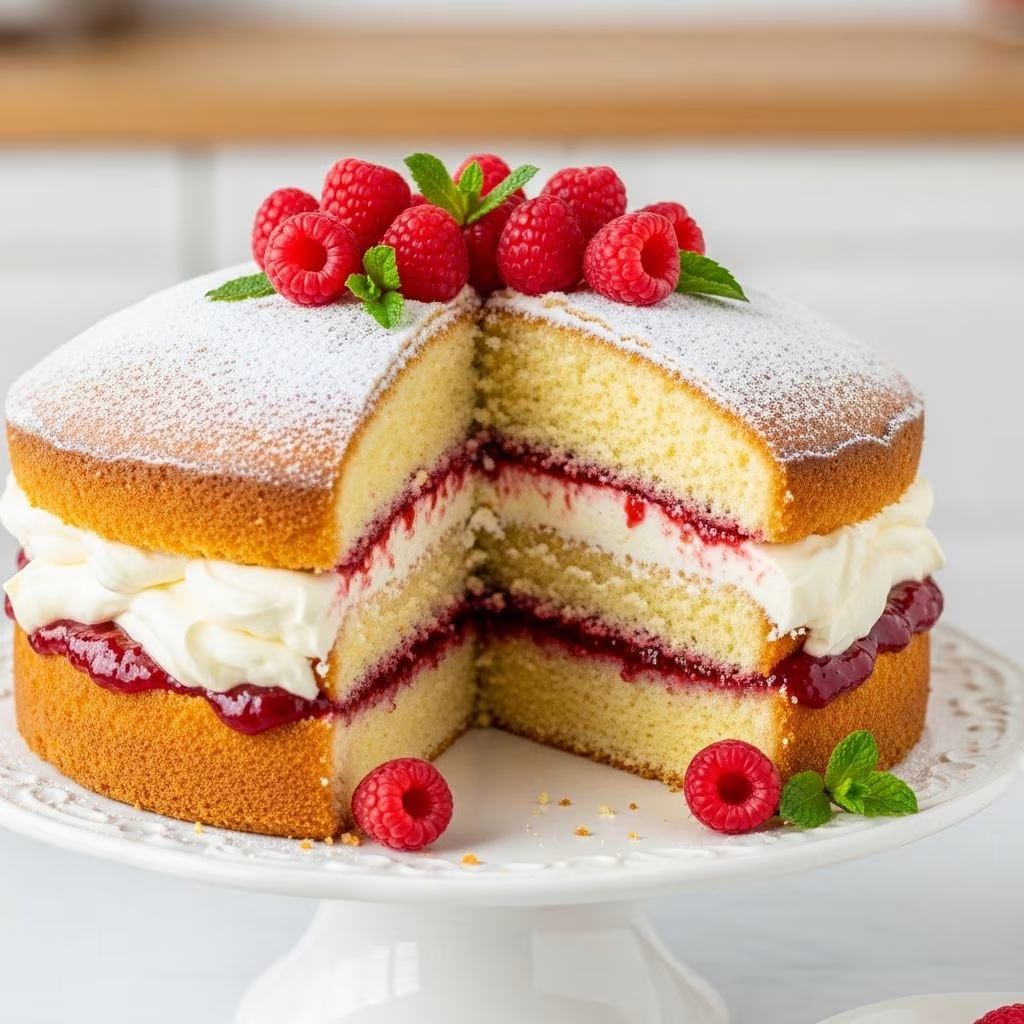
The Victoria sponge cake stands as a cornerstone of British baking tradition, celebrated for its tender crumb, subtle vanilla flavor, and simple yet elegant assembly. This unassuming dessert, consisting of two delicate sponge layers sandwiching jam and cream, embodies comfort and sophistication in every bite. Originating in the Victorian era, it remains a staple for afternoon tea gatherings, family celebrations, and casual indulgences. Achieving the ideal texture—one that’s light yet substantial—requires attention to ingredient quality, precise measurements, and gentle handling. In this guide, we’ll explore its rich history, essential techniques, a reliable recipe, and pro tips to elevate your bake from good to exceptional.
Origins and Cultural Significance
Named after Queen Victoria, who reportedly enjoyed this cake during her frequent afternoon teas in the mid-19th century, the Victoria sponge evolved from basic pound cake recipes. Early versions relied on equal weights of butter, sugar, eggs, and flour, beaten vigorously by hand to incorporate air for lift. The advent of baking powder in the 1840s transformed it into the lighter version we know today, making it accessible for home bakers without the need for endless whisking.
Beyond royalty, the cake symbolizes British hospitality. It’s a fixture at church fetes, garden parties, and Wimbledon viewings, often judged in baking competitions for even rise, fine crumb, and balanced sweetness. Its versatility allows adaptations like lemon curd fillings or chocolate variations, but the purist form—raspberry jam and whipped cream—honors its heritage. In modern kitchens, especially in the US, bakers adapt it using all-purpose flour and precise oven temperatures to replicate the authentic result.
Key Ingredients for Success
Selecting premium components is non-negotiable for a standout Victoria sponge. Here’s a breakdown:
- Butter: Unsalted, room-temperature butter provides richness and structure. European-style butters with higher fat content yield superior tenderness.
- Sugar: Granulated or caster sugar creams with butter to trap air bubbles, ensuring fluffiness. Avoid substitutes like brown sugar, which alter flavor and texture.
- Eggs: Large eggs at room temperature integrate smoothly, contributing moisture and lift. Freshness matters for stable emulsions.
- Flour: Self-rising flour is traditional in the UK for built-in leavening; in the US, sift all-purpose flour with baking powder and salt.
- Liquid: A splash of milk or buttermilk prevents density, promoting an open crumb.
- Fillings: High-quality strawberry or raspberry jam adds tart brightness; heavy cream whipped to soft peaks offers luxurious contrast.
Weights over volumes ensure consistency—use a kitchen scale for professional outcomes, as flour packing varies.
Step-by-Step Baking Guide
Follow these instructions for two 8-inch layers, serving 8-10. Prep time: 20 minutes. Bake time: 25-30 minutes. Total: 1 hour.
Prepare the Pans
Preheat oven to 350°F (175°C). Grease two 8-inch round pans with butter, line bottoms with parchment circles, and dust lightly with flour. This prevents sticking and ensures even release.
Mix the Batter
- Sift 2 cups self-rising flour (or 1¾ cups all-purpose + 2 tsp baking powder), ¼ tsp salt into a bowl.
- In a stand mixer with paddle attachment, beat 1 cup softened unsalted butter and 1 cup granulated sugar on medium-high until pale and fluffy, about 3-5 minutes. This step aerates the mixture for lift.
- Add 4 large eggs one at a time, beating well after each (scrape bowl as needed). If curdling occurs, add a tablespoon of flour midway.
- Mix in 1 tsp vanilla extract and 2-4 tbsp milk until smooth. Fold in dry ingredients gently by hand to avoid deflating air bubbles.
Bake to Perfection
Divide batter evenly between pans (about 350g each). Smooth tops with a spatula. Bake 25-30 minutes until golden, springy to touch, and a toothpick inserts clean. Cool in pans 10 minutes, then invert onto racks to cool fully. High altitude? Reduce baking powder slightly and increase oven temp by 15°F.
Assemble the Cake
Once cool, whip ¾ cup heavy cream with 2 tbsp powdered sugar to medium peaks. Spread one layer with ½ cup jam, top with cream. Place second layer cut-side down, dust with powdered sugar. Chill briefly for clean slices.
Ingredient Comparison Table
Different recipes vary slightly; here’s a synthesis for clarity:
| Component | Classic Ratio (per layer) | Modern Twist | Source Inspiration |
|---|---|---|---|
| Flour | 1 cup self-rising | 1 cup all-purpose + leaveners | |
| Butter | ½ cup softened | Cubed for even mix | |
| Sugar | ½ cup granulated | Caster for finer texture | |
| Eggs | 2 large | Room temp for emulsion | |
| Liquid | 1-2 tbsp milk | Buttermilk for tenderness | |
| Filling | Raspberry jam + cream | Strawberry or buttercream |
Troubleshooting Common Issues
Baking mishaps are learning opportunities. Address them proactively:
- Dense Cake: Under-creamed butter-sugar or overmixed batter. Cream longer next time.
- Domed Tops: Uneven oven heat. Rotate pans midway; use insulated strips if needed.
- Curdled Batter: Cold eggs. Warm them in water bath before adding.
- Soggy Layers: Warm jam or over-whipped cream. Cool jam and whip to soft peaks.
- Sticking: Insufficient greasing. Always parchment-line bottoms.
Test doneness early—overbaking dries the crumb. For humidity, reduce milk slightly.
Variations to Personalize Your Bake
While traditionalists stick to jam and cream, experiment mindfully:
- Lemon Victoria: Zest lemons into batter; use curd instead of jam for citrus zing.
- Chocolate Version: Swap ¼ cup flour for cocoa; fill with ganache.
- Berry Traybake: Bake in 9×13 pan, top with mixed berries and cream—ideal for crowds.
- Gluten-Free: Use 1:1 GF flour blend with xanthan gum; add extra liquid.
- Vegan Adaptations: Aquafaba for eggs, plant butter, and coconut cream.[Inspired by ]
Seasonal twists like elderflower cream in summer keep it fresh.
Perfect Pairings for Afternoon Tea
Serve at room temperature for optimal flavor. Pair with Earl Grey tea, scones, and finger sandwiches. For events, stack mini versions or add fresh strawberries atop the cream. Stores wrapped at room temp 2 days; freeze layers up to a month.
Frequently Asked Questions
Can I make Victoria sponge without self-rising flour?
Yes, substitute all-purpose flour + 2 tsp baking powder + ½ tsp salt per 2 cups flour. Sift thoroughly.
Why is my cake gummy?
Often from inaccurate measurements or underbaking. Weigh ingredients and check at 25 minutes.
Buttercream vs. whipped cream?
Whipped cream is lighter and traditional; buttercream (100g butter + 140g icing sugar + vanilla) suits stable fillings.
How far ahead can I bake?
Assemble day-of for best texture, but bake layers 1-2 days prior, wrapped tightly.
Scaling for larger cakes?
Double for 9-inch pans, but increase bake time 5-10 minutes. Use three layers for showstopper effect.
Advanced Techniques for Pro Results
Elevate with the reverse creaming method: Mix dry ingredients with cubed butter first for velvety crumb, then add liquids. This minimizes gluten development. For height, chill batter 30 minutes pre-bake. Pipe cream border to contain jam, preventing squish.
Judging standards emphasize symmetry: Level domes if needed, but gentle tapping yields flat tops.
References
- Classic Victoria Sandwich Cake – BAKE WITH ZOHA — Bake with Zoha. Accessed 2026. https://bakewithzoha.com/victoria-sandwich-cake/
- Victoria Sponge Cake, Afternoon Tea Cake – Recipe for US Kitchens — Christina’s Cucina. Accessed 2026. https://www.christinascucina.com/victoria-sandwich-traditional-british-afternoon-tea-cake-recipe-for-us-kitchens/
- Easy Victoria Sandwich Traybake Cake — Easy Peasy Foodie. Accessed 2026. https://www.easypeasyfoodie.com/easy-victoria-sandwich-traybake-cake/
- Victoria Sponge Cake – Preppy Kitchen — Preppy Kitchen. Accessed 2026. https://preppykitchen.com/victoria-sponge-cake/
- Victoria Sponge Cake | Erren’s Kitchen — Erren’s Kitchen. Accessed 2026. https://www.errenskitchen.com/victoria-sponge/
- Classic British Victoria Sponge Cake — The Flying Kitchen. Accessed 2026. https://theflyingkitchen.com/classic-british-victoria-sponge-cake/
- Classic Victoria sandwich recipe – BBC Good Food — BBC Good Food. Accessed 2026. https://www.bbcgoodfood.com/recipes/classic-victoria-sandwich-recipe