Understanding the Essence of Vichyssoise
Vichyssoise represents one of the most elegant and understated preparations in classical French gastronomy. This refined cold soup showcases the beauty of simplicity—a silky-smooth puree built upon humble components: potatoes, leeks or onions, quality stock, and enriching cream. The genius of vichyssoise lies in its ability to transform basic pantry staples into a dish of remarkable sophistication through careful technique and proper seasoning.
The soup’s journey to culinary prominence offers fascinating historical context. What began as a practical way to utilize leftover ingredients evolved into a celebrated restaurant classic. In 1917, Chef Louis Diat of the Ritz-Carlton in New York reimagined the cold potato and leek soup from his French childhood, presenting it to the hotel’s distinguished clientele. This reintroduction elevated vichyssoise from peasant fare to fine dining establishment, cementing its place among the world’s most respected soups.
Selecting Quality Ingredients for Optimal Results
Creating exceptional vichyssoise begins with thoughtful ingredient selection. Each component contributes meaningfully to the final dish’s texture, flavor profile, and overall success.
Potatoes: The Foundation
Potatoes serve as the primary structural element of vichyssoise, providing both body and creamy texture. Russet potatoes and Yukon Gold varieties both work admirably, each offering distinct characteristics. Russets contribute a lighter, airier quality when pureed, while Yukon Golds deliver natural buttery undertones without additional fat. Select firm, unblemished potatoes of similar size to ensure even cooking throughout the preparation process.
Leeks and Aromatics
Leeks form the aromatic backbone, providing subtle onion flavor without the harshness of raw onions. Only the white and pale green portions should be used; the darker green parts tend toward bitterness and tough texture. Proper cleaning proves essential, as leeks often harbor soil between layers. Slice them lengthwise and rinse thoroughly under running water, separating the layers to remove any trapped debris. Complementary aromatics such as shallots, celery, and garlic build complexity, though traditional preparations rely primarily on leeks.
Stock Selection
The liquid foundation dramatically influences the soup’s final character. Lower-sodium chicken broth allows for precise salt control, particularly important since cold dishes require slightly elevated seasoning to compensate for taste perception changes at lower temperatures. Vegetable broth offers an excellent alternative for plant-based variations, while homemade stocks provide superior depth compared to commercial options.
Cream and Enrichment
Heavy cream contributes essential richness and silken mouthfeel to finished vichyssoise. Beyond traditional heavy cream, creative cooks might explore crème fraîche for subtle tang, sour cream for distinctive brightness, or buttermilk for lemony notes. Yogurt and alternative dairy options expand possibilities for those with dietary considerations, though each substitution subtly shifts flavor dynamics.
Preparation Techniques and Cooking Methods
Building Aromatics Through Careful Sautéing
Quality vichyssoise begins with proper aromatic development. Melt unsalted butter in a heavy-bottomed pot over medium heat, allowing it to reach a gentle foam. Add cleaned, sliced leeks along with complementary vegetables like celery and minced shallots. This initial cooking phase, lasting approximately 10 to 15 minutes, allows the vegetables to soften and release their flavors without browning or caramelizing. The objective involves coaxing out natural sweetness while maintaining the vegetables’ delicate character.
Introducing Potatoes and Liquid
Once aromatics have softened adequately, add peeled and diced potatoes, then pour in stock to cover the vegetables by approximately one inch. Bring the mixture to a boil, then immediately reduce heat to maintain a gentle simmer. This cooking phase typically requires 40 to 60 minutes, though the specific duration depends on potato size and variety. The objective involves cooking potatoes until they disintegrate easily when pressed with a fork—this thoroughness proves critical for achieving the signature velvety texture.
Pureeing for Silken Consistency
Transforming the cooked mixture into silk-smooth consistency demands proper technique. Traditional approaches employ a food mill or blender, working in manageable batches to prevent splashing and burns from steam. When using a blender, never fill it more than halfway, and allow steam to escape by removing the top center piece and covering loosely with a kitchen towel. For supremely refined texture, pass the pureed soup through a fine-mesh sieve, pressing gently with the back of a spoon to extract every bit of essence while leaving any remaining fiber behind.
Seasoning and Temperature Control
Achieving Proper Salt Balance
Salt plays a more nuanced role in chilled soups than in hot preparations. Cold temperatures naturally dampen our taste perception, making flavors seem muted. Consequently, vichyssoise requires slightly oversalting compared to hot soup—a counterintuitive but essential technique. Season while the soup remains warm, then taste again after complete chilling, adding additional salt if needed. White pepper offers aesthetic advantages over black pepper, maintaining the soup’s pale, refined appearance.
Chill Time Considerations
Properly chilled vichyssoise achieves maximum flavor impact and luxurious mouthfeel. Allow at least four hours in the refrigerator, though overnight chilling remains preferable. This extended chill time permits flavors to meld and develop greater coherence while ensuring proper temperature throughout the soup’s body. Serve in chilled bowls to maintain temperature stability and enhance the refreshing experience.
Creative Variations and Modern Interpretations
While the classical preparation deserves respect, vichyssoise’s versatile foundation accommodates numerous creative modifications without compromising its essential character.
| Variation | Key Addition | Flavor Profile |
|---|---|---|
| Arugula Version | 2 cups packed arugula, added near completion | Peppery, slightly bitter complexity |
| Zucchini Enhancement | 2 cups diced zucchini, simmered 5 minutes | Fresh, garden-forward lightness |
| Cucumber & Lettuce | 2 cups diced cucumber, 1 butterhead lettuce head | Cool, refreshing verdant notes |
| Fennel-Infused | 2 cups chopped fennel bulb and fronds | Subtle anise undertones, delicate sweetness |
| Sweet Potato Twist | 2 cups pureed cooked sweet potato | Warm spice compatibility, earthy richness |
Herbaceous Developments
Fresh herbs amplify vichyssoise’s subtle elegance. Tarragon contributes sophisticated anise notes, while fresh chives provide gentle onion character and visual appeal. Dill offers distinctive brightness reminiscent of Eastern European interpretations, while parsley adds clean, herbal background support.
Texture and Ingredient Experimentation
Some preparations incorporate grated potatoes rather than cubed versions, reducing cooking time by nearly 20 minutes while producing marginally different textural qualities. Substituting celery root or celeriac for a portion of potatoes yields earthy complexity with reduced starch content, appealing to those monitoring carbohydrate intake. Vegan interpretations successfully employ plant-based cream alternatives and vegetable stock without sacrificing the soup’s essential character.
Practical Preparation Timeline and Tips
Advance Planning
Vichyssoise’s make-ahead nature renders it ideal for entertaining. Prepare the soup completely through the chilling stage one or two days before serving. This advance preparation allows flavor development while eliminating last-minute stress. Garnishes and final seasoning adjustments occur just before service for optimal freshness and presentation.
Storage Considerations
Properly stored vichyssoise maintains quality for three to four days in the refrigerator. Store in airtight containers to prevent absorption of refrigerator odors and flavor contamination. The soup freezes reasonably well for up to three months, though the cream component sometimes exhibits slight separation upon thawing. Gentle reheating and careful whisking typically restore satisfactory consistency.
Serving Excellence
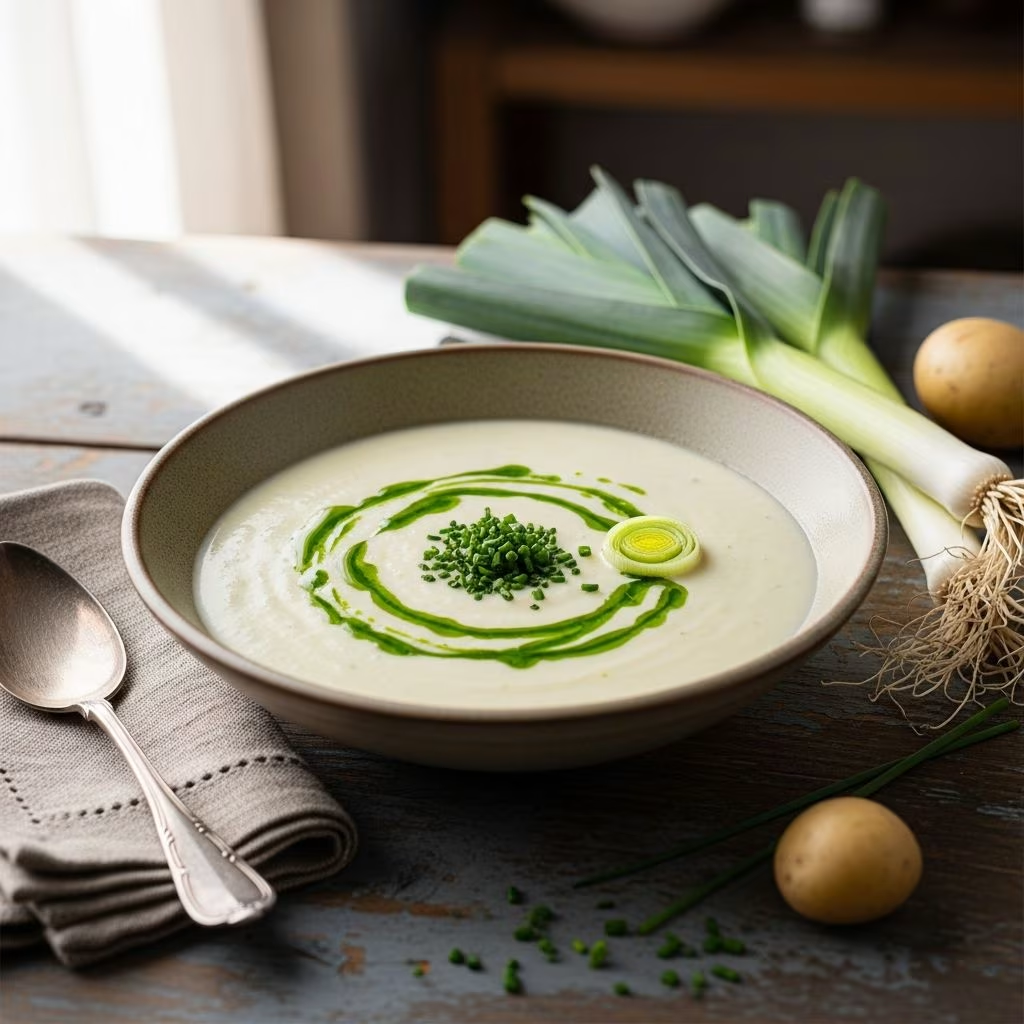
Temperature control throughout service proves essential to the vichyssoise experience. Chill serving bowls or cups for at least 30 minutes before use. Ladle soup carefully to avoid splashing and maintain presentation integrity. Garnish generously with minced fresh chives, a small dollop of crème fraîche, or crispy croutons for textural contrast. Some preparations include thin potato or leek chips for elegant visual presentation.
Frequently Asked Questions About Vichyssoise
- Can vichyssoise be served hot?
- Although tradition dictates serving this soup cold, it performs admirably as a hot preparation, particularly during cooler seasons. Simply omit the extended chilling and serve immediately after achieving desired consistency and seasoning. The soup retains all its refined character and silken texture when enjoyed warm.
- What potato varieties work best?
- Russet and Yukon Gold potatoes represent optimal choices. Avoid waxy varieties like red potatoes, which resist pureeing and create grainy texture. Starchy varieties break down completely, yielding the smooth consistency essential to authentic vichyssoise.
- How can I reduce cooking time?
- Grating potatoes rather than cubing them reduces cooking duration by approximately 20 minutes, as the increased surface area promotes faster heat penetration. Additionally, using thinner vegetable slices facilitates quicker softening throughout the preparation.
- What are suitable dairy alternatives?
- Crème fraîche, sour cream, buttermilk, and yogurt each contribute distinctive flavor notes while maintaining creamy texture. Dairy-free options including oat milk, rice milk, and almond milk work satisfactorily, though they produce marginally lighter results compared to traditional heavy cream.
- How do I achieve proper seasoning for cold soup?
- Cold temperatures suppress taste perception, necessitating slightly elevated salt levels compared to hot soups. Season while soup remains warm, then reassess after complete chilling. Gradual seasoning adjustments allow precise flavor calibration without over-salting.
- Can I make vichyssoise vegetarian?
- Yes, simply substitute vegetable broth for chicken stock and ensure all ingredients contain no animal products. The resulting soup maintains identical texture and silken consistency while accommodating plant-based dietary preferences.
Mastering Vichyssoise: Final Considerations
Vichyssoise exemplifies the principle that refined cuisine often emerges from humble ingredients combined through thoughtful technique. This elegant cold soup requires no exotic components, specialized equipment, or elaborate procedures—only attention to detail, quality ingredients, and respect for classical preparation methods. Whether served as an impressive dinner party opener or a satisfying summer luncheon centerpiece, vichyssoise delivers consistent excellence when fundamentals receive proper attention. The rewards of mastering this timeless preparation extend far beyond a single recipe, as the techniques involved—careful aromatic development, thorough cooking, proper pureeing, and precise seasoning—translate across countless other soup preparations and culinary applications. By understanding vichyssoise’s essence and embracing its versatile possibilities, home cooks unlock a gateway to sophisticated entertaining and personal culinary advancement.
References
- Classic Vichyssoise — Andrew Zimmern. Accessed April 2026. https://andrewzimmern.com/recipes/classic-vichyssoise/
- Vichyssoise Recipe: My Version of Julia Child’s — Levana Cooks. Accessed April 2026. https://levanacooks.com/recipe/vichyssoise-recipe/
- Vichyssoise Soup Made with Potatoes, Cucumbers & Chives — Chef Cindy. Accessed April 2026. https://chefcindy.com/vichyssoise-soup/
- Julia Child’s Vichyssoise for JC100 — Noshing with the Nolands. Accessed April 2026. https://noshingwiththenolands.com/julia-childs-vichyssoise-for-jc100/
- The Perfect Vichyssoise (Cold Potato Leek Soup) — LunaCafe. Accessed April 2026. https://www.thelunacafe.com/the-perfect-vichyssoise-cold-potato-leek-soup/