Vegetarian fried rice has become a staple in home kitchens worldwide, offering a versatile, economical, and satisfying meal that can be prepared in under thirty minutes. This beloved dish combines the simplicity of cooked grains with vibrant vegetables, aromatic seasonings, and protein-rich components to create a complete nutritional profile. Whether you’re seeking a quick weeknight dinner, a way to repurpose leftover rice, or an introduction to plant-based Asian cuisine, mastering the fundamentals of vegetarian fried rice opens endless culinary possibilities.
Understanding the Foundation: Rice Selection and Preparation
The quality of your finished dish begins with proper rice selection and preparation. Unlike fresh rice, which contains excess moisture that creates a mushy texture, using previously cooked and chilled rice is fundamental to achieving the signature separated, slightly firm grain structure characteristic of authentic fried rice. Allowing cooked rice to cool completely—ideally refrigerated overnight—allows the starches to set, making individual grains less likely to clump together during the high-heat cooking process.
Long-grain varieties such as jasmine or basmati rice work exceptionally well, though medium-grain options and brown rice also produce satisfactory results. Brown rice offers increased nutritional density with additional fiber and minerals compared to white rice varieties. When preparing rice specifically for fried rice purposes, rinsing raw grains thoroughly removes excess starch, leading to improved texture and separation during cooking.
The quantity of rice required depends on your intended serving size and whether you’re preparing fried rice as a main course or accompaniment. Typically, one cup of uncooked rice yields approximately three cups of cooked rice, providing a suitable base for two to three servings as an entrée.
Essential Vegetables and Protein Components
Creating texture and nutritional balance in vegetarian fried rice requires thoughtful vegetable selection. The ideal vegetable combination includes items that cook quickly, maintain their structural integrity during high-heat stir-frying, and offer complementary colors and flavors.
Primary Vegetables
- Carrots: Diced into small, uniform pieces, carrots provide natural sweetness, vibrant color, and require sufficient cooking time to soften adequately
- Onions: Finely chopped onions create an aromatic foundation, releasing their natural sugars and contributing depth to the overall flavor profile
- Peas: These small legumes add sweetness, textural contrast, and nutritional value; frozen peas work exceptionally well and require minimal additional cooking
- Garlic: Minced fresh garlic provides pungent, complex flavors that become more subtle and integrated through cooking
- Green onions: Sliced thinly and added near the end of cooking, these provide fresh, mild onion notes and visual appeal
Optional Vegetable Additions
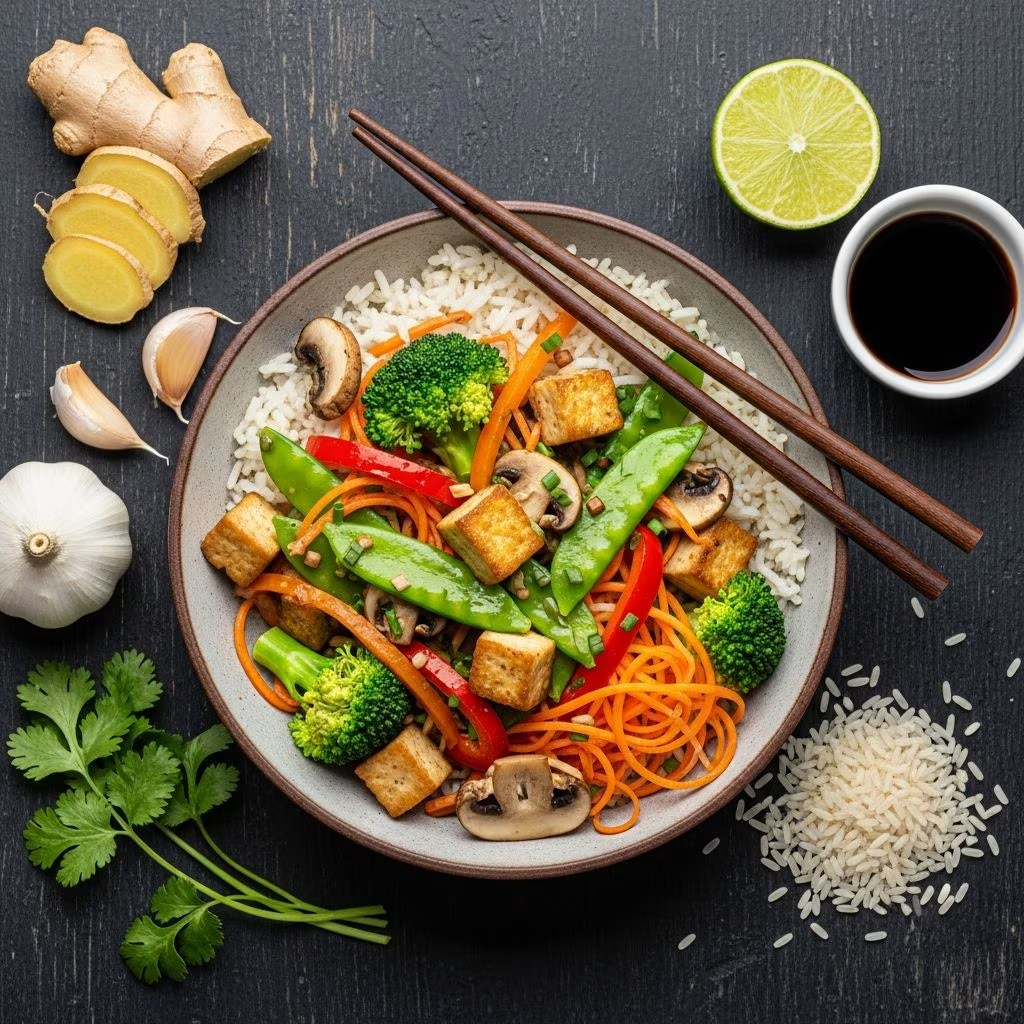
To customize your fried rice beyond the foundation vegetables, consider incorporating bell peppers, broccoli florets, snap peas, mushrooms, or cabbage. These vegetables should be cut into pieces smaller than traditional stir-fry sizes to ensure even cooking and prevent interrupting the flow of the dish during consumption. Frozen vegetable medleys offer convenient alternatives when fresh produce isn’t available, eliminating prep work while maintaining nutritional content.
Protein Enhancement Strategies
While fried rice can be entirely plant-based, adding protein sources creates a more complete meal. Lightly beaten eggs create an appealing texture and bind rice grains together naturally. For fully vegan preparations, crispy baked tofu marinated in a savory sauce provides substantial protein content alongside textural interest. Alternatively, chickpeas, lentils, or hemp seeds deliver plant-based protein without requiring advance preparation.
Flavor Development Through Seasonings and Condiments
The distinctive taste profile of vegetarian fried rice derives from carefully balanced seasonings rather than individual ingredients. Soy sauce forms the foundational seasoning, providing umami depth and salty complexity. Low-sodium varieties allow greater control over overall sodium content while preventing oversalting.
Rice vinegar contributes subtle acidity that brightens the overall flavor profile without creating harsh sour notes. Sesame oil, used sparingly due to its concentrated flavor, adds toasted, nutty undertones distinctly associated with Asian cuisine. For additional heat and complexity, sriracha, chili oil, or fresh green chilies can be incorporated based on personal preference and heat tolerance.
Tamari offers a gluten-free soy sauce alternative containing identical flavor characteristics, making it suitable for individuals with gluten sensitivity. Coconut aminos provide another alternative with slightly sweeter undertones and reduced sodium content compared to traditional soy sauce.
Technique and Cooking Method
Successful vegetarian fried rice relies on understanding and executing proper cooking techniques. The traditional method employs a large wok or skillet heated to high temperatures, promoting rapid moisture evaporation and developing subtle browning on rice grains.
Step-by-Step Cooking Process
- Heat neutral oil (such as avocado, vegetable, or peanut oil) in your wok or large skillet over medium-high heat until shimmering
- Add onions and carrots, cooking for two to three minutes while stirring frequently to prevent burning and ensure even cooking
- Introduce remaining vegetables requiring longer cooking times (broccoli, bell peppers, mushrooms) and continue cooking for three to four minutes
- Push cooked vegetables to the outer edge of the pan, creating a clear center space
- If using eggs, pour beaten eggs into the cleared center, stirring gently until partially cooked before combining with vegetables
- Add chilled rice to the pan, breaking apart any clumps using your spatula while incorporating thoroughly with vegetables
- Pour seasoning mixture (soy sauce, vinegar, sesame oil) over the rice, stirring constantly for two to three minutes
- Add quick-cooking ingredients like green onions, peas, and fresh herbs during the final minute
- Taste and adjust seasonings as needed, adding salt, pepper, or additional condiments to reach desired flavor intensity
High-Heat Cooking Principles
Maintaining high heat throughout the cooking process prevents the rice from becoming steamed or soggy. The elevated temperature encourages rapid evaporation of moisture while creating subtle browning and toasting on the rice grains. Constant stirring prevents sticking and ensures even heat distribution across all components.
Nutritional Considerations and Health Benefits
Vegetarian fried rice presents a balanced nutritional profile when constructed with appropriate ingredient ratios. One serving typically contains complex carbohydrates from rice, fiber from vegetables, protein from eggs or plant-based alternatives, and beneficial fats from sesame oil and cooking oils.
Using brown rice instead of white rice increases fiber content and provides additional B vitamins and minerals important for energy metabolism and cellular function. Incorporating diverse colorful vegetables ensures a broader spectrum of vitamins, minerals, and phytonutrients. Limiting added oil to two to three tablespoons total maintains reasonable fat and calorie content while sufficient for achieving proper cooking results.
For individuals managing sodium intake, using low-sodium soy sauce or tamari and limiting added salt allows customization of sodium levels to meet dietary requirements.
Preparation Strategies for Busy Schedules
Vegetarian fried rice accommodates modern busy lifestyles through advance preparation and ingredient planning. Cooking rice a day or two in advance and refrigerating in airtight containers creates a ready-to-use component requiring only reheating. Pre-chopping vegetables and storing in separate containers enables quick assembly when cooking time is limited.
Frozen vegetable combinations eliminate the need for fresh produce preparation while maintaining nutritional value and extending shelf life significantly. Keeping pantry staples—including rice, soy sauce, vinegar, sesame oil, and garlic—ensures you can prepare fried rice with minimal advance notice.
Creative Variations and Flavor Profiles
While traditional vegetarian fried rice employs standard Asian seasonings, numerous creative variations accommodate different cuisine preferences and ingredient availability. Thai-inspired versions incorporate coconut milk, lime juice, and fresh basil for bright, herbaceous notes. Indian-style variations introduce ginger, cumin, and turmeric, creating warming spice profiles distinct from traditional Asian preparations.
Mediterranean variations replace soy sauce with olive oil and incorporate sun-dried tomatoes, olives, and fresh herbs like oregano and parsley. Mexican-influenced versions add jalapeños, lime, cilantro, and incorporate black beans alongside rice for increased protein and fiber.
Common Mistakes and Solutions
| Problem | Cause | Solution |
|---|---|---|
| Mushy, clumpy rice | Using fresh rice with excess moisture | Always use previously cooked and chilled rice; allow adequate refrigeration time |
| Bland flavor profile | Insufficient seasoning or under-cooking aromatics | Taste and adjust seasonings; cook garlic and aromatics until fragrant before adding rice |
| Unevenly cooked vegetables | Cutting vegetables to varying sizes or not adjusting cooking times | Cut all vegetables into uniform small pieces; add ingredients based on cooking time requirements |
| Rice sticking to pan | Insufficient oil or low heat temperature | Maintain high heat; ensure adequate oil coating; stir constantly |
Frequently Asked Questions
Can I use fresh rice instead of previously cooked rice?
Fresh rice contains excess moisture that creates steamed, sticky rice rather than the desired separated grain texture. Cooking rice specifically for fried rice and allowing it to cool completely is essential for optimal results. If immediate use is necessary, spreading freshly cooked rice on a sheet pan to cool quickly improves the outcome.
What oil should I use for cooking vegetarian fried rice?
Choose neutral-flavored oils with high smoke points, such as avocado oil, vegetable oil, peanut oil, or rice bran oil. Sesame oil, while flavorful, has a lower smoke point and lower flash temperature, making it suitable for finishing rather than primary cooking.
How can I make vegetarian fried rice more protein-rich?
Incorporate two or three eggs, use crispy baked tofu, add cooked legumes like chickpeas or black beans, include hemp seeds, or use nutritional yeast for additional protein content without significantly increasing cooking time.
Can I prepare vegetarian fried rice ahead of time?
Yes, fried rice reheats well and can be prepared one to two days in advance. Store in airtight containers in the refrigerator and reheat gently in a wok or large skillet over medium heat, adding a small splash of water if the rice seems dry.
What vegetables work best for fried rice?
Ideal vegetables cook quickly, maintain texture during high-heat cooking, and offer complementary flavors. Carrots, peas, onions, and garlic form the classic foundation, with bell peppers, broccoli, snap peas, mushrooms, and cabbage as excellent secondary options.
Conclusion: Mastering a Versatile Vegetarian Staple
Vegetarian fried rice represents more than a simple recipe—it exemplifies resourceful, nutritious cooking that transforms basic pantry ingredients into a satisfying, complete meal. By understanding the importance of rice preparation, mastering high-heat cooking techniques, and thoughtfully combining vegetables and seasonings, home cooks can create restaurant-quality results consistently. The adaptability of this dish accommodates ingredient preferences, dietary requirements, and creative culinary experimentation, making it an invaluable addition to any cook’s repertoire.
References
- Principles of Stir-Frying: Temperature and Oil Selection in Asian Cuisine — Serious Eats. 2023. https://www.seriouseats.com/stir-fry-basics
- Nutritional Comparison: Brown Rice vs. White Rice — United States Department of Agriculture, National Nutrient Database. 2024. https://fdc.nal.usda.gov/
- Food Safety and Proper Storage of Cooked Vegetables — Centers for Disease Control and Prevention. 2024. https://www.cdc.gov/foodsafety/index.html
- Egg Protein Content and Cooking Methods — Academy of Nutrition and Dietetics Evidence Analysis Library. 2023. https://www.eatright.org/
- Sodium Content in Soy Sauce and Low-Sodium Alternatives — United States Food and Drug Administration, Dietary Supplement Label Database. 2024. https://www.fda.gov/