The picadillo stands as one of Latin America’s most beloved comfort foods, with variations spanning from Mexico to Cuba to the Philippines. Each region has developed its own interpretation, yet all share common threads of savory, slightly sweet, and aromatic flavors that make this dish enduringly popular. The traditional preparation relies heavily on ground meat as its foundation, but modern cooking has opened new possibilities for reimagining this classic.
A vegetarian adaptation transforms picadillo into something equally satisfying without sacrificing the complex flavor profile that makes the original so memorable. By substituting black beans for ground meat and incorporating elements from multiple regional variations, home cooks can create a one-pan meal that satisfies both vegetarians and meat eaters seeking a lighter option.
Understanding the Culinary Heritage
Picadillo represents more than just a recipe; it embodies the culinary crossroads of Latin America. The Mexican version typically incorporates diced potatoes and a savory tomato base, while the Cuban interpretation introduces sweetness through golden raisins and briny olives. The Filipino variant adds another dimension with diced vegetables and unique seasoning profiles.
What unites these variations is their foundation in accessible ingredients that transform into something deeply flavorful through careful seasoning and cooking technique. The combination of aromatics like onion and garlic, warming spices such as cumin and coriander, and acidic components creates a dish that feels both comforting and sophisticated.
Why Black Beans Deserve a Place in This Classic
Black beans offer more than nutritional benefits; they provide texture and substance that can convincingly replace ground meat in dishes where they’re properly prepared. Their neutral flavor allows them to absorb the surrounding seasonings while their firm texture resists becoming mushy when cooked properly.
The use of canned beans streamlines preparation without compromising quality, provided they’re thoroughly rinsed and drained. This simple step removes excess sodium and starch, allowing the beans to better absorb the flavors of the sauce they’re combined with.
Key Components That Define the Dish
The Aromatic Foundation
Beginning with extra-virgin olive oil creates the perfect canvas for developing flavor. Green bell peppers and finely minced onions provide the aromatic base, cooked until they soften and develop slight caramelization. This foundation step shouldn’t be rushed; allowing these vegetables adequate time to cook properly ensures they contribute depth rather than merely texture.
Potato Integration
Russet potatoes cut into half-inch pieces serve a crucial role in this dish. They add substance and create varied texture throughout each serving. The key lies in achieving the balance between partial cooking during the stovetop phase and finishing in the oven, ensuring potatoes emerge tender without becoming waterlogged.
Spice Complexity
Ground coriander and cumin form the aromatic backbone, while tomato paste provides umami depth. Double-concentrated tomato paste intensifies this element without requiring extended cooking time. All-purpose flour aids in thickening while helping spices adhere to the vegetable mixture during the crucial browning phase.
Flavor Accents
Sliced green olives contribute briny notes that cut through richness, while golden raisins introduce subtle sweetness and chewy texture. These components, borrowed from both Mexican and Cuban traditions, create layers of flavor that prevent the dish from feeling one-dimensional.
Heat Element
Tabasco sauce provides adjustable heat that can be modified according to preference. This addition ensures the dish has complexity rather than simple spiciness, warming diners from within rather than overwhelming their palates.
The Cheese Component and Finishing Techniques
Monterey Jack cheese serves dual purposes in this recipe. A portion mixed into the bean mixture before baking adds creamy richness throughout, while the remaining cheese spread across the surface creates an appealing golden crust. The oven’s heat causes the cheese to melt and brown, adding textural contrast to the stewy base beneath.
Monitoring the browning process ensures optimal results. If the cheese hasn’t achieved desirable coloration within the standard baking window, a brief broiler finish can complete the job without overcooking the filling.
Step-by-Step Preparation Guide
Initial Vegetable Preparation
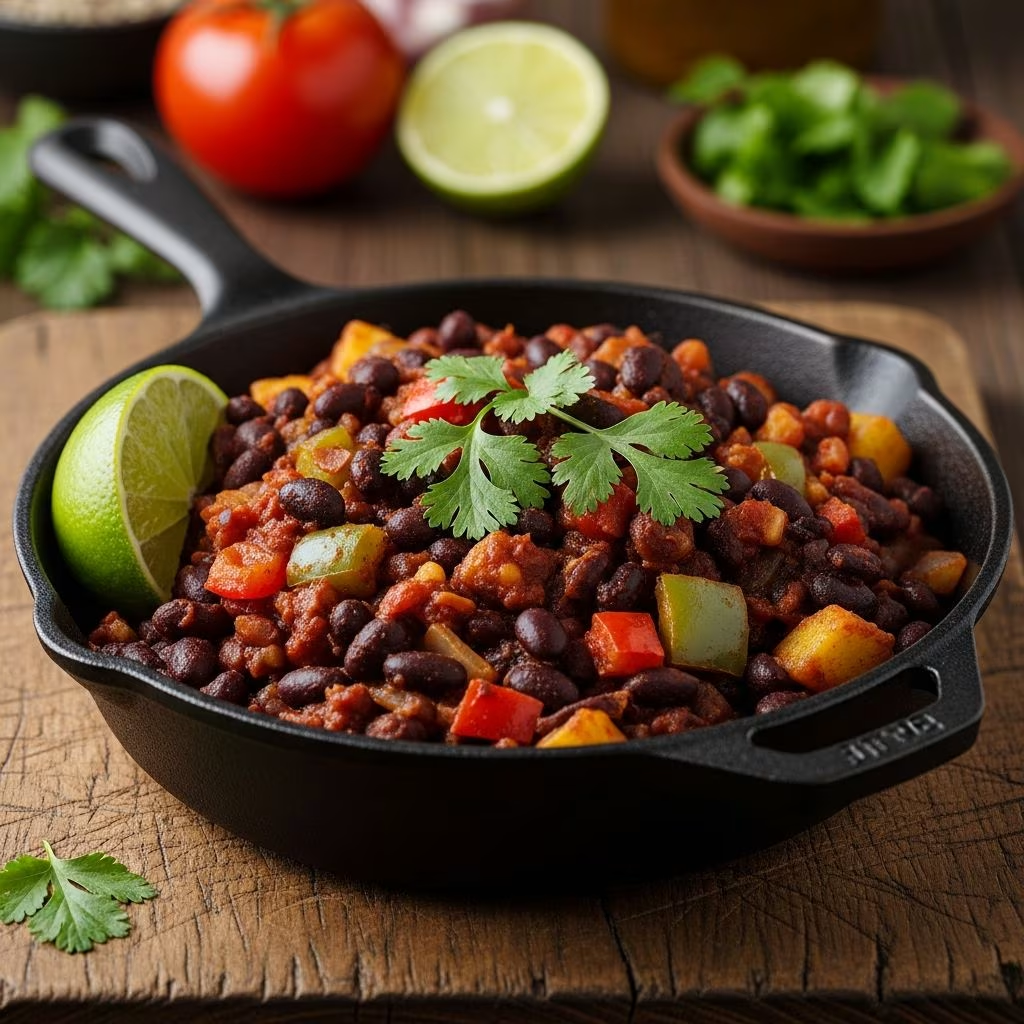
Begin by preheating your oven to 375°F with the rack positioned in the top third. Heat olive oil in a large cast-iron skillet over medium-high heat. Add your finely chopped green pepper, minced onion, and diced potatoes. Cook this mixture while stirring frequently, aiming for 12 to 16 minutes. The vegetables should show slight browning while the potatoes become tender enough to yield to pressure but maintain their shape.
Spice Blooming
Add minced garlic, tomato paste, flour, coriander, cumin, and salt. Continue cooking and stirring for approximately four minutes. This step, known as blooming spices, allows them to release their essential oils and develop deeper, more complex flavors. You should notice the tomato paste beginning to darken and stick slightly to the skillet’s bottom.
Bean Integration
Introduce your rinsed and drained black beans along with chopped cilantro, green olives, golden raisins, Tabasco, and water. Stir thoroughly to combine all components evenly. Bring the mixture to a boil, then remove from heat. At this point, stir in a quarter cup of coarsely grated Monterey Jack cheese.
Cheese Topping and Baking
Distribute the remaining cheese evenly across the bean mixture’s surface. Place your skillet on a rimmed baking sheet to catch any spills, then transfer to the preheated oven. Bake for 23 to 28 minutes, watching for the cheese to melt completely and develop light browning. Should browning prove insufficient after 32 minutes, activate your broiler and broil for one to three minutes, depending on your unit’s intensity.
Final Presentation
Remove the skillet from the oven and immediately top with fresh cilantro leaves. Serve directly from the skillet alongside warm tortillas or tortilla chips for scooping and flavor variation.
Essential Tips for Success
Potato Timing Matters
The most critical element in this recipe involves achieving proper potato doneness. Partial cooking during the stovetop phase provides essential time for heat penetration. The oven then completes the process without drying out or overcooking the exterior. Skip this step and you’ll face either crunchy or mushy results.
Bean Quality
Always rinse canned beans thoroughly under cold running water. This removes not only excess sodium but also the starchy liquid that can make the final dish gummy rather than chunky. Properly treated canned beans perform remarkably well in this application.
Cast Iron Advantages
A cast-iron skillet provides superior heat retention and browning capabilities compared to conventional cookware. Its heat distribution ensures even cooking while its transition from stovetop to oven requires no transfer, simplifying cleanup.
Cheese Selection
Monterey Jack’s mild flavor and excellent melting properties make it ideal for this dish. Its slightly buttery character complements rather than competes with the picadillo’s complex spicing.
Serving Suggestions and Accompaniments
| Serving Option | Pairing Method | Flavor Effect |
|---|---|---|
| Warm Tortillas | Scoop filling into tortillas for tacos | Adds chewiness and neutral vehicle |
| Tortilla Chips | Use for scooping directly from skillet | Provides crunch contrast |
| Steamed Rice | Serve picadillo over bed of white rice | Dilutes intensity with mild starch |
| Sour Cream | Dollop on individual portions | Cools heat and adds creaminess |
| Fresh Cilantro | Garnish before serving | Brightens finish with herbal notes |
Nutritional Considerations
Black beans provide substantial plant-based protein, making this vegetarian adaptation nutritionally complete without additional protein sources. They also contribute fiber, which aids digestion and promotes satiety. The combination of beans with whole grains when served with tortillas or rice creates a complete amino acid profile comparable to meat-containing versions.
Potatoes add resistant starch when properly cooked, which offers metabolic benefits. The abundance of vegetables and legumes means each serving delivers multiple micronutrients including folate, iron, and various B vitamins.
Frequently Asked Questions
Can I prepare this dish ahead of time?
Yes, the recipe handles make-ahead preparation well. Complete all steps through the bean mixture stage, then refrigerate in your cast-iron skillet or transfer to a baking dish. Add the cheese topping only when ready to bake, then proceed with the standard baking time, adding five to ten minutes to account for the cold starting temperature.
What if I don’t have cast iron?
While cast iron is recommended, any oven-safe skillet works adequately. Avoid non-stick cookware in the oven unless manufacturer specifications explicitly approve it. A ceramic or glass baking dish similarly accommodates this recipe with adjusted cooking times.
Are there vegetable substitutions?
The core components—aromatics, potatoes, and beans—should remain consistent. However, you might experiment with red bell peppers instead of green, add diced carrots for additional sweetness, or include corn for textural variation. Keep total vegetable volume similar to prevent moisture imbalance.
How do I adjust heat levels?
Tabasco quantity directly controls spiciness. Begin with the suggested amount, then adjust based on personal preference. Additional hot sauce or cayenne pepper intensifies heat without altering other flavor components.
Can I freeze leftovers?
The filling portion freezes successfully for up to three months. Cool completely before transferring to freezer containers, then thaw overnight in the refrigerator before reheating. Reheat gently on the stovetop or in a moderate oven to avoid cheese toughness.
Seasonal Variations and Adaptations
Summer preparations might reduce Tabasco while increasing fresh cilantro for brighter flavor. Winter versions benefit from slightly increased spicing and could incorporate roasted poblano peppers for deeper complexity. The recipe’s flexibility accommodates these adjustments without fundamental alteration.
For those avoiding dairy, cashew cream whisked with a touch of lime juice can replace traditional cheese, creating richness without animal products while maintaining the creamy element the dish requires.
Conclusion
This vegetarian black bean picadillo skillet proves that respecting traditional flavor profiles while updating preparation methods yields remarkably satisfying results. The combination of aromatic spices, textured vegetables, tender beans, and melted cheese creates a dish that feels both comforting and contemporary. Whether you follow the recipe precisely or adapt it to your preferences and available ingredients, the fundamental approach ensures delicious outcomes suitable for any weeknight dinner table.
References
- Black Bean Picadillo Skillet Recipe — Bryan’s New Foodie Site. Accessed April 2026. https://bhiggs.x10hosting.com/foodie/black-bean-picadillo-skillet/
- Slow Cooker Picadillo with Black Beans — Weight Watchers USA. Accessed April 2026. https://www.weightwatchers.com/us/recipe/slow-cooker-picadillo-black-beans-1/5626a63bf79cf9120df3b358
- Black-Bean Picadillo Recipe Card — Hitchcock Field & Fork Pantry, University of Florida. Accessed April 2026. https://pantry.fieldandfork.ufl.edu/