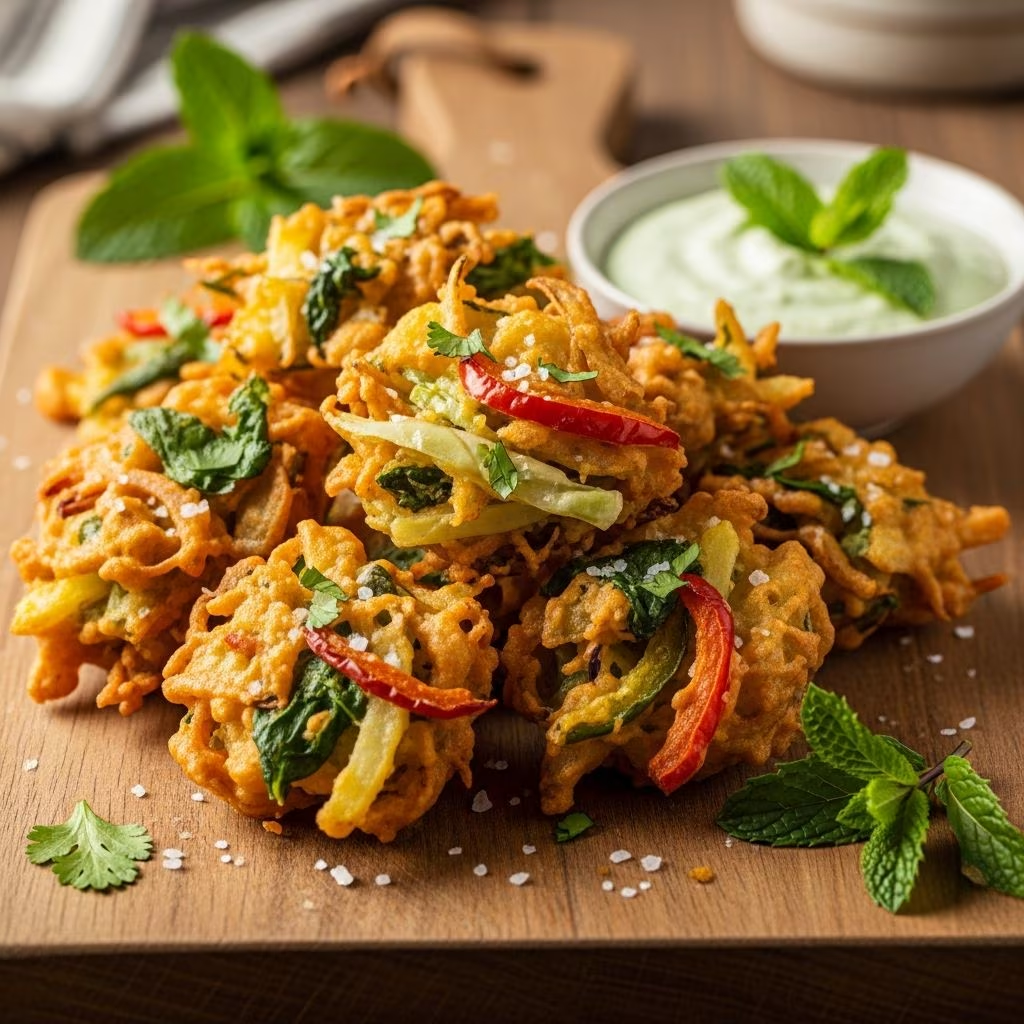
Vegetable pakoras, also known as sabzi pakoras or mixed veggie fritters, represent a beloved staple in Indian cuisine. These golden, crunchy delights combine fresh vegetables coated in a spiced gram flour batter and deep-fried to perfection. Perfect for rainy afternoons, evening tea sessions, or festive gatherings like iftar during Ramadan, they offer a satisfying crunch and burst of flavors from herbs and spices.
Why Vegetable Pakoras Are a Must-Try
Pakoras transcend mere snacking; they evoke nostalgia and comfort. In India, the aroma of frying pakoras signals hospitality and warmth. Their versatility allows customization with seasonal vegetables, making them nutritious yet indulgent. The combination of crispy exteriors and tender interiors, enhanced by spices like cumin and carom seeds, creates an addictive texture and taste profile.
Health-conscious eaters appreciate the vegetables’ fiber and vitamins, balanced by moderate oil use. Studies from nutritional sources highlight gram flour’s protein content, aiding satiety. For instance, the USDA notes chickpea flour provides about 20g protein per 100g, supporting its role in balanced diets.[USDA FoodData Central]
Essential Ingredients for Authentic Pakoras
Gathering the right ingredients ensures success. Focus on fresh produce and quality spices for optimal flavor.
- Gram flour (besan): 1 cup – The base for the batter, providing structure and nutty taste.
- Rice flour: 2 tablespoons – Adds extra crispiness without sogginess.
- Vegetables: Julienne potatoes (2 medium), shredded cabbage (1.5 cups), carrot juliennes (1 cup), chopped spinach (1 cup), spring onions (0.5 cup) – Mix for varied textures and colors.
- Spices: Roasted cumin (0.5 tsp), red chili powder (0.5 tsp), crushed coriander seeds (1 tbsp), carom seeds (0.25 tsp), baking soda (0.25 tsp), dried fenugreek leaves (1 tsp), chaat masala (1.5 tsp).
- Others: Fresh coriander (1-2 tbsp), Himalayan pink salt (to taste), water (0.5 cup), oil for frying, roasted chickpeas (0.5 cup, optional for crunch).
These components draw from traditional recipes, emphasizing balance between heat, earthiness, and freshness.
Step-by-Step Guide to Making Perfect Pakoras
Preparation takes about 30-40 minutes, yielding 20-25 pakoras. Follow these steps for restaurant-quality results.
Prepare the batter: In a large bowl, combine gram flour, rice flour, crushed cumin, salt, chili powder, coriander seeds, baking soda, carom seeds, orange food color (optional for hue), and chopped coriander. Gradually add water, whisking to a smooth, thick paste. Cover and rest for 15-20 minutes to develop flavors.
Season vegetables: Mix julienned potatoes, cabbage, carrots, spinach, spring onions, salt, chaat masala, kasuri methi, and 1 tsp oil. Toss evenly for spice infusion.
Combine mixtures: Fold vegetable mix into the rested batter. Ensure even coating; the mixture should hold shape when scooped.
Heat oil: In a deep wok, heat oil to 350°F (medium-high). Test with a small batter drop – it should sizzle and rise.
Fry pakoras: Take small handfuls of mixture, optionally stuff with slit roasted chickpeas for added crunch. Gently drop into hot oil. Fry in batches on low-medium heat until golden and crisp (4-6 minutes per batch). Drain on paper towels.
Serve hot: Sprinkle chaat masala and pair with green chutney or tamarind sauce.
| Step | Time | Tips |
|---|---|---|
| Batter Rest | 15-20 min | Allows gluten to relax for lighter texture. |
| Frying | 4-6 min/batch | Maintain oil temp to avoid oil absorption. |
| Total Prep | 30-40 min | Scale batter for larger crowds. |
Tips for Ultra-Crispy, Non-Soggy Pakoras
Achieving the ideal crunch requires technique. Use rice flour for structure; it absorbs less oil. Avoid overcrowding the wok to prevent temperature drops. Julienne veggies thinly for even cooking. Baking soda aids lightness, but use sparingly. Post-frying, place on a wire rack instead of paper towels for air circulation.
For healthier versions, air-fry at 375°F for 15-20 minutes, flipping halfway. Though less crispy, it cuts oil significantly. Experiment with onion-only or spinach-dominant mixes for variety.
Health Benefits and Nutritional Insights
Pakoras offer more than indulgence. Vegetables provide vitamins A, C, K from carrots, spinach, cabbage. Gram flour delivers plant-based protein and iron. A single serving (3-4 pakoras) approximates 200-300 calories, with 10-15g protein, per nutritional databases.[USDA]
Spices like ajwain aid digestion, cumin supports metabolism – backed by Ayurvedic traditions and modern studies from PubMed on carom seeds’ antimicrobial properties. Moderation is key due to frying; opt for avocado or mustard oil for better fats.
Delicious Serving Suggestions and Pairings
Pakoras shine with accompaniments. Classic pairings:
- Chutneys: Mint-coriander or spicy tamarind for tang.
- Tea: Masala chai enhances spice notes.
- Curries: Soak in yogurt-based pakora curry for a hearty meal, as in traditional recipes.
- Festive: Iftar special with dates or lemonade.
For meals, serve atop jeera rice or with naan. Kids love them in lunchboxes, cooled and packed.
Common Variations Across Regions
Pakoras adapt regionally. North Indian versions emphasize potatoes and onions; Punjabi styles add fenugreek. South Indian renditions incorporate curry leaves. For gluten-free, use only gram flour. Vegan by default, try cauliflower or paneer for protein boosts.
Monsoon specials mix all greens; winter editions feature root veggies. Experiment with beetroot for color or zucchini for moisture.
Frequently Asked Questions (FAQs)
Can I bake pakoras instead of frying?
Yes, preheat oven to 400°F, brush with oil, bake 20-25 minutes. Results are healthier but less crispy.
How to store leftover pakoras?
Refrigerate in airtight containers up to 2 days. Reheat in oven at 350°F for crispiness; avoid microwave sogginess.
What if my batter is too thick?
Add water 1 tbsp at a time. Aim for pancake-batter consistency – coats veggies without dripping.
Are pakoras gluten-free?
Naturally, if using pure gram flour. Check for cross-contamination in packaged besan.
Best oil for frying?
Neutral oils like peanut or canola withstand high heat. Mustard oil adds authentic flavor.
Troubleshooting Guide
Problems and fixes:
- Soggy pakoras: Oil too cool; increase heat.
- Raw inside: Larger portions; use smaller scoops.
- Batter not sticking: Rest longer or add cornflour.
Master these for consistent success.
Vegetable pakoras bring joy through simplicity and flavor. Whether solo snacking or family sharing, they embody culinary comfort. Try today and elevate your snack game.
References
- Mix Sabzi Pakora Recipe by Food Fusion — Food Fusion (YouTube). 2023. https://www.youtube.com/watch?v=cm3dncSgVo0
- Pakore Ki Sabzi – Indian Fritters Curry — My Ginger Garlic Kitchen. 2022-10-15. https://www.mygingergarlickitchen.com/how-to-make-pakore-ki-sabzi/
- Vegetable Pakora Recipe — Swasthi’s Recipes. 2024-05-20. https://www.indianhealthyrecipes.com/pakora-recipe-vegetable-pakora-pakoda/
- Mix Sabzi Pakora Ramadan Special — Food Fusion (YouTube Shorts). 2024. https://www.youtube.com/shorts/GqbBp_a7g-I
- FoodData Central: Chickpea Flour — United States Department of Agriculture (USDA). 2023-07-01. https://fdc.nal.usda.gov/fdc-app.html#/food-details/173757/nutrients