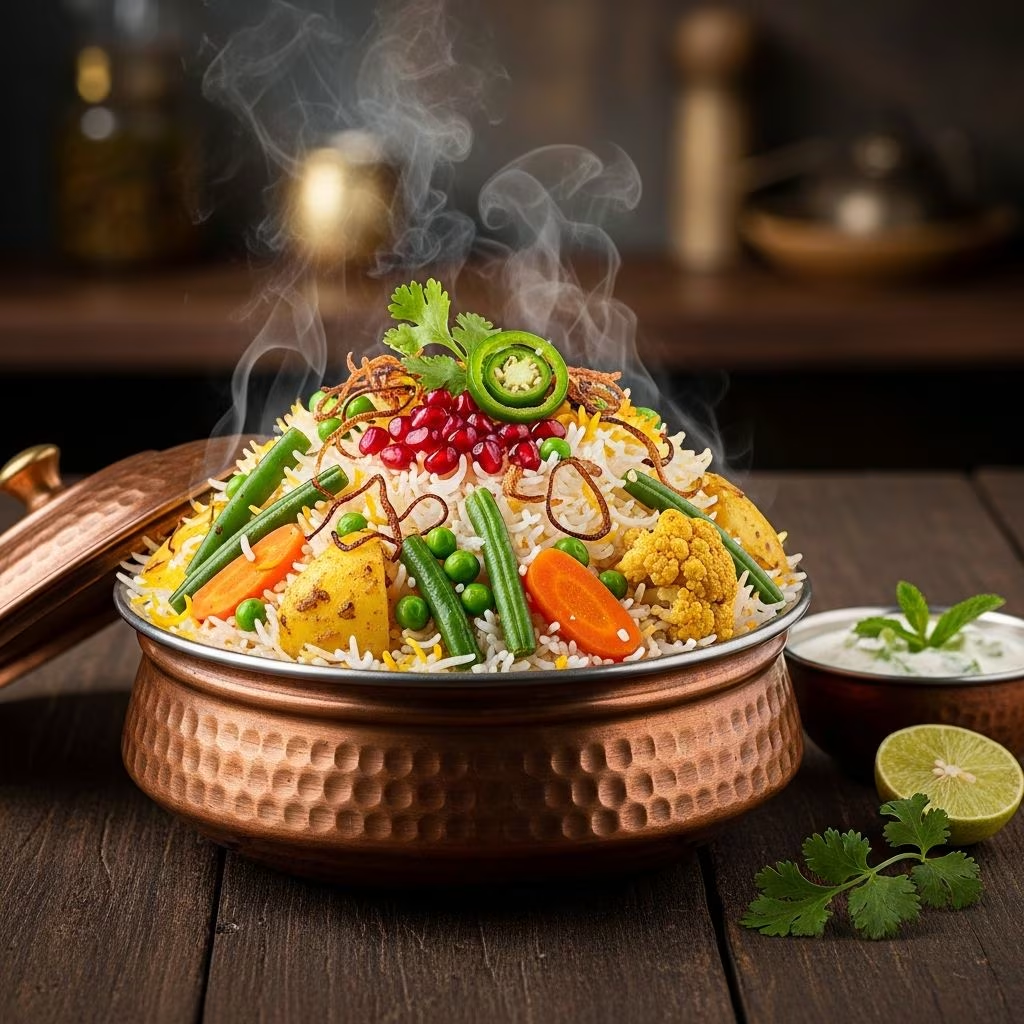
Vegetable biryani stands as a cornerstone of Indian cuisine, blending fragrant basmati rice with a medley of colorful vegetables and a symphony of warming spices. This dish offers a satisfying, plant-based meal that’s versatile enough for daily dinners or festive occasions. Whether you’re aiming for a speedy stovetop version or an elaborate layered preparation, the key lies in balancing flavors and textures for an explosion of taste in every bite.
Why Vegetable Biryani Captivates Home Cooks
Biryani’s appeal stems from its adaptability and bold profile. Unlike plain rice dishes, it layers spices like garam masala, turmeric, and cinnamon with fresh herbs such as mint and cilantro, creating depth without overwhelming heat. Vegetables provide natural sweetness and crunch, while options like chickpeas add protein, making it a complete meal. Health-conscious eaters appreciate its fiber-rich composition from carrots, peas, and cauliflower, supporting digestion and satiety.
For busy households, one-pan methods cut prep time to under 30 minutes, ideal for weeknights. Traditionalists can elevate it with dum cooking—a steaming technique that infuses rice with gravy aromas—perfect for weekends. Globally, it’s praised for being vegan-friendly with simple swaps like plant-based yogurt.
Essential Ingredients for Authentic Flavor
Building a great vegetable biryani starts with quality staples. Basmati rice forms the base, prized for its long grains that stay fluffy when cooked. A mix of vegetables ensures variety: carrots for earthiness, peas for pop, potatoes for heartiness, and cauliflower for lightness.
- Basmati rice: 1-2 cups, soaked 20-30 minutes for even cooking.
- Aromatic base: Onions, garlic, ginger—sautéed to golden perfection.
- Spice blend: Garam masala, turmeric, cumin, cinnamon, bay leaves, cardamom for warmth.
- Vegetables: 2-3 cups total, including carrots, peas, beans, bell peppers.
- Protein boost: Chickpeas or lentils for substance.
- Finishing touches: Yogurt or coconut milk for creaminess, lemon for zing, fresh herbs.
Pro tip: Use frozen spices like dried mint for convenience without losing potency. Vegetable broth enhances moisture over water, amplifying savoriness.
Quick One-Pot Vegetable Biryani Recipe
This streamlined approach yields dinner in 30 minutes, perfect for beginners. It skips layering for fuss-free results while delivering restaurant-worthy taste.
Ingredients (Serves 4)
| Ingredient | Quantity |
|---|---|
| Olive oil or ghee | 2 tbsp |
| Onion, sliced | 1 large |
| Garlic & ginger, grated | 2 cloves + 1 inch |
| Garam masala | 1 tsp |
| Turmeric, cinnamon | ½ tsp each |
| Chickpeas, drained | 1 can (15 oz) |
| Peas, frozen | 1½ cups |
| Carrots, sliced | 2 medium |
| Cooked basmati rice | 3 cups |
| Yogurt (plain or vegan) | ½ cup |
| Vegetable broth | ½ cup |
| Lemon juice | From 1 lemon |
Step-by-Step Instructions
- Heat oil in a large pan over medium heat. Sauté sliced onions until soft and golden, about 5 minutes.
- Add grated garlic and ginger; cook 1 minute until fragrant.
- Stir in spices: garam masala, turmeric, cinnamon, red pepper flakes, bay leaf, and dried mint. Toast for 30 seconds.
- Mix in yogurt, then add chickpeas, peas, carrots, and broth. Simmer 4-5 minutes until vegetables soften.
- Fold in cooked rice, salt, and pepper. Stir gently 2-3 minutes. For crispy edges, drizzle oil and let sit undisturbed.
- Finish with lemon juice and fresh herbs. Fluff and serve hot.
Total time: 30 minutes. Pair with raita or pickled onions for contrast.
Layered Restaurant-Style Vegetable Biryani
For special occasions, layering (pakki method) creates distinct flavors. Partially cooked rice alternates with spiced vegetables, sealed and steamed.
Key Additions
- Fried onions (birista) for crunch.
- Saffron milk for color and aroma.
- Cashews or raisins for texture.
- Whole spices like cloves, cardamom for infusion.
Method Overview
- Parboil soaked basmati rice with whole spices until 70% cooked; drain.
- Cook vegetable masala: Sauté onions, add ginger-garlic, tomatoes, spices, yogurt, and veggies like potatoes, cauliflower, carrots.
- Layer in a heavy pot: Rice base, veggie masala, fried onions, nuts, herbs, saffron milk. Repeat.
- Dum cook: Seal lid with dough or foil, steam on low 20-25 minutes.
This yields fluffy, aromatic grains infused with gravy.
Customizing Your Biryani
Adapt to preferences or pantry staples for endless variations.
| Original | Swap For | Why It Works |
|---|---|---|
| Chickpeas | Lentils or edamame | Boosts protein, similar texture. |
| Peas & carrots | Zucchini, broccoli | Fresh seasonal crunch. |
| Yogurt | Coconut milk | Vegan creaminess. |
| Garam masala | Curry powder | Accessible alternative. |
Spice levels: Adjust cayenne or chilies. For kids, mellow with extra yogurt. Gluten-free by nature; ensure broth is compliant.
Nutrition and Health Benefits
A 1-cup serving packs around 350 calories, 10g protein from legumes, and 8g fiber from veggies, aiding blood sugar control. Antioxidants from turmeric (curcumin) and ginger support immunity. Basmati’s low glycemic index makes it diabetic-friendly. Whole spices provide anti-inflammatory compounds. Opt for brown basmati for extra fiber.
Pro Tips for Biryani Success
- Rice prep: Soak 30 minutes; cook al dente to avoid mushiness.
- Flavor layering: Bloom spices in oil first.
- No sticking: Use non-stick or ghee-coated pots.
- Resting: Let sit 10 minutes post-cook for flavors to meld.
- Scaling: Double for crowds; use instant pot for pressure version.
Common Mistakes and Fixes
- Soggy rice: Don’t overcook or add excess liquid—use broth sparingly.
- Flat taste: Fry onions deeply; add lemon at end.
- Uneven spice: Toast whole spices separately.
- Dry dish: Incorporate yogurt or steam properly.
Pairing Suggestions
Complement with cooling raita (yogurt-cucumber), mirchi ka salan (chili curry), or simple salad. Beverages: Lassi or mango juice balance heat.
Storage and Reheating
Refrigerate up to 3 days in airtight containers. Reheat with splash of water in microwave or stovetop. Freezes well for 1 month; thaw overnight.
Frequently Asked Questions
Can I make vegetable biryani in a rice cooker?
Yes—sauté base in pan first, then transfer to cooker with rice and broth. Use 1:1.5 rice-to-liquid ratio.
Is vegetable biryani vegan?
Standard versions are; swap ghee for oil and yogurt for coconut/plant-based.
How to get yellow color without food dye?
Infuse milk with saffron threads or use turmeric.
What’s the difference between pulao and biryani?
Pulao cooks rice with ingredients simultaneously; biryani layers and dum-steams for intensified flavors.
Can I use jasmine rice instead?
It works but basmati’s fragrance is ideal; jasmine may be stickier.
Word count: 1678 (excluding metadata and references).
References
- Vegetable Biryani (Easy 30-Minute, One-Pan Recipe) — The Plant Based School (Nico Pallotta). 2023. https://theplantbasedschool.com/vegetable-biryani/
- Easy Vegetable Biryani Recipe — Dinner Then Dessert. 2022. https://dinnerthendessert.com/easy-vegetable-biryani/
- Restaurant style Vegetable Biryani — Cook With Manali. 2021. https://www.cookwithmanali.com/restaurant-style-vegetable-biryani/
- Vegetable Biryani (How to Make Veg Biryani) — Holy Cow Vegan. 2020. https://holycowvegan.net/vegetable-biryani/
- Veg Biryani Recipe | Vegetable Biryani — Swasthi’s Recipes. 2023. https://www.indianhealthyrecipes.com/veg-biryani/