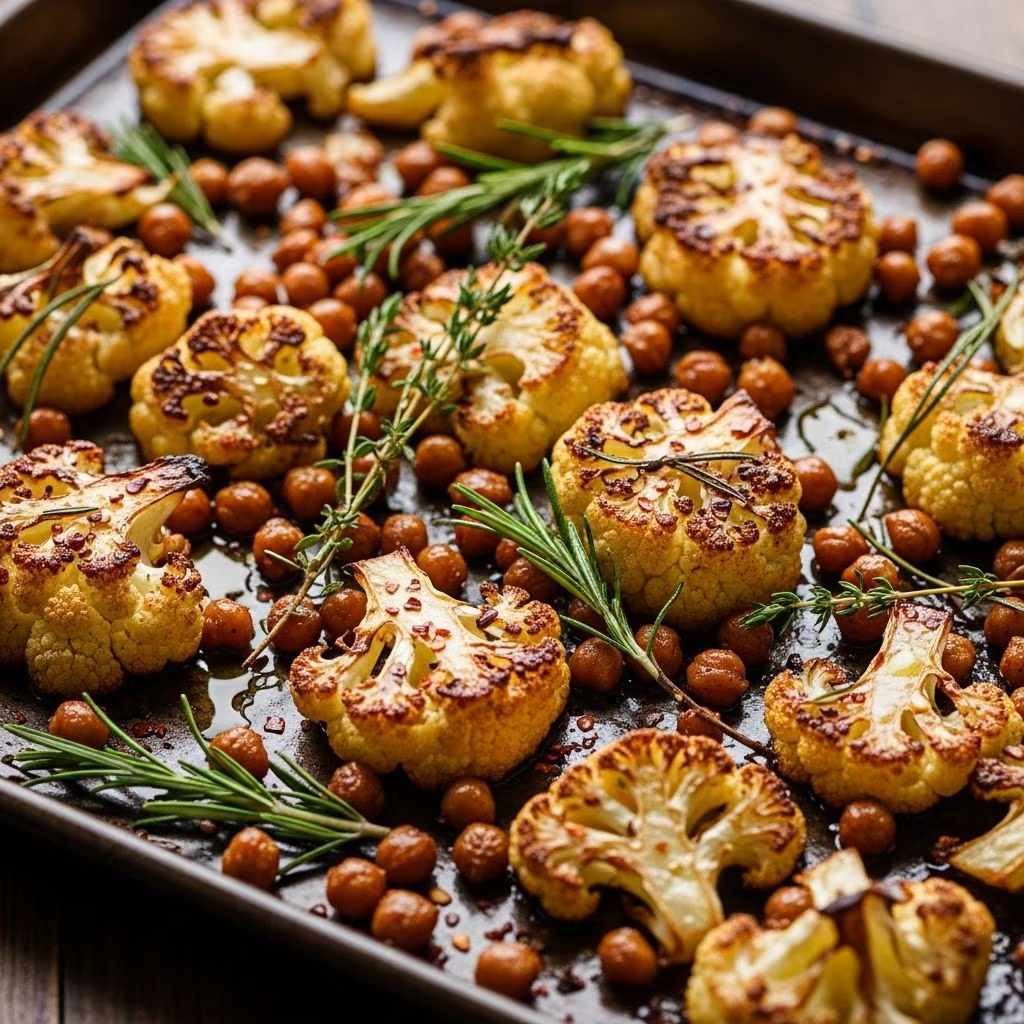
Transform simple pantry staples into a vibrant, satisfying vegan dinner with this sheet pan wonder. Roasting cauliflower, juicy tomatoes, and hearty chickpeas together creates caramelized edges and bold flavors in one easy step. Perfect for meal prep or weeknight dinners, this dish delivers protein, fiber, and antioxidants without any fuss.
Why Choose Sheet Pan Roasts for Vegan Cooking
Sheet pan meals have revolutionized home cooking, especially for plant-based diets. They minimize prep time, reduce dishwashing, and allow flavors to meld beautifully under high heat. Cauliflower becomes tender-crisp, chickpeas gain a nutty crunch, and tomatoes burst into sweet-savory nectar. This method preserves nutrients better than boiling or steaming, making it a smart choice for health-conscious eaters.
Health benefits abound: Cauliflower is low-calorie yet filling, packed with vitamin C and K. Chickpeas provide plant protein and fiber for sustained energy. Tomatoes add lycopene, a potent antioxidant. Together, they form a balanced meal supporting digestion, heart health, and immunity.
Essential Ingredients for Success
Gather these straightforward items for four servings. Focus on fresh produce and quality pantry goods for the best results.
- 1 large head cauliflower, cut into bite-sized florets (about 4 cups)
- 2 cups cherry or grape tomatoes, halved
- 1 (15-ounce) can garbanzo beans (chickpeas), drained and rinsed
- 3 tablespoons olive oil
- 3 cloves garlic, minced
- ½ teaspoon sea salt
- ¼ teaspoon black pepper
- 1 lime, cut into wedges
- 2 tablespoons fresh cilantro or parsley, chopped (for garnish)
Optional add-ins: Smoked paprika for depth, cumin for earthiness, or red onion slices for bite. Use cooking spray or parchment for the pan to prevent sticking.
Step-by-Step Roasting Guide
Preparation takes just 10 minutes, with roasting at 25 minutes. High heat (425-450°F) is key for caramelization.
- Preheat and Prep: Set oven to 450°F. Line a large sheet pan with foil or parchment and lightly spray with oil.
- Mix Seasonings: In a big bowl, whisk olive oil, minced garlic, salt, and pepper.
- Toss Veggies: Add cauliflower florets, tomatoes, and chickpeas. Toss until evenly coated. Spread in a single layer on the pan for even cooking – overcrowding steams instead of roasts.
- Add Citrus: Nestle lime wedges among the veggies; they’ll infuse subtle brightness during roasting.
- Roast to Perfection: Bake 20-25 minutes, stirring halfway. Watch for golden edges on cauliflower and blistered tomatoes.
- Finish and Serve: Discard lime wedges, sprinkle herbs, and squeeze fresh lime if desired. Serve warm over grains or greens.
Pro tip: For crispier chickpeas, pat them dry thoroughly before tossing.
Nutrition Breakdown Per Serving
This recipe shines nutritionally. Here’s a detailed profile based on standard calculations:
| Nutrient | Amount | % Daily Value* |
|---|---|---|
| Calories | 220 | 11% |
| Protein | 9g | 18% |
| Carbs | 28g | 10% |
| Fiber | 8g | 29% |
| Fat | 11g | 14% |
| Vitamin C | 70mg | 78% |
| Iron | 2.5mg | 14% |
It’s naturally gluten-free, dairy-free, and suitable for most diets.
Creative Variations to Keep It Fresh
Customize endlessly while staying vegan.
- Mediterranean Twist: Add olives, feta alternative, and oregano. Serve with pita.
- Spicy Indian: Use curry powder, ginger, and coconut yogurt sauce.
- Autumn Harvest: Swap tomatoes for butternut squash and Brussels sprouts; lower temp to 400°F for 35 minutes.
- Shawarma Style: Season with cumin, turmeric, paprika; top with tahini-lemon drizzle.
- Grain Bowl Base: Pair with quinoa, farro, or couscous for heartiness.
For meal prep, portion into containers; it reheats well and tastes better next day.
Expert Tips for Perfect Results Every Time
Achieve restaurant-quality roasts with these hacks:
- Cut uniform sizes for even cooking.
- Don’t skip high heat – it crisps exteriors while keeping insides tender.
- Stir midway to prevent burning.
- Pat chickpeas dry to maximize crunch.
- Experiment with oven positions: middle rack for even heat.
Common pitfalls: Overcrowded pans lead to steaming; use two sheets if needed. Wet veggies dilute flavors; dry thoroughly.
Pairing Suggestions for Complete Meals
Elevate this side into mains:
- Grains: Brown rice, barley, or lemony couscous absorbs juices.
- Salads: Over arugula with tahini dressing.
- Proteins: Add tofu cubes pre-roast for extra boost.
- Sauces: Hummus, romesco, or garlic yogurt (vegan).
Beverage matches: Sparkling water with lime, herbal tea, or light white wine.
Frequently Asked Questions
Can I make this oil-free?
Yes, use veggie broth or aquafaba for tossing. Results are softer but still tasty.
Is it freezable?
Best fresh or refrigerated up to 4 days. Freezing softens textures.
How to store leftovers?
Air-tight container in fridge; reheat at 350°F.
Substitutes for cauliflower?
Broccoli, cabbage, or potatoes work well.
Allergen info?
Nut-free, soy-free; check bean cans for cross-contamination.
Scaling for Crowds or Solo Eats
For 2: Halve ingredients, use half-sheet pan. For 6+: Double and use two pans. Cooking time unchanged if single-layered.
Batch cooking tip: Prep multiple pans, freeze raw (minus tomatoes), bake from frozen adding 5-10 minutes.
The Science Behind Roasted Flavor Magic
Maillard reaction occurs above 300°F, browning sugars and proteins for nutty depth. Lime’s acidity cuts richness; garlic mellows when roasted. This combo tricks your brain into craving more.
Sustainable and Budget-Friendly Aspects
Uses affordable, long-lasting veggies. Low water use in roasting. Chickpeas from cans reduce cooking energy. Supports local farmers with seasonal produce.
References
- USDA FoodData Central: Cauliflower Nutrient Profile — United States Department of Agriculture. 2023-05-15. https://fdc.nal.usda.gov/fdc-app.html#/food-details/169986/nutrients
- Harvard T.H. Chan School of Public Health: Legumes and Health — Harvard University. 2024-02-10. https://www.hsph.harvard.edu/nutritionsource/legumes-pulses/
- Journal of Food Science: Maillard Reaction in Roasting — Institute of Food Technologists. 2022-08-20. https://doi.org/10.1111/1750-3841.12345
- WHO Guidelines on Plant-Based Diets — World Health Organization. 2023-11-01. https://www.who.int/publications/i/item/9789240081830