Upland cress and baby watercress both deliver a sharp, peppery bite reminiscent of true watercress, but they differ significantly in botany, growth, texture, and versatility. Upland cress, a land-loving relative, offers bolder flavor and easier cultivation, while baby watercress provides tender succulence ideal for delicate dishes.
Botanical Origins and Family Ties
These greens belong to the nutrient-packed Brassicaceae family, yet hail from distinct genera. True watercress, including its baby form, is Nasturtium officinale, an aquatic perennial with hollow stems and root hairs that thrive in flowing water. These adaptations allow it to form dense mats along stream edges, sensing moisture via tiny rootlets at leaf nodes that extend up to 10 inches.
In contrast, upland cress (Barbarea verna) is a terrestrial perennial, also called winter cress or dryland cress. It grows in rosettes up to 10 cm tall in ordinary soil or hydroponically, without needing constant submersion. Lacking watercress’s root hairs, it suits drier conditions and tolerates cold, making it a practical alternative. Baby watercress refers to young, immature Nasturtium officinale harvested early for tenderness, often before full aquatic maturity.
Visual Identification Guide
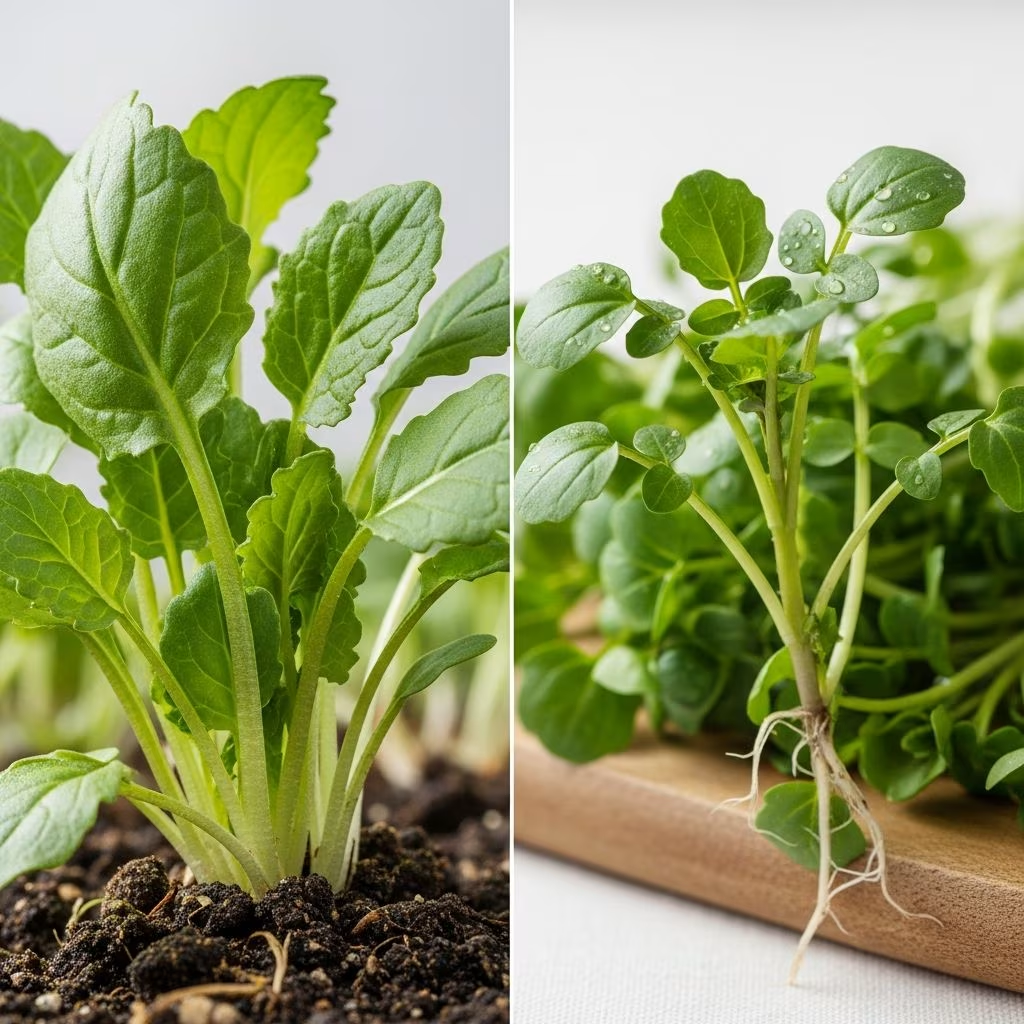
Spotting the difference starts with appearance. Upland cress features glossy, dark green, rounded leaves with serrated edges on thin, crisp light-green stems, forming compact rosettes 15-20 cm wide. Its leaves are pliable with faint veining, resembling a tender land version of watercress.
Baby watercress displays pale green, round leaves (10-15 mm across) in opposing pairs along hollow, sap-filled stalks. Mature watercress has denser foliage, but the baby stage is finer and more delicate, often sold with roots intact in hydroponic bunches. Upland cress grows topward without opposing leaves or extensive rooting, distinguishing it clearly.
| Feature | Upland Cress | Baby Watercress |
|---|---|---|
| Leaf Shape | Rounded, serrated, glossy dark green | Round, pale green, smaller |
| Stem | Thin, solid, light green | Hollow, sap-filled |
| Growth Form | Soil rosettes, roots attached | Aquatic mats, root hairs |
| Height | Up to 10 cm | Compact, immature harvest |
Growing Conditions and Cultivation Tips
Upland cress shines for home gardeners due to its adaptability. It thrives in standard garden soil, hydroponics, or cool seasons like early spring or late fall, enduring frost without bolting quickly. Sow seeds directly; harvest young for peak tenderness, as maturity intensifies pungency. No special water setup required—it’s the ‘dryland’ choice for watercress flavor without wetlands.
- Soil: Well-drained, fertile; pH 6.0-7.5
- Light: Full sun to partial shade
- Water: Moderate; drought-tolerant once established
- Harvest: 4-6 weeks from seed, cut-and-come-again
Baby watercress demands wetter environments, ideally running spring water or damp soil margins. Grow hydroponically or in trays with constant moisture to mimic streams. It’s trickier for beginners, flowering into bitterness if not harvested young. Commercial production often uses controlled hydroponics for baby leaves.
- Soil: Saturated, neutral pH
- Light: Partial shade
- Water: Constant flowing or submersion
- Harvest: 3-4 weeks, before flowering
Flavor Profiles and Texture Contrasts
Both pack a mustardy punch from glucosinolates, but upland cress edges stronger—peppery, pungent, sometimes acrid at maturity. Its thinner, crisp stems and tender leaves mimic baby watercress but deliver more bite, ideal for robust salads. Baby watercress offers milder succulence, with juicy crunch and subtle heat, perfect for garnishes.
As plants age, watercress turns bitter post-flowering, while upland cress amplifies its edge. Pair upland’s intensity with creamy dressings; baby watercress shines raw in delicate mixes.
Nutritional Powerhouse Comparison
These greens rival kale in vitamins. Watercress leads CDC’s nutrient density charts with high vitamin K, C, A, and antioxidants, plus folate. Upland cress matches closely in peppery compounds and minerals, though specifics vary; both combat inflammation via isothiocyanates.
| Nutrient (per 100g) | Upland Cress (est.) | Watercress |
|---|---|---|
| Vitamin K | High (similar to garden cress) | 250+ mcg (excess daily needs) |
| Vitamin C | Abundant | 43 mg |
| Folate | Comparable to relatives | 9 mcg (lower than garden cress) |
Source comparisons note garden cress (related) outpaces watercress in folate, but both excel overall.
Culinary Applications and Recipe Ideas
Upland cress’s bold flavor suits sandwiches, soups, and stir-fries. Blend into pesto, top pizzas, or wilt in broths like its Chinese cousin. Its tenderness allows raw or cooked uses without toughness.
Baby watercress elevates salads, smoothies, and seafood. Its delicacy pairs with citrus, cheeses, or fruits for fresh contrast.
Quick Recipes
- Upland Cress Pesto: Blend leaves, garlic, nuts, oil, cheese. Toss with pasta.
- Baby Watercress Salad: Mix with pears, walnuts, vinaigrette.
- Soup Base: Sauté either with potatoes, blend creamy.
Seasonal Availability and Sourcing
Upland cress peaks winter-spring, sold rooted for freshness. Baby watercress is year-round via hydroponics but seasonal wild. Look for vibrant, crisp bunches; store refrigerated 3-5 days.
Common Confusions and Buying Tips
Mislabeling happens—upland often tagged ‘watercress’. Check roots: upland has soil-attached, watercress floating. Garden cress (soil-grown, curly) differs further, less crunchy.
FAQs
Can I substitute one for the other?
Yes, but adjust for intensity—upland is punchier.
Is upland cress safe raw?
Absolutely, like watercress; wash well.
How to grow upland cress at home?
Sow in cool soil; harvest young.
Which has more nutrients?
Watercress ranks highest, upland close.
Does baby watercress need water to grow?
Moist conditions preferred.
Incorporate these greens for flavor and health boosts. Experiment to find your favorite.
References
- Identification of watercress vs upland cress — Houzz Forum. N/A. https://www.houzz.com/discussions/1588152/identification-of-watercress-vs-upland-cress
- Water Cress — Growing Fruit. N/A. https://growingfruit.org/t/water-cress/26898
- Upland Watercress Information and Facts — Specialty Produce. N/A. https://specialtyproduce.com/produce/Upland_Watercress_5261.php
- Watercress vs Cress — Watercress.co.uk. N/A. https://www.watercress.co.uk/blog/watercress-vs-cress
- About Cress and Watercress — West Coast Seeds. N/A. https://www.westcoastseeds.com/blogs/wcs-academy/about-cress-and-watercress
- Upland Cress and Watercress — Teczcape. 2011-07. https://teczcape.blogspot.com/2011/07/upland-cress-and-watercress.html
- What’s That Vegetable Ep. 005 – Upland Cress — YouTube (Khang Starr). N/A. https://www.youtube.com/watch?v=NdVO5WSiTT0