When it comes to iconic Middle Eastern desserts, few dishes command as much reverence and affection as Umm Ali, Egypt’s treasured bread pudding that has graced tables for centuries. This warm, comforting dessert represents more than just a combination of ingredients; it embodies cultural heritage, family gatherings, and the art of simple yet elegant cooking. Whether served at celebrations or intimate family dinners, Umm Ali continues to captivate palates across the globe with its distinctive blend of crispy pastry, velvety cream, and aromatic spices.
The Historical Significance and Origins of Umm Ali
The story of Umm Ali traces back to the twelfth century in Egypt, though its exact origins remain shrouded in folklore and competing narratives that add to its mystique. The name itself, translating to ‘mother of Ali,’ carries different interpretations depending on which account you encounter. Some culinary historians credit the dish to the wife of an Egyptian ruler, while others point to a resourceful woman who prepared this delectable creation for a visiting dignitary, earning her immortal recognition through the dish that bears her name.
What makes the origin story particularly fascinating is how it has evolved across generations and regions. Rather than a single definitive account, Umm Ali’s history reflects the fluid nature of oral traditions in Middle Eastern cuisine, where stories shift and transform while maintaining their essential truth about a dish that transcended social boundaries and became a beloved national treasure.
Understanding the Composition: What Makes Umm Ali Unique
Umm Ali occupies a special place in the dessert world as Egypt’s distinctive interpretation of bread pudding, though it differs significantly from its Western counterparts. Rather than relying on traditional bread cubes, this dessert employs flaky puff pastry, phyllo dough, or crispy croissants as its structural foundation. The pastry layers serve as vehicles for absorbing the luxurious sweet milk mixture, creating a textural complexity that distinguishes Umm Ali from conventional puddings.
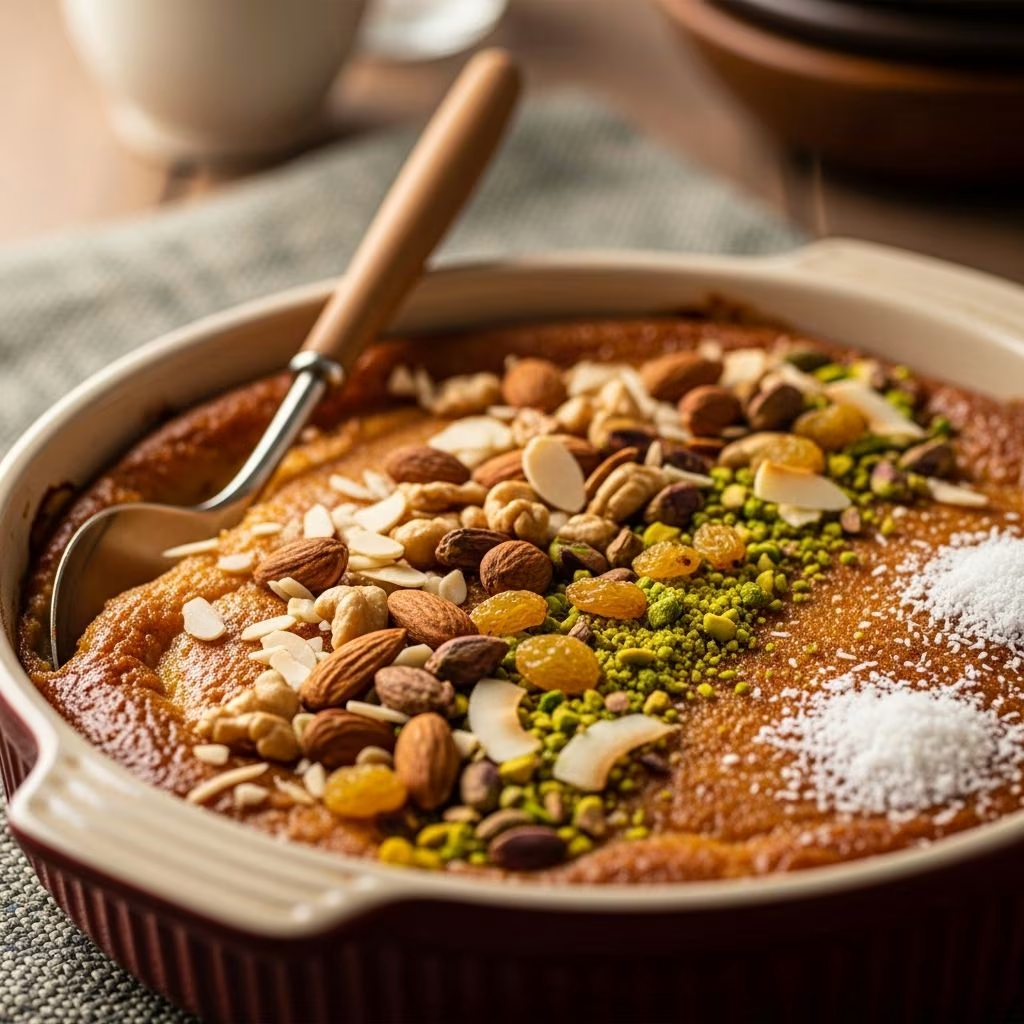
The composition extends beyond pastry, incorporating a carefully curated blend of ingredients that work in harmonious balance. The sweet milk base, infused with warm spices and aromatic essences, penetrates the pastry layers while remaining separate enough to preserve textural contrast. Layers of toasted nuts provide satisfying crunch and depth, while raisins and shredded coconut contribute sweetness and chewiness.
Core Ingredients: Building Blocks of Authenticity
The Pastry Foundation
The choice of pastry significantly influences the final result. Store-bought puff pastry offers convenience and reliability, baking into a golden, flaky base that readily absorbs the milk mixture without becoming mushy. Many cooks prefer this option for its consistency and ease of preparation. Alternatively, phyllo dough provides a more delicate, paper-thin crispness, while croissants contribute buttery richness and natural lamination. Some traditional preparations utilize stale bread torn into manageable pieces, honoring the dish’s humble origins as a method for repurposing pantry staples.
The Milk Mixture
The soul of Umm Ali lies in its sweetened milk base, which transforms ordinary pastry into something extraordinary. Many contemporary recipes combine whole milk with evaporated or condensed milk, creating a richer consistency than milk alone. This combination provides both creaminess and depth, with the condensed milk adding subtle caramel notes that elevate the overall flavor profile.
Aromatic Spices and Flavorings
Traditionally, Umm Ali features cardamom as its signature spice, with a few threads of saffron adding color and sophisticated flavor. Vanilla extract provides foundational sweetness and aromatic warmth, though some recipes incorporate rosewater for a distinctly Middle Eastern character. These elements work together to create a sensory experience that extends beyond mere sweetness.
Nuts and Dried Fruits
A variety of nuts contributes both nutritional value and textural complexity. Slivered almonds, pistachios, pine nuts, and hazelnuts are common choices, either used individually or combined according to personal preference and availability. Raisins or sultanas provide chewy bursts of natural sweetness, while desiccated coconut adds tropical notes and pleasant chewiness.
Preparation Methods: From Concept to Table
Preparing the Pastry
Begin by preheating your oven to 350°F and preparing your baking dish with light greasing. If using puff pastry sheets, bake them according to package directions until golden and crispy, then allow them to cool slightly before breaking into manageable pieces. This preliminary baking step ensures the pastry maintains its structure during the milk-soaking phase rather than becoming completely saturated.
Creating the Milk Mixture
In a medium saucepan, combine your chosen milk base with sugar, stirring over medium-high heat until the sugar dissolves completely, typically requiring about three minutes. Add your spice selections—cardamom powder, saffron strands, and vanilla extract—creating an aromatic foundation. Some recipes incorporate cinnamon or nutmeg for additional warmth. Bring the mixture to a simmer, then remove from heat to cool slightly before using.
Assembling the Layers
Layer construction follows a simple yet deliberate pattern. First, distribute roughly half of your pastry pieces across the bottom of your prepared baking dish. Follow with half of your mixed nuts and dried fruits, creating an even distribution. Pour half of the warm milk mixture over this layer, ensuring the pastry becomes saturated. Repeat with remaining pastry pieces, nuts, fruits, and milk mixture, creating visual balance and consistent texture throughout.
The Final Touch and Baking
Crown your assembled pudding with a layer of whipped cream or additional condensed milk mixture, creating a luxurious surface that will turn golden brown during baking. Bake for 30 to 35 minutes, or until the top achieves a beautiful golden-brown color and the filling bubbles around the edges. Some recipes call for finishing under the broiler with a dusting of dark brown sugar for enhanced caramel flavor and visual appeal.
Ingredient Flexibility: Making It Your Own
Pastry Variations
| Pastry Type | Characteristics | Preparation Notes |
|---|---|---|
| Puff Pastry | Flaky, golden, buttery | Bake first, then break into pieces |
| Phyllo Dough | Delicate, paper-thin, crispy | Layer and bake before crumbling |
| Croissants | Rich, naturally laminated, tender | Use store-bought, chop directly |
| Stale Bread | Traditional, economical, rustic | Tear into small pieces without baking |
Milk Base Options
While full-fat dairy milk provides traditional richness, plant-based alternatives including coconut milk, almond milk, or oat milk accommodate dietary preferences. Sweetened condensed milk adds depth and subtle caramel undertones, while evaporated milk provides creaminess without excess sweetness. Some cooks experiment with a combination of whole milk and heavy cream for enhanced luxury.
Nut and Dried Fruit Customization
The beauty of Umm Ali lies in its adaptability regarding nuts and dried fruits. While almonds and pistachios dominate traditional recipes, walnuts, cashews, pecans, or macadamia nuts work equally well. For dried fruits, cranberries, apricots, dates, or figs provide alternatives to raisins, each contributing distinct flavor notes and textural properties.
Frequently Asked Questions
Can I prepare Umm Ali in advance?
Yes, you can assemble Umm Ali several hours ahead of baking. Cover the unbaked pudding with plastic wrap and refrigerate until ready to bake. Add approximately 5 to 10 minutes to the baking time if baking from a cold state, ensuring the interior heats through completely.
Is Umm Ali appropriate for vegetarians?
Absolutely. Unlike many Western bread puddings, traditional Umm Ali contains no eggs, making it naturally vegetarian and easily accommodating various dietary preferences when plant-based milk options are selected.
How should I store leftover Umm Ali?
Store covered leftovers in the refrigerator for up to three days. Reheat gently in a low oven to restore the pastry’s crispness, or enjoy at room temperature for a different but equally satisfying texture.
What beverages pair well with Umm Ali?
Traditionally served warm, Umm Ali pairs beautifully with strong Turkish coffee, cardamom-spiced coffee, or traditional mint tea, complementing rather than competing with the dessert’s rich spice profile.
Can I make Umm Ali gluten-free?
Yes, substituting gluten-free puff pastry maintains authenticity while accommodating dietary restrictions. Ensure all other ingredients, particularly spices and milk products, meet your specific requirements.
Serving Traditions and Cultural Context
Umm Ali transcends simple dessert classification in Egyptian culture, functioning as a centerpiece dessert for celebrations, religious holidays, and family gatherings. Its warmth and communal nature make it particularly suited to serving multiple guests, with portions ladled directly from the baking dish into individual bowls. The contrast between the warm pudding and cool whipped cream provides sensory satisfaction that extends beyond taste into the realm of comfort and tradition.
The dessert’s accessibility—requiring no specialized skills or exotic ingredients—has contributed to its enduring popularity across socioeconomic boundaries, remaining equally at home in formal dining settings and casual family meals.
Conclusion: A Timeless Dessert Worth Discovering
Umm Ali represents far more than a mere compilation of pastry, milk, and nuts. It embodies centuries of culinary tradition, cultural pride, and the simple human pleasure derived from sharing something warm and delicious. Whether you follow a traditional recipe precisely or adapt it to personal preferences, preparing Umm Ali connects you to a legacy of Egyptian hospitality and culinary excellence. The next time you seek a dessert that delivers both sophistication and comfort, consider this legendary bread pudding—a choice that honors tradition while celebrating the universal language of exceptional food.
References
- Umm Ali – Caroline’s Cooking — Caroline’s Cooking. Accessed April 2026. https://www.carolinescooking.com/umm-ali/
- Umm Ali Recipe with Croissants — Cook’s Hideout. Accessed April 2026. https://www.cookshideout.com/umm-ali
- Umm Ali Recipe | Egyptian Dessert — My Cooking Journey. Accessed April 2026. https://www.mycookingjourney.com/umm-ali-egyptian-dessert/
- Umm Ali (Egyptian Bread Pudding) — The Mediterranean Dish. Accessed April 2026. https://www.themediterraneandish.com/umm-ali-egyptian-bread-pudding/
- Umm Ali (Egyptian Bread Pudding) — Hungry Paprikas. Accessed April 2026. https://www.hungrypaprikas.com/umm-ali/