Pumpkin soup represents one of autumn’s most beloved culinary traditions, embodying warmth, comfort, and seasonal sophistication in a single bowl. Beyond its simplicity lies a depth of technique and ingredient understanding that separates adequate soup from truly exceptional bowls that linger in memory. This comprehensive guide explores the fundamentals of pumpkin soup creation, from ingredient selection through advanced flavor development strategies.
Understanding Your Pumpkin Selection
The foundation of superior pumpkin soup begins with selecting the right variety of pumpkin. Sugar pie pumpkins and kabocha squash represent the ideal choices for soup preparation, offering higher flesh density and superior flavor concentration compared to decorative pumpkins. Sugar pie pumpkins typically weigh between three and four pounds, providing manageable portions for home cooks while delivering concentrated sweetness and dense flesh that creates naturally creamy soups without excessive thickening agents.
Kabocha squash has gained prominence among experienced cooks for its butternut-like texture and slightly chestnut-forward flavor profile that adds complexity to the final soup. The flesh of kabocha varieties contains less water content than standard pumpkins, resulting in more intensely flavored broths that require less reduction time during cooking.
When selecting fresh pumpkins, choose specimens with unblemished skin, firm texture, and weight that feels substantial for their size. A four-pound pumpkin should feel dense when lifted, indicating optimal flesh development and sugar concentration.
Preparation Methods and Their Impact on Flavor
The approach taken to prepare your pumpkin significantly influences both the final flavor profile and cooking time. Two primary methods dominate contemporary pumpkin soup preparation: the roasting technique and the direct-cooking approach.
Roasting methodology involves halving the pumpkin, removing seeds, coating the flesh with olive oil, and roasting cut-side down at high heat until the flesh develops caramelization and deepened color. This method concentrates sugars through the Maillard reaction, creating richer, more complex flavors with subtle sweetness undertones. Roasted pumpkin soup typically requires less sugar addition and develops more sophisticated taste dimensions than direct-cooking methods.
Direct-cooking methodology involves peeling and cubing raw pumpkin before adding to simmering stock, significantly reducing preparation time. This faster approach preserves brighter, more delicate pumpkin notes and works particularly well when adding aromatic spices or complementary ingredients like curry powder or fresh ginger.
Core Ingredient Foundation
Beyond pumpkin itself, several ingredients contribute essential structure and depth to the finished soup. A quality stock forms the liquid foundation, with vegetable broth preferred by many contemporary cooks for its lighter body and ability to showcase pumpkin flavor without competition. Chicken stock adds savory depth when desired, though vegetable varieties provide cleaner pumpkin expression.
Aromatics—specifically yellow onion and garlic—provide the savory backbone that prevents pumpkin soups from tasting one-dimensional or overly sweet. These vegetables should be chopped or sliced rather than minced, allowing them to break down during cooking and fully integrate into the soup structure.
Fat sources determine the soup’s final mouthfeel and richness. Heavy cream, coconut milk, and half-and-half each deliver different sensory experiences. Heavy cream creates the densest, most luxurious mouthfeel with traditional dairy characteristics. Coconut milk introduces tropical undertones and works particularly well with curry-based flavor profiles. Half-and-half provides moderate richness suitable for health-conscious preparations without sacrificing satisfying texture.
Spice Architecture and Flavor Development
The spice profile chosen determines whether your soup tastes traditionally autumn-forward or explores global flavor territories. Classical Western pumpkin soups typically employ ground nutmeg, cinnamon, and cloves in measured quantities. These warm spices complement pumpkin’s natural sweetness without overwhelming it.
Contemporary recipes increasingly incorporate global spice traditions. Curry-based preparations use ground cumin, coriander, cardamom, and turmeric to create sophisticated, warming profiles. The combination of these spices creates complexity that engages multiple taste receptors and provides depth that prevents palate fatigue during consumption.
Fresh ginger adds sharpness and brightness that counterbalances sweetness, while cayenne pepper provides subtle heat that energizes flavor without creating obvious spiciness. Apple cider vinegar contributes acidity that brightens the overall profile and amplifies other flavors through chemical enhancement.
Cheese additions like gruyere create umami depth and contribute subtle nuttiness that elevates the soup beyond simple vegetable preparations. The cheese should be added off-heat and stirred until completely melted and emulsified throughout the soup.
Cooking Technique and Timing
The cooking process dramatically influences texture and flavor intensity. Standard cooking approaches involve bringing pumpkin and stock to a boil, then reducing heat to maintain a gentle simmer. This prevents rapid evaporation while allowing thorough cooking of the pumpkin flesh.
Cooking duration varies based on pumpkin preparation method. Roasted pumpkin pieces require approximately fifteen to twenty minutes of simmering to fully soften and release their essence into the broth. Raw, cubed pumpkin typically requires thirty to thirty-five minutes to achieve sufficient tenderness for blending.
Temperature control during the final stages prevents cream separation and texture degradation. Once dairy elements are incorporated, soups should be maintained at gentle heat without returning to boiling, as excessive heat causes cream to separate and creates grainy, unpleasant texture.
Achieving Ideal Texture Through Blending
The transition from chunky components to silky-smooth consistency determines the soup’s appeal and perceived quality. Immersion blenders offer convenience and control, allowing cooks to reach desired consistency while maintaining heat in the pot. This tool enables gradual texture adjustment, stopping at the preferred point between partially chunky and completely smooth.
Traditional blender processing requires transferring soup in batches, allowing controlled cooling and reducing splash risk. Food processors work similarly, though they may require more batching due to smaller capacity. The advantage of batch processing lies in the ability to create custom textures within a single pot—some cooks prefer leaving small pumpkin chunks suspended in smooth cream for textural interest.
Over-blending can develop gummy, unpleasant textures as air incorporation becomes excessive. Most superior pumpkin soups achieve a velvety consistency through moderate blending that fully incorporates solid elements without introducing excessive air.
Flavor Customization and Variation Strategies
The basic pumpkin soup formula serves as an excellent foundation for numerous creative variations that maintain core appeal while exploring different flavor territories.
- Curry-Inspired Version: Incorporate ground cumin, coriander, turmeric, and cardamom. Substitute coconut milk for heavy cream and finish with fresh cilantro and lime juice for brightness.
- Thai Red Curry Direction: Sauté red curry paste in oil before adding other ingredients. Use coconut cream rather than regular cream and garnish with fresh herbs and crispy shallots.
- Traditional Autumn Profile: Emphasize ground nutmeg, cinnamon, and cloves while maintaining cream and subtle sweetness from natural pumpkin sugars.
- Sophisticated Umami Version: Add gruyere cheese and white miso paste for deep savory undertones that balance sweetness.
- Wellness-Focused Preparation: Use vegetable broth exclusively, substitute half-and-half for heavy cream, and incorporate ginger and turmeric for anti-inflammatory properties.
Garnish Strategies and Serving Suggestions
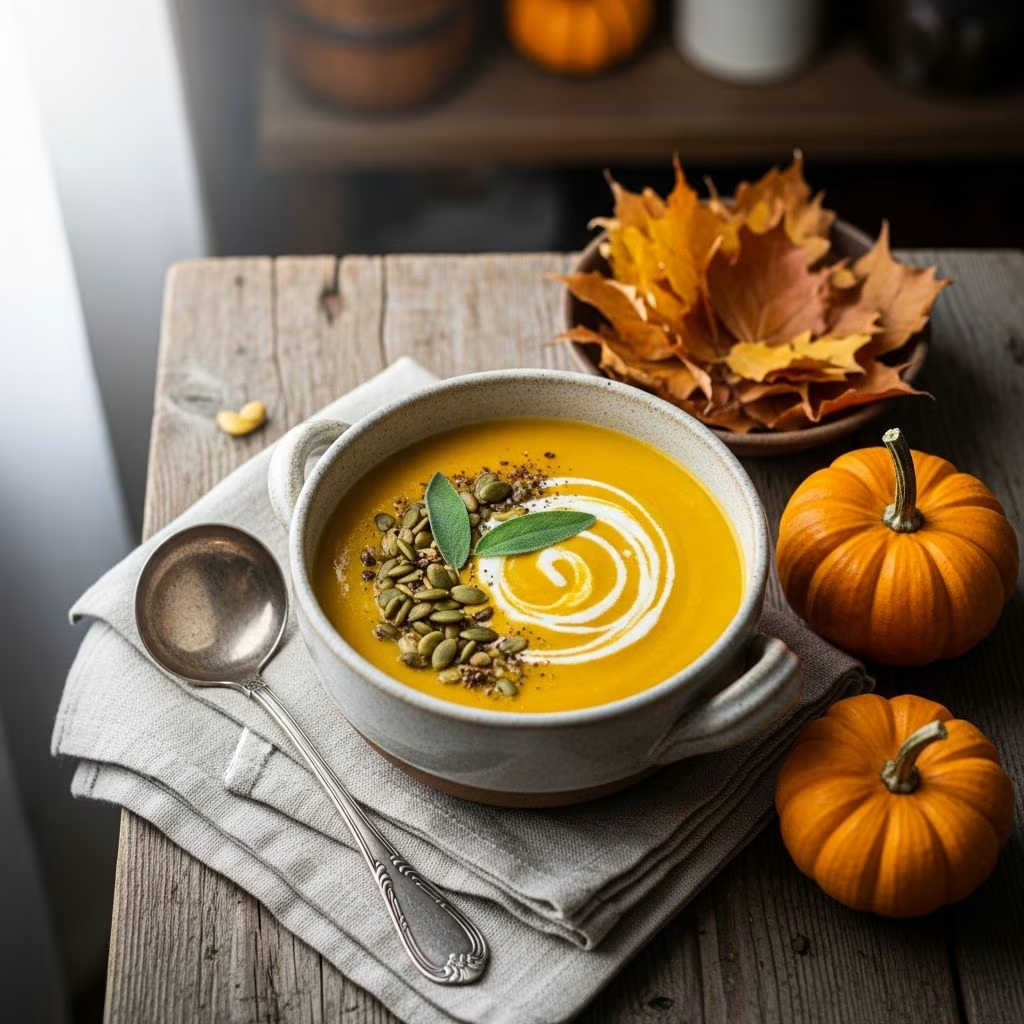
Superior garnishes transform soup from simple sustenance to impressive presentation. Toasted pumpkin seeds (pepitas) add crunch and visual interest while echoing the primary ingredient. Crispy bacon pieces introduce smoky depth that complements pumpkin’s sweetness. Homemade croutons provide textural contrast and absorb surrounding flavors while remaining structurally intact.
Fresh chives offer delicate onion notes that enliven each spoonful, while fried sage leaves contribute herbal complexity. Toasted nuts—particularly pecans or walnuts—add richness and crunch that encourages varied chewing textures. A drizzle of infused oil, such as herb-infused or chili-infused varieties, adds visual elegance and flavor dimension.
Cream dollops provide visual contrast and temperature play when serving hot soup, creating textural interest through cold cream against warm broth. Microgreens and edible flowers elevate presentation for special occasions.
Storage, Make-Ahead, and Reheating Considerations
Pumpkin soup develops deeper, more integrated flavors after resting, making it an excellent candidate for advance preparation. Properly stored soup maintains quality for four to five days in sealed refrigerator containers. The flavors actually improve slightly during the first day as ingredients continue to meld and exchange essence.
Freezing is practical for longer storage, with soup maintaining excellent quality for two to three months when frozen in airtight containers or bags. Leave headspace for expansion, and consider freezing without cream additions, stirring these in after thawing and reheating for superior texture preservation.
Reheating should proceed gently over medium-low heat, stirring occasionally to ensure even temperature distribution. Rapid reheating can cause cream separation. Adding small amounts of stock or water compensates for any evaporation that occurs during storage and reheating.
Nutritional Profile and Health Considerations
Pumpkin contributes significant nutritional value to soup preparations. Rich in beta-carotene and vitamins A and C, pumpkin provides antioxidant benefits alongside fiber content that supports digestive health. The vegetable’s natural sweetness allows soups to achieve satisfying taste without added sugars.
Dairy additions contribute calcium and protein, creating more nutritionally complete meals. Plant-based cooks can substitute coconut milk or cashew cream, maintaining creamy texture while aligning with dietary preferences.
Frequently Asked Questions
Can I use canned pumpkin puree instead of fresh pumpkin?
Yes, canned pumpkin puree offers convenience and consistency. Use approximately one cup of canned puree per four-pound fresh pumpkin. Reduce stock slightly since canned puree contains less liquid than fresh versions. The flavor will be slightly less complex than fresh preparations, but still satisfying and significantly faster to prepare.
How do I prevent my soup from becoming too thick?
Control thickness by adjusting stock quantity during cooking or adding additional broth during the blending process. Remember that soup continues to thicken slightly as it cools. Start with less stock than you think necessary, knowing you can always add more without compromising flavor, whereas thinning overly concentrated soup dilutes taste.
Why does my soup taste too sweet?
Balance sweetness by adding acidic elements like apple cider vinegar or fresh lemon juice. Umami-rich ingredients like miso paste or additional cheese counter excessive sweetness. Toasted spices like cumin contribute savory complexity that distracts from sweetness perception.
Can pumpkin soup be made dairy-free?
Absolutely. Coconut milk, cashew cream, oat cream, or almond milk serve as excellent dairy replacements. Coconut milk creates the richest texture most similar to cream-based versions.
How far in advance can I prepare pumpkin soup?
Pumpkin soup can be prepared up to five days in advance and refrigerated, with flavor actually improving over the first day. For longer storage, freeze for up to three months. It’s best to freeze soup before adding cream, stirring this in after thawing and reheating.
References
- Classic Pumpkin Soup – The Woks of Life — The Woks of Life. Accessed 2026. https://thewoksoflife.com/pumpkin-soup-recipe/
- Pumpkin Soup Recipe – Love and Lemons — Love and Lemons. Accessed 2026. https://www.loveandlemons.com/pumpkin-soup-recipe/
- Creamy Roasted Pumpkin Soup – Cookie and Kate — Cookie and Kate. Accessed 2026. https://cookieandkate.com/creamy-vegan-pumpkin-soup/
- Pumpkin Soup – RecipeTin Eats — RecipeTin Eats. Accessed 2026. https://www.recipetineats.com/classic-pumpkin-soup/
- Fantastic Pumpkin Soup Recipe from Jacques Pépin — KQED. Accessed 2026. https://www.youtube.com/watch?v=oFYt3-RvgFw