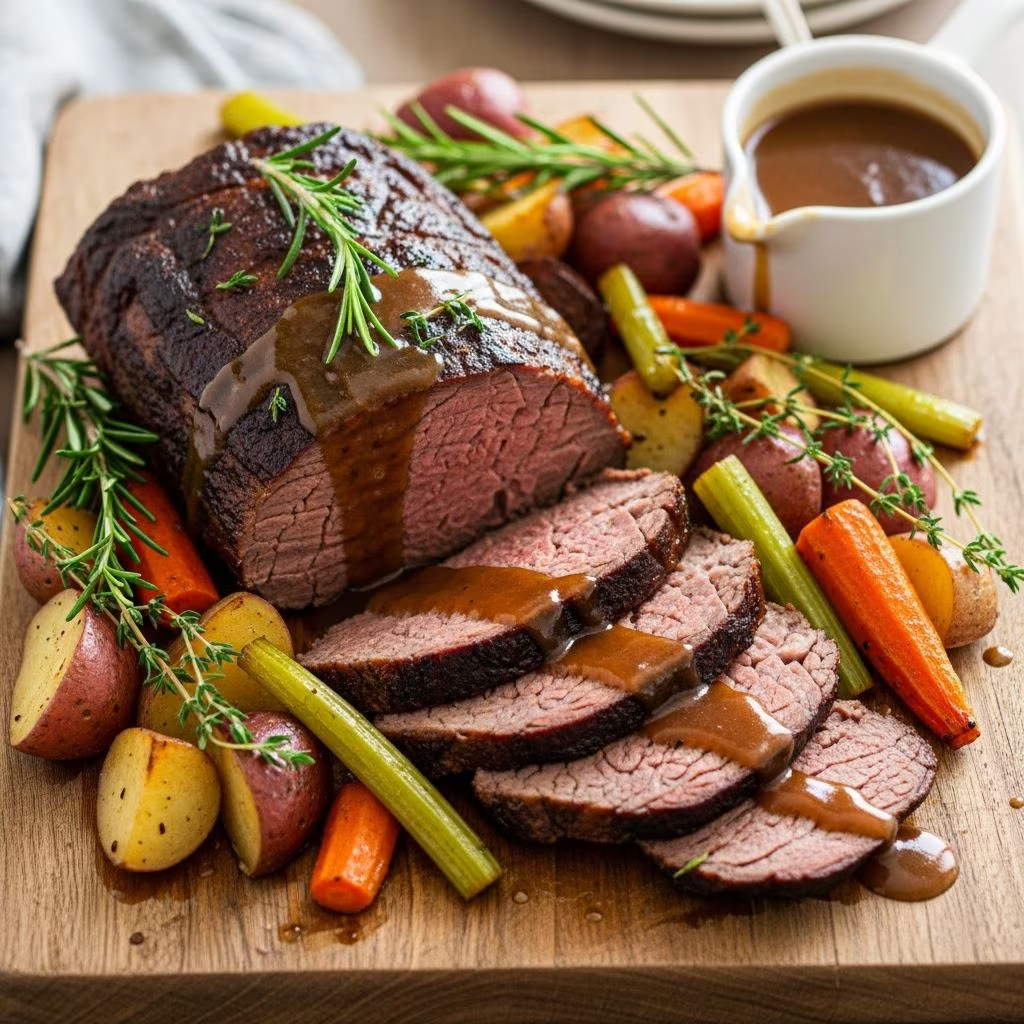
Pot roast stands as a cornerstone of comforting home cooking, transforming tough cuts of beef into succulent, flavor-packed meals through slow braising. This dish, rooted in tradition, brings together simple ingredients like chuck roast, root vegetables, and savory broth to create something extraordinary. Whether you’re feeding a crowd or seeking a cozy weeknight meal, mastering pot roast elevates your culinary repertoire with minimal effort and maximum reward.
Why Pot Roast Remains a Timeless Favorite
The appeal of pot roast lies in its forgiving nature and deep flavors. Braising—a technique where meat is seared then cooked low and slow in liquid—breaks down connective tissues in cuts like chuck roast, resulting in fork-tender results. This method not only tenderizes but infuses the meat with the essence of vegetables, herbs, and stock, creating a self-contained meal. Families have cherished it for generations because it requires little hands-on time, allowing the oven to do the work while filling the home with irresistible aromas.
Nutritionally, pot roast offers balanced protein from beef paired with fiber-rich vegetables. A typical serving provides essential nutrients like iron, vitamin A from carrots, and potassium from potatoes, making it a wholesome choice amid busy lifestyles.
Selecting the Ideal Beef Cut for Perfection
Choosing the right beef is crucial for success. **Chuck roast** reigns supreme due to its marbling—those intramuscular fat pockets that melt during cooking, ensuring juiciness. Aim for a 3- to 4-pound piece with even thickness for uniform cooking. Look for bright red meat with white fat flecks; avoid cuts that are overly lean or grayish.
Alternatives include brisket for a smokier profile or bottom round for leaner options, though these may require longer cooking. Grass-fed beef adds a robust flavor but can be less tender, so adjust braising time accordingly. Always source from reputable butchers for freshness and quality.
Essential Ingredients for a Flavorful Base
Great pot roast starts with quality components. Here’s a breakdown:
- Beef chuck roast (3.5-4 lbs): The star, providing richness.
- Olive oil (2 tbsp): For searing to build fond (those browned bits of flavor).
- Aromatics: 1 julienned yellow onion, 2 sliced leeks (whites and light greens), 6 minced garlic cloves.
- Liquids: 1 cup red wine (for deglazing), 6 cups beef stock, 3 tbsp tomato paste.
- Herbs: 2 bay leaves, 8-10 thyme sprigs, 8-10 parsley stems.
- Vegetables: 2 lbs baby Yukon potatoes, 6-10 carrots (2-inch pieces), 4 celery ribs (2-inch pieces), 2 parsnips (2-inch pieces), 1 rutabaga (1-inch cubes).
- Finishers: 1/2 recipe beurre manié (butter-flour paste for thickening), Worcestershire sauce, 1 tbsp red wine vinegar, salt, and pepper.
These elements create layers: acids brighten, umami deepens, and starches absorb juices.
Step-by-Step Guide to Braising Success
Follow these precise steps for restaurant-worthy results.
- Prep the beef: Generously salt all sides. Place on a wire rack over a baking sheet, uncovered, in the fridge for 12-48 hours. This dry-brining draws out moisture for better browning and seasoning penetration.
- Sear the meat: Pat dry, season with pepper. Heat oil in a large Dutch oven over high until smoking. Add beef, reduce to medium, and sear all sides golden (about 8-10 minutes total).
- Build the base: Remove beef. Sauté onions and leeks until softened (5 minutes), add garlic (30-45 seconds). Deglaze with 1/4 cup wine, scraping fond. Stir in tomato paste, cook 2-3 minutes.
- Simmer the braise: Add remaining 3/4 cup wine, stock, herbs, salt, and pepper. Return beef, bring to boil. Cover, transfer to lower oven rack at 325°F for 3.5-4 hours until 200-210°F internal temp and fork-tender.
- Add vegetables: In last 45-60 minutes, nestle in potatoes, carrots, celery, parsnips, and rutabaga. They cook just long enough to soften without mushiness.
- Finish the sauce: Remove solids. Whisk beurre manié into juices, simmer to thicken. Season with Worcestershire and vinegar for balance.
Pro tip: Use a 5-7 quart Dutch oven for even heat distribution.
Vegetable Choices and Timing Tips
Vegetables add color, texture, and nutrition. **Root veggies** like carrots and parsnips hold shape well, while potatoes provide creaminess. Cut uniformly (2-inch pieces) for even cooking. Introduce them late to prevent over-softening—aim for tender-crisp.
| Vegetable | Prep Method | Add Timing | Flavor Note |
|---|---|---|---|
| Carrots | 2″ pieces | Last 45 min | Sweet, earthy |
| Potatoes (Yukon) | Whole baby or halved | Last 45 min | Buttery |
| Parsnips | 2″ pieces | Last 45 min | Slightly nutty |
| Rutabaga | 1″ cubes | Last 45 min | Mildly sweet |
| Celery | 2″ pieces | Last 45 min | Crisp, aromatic |
Experiment with mushrooms or turnips for variety.
Common Mistakes and How to Avoid Them
- Skipping the sear: Builds flavor; don’t rush.
- Overcrowding the pot: Leads to steaming, not braising.
- Low-quality stock: Use homemade or low-sodium for control.
- Rushing cook time: Patience yields tenderness; check temp, not clock.
- Vegetables too early: Results in mush—time precisely.
Storage, Reheating, and Make-Ahead Strategies
Pot roast improves overnight as flavors meld. Cool completely, store in airtight containers in fridge (up to 4 days) or freeze (3 months). Reheat gently on stovetop over low heat, stirring occasionally, or in a 300°F oven covered with foil.
For make-ahead: Braise beef alone, refrigerate, then add fresh veggies before final cook. This keeps everything vibrant.
Creative Variations to Elevate Your Roast
Adapt for seasons or preferences:
- Asian-inspired: Swap wine for soy sauce, add ginger, star anise, bok choy.
- Italian twist: Use crushed tomatoes, oregano, pearl onions, serve over polenta.
- Root beer braise: Replace wine with root beer for sweet depth.
- Vegetarian version: Mushrooms and lentils mimic beef texture.
- Slow cooker method: Sear first, then low 8-10 hours.
Nutritional Profile and Serving Suggestions
Per serving (1/6 recipe): ~500 calories, 40g protein, 25g fat, 30g carbs. Pair with crusty bread to sop juices, green salad for balance, or mashed parsnips.
Frequently Asked Questions
Can I make pot roast without wine?
Yes, substitute with beef broth or grape juice for deglazing; add balsamic for acidity.
What’s the best pot for cooking?
A heavy Dutch oven (enameled cast iron) excels for heat retention.
How do I thicken the gravy?
Beurre manié or cornstarch slurry; simmer gently to avoid lumps.
Is overnight dry-brining necessary?
It enhances flavor but skip if short on time—season well before searing.
Can I use a pressure cooker?
Yes, 60-75 minutes high pressure after searing, natural release.
Pairing Ideas for the Perfect Meal
Complement with red wines like Cabernet Sauvignon or a crisp Chardonnay. Sides: Roasted Brussels sprouts, Yorkshire puddings, or simple peas.
References
- USDA Beef Cooking Guidelines — United States Department of Agriculture. 2023-05-15. https://www.fsis.usda.gov/food-safety/safe-food-handling-and-preparation/meat/pot-roast
- Beef Braising Techniques — National Cattlemen’s Beef Association. 2024-02-10. https://www.beefitswhatsfordinner.com/cooking/how-to/braising
- Nutritional Data for Beef Chuck Roast — USDA FoodData Central. 2025-01-20. https://fdc.nal.usda.gov/fdc-app.html#/food-details/169478/nutrients
- Science of Slow Cooking — Harvard T.H. Chan School of Public Health. 2023-11-08. https://www.hsph.harvard.edu/nutritionsource/food-features/meat/
- Vegetable Cooking Times — University of Nebraska-Lincoln Extension. 2024-06-12. https://food.unl.edu/article/basic-cooking-methods/