Preserving cucumbers through pickling has deep roots in Ukrainian culinary heritage, where garlic and dill create pickles that are crisp, tangy, and bursting with flavor. These versatile condiments elevate simple meals, from borscht to grilled meats, offering a perfect balance of sourness and spice. Whether you opt for natural fermentation or a quick vinegar brine, this guide provides everything needed to craft authentic Ukrainian garlic dill pickles at home.
The Essence of Ukrainian Pickling
Ukrainian pickling emphasizes natural ingredients and time-honored techniques passed down through generations. Cucumbers are transformed using salt, garlic, dill, and sometimes unique additions like grape or horseradish leaves to ensure crunchiness. Fermentation produces probiotics for gut health, while vinegar methods offer faster results. Both approaches yield pickles that maintain their firm texture and robust taste, distinguishing them from softer commercial varieties.
Key to success is selecting small, firm pickling cucumbers, about 3-5 inches long, with bumpy skins that indicate freshness. Avoid waxed supermarket cucumbers, as they resist brine penetration. Harvest from gardens during peak summer for the best results, ensuring they are washed thoroughly to remove any dirt.
Essential Ingredients for Authentic Flavor
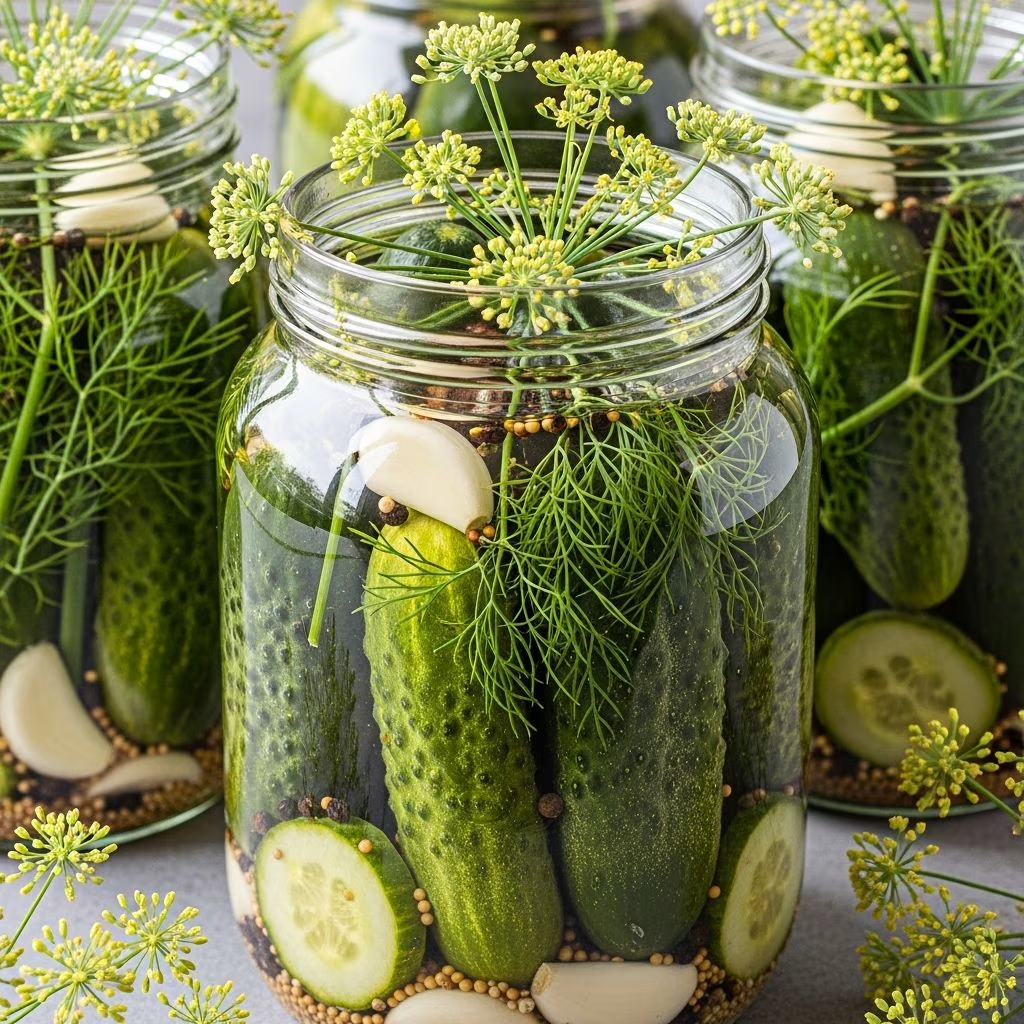
The beauty of Ukrainian garlic dill pickles lies in straightforward, high-quality components. Here’s a breakdown of what you’ll need for a standard 1-liter jar:
- Pickling cucumbers: 10-15 small ones, trimmed at the blossom end to prevent softening enzymes from breaking down pectin.
- Garlic cloves: 4-6, peeled and sliced or halved for intense aroma and flavor infusion.
- Fresh dill: 1-2 flowering heads or generous sprigs, providing seeds and umami depth.
- Pickling salt: 2 tablespoons coarse, non-iodized salt per liter of water to draw out moisture and promote fermentation.
- Optional enhancers: Grape or horseradish leaves for tannins that keep pickles crisp; red pepper flakes for heat; bay leaves or pickling spices for complexity.
For vinegar brines, include white vinegar (4 cups), water (4 cups), and a touch of sugar (1 teaspoon per liter) to balance acidity.
Two Methods: Fermented vs. Quick Refrigerator Pickles
Ukrainian traditions favor lacto-fermentation for depth of flavor, but quick methods suit modern kitchens. Both deliver the signature garlic-dill punch.
Natural Fermentation for Probiotic Power
Fermentation relies on beneficial bacteria converting sugars into lactic acid, creating fizz, sourness, and crunch without vinegar. This method mimics ancestral practices using garden-fresh produce.
- Prepare jars: Sterilize quart jars by boiling or oven-heating at 250°F for 10 minutes.
- Layer aromatics: Place a grape or horseradish leaf at the bottom, add dill head, 2-3 garlic cloves, and optional pepper flakes.
- Pack cucumbers: Stand cucumbers upright, packing tightly to minimize air pockets. Top with more garlic, dill, and a leaf.
- Make brine: Dissolve 2 tablespoons pickling salt and 1 teaspoon sugar in 1 liter boiling water. Cool slightly before pouring over cucumbers, leaving 1-inch headspace.
- Ferment: Loosely lid jars and leave at room temperature (65-75°F) for 3-7 days. Skim foam daily; taste for desired tanginess. Burp jars to release gases.
- Store: Tighten lids and refrigerate for up to 3 months once fermented.
This yields juicy, sour pickles with natural effervescence, ideal for snacking or salads.
Quick Vinegar Brine for Speedy Results
For pickles ready in days, use a hot vinegar brine. This canning-safe method ensures longer shelf life.
| Step | Action | Tips |
|---|---|---|
| 1. Sterilize | Heat jars in 250°F oven; simmer lids. | Keep warm until filling. |
| 2. Pack | Add garlic halves, dill, spices; fit cucumbers tightly. | Push in extra garlic for zest. |
| 3. Brine | Boil 4 cups water, 4 cups vinegar, 1/2 cup salt, optional sugar. | Stir until dissolved. |
| 4. Fill & Seal | Pour hot brine to 1/2-inch headspace; lid immediately. | Finger-tighten rings. |
| 5. Process | Water bath 10-20 minutes based on altitude. | Adjust for 3000+ ft elevation. |
Refrigerate after 24 hours for best flavor; ready in 1 week, lasting months sealed.
Tips for Perfect Crunch and Safety
Crunch is paramount in Ukrainian pickles. Tannins from grape or oak leaves inhibit enzymes; blossom-end trimming is crucial. Use ice water soaks pre-packing to firm cucumbers. Avoid overpacking or loose fits that trap air, leading to mushiness.
Safety first: Always use canning-approved jars. For fermentation, ensure full submersion to prevent mold. Check seals post-processing—depressed lids indicate vacuum seal. Discard if off-odors, sliminess, or bulging occur. USDA guidelines recommend processing times for low-acid foods, though refrigerator methods bypass this for short-term use.
Flavor Variations and Pairings
Customize with Ukrainian twists: Add mustard seeds, coriander, or hot peppers for spice. Ferment with currant leaves for subtle sweetness. Bread-and-butter style incorporates sliced onions and more sugar.
- With meals: Slice into salads, top burgers, or serve with rye bread and butter.
- In recipes: Chop for potato salad, relish, or Bloody Mary garnishes.
- Health boost: Fermented versions provide probiotics, vitamins from garlic and dill.
Common Mistakes and Troubleshooting
Soft pickles: Likely untrimmed blossoms or low tannins—add leaves next batch.
Hollow centers: Overripe cucumbers; select firm, small ones.
Cloudy brine: Normal in fermentation from yeast; strain if needed.
No seal: Reprocess or refrigerate promptly.
Storage and Shelf Life
Sealed canned pickles last 1 year in a cool pantry. Opened jars refrigerate 2 months. Fermented ones keep 3-6 months chilled. Always label with dates.
FAQ
Can I use regular cucumbers?
No, pickling varieties have tougher skins and fewer seeds for better texture.
How long until pickles are ready?
Fermented: 3-7 days; vinegar: 2-3 days in fridge, optimal at 1 week.
Are these pickles safe for canning?
Yes, vinegar brines are acidic enough; follow altitude-adjusted processing.
What substitutes for grape leaves?
Horseradish, oak, or black tea bags provide similar tannins.
Why add sugar to brine?
It balances salt and aids fermentation without sweetness overpowering.
This comprehensive guide empowers you to recreate Ukrainian garlic dill pickles, preserving summer’s bounty with authentic flair. Experiment confidently for jars that rival family heirlooms.
References
- Homemade Garlic Dill Pickles — Dish ‘n’ the Kitchen. 2020-08-15. https://dishnthekitchen.com/homemade-garlic-dill-pickles/
- How To Make Quick Dill Pickles – Ukrainian Family Recipe — YouTube (Kitchen Garden). 2023-07-20. https://www.youtube.com/watch?v=W2S3abVewAs
- Spicy Garlic Dill Pickles — At the Immigrant’s Table. 2022-05-10. https://immigrantstable.com/spicy-garlic-dill-pickles/
- Ohirok – Ukrainian Garlic and Dill Pickles – Workshop — YouTube (Capital Ukrainian Festival). 2021-09-05. https://www.youtube.com/watch?v=06H4hHDNNr8
- Ukrainian Garlic Dill Pickles — Pickle Addicts. 2023-01-12. https://www.pickleaddicts.com/blog/ukrainian-garlic-dill-pickles