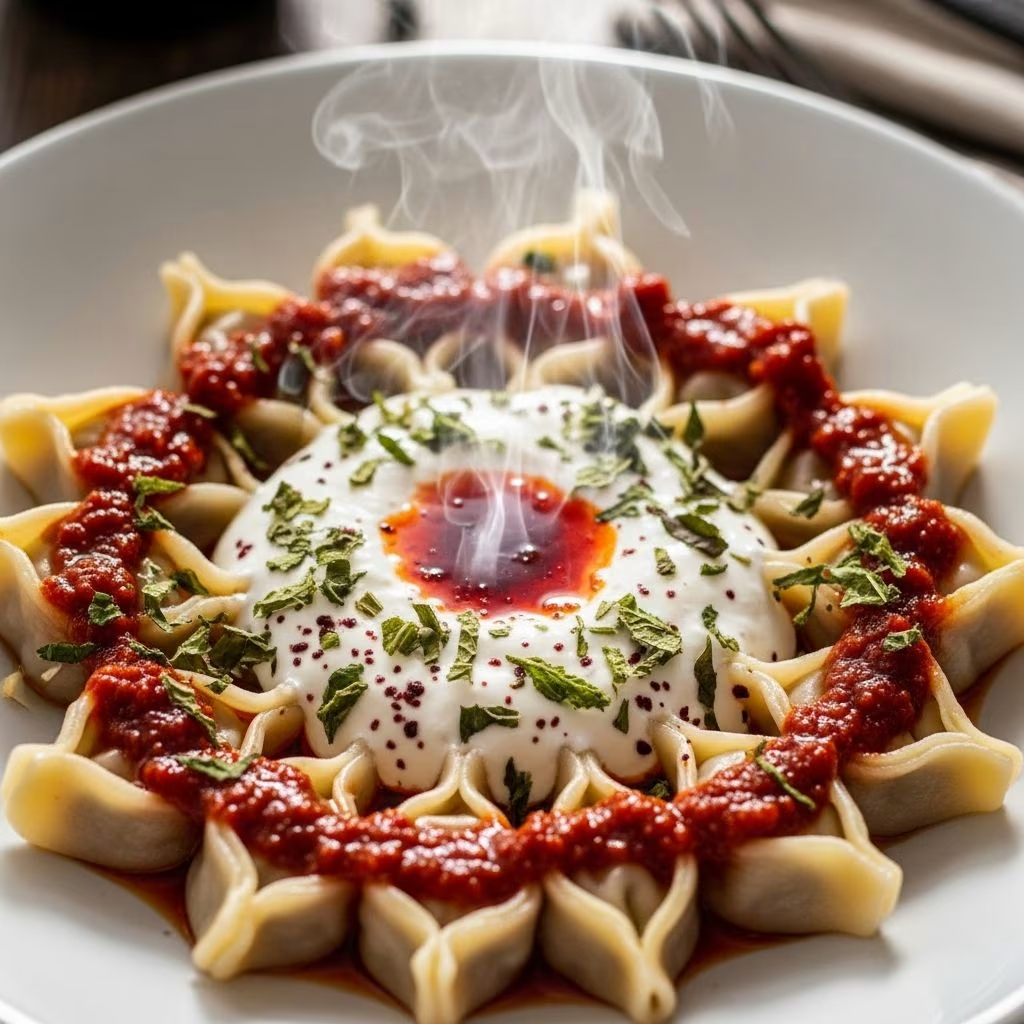
Turkish manti are petite, flavorful dumplings that embody the heart of Anatolian culinary tradition. These bite-sized treasures feature a thin, elastic dough enveloping a savory meat filling, then finished with creamy garlic yogurt and aromatic spiced oils. Unlike larger dumplings from other cuisines, manti’s diminutive size—often smaller than a pencil eraser—demands patience but rewards with bursts of flavor in every morsel.
The Cultural Roots of Manti
Manti trace their origins to Central Asian nomads who carried stuffed pasta variations across trade routes into Turkey. In Turkish homes, especially in Kayseri and other inland regions, manti represents family gatherings and festive occasions. Families compete to make the tiniest versions, with legends of grandmothers producing over a thousand per batch. This labor-intensive dish symbolizes hospitality and skill, often served at weddings or holidays.
Regional twists abound: Kayseri manti are famously minuscule and paired with thick yogurt, while eastern varieties might incorporate lentils or pumpkin. Regardless of variation, the core appeal lies in the contrast of textures—crisp-edged dough, juicy filling, cool yogurt, and warm spice-infused fats.
Essential Ingredients for Perfect Manti
Quality starts with simple, fresh components. Here’s a breakdown of key elements:
- Dough: All-purpose flour (2-3 cups), egg (1), water (1/2 cup), salt (1 tsp), olive oil (1-2 tbsp). The dough must be firm yet pliable for thin rolling.
- Filling: Ground lamb or beef (8-12 oz), grated onion (1 small), parsley (1/4 cup minced), salt, pepper, optional spices like cumin or paprika.
- Yogurt Sauce: Thick Greek-style yogurt (1-2 cups), minced garlic (2-4 cloves), pinch of salt.
- Spiced Oil: Butter or olive oil (1/4 cup), red pepper flakes, dried mint, sumac, tomato or pepper paste.
| Component | Quantity (Serves 4) | Key Tips |
|---|---|---|
| Dough Flour | 2.5 cups | Sift for smoothness; add extra if sticky |
| Meat Filling | 8 oz ground meat | Use fatty meat for juiciness; mix thoroughly |
| Yogurt | 2 cups | Strain for thickness; chill before serving |
| Spices | Aleppo pepper, sumac | Toasted for aroma; adjust heat to taste |
Step-by-Step Dough Preparation
Begin with the dough, the foundation of great manti. Sift flour and salt into a bowl, creating a well for the beaten egg, water, and oil. Gradually incorporate the flour using your fingers until a shaggy mass forms. Transfer to a floured surface and knead vigorously for 5-10 minutes. The result should be smooth, elastic, and slightly firm—like playdough but less sticky.
Wrap in plastic and refrigerate for 30-60 minutes. This resting period relaxes the gluten, making it easier to roll paper-thin sheets essential for delicate manti. Divide into quarters for manageable pieces, keeping unused portions covered to prevent drying.
Crafting the Savory Filling
While dough rests, prepare the filling. Finely grate an onion to release its moisture, which keeps the meat tender. Combine with ground meat, chopped parsley, salt, and pepper. For extra depth, add a pinch of allspice or cinnamon—a nod to Ottoman influences. Mix by hand until sticky and uniform; this ensures even distribution in each tiny dumpling.
Pro tip: Sauté the onion lightly before mixing to mellow its sharpness, though raw versions maintain a fresher bite common in traditional recipes. Let the mixture rest for flavors to meld.
Assembling Manti: The Art of Tiny Dumplings
Roll one dough quarter into a large rectangle, aiming for 1/16-inch thickness—nearly translucent. Cut into 1/2-inch squares using a sharp knife or pastry wheel. Place a scant 1/4 teaspoon of filling in each center. Fold diagonally into triangles, then pinch opposite corners together, sealing edges firmly. Repeat meticulously.
For beginners, larger 1-inch squares ease the process; practice yields the prized pea-sized manti. Arrange on a floured tray; they can be frozen at this stage for up to a month.
Cooking Techniques for Flawless Texture
Two-stage cooking preserves shape and texture. First, par-bake assembled manti on greased trays at 400°F for 8-10 minutes until lightly golden. This sets the dough without fully cooking the filling.
Next, boil in generously salted water. Add manti gently to a rolling boil, reduce to simmer, and cook 6-10 minutes until they float and dough is tender. Drain and toss with olive oil to prevent clumping. Fresh manti cook faster; frozen ones add 2-3 minutes directly from freezer.
Signature Sauces and Toppings
Manti shines with layered sauces. Whip strained yogurt with crushed garlic and salt for a cooling, tangy base. For the spiced oil, melt butter or heat oil, stir in tomato/pepper paste, then bloom red pepper flakes, mint, and sumac for 1 minute until fragrant.
Assemble by plating boiled manti, spooning yogurt generously, drizzling spiced oil, and sprinkling extra herbs. Some add a paprika-infused butter for triple sauce luxury.
Variations to Suit Every Paler
- Vegetarian Manti: Swap meat for mushrooms, spinach, or lentils; season boldly.
- Regional Twists: Kayseri-style with intense yogurt; Urfa with pomegranate molasses.
- Modern Takes: Cheese-filled or seafood versions for fusion appeal.
- Gluten-Free: Use rice flour blends, adjusting water for elasticity.
Storage, Freezing, and Reheating Tips
Uncooked manti freeze beautifully on trays, then bag for 3 months. Par-baked extend shelf life in the fridge to 2 days. Reheat boiled manti by sautéing lightly in oil or steaming. Avoid microwaving to maintain texture. Leftovers? Layer with sauces and bake into a casserole.
Common Mistakes and Pro Tips
Dough too soft? Add flour during kneading. Filling dry? More onion or fat. Dumplings opening? Seal with egg wash. Roll thinner for authenticity—patience pays off.
Scale up for parties: Enlist family for assembly line fun. Tools like ravioli molds speed cutting, but hand-shaping preserves tradition.
Pairing Suggestions and Serving Ideas
Serve manti hot as a main with salad and ayran (yogurt drink). Pair with raki for adults or pomegranate juice for kids. For dessert, follow with baklava to complete the Turkish feast.
Frequently Asked Questions (FAQs)
What makes Turkish manti different from other dumplings?
Its tiny size, garlic yogurt topping, and spiced butter distinguish it from Chinese wontons or Italian ravioli.
Can I make manti ahead of time?
Yes, freeze uncooked for up to 3 months; par-bake before boiling.
Vegetarian substitute for meat filling?
Mushrooms, lentils, or cheese work excellently.
How thin should the dough be?
Almost see-through, about 1 mm thick.
What’s the best yogurt for manti?
Thick, full-fat Greek or strained homemade.
References
- Mantı (Turkish Manti Dumplings Recipe) — The Mediterranean Dish. 2023-05-15. https://www.themediterraneandish.com/manti-turkish-dumplings/
- Manti, Turkish dumplings with ground meat, onion and spices — Ozlem’s Turkish Table. 2013-12-01. https://ozlemsturkishtable.com/2013/12/manti-the-tiny-treasuresturkish-dumplings-stuffed-with-ground-meat-in-garlic-yoghurt-and-spices/
- Turkish Manti: Tiny Lamb Stuffed Dumplings with Three Sauces — Panning the Globe. 2018-11-20. https://www.panningtheglobe.com/turkish-manti/
- Homemade Manti (Turkish Dumplings) — Kenna’s Cooks. 2022-08-10. https://kennascooks.com/homemade-manti-turkish-dumplings/