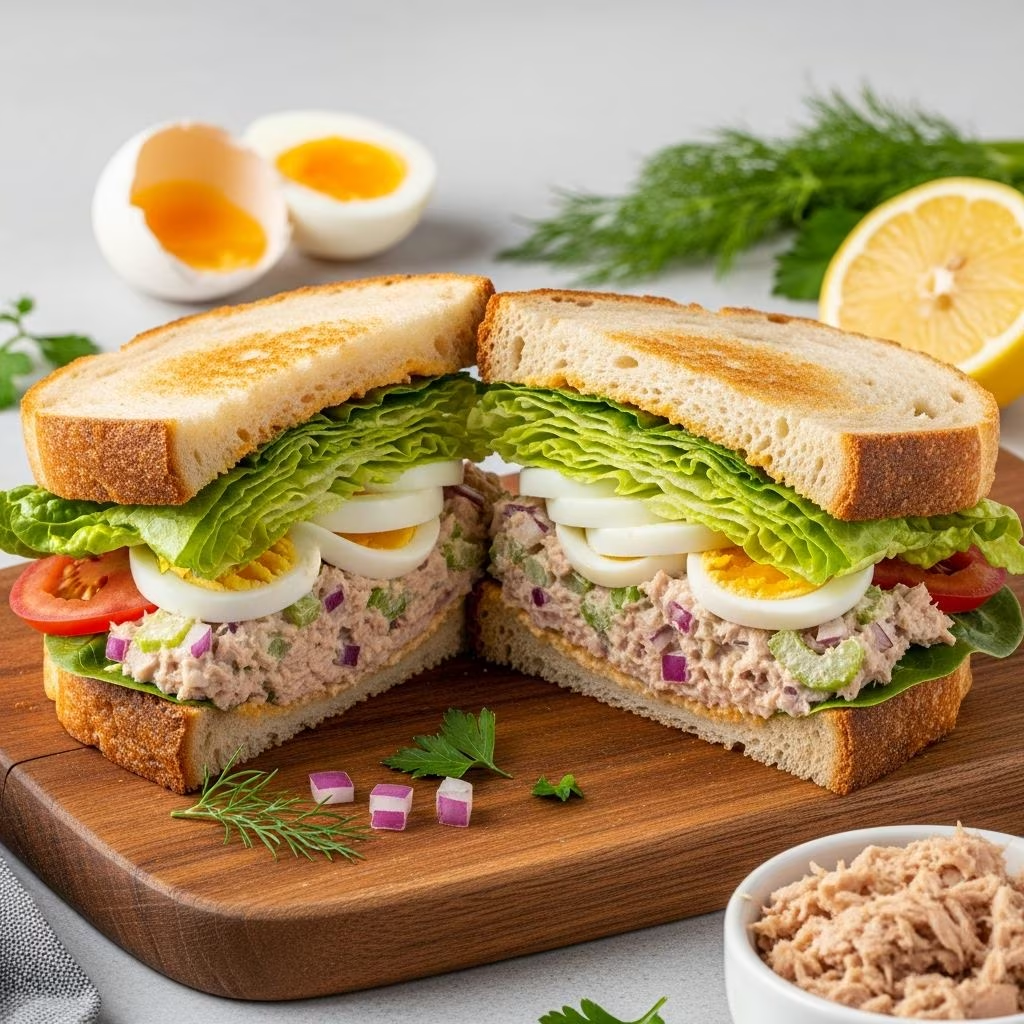
Combining the flaky texture of canned tuna with the creamy richness of hard-boiled eggs creates a sandwich filling that’s both satisfying and versatile. This guide explores everything from basic preparations to gourmet variations, ensuring you can whip up a delicious meal in minutes.
Why Tuna Egg Sandwiches Are a Kitchen Staple
Tuna egg sandwiches stand out for their simplicity and balance of flavors. The mild fishiness of tuna pairs seamlessly with the subtle creaminess of eggs, bound together by mayonnaise or yogurt for a spreadable consistency. They’re ideal for busy days, offering high protein content that keeps you full longer without much effort.
These sandwiches trace their popularity to classic American lunch traditions, evolving with modern twists like added vegetables or spices. Their appeal lies in pantry-friendly ingredients: most kitchens already stock canned tuna, eggs, and basic condiments.
Essential Ingredients for Success
Start with high-quality components to elevate your sandwich. Here’s a breakdown of core elements:
- Canned Tuna: Opt for tuna packed in water for a leaner option; drain thoroughly to avoid sogginess.
- Hard-Boiled Eggs: Use fresh eggs boiled to a firm yet yolk-creamy stage for optimal mashing.
- Mayonnaise or Substitute: Full-fat mayo provides creaminess; Greek yogurt offers a tangy, lighter alternative.
- Flavor Boosters: Dijon mustard, black pepper, oregano, or celery seed add depth without overpowering.
- Bread Choices: Whole-wheat for nutrition, sourdough for tang, or soft white for classic comfort.
Optional add-ins like chopped celery, onions, or lemon juice introduce crunch and brightness.
Step-by-Step Basic Recipe
Prepare this foundational version in under 10 minutes for two servings.
- Boil and peel 2-3 large eggs. Chop roughly or mash with a fork.
- Drain one 5-ounce can of tuna well. Flake it into a bowl with the eggs.
- Mix in 3 tablespoons mayonnaise, 1 teaspoon Dijon mustard, ¼ teaspoon each of black pepper and oregano, and a pinch of salt.
- Stir until combined, leaving some egg chunks for texture.
- Spread on toasted bread slices. Add lettuce or tomato if desired.
This yields about 400 calories per sandwich, with roughly 25g protein.
Nutrition Breakdown and Health Benefits
Tuna egg sandwiches pack nutritional punch. A typical serving provides:
| Nutrient | Amount per Sandwich | % Daily Value* |
|---|---|---|
| Protein | 25g | 50% |
| Healthy Fats | 20g | 25% |
| Calories | 420 | 21% |
| Vitamin D (from eggs/tuna) | 4mcg | 20% |
| Selenium | 60mcg | 109% |
*Based on 2,000-calorie diet. Tuna supplies omega-3s for heart health, while eggs contribute choline for brain function. Using yogurt reduces fat; whole-grain bread adds fiber.
Per USDA guidelines, this combo supports muscle repair and satiety, making it great for weight management when portioned mindfully.
Creative Variations to Try
Customize your tuna egg sandwich for different moods or diets.
Open-Face Style
Toast sourdough, layer with greens, tuna-egg mix, and a fried egg on top. Squeeze lemon for zest. Perfect for lighter meals.
Spicy Devilled Version
Incorporate curry powder, ground coriander, and chopped cilantro into the base. Use Kewpie mayo for umami. Spread on buttered white bread with cucumber ribbons.
Crunchy Celery Boost
Add diced celery, red onion, and celery seed. This version mimics traditional egg salad with extra snap.
Healthy Greek Yogurt Twist
Swap mayo for yogurt, mix in relish and garlic. Serve on whole-wheat for a high-protein, low-cal option.
Each variation maintains the core 5-10 minute prep time.
Pro Tips for Perfect Texture and Flavor
- Drain Tuna Aggressively: Press with a paper towel to remove excess liquid.
- Egg Consistency: Mash partially for varied texture—chunky eggs prevent a paste-like spread.
- Season Gradually: Taste as you go; tuna brands vary in saltiness.
- Bread Prep: Lightly toast to avoid sogginess; butter edges for gourmet touch.
- Make-Ahead: Store filling in fridge up to 2 days; assemble fresh.
Common Mistakes and How to Avoid Them
Steer clear of these pitfalls:
- Over-mixing leads to mush; stop when just combined.
- Undrained tuna waters down flavor—always squeeze dry.
- Skipping acid (lemon/mustard) results in blandness; a splash brightens it up.
- Using old eggs or low-quality tuna compromises taste.
Pairing Suggestions
Elevate your sandwich with sides:
- Fresh fruit like apple slices for contrast.
- Crunchy pickles or chips.
- Simple green salad with vinaigrette.
For drinks, iced tea or sparkling water complements the savory notes.
Meal Prep and Storage Advice
Double the recipe for the week. Portion filling into airtight containers; it lasts 3-4 days refrigerated. Freeze bread separately to maintain freshness. Thaw filling overnight before use.
FAQ
Can I make this vegan?
Yes—use mashed chickpeas instead of tuna and eggs, with plant-based mayo.
Is it safe to eat daily?
Moderation is key due to mercury in tuna; limit to 2-3 times weekly per FDA advice.
What’s the best tuna type?
Albacore for mild flavor, skipjack for affordability.
How do I hard-boil eggs perfectly?
Boil 9-12 minutes, ice bath for easy peeling.
Gluten-free options?
Choose gluten-free bread or lettuce wraps.
Advanced Techniques for Foodies
Experiment with sous-vide eggs for softer yolks or infuse mayo with herbs. Grill the sandwich for a panini effect, adding cheese for meltiness. These tweaks turn a simple lunch into a bistro-worthy dish.
Incorporate global flavors: add sriracha for Asian heat or za’atar for Mediterranean flair.
References
- USDA FoodData Central: Tuna and Egg Nutritional Profiles — United States Department of Agriculture. 2023-05-15. https://fdc.nal.usda.gov/
- FDA Advice on Seafood Consumption — U.S. Food and Drug Administration. 2024-01-10. https://www.fda.gov/food/metals-and-your-food/mercury-levels-commercial-fish-and-shellfish-1990-2012
- Harvard T.H. Chan School of Public Health: Protein Sources — Harvard University. 2023-11-20. https://www.hsph.harvard.edu/nutritionsource/protein/
- American Heart Association: Omega-3 Benefits — American Heart Association. 2024-03-05. https://www.heart.org/en/healthy-living/healthy-eating/eat-smart/fats/fish-and-omega-3-fatty-acids
- CDC Egg Safety Guidelines — Centers for Disease Control and Prevention. 2023-08-12. https://www.cdc.gov/foodsafety/foods/eggs.html