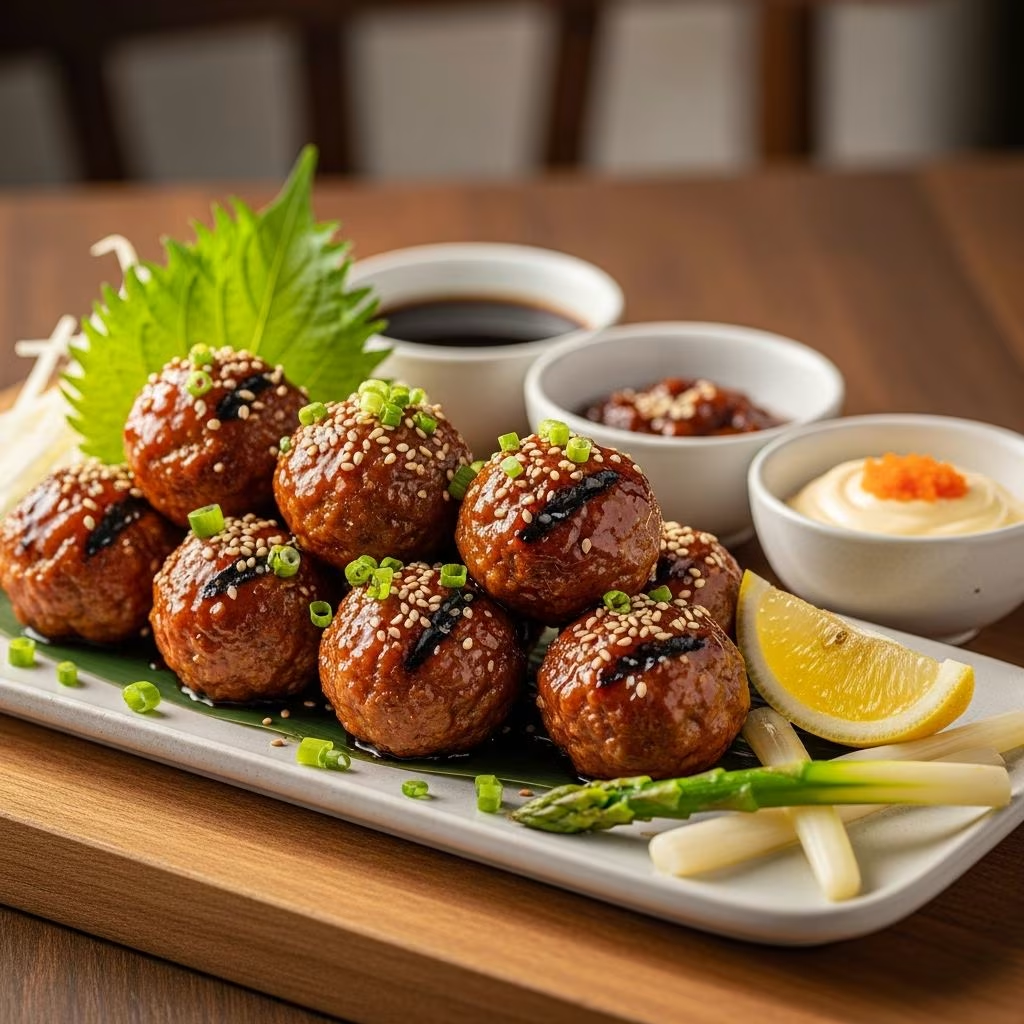
Japanese chicken meatballs, known as tsukune, represent a cornerstone of yakitori cuisine, offering a harmonious blend of tender texture, subtle savoriness, and a glossy tare glaze. These versatile orbs shine whether skewered over charcoal or simmered in broths, captivating home cooks with their simplicity and depth of flavor.
The Allure of Tsukune in Japanese Cuisine
Tsukune embody the essence of yakitori, Japan’s street food tradition of grilled skewers. Unlike denser beef or pork alternatives, chicken-based tsukune prioritize juiciness and bounce, achieved through careful meat selection and binding techniques. Originating from izakayas and festival stalls, they pair seamlessly with rice, noodles, or salads, making them a staple for casual dinners or gatherings.
Their appeal lies in balance: a soft interior contrasts with a caramelized exterior, often lacquered in sweet-savory tare—a reduction of soy, mirin, and sake. This glaze not only enhances taste but also creates an irresistible sheen. For beginners, tsukune demystify meatball-making, proving that finesse trumps force in achieving perfection.
Selecting the Ideal Chicken for Superior Texture
Ground chicken forms the heart of tsukune, but not all mince delivers the desired softness and resilience. Opt for a blend of thigh and breast meat, roughly 50-50, to harness thigh’s richness and breast’s leanness. Thigh mince contributes essential fat, preventing dryness and ensuring a plush mouthfeel.
Commercial ground chicken often lacks uniformity; finer grinds yield smoother surfaces, avoiding the coarseness that leads to cracking during cooking. If unavailable, pulse thigh fillets in a food processor for control over texture. Incorporating 10% chicken fat elevates juiciness further, mimicking professional recipes.
| Chicken Type | Pros | Cons | Best Use |
|---|---|---|---|
| Thigh Mince | Juicy, flavorful | Higher fat content | Primary base (70-90%) |
| Breast Mince | Lean, mild | Can dry out | Blended for structure |
| Added Fat | Boosts moisture | Needs moderation | 10% enhancement |
Essential Ingredients for Authentic Flavor
Beyond chicken, tsukune rely on pantry staples that bind, season, and tenderize. Salt draws out moisture, creating a sticky matrix essential for cohesion. A whole egg acts as a binder, while grated onion and ginger infuse umami and warmth—use ginger juice alone for subtlety.
- Light soy sauce: Provides salinity without overpowering.
- Cornstarch or potato starch: Ensures smoothness and elasticity.
- Sake and mirin: Deglaze and sweeten the mix.
- Miso (optional): Adds fermented depth for variation.
- Panko breadcrumbs: Lightens the texture without heaviness.
These elements transform raw mince into a pliable paste, ready for shaping. Proportions matter: start with 450g chicken, scaling binders conservatively to avoid gumminess.
Step-by-Step Mixing Technique
Mixing demands patience to develop proteins for bounce. Begin with chicken, salt, and fat; knead vigorously until tacky—this “sticky stage” prevents disintegration. Gradually incorporate wet ingredients like egg, grated elements, and soy, folding gently to distribute evenly.
Avoid overmixing, which toughens meat. Test readiness by forming a small patty; it should hold without crumbling. If too slack, add starch incrementally. For miso-enhanced versions, knead post-salting to integrate the paste smoothly.
Innovative Shaping Methods for Perfect Balls
Traditional rolling suits firmer mixes, but tsukune’s softness calls for extrusion. Form a ring with thumb and index finger, squeezing mince through to extrude uniform spheres. Scoop with an oiled spoon for seamless transfer. This yields 3-4cm meatballs, ideal for skewering.
Alternative: Toss between wet palms for bounce, placing directly into a cold oiled pan. Wet hands prevent sticking, ensuring even shapes. Aim for consistency—uneven sizes cook unpredictably.
Pre-Cooking: Boiling for Firmness
Boil shaped tsukune in simmering water for 5-7 minutes until buoyant and firm. This par-cooks, setting structure without drying. Skim foam for clarity, cooking in batches to maintain temperature. Post-boil, shock in ice water optionally for later use, or proceed to grilling.
Grilling and Glazing Mastery
Skewer three meatballs per flat stick for stability. Grill over medium-high heat, basting with tare every flip. Tare recipe: Simmer soy (½ cup), mirin (½ cup), sake (¼ cup), and sugar (2 tbsp) until syrupy, reducing by a third.
Char lightly for smokiness, glazing twice per side. Total cook: 4-6 minutes. Indoor alternative: Broil or pan-sear, flipping meticulously.
Pan-Frying Variation for Juiciness
For stovetop ease, arrange in a cold oiled pan over medium-low. Brown one side 5 minutes, flip, add water, and steam covered 3 minutes. This hybrid yields golden exteriors with steamed interiors, perfect for weeknights.
Crafting the Iconic Tare Sauce
Tare elevates tsukune from good to unforgettable. Combine equal soy and mirin, half sake, and sugar; boil then simmer 4-5 minutes. Brush generously during final cooks for adhesion. Store extras refrigerated for weeks, reheating gently.
Creative Tsukune Variations
Adapt tsukune endlessly:
- Leek-stuffed: Embed chopped negi for crunch.
- Miso-infused: Swap soy for white miso.
- Curry-spiced: Add garam masala for fusion.
- Broth simmered: In dashi for soup bases.
Vegetarian twist: Substitute ground mushrooms or tofu, adjusting binders.
Presentation and Pairing Ideas
Plate skewered tsukune fanned with lemon wedges, shichimi togarashi on side. Pair with chilled sake, cucumber salad, or steamed rice. Garnish with scallions for color pop.
Common Pitfalls and Fixes
| Issue | Cause | Solution |
|---|---|---|
| Dry texture | Lean meat, overcooking | Add fat, boil first |
| Cracking | Poor binding | Knead to sticky |
| Bland flavor | Under-seasoning | Grated aromatics |
Storage and Make-Ahead Tips
Uncooked mix refrigerates 24 hours or freezes portioned. Boiled tsukune keep 3 days chilled, reheating via glaze. Full skewers freeze well, thawing before grilling.
FAQs
Can I use ground turkey for tsukune?
Yes, but thigh-heavy turkey mimics chicken fat best for authenticity.
What’s the role of starch?
It absorbs moisture, promoting smoothness and chew.
How spicy can I make tare?
Add ichimi or togarashi during reduction for heat.
Air fryer possible?
Yes, 180°C/350°F for 8-10 minutes, flipping and glazing midway.
Gluten-free version?
Use tamari and cornstarch; skip panko or sub gluten-free crumbs.
References
- Tsukune (Japanese Chicken Meatballs) – RecipeTin Japan — RecipeTin Japan. 2023-05-15. https://japan.recipetineats.com/tsukune-japanese-chicken-meatballs/
- TSUKUNE! How Japanese Cook Tasty Chicken Meatballs – YouTube — Sushi By Kunihiro. 2023-08-20. https://www.youtube.com/watch?v=eBFsPe7GfzU
- Chicken Meatballs (Tsukune) and The Japanese Pantry — Tara’s Multicultural Table. 2022-11-10. https://tarasmulticulturaltable.com/chicken-meatballs-tsukune/