Trinidadian green seasoning stands as a cornerstone of Caribbean culinary tradition, delivering a burst of fresh, aromatic intensity to dishes across the region. This vibrant herb paste, often simply called “green seasoning,” combines pungent herbs, spicy peppers, and zesty aromatics into a versatile base that elevates everything from grilled meats to hearty stews. Rooted in the lush biodiversity of Trinidad and Tobago, it reflects the island’s fusion of African, Indian, and indigenous influences, creating a flavor profile that’s earthy, spicy, and profoundly fresh.
The Heart of Caribbean Kitchens
In homes and markets throughout Trinidad, green seasoning is more than an ingredient—it’s a daily ritual. Families blend batches weekly, using it to marinate chicken for curry, season fish for bake, or stir into pelau rice for depth. Its freshness distinguishes it from dried spices, preserving the essence of garden herbs that grow abundantly in the tropical climate. This paste’s adaptability makes it indispensable, whether for quick weeknight meals or festive feasts like Diwali or Carnival.
Chefs prize its ability to infuse moisture and flavor without overpowering dishes. A small spoonful can transform bland proteins into juicy, aromatic masterpieces, while its bright green hue signals authenticity and vitality. Unlike commercial sauces, homemade versions allow customization, balancing heat and herbal notes to personal taste.
Core Ingredients Breakdown
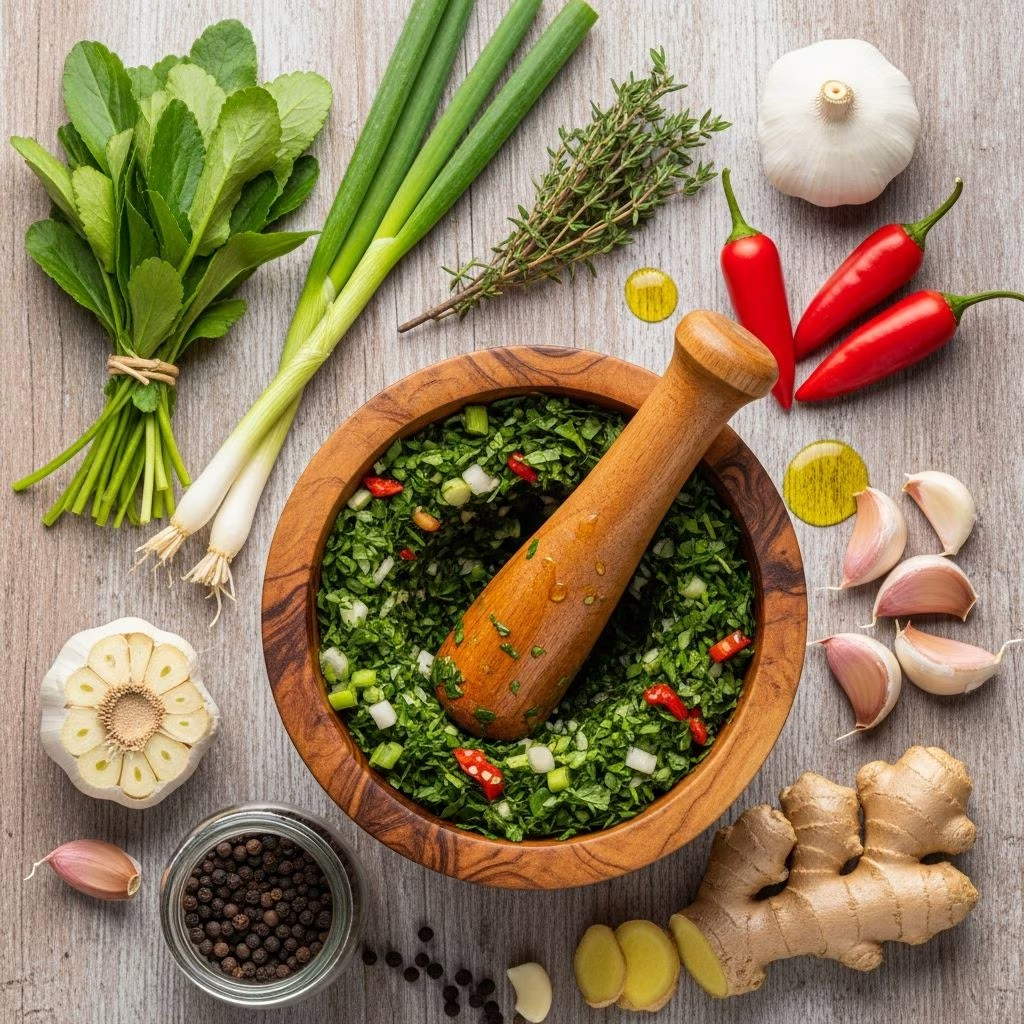
Building a potent Trinidadian green seasoning starts with selecting high-quality, fresh components. The foundation relies on hardy greens and bold aromatics that withstand blending while retaining potency.
- Culantro (Chadon Beni): The star herb, with its intense, cilantro-like punch but earthier depth. Eight to ten leaves provide the signature backbone; substitute cilantro if unavailable, using double the amount.
- Garlic: Ten to fifteen cloves deliver sharp, savory heat that mellows upon cooking.
- Green Onions (Scallions): Four to eight stalks add mild oniony sweetness and freshness.
- Thyme: A tablespoon of fresh leaves or twelve sprigs infuses woodsy, lemony notes.
- Ginger: A one-inch piece grated fine brings warm spiciness and aids digestion.
- Peppers: Scotch bonnet or habanero for fire (one whole or seeded), plus milder bell or pimento peppers for color and sweetness.
- Onion and Celery: Half an onion and two stalks celery contribute crunch and subtle bitterness.
- Acid and Salt: Lime juice or white vinegar (1/4 cup) for brightness; salt to taste.
These elements create synergy: herbs for aroma, alliums for pungency, peppers for heat, and acid for balance. Freshness is key—wilted herbs dull the paste’s vibrancy.
Step-by-Step Preparation Guide
Crafting green seasoning is straightforward, requiring just a blender and sharp knife. This yields about 2 cups, enough for multiple meals.
- Prep Ingredients: Rinse all produce thoroughly. Roughly chop green onions, celery, onion, peppers, and ginger. Peel garlic.
- Layer in Blender: Start with harder items like garlic, ginger, and peppers at the bottom for even blending.
- Add Herbs: Top with culantro, thyme, parsley or cilantro, and green onions.
- Blend in Stages: Pulse initially to break down chunks. Add 1/4 cup water, vinegar, or lime juice gradually to achieve a chunky paste—avoid over-blending to soupy consistency.
- Season and Taste: Incorporate salt. Blend smooth, adjusting acid or heat as needed.
- Store Immediately: Transfer to a clean jar, topping with a thin oil layer to preserve color.
Total time: 15 minutes. Pro tip: Use a high-speed blender for silkier texture; food processors work for chunkier versions ideal in rustic stews.
Customizing Your Blend
No two green seasonings are identical, reflecting personal or regional twists. Adapt based on availability and preference:
| Variation | Key Additions/Substitutions | Best For |
|---|---|---|
| Mild Family Version | Omit hot peppers; add more bell peppers and basil | Kids’ meals, veggie dishes |
| Spicy Island Heat | Whole scotch bonnet + extra ginger | Curries, jerk-style grills |
| Herb-Forward | Extra thyme, oregano, chives | Soups, seafood marinades |
| Vegan Boost | Celery leaves, parsley, lemon zest | Tofu, plant-based stews |
Experiment with local twists: Guyanese versions lean heavier on wiri wiri peppers, while Jamaican blends incorporate more scallion.
Versatile Applications in Cooking
Green seasoning’s magic lies in its multifunctionality. Use 2-4 tablespoons per pound of protein or pot of grains.
- Marinades: Mix with oil for overnight soaks on chicken, fish, or shrimp before grilling.
- Stews and Curries: Sauté first, then build sauces around it for pelau or callaloo.
- Rice and Beans: Stir in during cooking for infused flavor without muddiness.
- Sauces and Dips: Thin with vinegar for a chimichurri-like table condiment.
- Veggies and Tofu: Toss roasted eggplant or pressed tofu in it for Caribbean flair.
In Trinidadian curry chicken, it tenderizes meat while layering flavors. For doubles, a dash enhances channa filling.
Storage and Longevity Tips
Fresh green seasoning lasts 1-2 weeks refrigerated in an airtight jar, topped with oil to prevent oxidation. For longer storage:
- Freezer Method: Portion into ice cube trays; pop out cubes for single-use convenience. Lasts 3-6 months.
- Oil Infusion: Submerge in olive oil for a flavored oil that doubles as cooking medium.
- Drying (Limited): Not ideal, as freshness is key, but dehydrated versions work in pinches.
Signs of spoilage: browning, off odors, or mold. Always sniff before use.
Health Benefits and Nutritional Profile
Beyond taste, green seasoning packs nutrition. Culantro and garlic offer antioxidants fighting inflammation. Ginger aids digestion; thyme provides vitamins C and A. Low-calorie (about 20 per tablespoon), it’s keto-friendly and boosts immunity with allicin from garlic. Peppers deliver capsaicin for metabolism support. Use generously for flavorful, healthful meals.
Frequently Asked Questions
What is the difference between culantro and cilantro?
Culantro has broader leaves and a stronger, more pungent flavor; cilantro is milder and leafier. Both work, but culantro defines authentic Trini taste.
Can I make green seasoning without a blender?
Yes, finely mince by hand for a chunkier paste, though blending ensures even distribution.
Is green seasoning spicy?
Depends on peppers; seed them for mild or use whole for heat. Start small and adjust.
How much to use in recipes?
2 tablespoons per pound of meat; 1-2 for pots of rice or soup. Sauté first to release oils.
Where to find culantro?
West Indian, Latin, or Asian markets; grow from seed for steady supply.
Pairing with Iconic Trinidadian Dishes
Integrate into classics: Marinate pelau chicken overnight. For bake and shark, rub on fish fillets. Elevate macaroni pie by folding in a spoonful. In roti fillings, it binds curry goat or shrimp.
Explore fusions: Green seasoning tacos with jerk-spiced pork or veggie stir-fries for global twists.
References
- How to Make Trinidadian Green Seasoning — Goat Roti Chronicles. 2020-01-15. https://www.goatrotichronicles.ca/trinidadian-green-seasoning/
- Trinidad Green Seasoning Recipe — The Natural Foodie. 2022-05-10. https://www.thenaturalfoodie.com/blog/trinidad-green-seasoning-recipe
- Trinidadian Green Seasoning — GypsyPlate. 2023-08-20. https://gypsyplate.com/trinidadian-green-seasoning/
- Caribbean Green Seasoning Recipe (From Trinidad) — Unpeeled Journal. 2021-11-05. https://unpeeledjournal.com/nardias-trini-green-seasoning-recipe/
- How to Make the Green Seasoning Paste That’s So Unique to Caribbean Cuisine — Caribbean Pot. 2019-03-12. https://caribbeanpot.com/how-to-make-the-green-seasoning-paste-thats-so-unique-to-caribbean-cuisine/