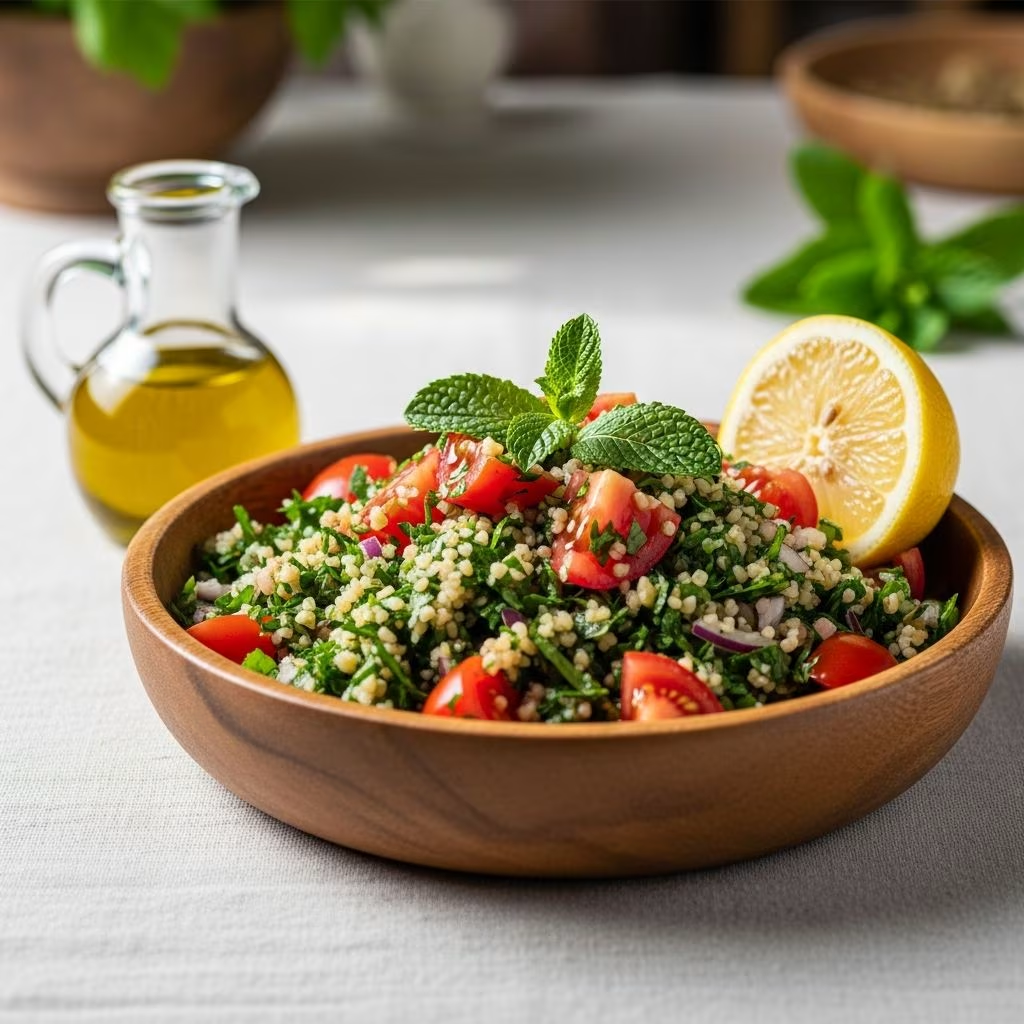
Traditional Lebanese tabbouleh stands out as a refreshing staple in Middle Eastern cuisine, celebrated for its bold herbaceous notes and bright citrus tang. Unlike grain-heavy versions, this salad prioritizes finely chopped parsley as the star ingredient, complemented by ripe tomatoes, onions, mint, and a touch of bulgur wheat soaked to perfection. The dressing—a simple blend of fresh lemon juice and extra virgin olive oil—ties everything together, creating a dish that’s light, vegan, and packed with nutrients.
The Heritage and Appeal of Tabbouleh
Tabbouleh, often called tabouli, traces its roots to the Levant region, particularly Lebanon, where it has been a beloved meze for generations. This parsley-dominant salad embodies the essence of Mediterranean freshness, often served at gatherings alongside grilled meats, hummus, or fresh lettuce leaves for scooping. Its popularity stems from the harmonious balance of textures: the slight chew of bulgur against the crispness of vegetables and the juiciness of tomatoes. Health enthusiasts appreciate its low-calorie profile, high fiber content, and abundance of vitamins from greens.
At its core, tabbouleh is about quality ingredients. The dish shines when made with the freshest produce, emphasizing minimalism to let natural flavors dominate. In Lebanese homes, it’s a point of pride, with families passing down techniques for achieving the perfect chop and seasoning balance.
Essential Ingredients for True Tabbouleh
Gathering the right components is crucial for authenticity. Here’s a breakdown of what you’ll need for about 6-8 servings:
- Parsley: 4 large bunches (about 4-5 cups finely chopped). Opt for flat-leaf Italian parsley for traditional flavor, though curly works well for volume. Remove thick stems and dry thoroughly.
- Fine bulgur wheat: ¼ to ⅓ cup. Use #1 fine grind, which softens quickly without cooking.
- Tomatoes: 4 medium ripe ones, diced small (about 2 cups) and drained to avoid sogginess.
- Onions: 1 small white or red onion, plus 1-2 green onions or scallions, finely minced.
- Fresh mint: ½ to 1 bunch (¼ cup chopped). Essential for its cooling aroma; avoid dried.
- Cucumber (optional but traditional): 1 Persian or small English, finely diced.
- Lemon juice: ½ cup freshly squeezed from 2-3 large lemons. Bottled lacks the vibrancy.
- Extra virgin olive oil: ⅓ cup for richness and silkiness.
- Seasonings: ½-1 tsp salt, pinch of black pepper, optional 7-spice blend (allspice, cinnamon, etc.), or sumac for tang.
This lineup keeps the salad vibrant green and zesty, with bulgur playing a supporting role.
Step-by-Step Preparation Guide
Precision in prep ensures the salad’s signature crunch and flavor. Start the night before if possible for best results.
Prep the greens: Wash parsley and mint in cold water, spin dry, and let air-dry completely (or overnight). This prevents a watery salad.
Chop finely: Use a sharp knife to mince parsley into tiny pieces—no food processor, as it bruises leaves. Aim for confetti-like texture. Chop mint similarly, then scallions, onion, tomatoes, and cucumber. Drain tomato and onion juices in a strainer.
Soak bulgur: Place bulgur in a bowl with half the lemon juice and a pinch of salt. Let sit 10-30 minutes until softened and plumped. No cooking needed.
Season onions: Mix minced onion with 7-spices or pepper for depth.
Combine just before serving: Gently toss all chopped veggies, herbs, soaked bulgur, remaining lemon juice, olive oil, and salt. Taste and adjust— it should be lemon-forward and herbaceous.
Serve immediately with romaine leaves or cabbage for wrapping. The salad holds for 1-2 days refrigerated but is best fresh.
Pro Tips for Restaurant-Quality Results
- Invest in a sharp chef’s knife; consistent fine chops are non-negotiable.
- Drain everything: Soggy tabbouleh is a common pitfall.
- Fresh lemons only—squeeze by hand for oils that enhance flavor.
- Balance acidity: Start with less lemon and add to taste.
- Room temperature serving maximizes flavors; cold mutes them.
Nutrition and Health Benefits
Tabbouleh is a nutritional powerhouse. A 1-cup serving offers roughly 100-150 calories, 5g fiber, vitamin C (over 50% DV from parsley and lemon), vitamin K, and antioxidants from tomatoes. It’s naturally vegan, gluten-light (if using certified bulgur), and supports digestion thanks to bulgur’s prebiotic fiber. Pair with proteins for a complete meal.
| Nutrient | Per Serving (1 cup) | % Daily Value |
|---|---|---|
| Calories | 120 | 6% |
| Fiber | 4g | 14% |
| Vitamin C | 45mg | 50% |
| Vitamin A | 2000 IU | 40% |
| Fat | 9g | 12% |
Values approximate based on standard recipes.
Creative Variations and Substitutions
While purists stick to basics, adaptations abound:
- Grain-free: Quinoa or cauliflower rice.
- Spice it up: Add sumac, za’atar, or pomegranate seeds.
- Protein boost: Chickpeas or feta for non-vegan twists.
- Seasonal: Radishes or bell peppers in summer.
- Large batch: Double greens for parties; holds well.
These keep the spirit alive while suiting modern diets.
Pairing Suggestions for Meze Spreads
Tabbouleh excels in mezze platters. Complement with:
- Grilled kebabs (shish taouk, kofta).
- Creamy dips like baba ganoush or labneh.
- Pita bread or fresh veggies for dipping.
- Chilled yogurt drinks (ayran).
It cuts richness, refreshing the palate.
Frequently Asked Questions
What makes tabbouleh authentic?
Authenticity lies in parsley volume, fine bulgur, fresh lemon, and no overpowering grains.
Can I make it ahead?
Prep ingredients separately; mix 30 minutes before serving to retain crunch.
Flat-leaf or curly parsley?
Both work; flat for tradition, curly for ease and volume.
How to store leftovers?
Air-tight container in fridge up to 2 days; flavors intensify.
Is bulgur necessary?
Traditional yes, but couscous or freekeh substitutes in a pinch.
Conclusion: Elevate Your Table with Tabbouleh
Mastering tabbouleh brings Mediterranean vibrancy home. Its simplicity belies profound freshness—ideal for any occasion. Experiment confidently, always prioritizing quality produce for that wow factor.
References
- Authentic Tabouli Recipe – Lebanese Tabbouleh — Mama’s Lebanese Kitchen. 2022-04-18. https://mamaslebanesekitchen.com/salads/authentic-lebanese-tabbouleh-recipe/
- Lebanese Tabbouleh Recipe — Zaatar and Zaytoun. N/A. https://zaatarandzaytoun.com/tabbouleh/
- Tabbouleh – Simply Lebanese — Simply Lebanese. N/A. https://www.simplyleb.com/recipe/tabbouleh/
- Tabouli Salad Recipe (Tabbouleh) – Easy Authentic Recipe — May I Have That Recipe. N/A. https://mayihavethatrecipe.com/tabouleh-salad/
- Traditional Tabbouleh — Thyme & Toast. N/A. https://thymeandtoast.com/tabbouleh/
- Lebanese Tabbouleh Salad — Feel Good Foodie. N/A. https://feelgoodfoodie.net/recipe/traditional-lebanese-tabbouleh-salad/