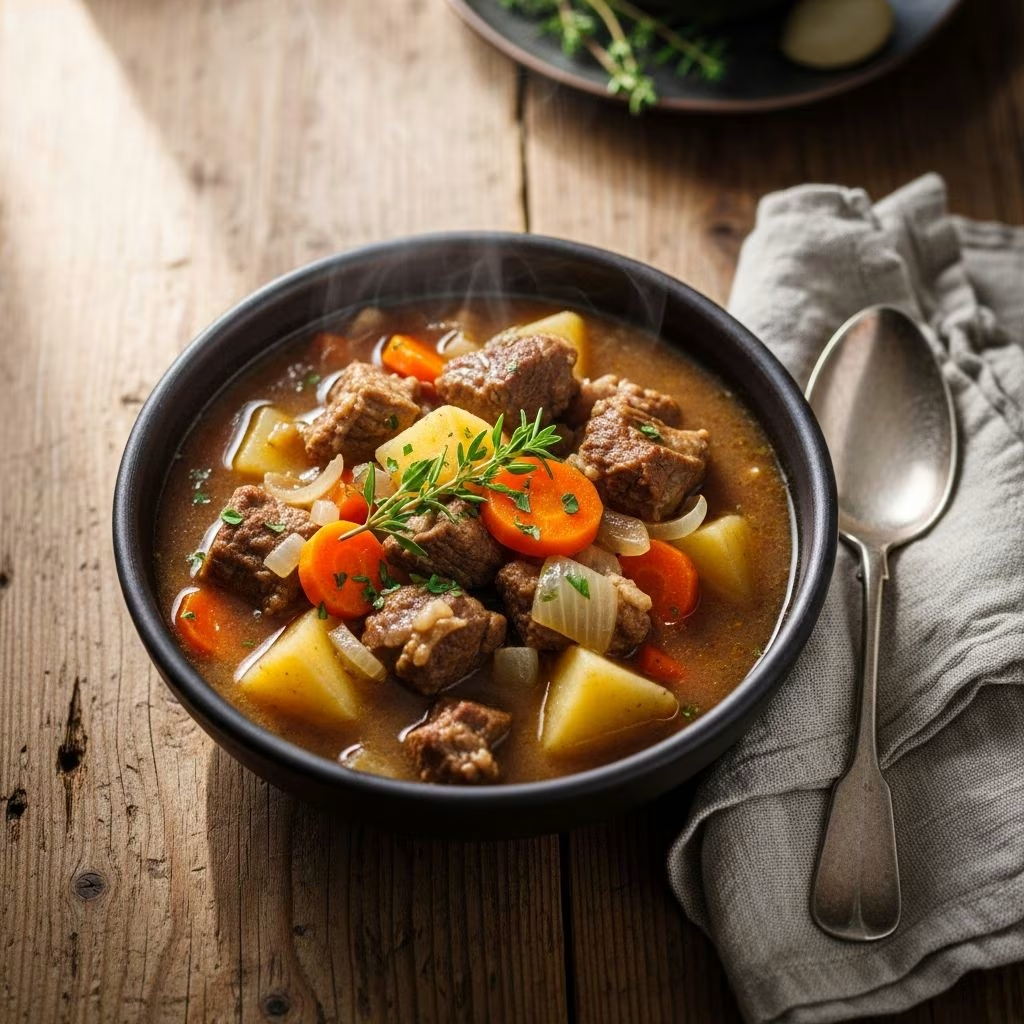
Irish stew stands as one of the most beloved comfort foods, originating from the rugged landscapes of Ireland where simple, wholesome ingredients create profound flavors. This dish, born from necessity among shepherds and farmers, combines tender meat with robust root vegetables in a savory broth that warms the soul. While traditional versions rely on lamb and potatoes, modern adaptations incorporate beef and additional vegetables for deeper taste profiles. Whether simmered slowly on the stovetop or in a Dutch oven, Irish stew embodies rustic simplicity at its finest.
The Origins and Evolution of Irish Stew
Rooted in 18th-century Ireland, the stew emerged as a practical meal using mutton—the meat from older sheep—paired with locally abundant potatoes and onions. Shepherds layered these ingredients in pots over open fires, allowing natural juices to form a thickened gravy. Over time, as beef became more accessible, many recipes shifted to include it, offering a milder flavor that appeals to broader palates. Today, variations often feature stout beer like Guinness, adding a malty richness that elevates the dish without straying far from its humble beginnings.
The evolution reflects Ireland’s culinary adaptability. Early recipes avoided carrots and parsley to preserve authenticity, but contemporary cooks embrace these additions for color and freshness. This flexibility ensures Irish stew remains relevant, served at family gatherings, St. Patrick’s Day feasts, or chilly evenings year-round.
Key Ingredients for Authentic Flavor
Selecting quality components is crucial for a standout Irish stew. The meat serves as the foundation, while vegetables and seasonings build layers of taste.
- Lamb or Beef: Lamb shoulder or mutton provides traditional gaminess and tenderness after long simmering. For beef versions, choose chuck or sirloin cuts with marbling to ensure juiciness.
- Potatoes: Red or Yukon Gold varieties hold shape well, releasing starch to thicken the broth naturally.
- Root Vegetables: Carrots, onions, leeks, and parsnips add sweetness and earthiness.
- Herbs and Aromatics: Fresh thyme, bay leaves, and parsley infuse subtle, woodsy notes.
- Liquids: Beef broth combined with Guinness stout creates a deep, complex base. Worcestershire sauce enhances umami.
Pearl barley, optional in some recipes, contributes a chewy texture and absorbs flavors beautifully.
Step-by-Step Guide to Cooking Irish Stew
Preparing Irish stew demands patience, as low-and-slow cooking tenderizes meat and melds flavors. This method yields about 6-8 servings and takes 2.5-3 hours total.
- Prepare the Meat: Trim 2-3 pounds of lamb shoulder or beef chuck into 1.5-2 inch cubes. Pat dry, season generously with salt and pepper, and dust lightly with flour for browning.
- Brown the Meat: Heat 2-3 tablespoons of oil or butter in a large Dutch oven over medium-high heat. Sear meat in batches to avoid steaming, achieving a golden crust for enhanced flavor via Maillard reaction.
- Sauté Vegetables: Add diced onions (2 medium), minced garlic (3 cloves), sliced leeks (1), and chopped carrots (4-5). Cook until softened, about 5-7 minutes. Stir in 2 tablespoons tomato paste if using for added depth.
- Deglaze and Simmer: Pour in 12-16 oz Guinness, scraping browned bits. Add 4-6 cups beef broth, 1-2 tablespoons Worcestershire, a pinch of sugar, 2 bay leaves, and 2 teaspoons fresh thyme. Return meat to pot with 1.5 pounds cubed potatoes and optional ½ cup pearl barley.
- Cook Low and Slow: Bring to a boil, then reduce to a simmer. Cover and cook 2-3 hours until meat shreds easily and broth thickens. Stir occasionally, adding broth if needed.
- Finish and Rest: Remove bay leaves, stir in chopped parsley. Let rest 15 minutes off heat for flavors to settle.
Variations to Suit Every Taste
Irish stew’s versatility allows customization while honoring its roots.
| Variation | Key Changes | Best For |
|---|---|---|
| Traditional Lamb | Lamb shoulder, potatoes, onions only; water or basic stock | Authenticity seekers |
| Beef Guinness | Chuck beef, stout beer, carrots, thyme | Rich, malty flavor lovers |
| Vegetarian | Mushrooms, lentils instead of meat; vegetable broth | Plant-based diets |
| Quick Version | Pressure cooker, 45 minutes total | Weeknight meals |
For St. Patrick’s Day, top with puff pastry shamrocks baked separately for a festive touch.
Essential Cooking Tips for Perfection
- Don’t Rush Browning: High heat and space between pieces lock in juices.
- Layer Potatoes Strategically: Place larger chunks at the bottom to prevent mushiness.
- Taste and Adjust: Midway through cooking, check seasoning; add salt sparingly as broth reduces.
- Make Ahead: Flavors intensify overnight; reheat gently on stovetop.
- Thicken Naturally: Potato starch suffices, but a flour slurry works if needed.
Pairing Suggestions and Serving Ideas
Serve Irish stew in deep bowls with crusty soda bread to sop up the gravy. Pair with a crisp green salad or steamed cabbage for balance. Beverages like more Guinness, red wine, or Irish whiskey complement the hearty profile. For dessert, opt for apple crumble or whiskey-infused chocolate.
Leftovers freeze well for up to 3 months; portion into airtight containers.
Nutrition and Health Considerations
A 1.5-cup serving offers approximately 450 calories, 30g protein, 25g fat, and 35g carbs, rich in iron, vitamin A, and fiber from vegetables. Use leaner cuts and less oil for lighter versions. Barley boosts fiber for heart health.
Frequently Asked Questions
Can I make Irish stew in a slow cooker?
Yes, brown meat first, then cook on low for 8 hours or high for 4-5 hours.
Is Guinness essential?
It adds unique depth, but substitute non-alcoholic stout or extra broth.
What’s the difference between Irish and regular beef stew?
Irish focuses on lamb/potatoes with minimal ingredients; others include tomatoes or wine.
How do I thicken the stew?
Mash some potatoes or simmer uncovered to reduce.
Freezer-friendly?
Absolutely; thaw overnight and reheat on stove.
Why Irish Stew Endures
Its enduring appeal lies in unpretentious ingredients yielding extraordinary comfort. From Irish hearths to global tables, this stew transcends seasons, uniting eaters around shared warmth and tradition.
References
- Irish Beef Stew Recipe — Coley Cooks. 2023-03-17. https://coleycooks.com/kates-irish-stew/
- Traditional Irish Stew Recipe — An Irishman’s Wife. 2022-11-15. https://www.theirishmanswife.com/irish-stew/
- Easy Irish Beef Stew — Gitta’s Kitchen. 2024-01-10. https://www.gittaskitchen.com/easy-irish-beef-stew/
- Best Irish Stew Recipe — The Pioneer Woman. 2023-09-05. https://www.thepioneerwoman.com/food-cooking/recipes/a46912678/irish-stew-recipe/
- Irish Beef and Guinness Stew — RecipeTin Eats. 2021-05-12. https://www.recipetineats.com/irish-beef-and-guinness-stew/