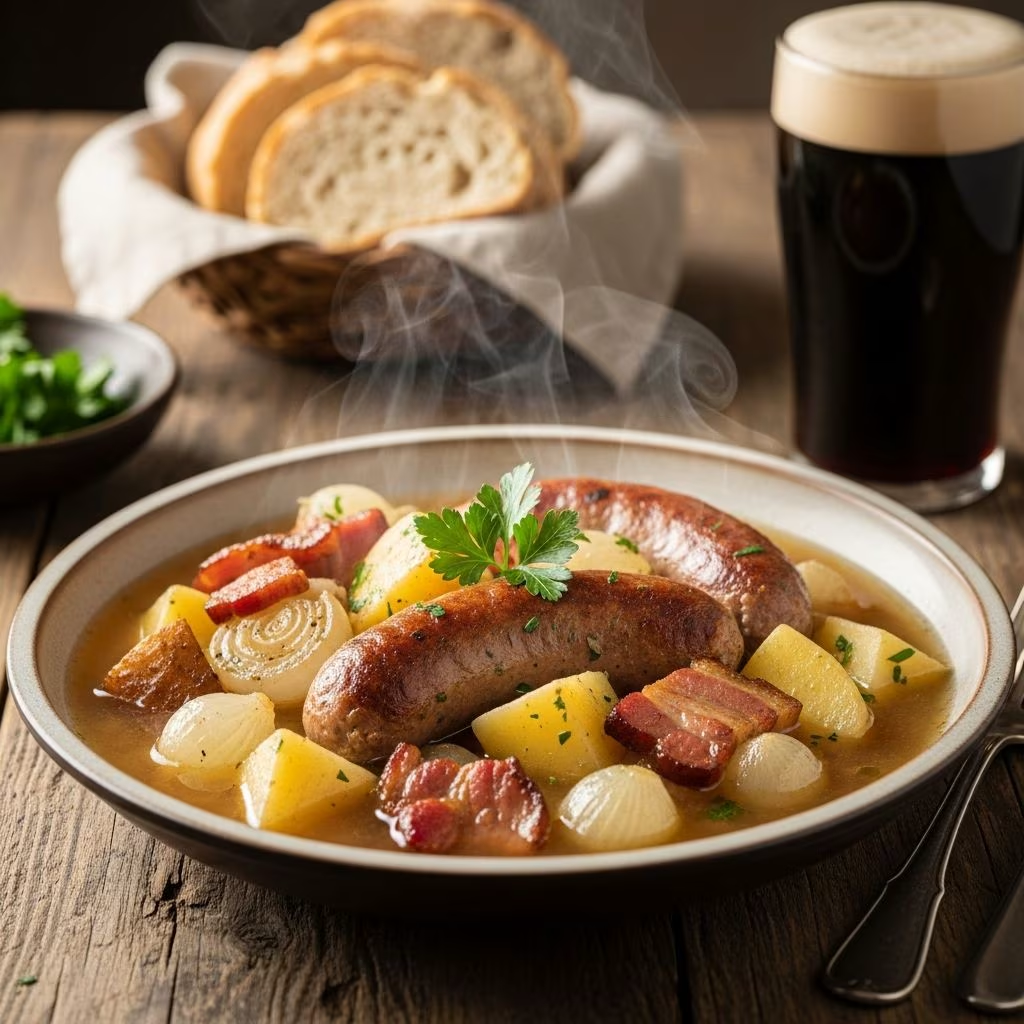
Immerse yourself in the rich culinary heritage of Ireland with **Dublin Coddle**, a timeless dish that captures the essence of comfort food. This stew, born in the bustling streets of Dublin, combines tender pork sausages, crispy bacon, robust potatoes, and sweet onions in a flavorful broth. Slow-cooked to meld every ingredient into a symphony of tastes, it’s the ultimate meal for cold nights or festive gatherings like St. Patrick’s Day.
The Origins and Cultural Significance of Dublin Coddle
Dublin Coddle traces its roots back to 18th-century Ireland, particularly the working-class neighborhoods of Dublin. The name ‘coddle’ derives from the gentle simmering method, or ‘coddling,’ which tenderly cooks the ingredients without aggressive boiling. Historians suggest it emerged as a practical solution for using leftover meats and vegetables, making it a staple in modest households.
Legend has it that the dish was prepared by wives while husbands enjoyed evenings at local pubs, ready to serve upon their return. This lore underscores its role as nourishing, no-fuss fare. Today, it symbolizes Irish hospitality, often featured in community events and family dinners. Variations exist across recipes, but the core remains: layers of meat and veggies braised in stock for deep flavor.
Essential Ingredients for Authentic Flavor
The beauty of Dublin Coddle lies in its straightforward, wholesome components. Here’s what you’ll need for a pot serving 6-8:
- Pork Sausages (1-2 lbs): Irish bangers are ideal for their juicy, herby profile; substitutes like high-quality pork links work well.
- Bacon (½-1 lb): Thick-cut, smoked streaky bacon adds smokiness and renders fat for sautéing.
- Potatoes (2 lbs): Yukon Gold or russet, cut into 1-1½ inch chunks for a mix of creamy and firm textures.
- Onions (2-3 large): Sliced thinly for caramelization and subtle sweetness.
- Garlic (2-4 cloves): Minced for aromatic depth.
- Herbs: Fresh parsley, thyme, bay leaves for earthy notes.
- Liquid Base: Chicken or beef stock (4-6 cups), optionally enhanced with stout beer or Guinness for maltiness.
- Seasonings: Salt, black pepper, sometimes allspice or flour for thickening.
Optional add-ins like carrots, leeks, or apple cider vinegar introduce extra dimensions without straying from tradition.
Step-by-Step Guide to Preparing Dublin Coddle
Creating this stew is simple, relying on layering and low-heat cooking. Prep time: 20-30 minutes. Cook time: 1-2.5 hours. Use a Dutch oven or heavy pot for best results.
Prep the Meats: Heat oil in the pot over medium. Cook bacon until golden and crisp, about 5-7 minutes. Remove and set aside, leaving fat. Brown sausages on all sides (2-3 minutes per side) for caramelization—key to superior flavor. Reserve sausages.
Sauté Aromatics: In the remaining fat, cook sliced onions until softened and browned, 5-8 minutes. Add minced garlic for 1 minute until fragrant. Deglaze with beer if using, scraping browned bits.
Build the Layers: Off heat, layer half the potatoes on the bottom, seasoned with pepper and parsley. Add half the onions, bacon, and sausages. Repeat with remaining potatoes, onions, bacon, sausages, herbs, and bay leaves. Pour stock over to cover.
Simmer Gently: Bring to a boil, then reduce to low simmer or bake at 300°F (150°C) covered for 1.5-2 hours until potatoes are tender and flavors unite. Stir occasionally; add stock if needed.
Rest and Serve: Let sit 10 minutes. Discard bay leaves.
Pro Tip: Browning meats prevents a ‘boiled’ taste, elevating the dish.
Variations and Modern Twists
While traditionalists stick to basics, creativity abounds:
| Variation | Description | Why It Works |
|---|---|---|
| Slow Cooker Method | Layer ingredients in cooker; cook low 6-8 hours. | Hands-off for busy days. |
| Beer-Infused | Add stout for malty richness. | Balances fattiness with bitterness. |
| Veggie Boost | Incorporate carrots, leeks, parsnips. | Added nutrition and color. |
| Gluten-Free | Skip flour thickener; use cornstarch. | Inclusive for diets. |
| Oven-Baked | 300°F for 2 hours. | Even cooking, deepened flavors. |
These adaptations keep the dish versatile for contemporary kitchens.
Perfect Pairings: What to Serve with Dublin Coddle
This stew shines with simple sides that soak up its broth:
- Irish Soda Bread: Crusty exterior, soft crumb—ideal for dipping.
- Brown Bread: Nutty, hearty complement.
- Fresh Herbs: Garnish with chopped parsley for brightness.
- Drinks: Guinness stout, Irish ale, or herbal tea.
- Salad: Tangy greens to cut richness.
Nutritionally, one serving offers ~500-600 calories, protein-packed from meats, carbs from potatoes.
Storage, Freezing, and Reheating Tips
Dublin Coddle stores beautifully:
- Fridge: Up to 4 days in airtight container.
- Freezer: 3 months; portion in bags.
- Reheat: Stovetop low simmer with splash of stock, or microwave covered.
Avoid boiling leftovers to preserve texture.
Common Mistakes and How to Avoid Them
- Not Browning Meats: Leads to bland taste—always sear first.
- Overcrowding Pot: Ensures even cooking; use large vessel.
- High Heat: Causes mushy potatoes—simmer low and slow.
- Skipping Layers: Promotes flavor distribution.
Health Benefits and Nutritional Insights
Beyond comfort, this stew provides balanced nutrition: potatoes for potassium and fiber, sausages for protein, onions/garlic for antioxidants. Opt for leaner meats or less bacon for lighter versions. Paired with veggies, it’s a wholesome one-pot meal.
Frequently Asked Questions (FAQs)
What makes Dublin Coddle different from other Irish stews?
It uses pork sausages and bacon instead of lamb, with a focus on layering and gentle simmering.
Can I make Dublin Coddle vegetarian?
Yes, substitute plant-based sausages and smoked tempeh for bacon, using veggie stock.
Is Guinness necessary?
No, but it adds authentic depth; substitute stock or non-alcoholic beer.
How spicy is it?
Mild; adjust pepper or add chili for heat.
Best potatoes for this recipe?
Yukon Gold for creaminess, russets for structure.
Embrace the warmth of Irish tradition with Dublin Coddle—simple, satisfying, and steeped in history. Whether for a holiday feast or weeknight dinner, it delivers heartiness in every spoonful.
References
- Dublin Coddle (Irish Sausage and Potato Stew) — Tara’s Multicultural Table. 2023-10-15. https://tarasmulticulturaltable.com/dublin-coddle/
- Dublin Coddle Recipe (Irish Sausage and Potato Stew) — Olivia’s Cuisine. 2022-03-17. https://www.oliviascuisine.com/dublin-coddle/
- Dublin Coddle – Traditional Irish Stew with Sausage & Potatoes — Ethnic Spoon. 2023-05-22. https://ethnicspoon.com/dublin-coddle/
- Dublin Coddle Recipe (Irish Sausage and Potato Stew) — Wholefully. 2021-11-10. https://wholefully.com/dublin-coddle-7/
- Dublin Coddle – Irish Bacon, Sausage, and Potato Stew — Karen’s Kitchen Stories. 2019-03-17. https://www.karenskitchenstories.com/2019/03/dublin-coddle-irish-bacon-sausage-and.html