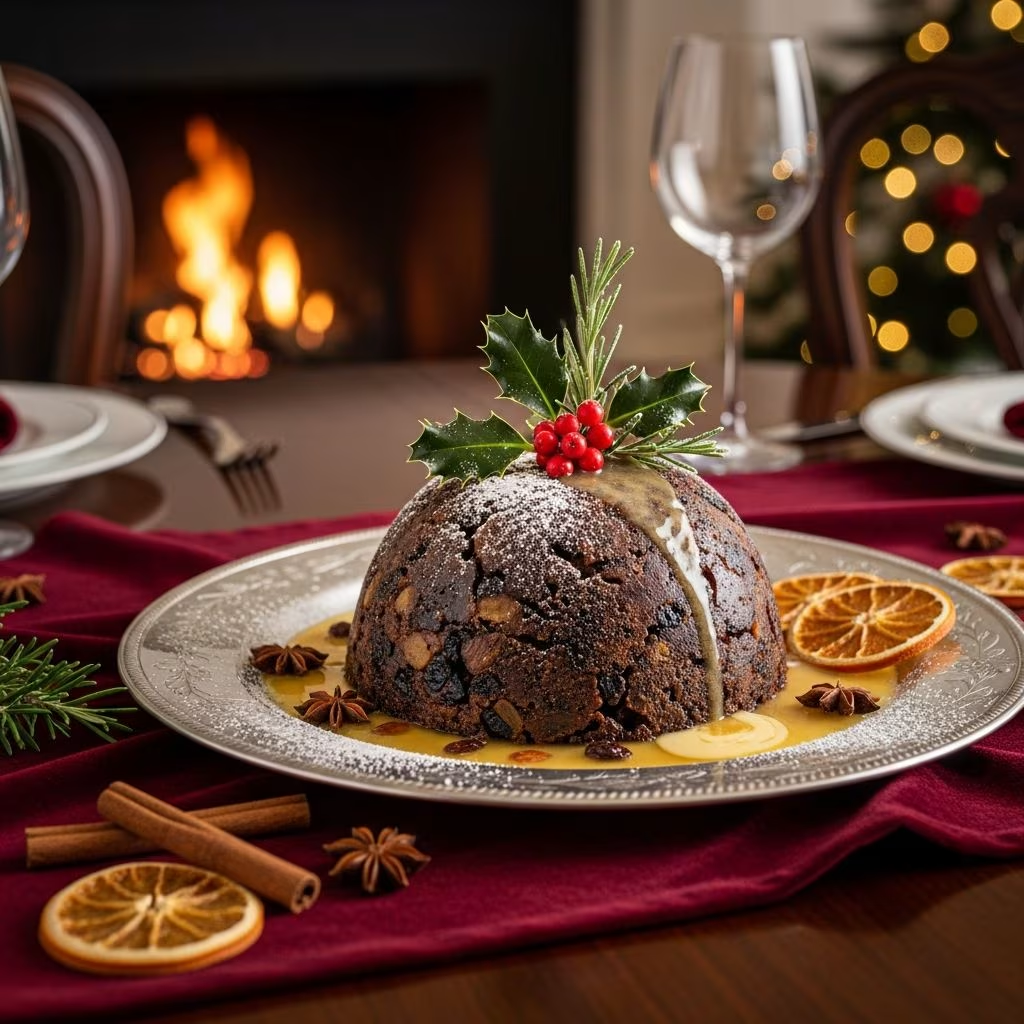
Christmas pudding stands as a cornerstone of British holiday traditions, evoking images of grand family gatherings and flickering candlelight. This dense, fruit-packed delight, often aged for weeks or months, bursts with flavors from dried fruits, spices, and a touch of spirits. Rooted in centuries-old customs, it symbolizes good fortune when served with flames dancing atop its brandy-soaked surface. Crafting one at home brings the majesty of royal kitchens into your own, offering a rewarding project that impresses guests and creates lasting memories.
The Storied Legacy of Christmas Pudding
The origins of Christmas pudding trace back to medieval England, where it evolved from a simple porridge called plum porridge into the elaborate steamed dessert we know today. By the Victorian era, it had become a staple, with recipes appearing in cookbooks like those from Eliza Acton, emphasizing hearty ingredients suited for long winters. Royal families elevated it further, with versions from Buckingham Palace featuring precise measurements of fruits and suet for optimal texture and taste. Queen Elizabeth II’s own recipe, shared publicly, highlighted its place in palace festivities, blending everyday accessibility with luxurious depth.
Historically, puddings were stirred on Stir-up Sunday, the last Sunday before Advent, where families mixed ingredients while making wishes. This communal ritual underscored its role in holiday bonding. Unlike modern cakes, the pudding matures over time, allowing flavors to meld and intensify, much like fine wine.
Essential Ingredients for Authentic Flavor
A true royal Christmas pudding relies on a symphony of dried fruits, nuts, and warming spices. Core components include:
- Dried fruits: Currants (200g), seedless raisins (350g), sultanas (350g), and chopped candied peel (120g) provide chewy sweetness and moisture.
- Nuts and fresh elements: Blanched almonds (170g), glace cherries (100g), a coarsely chopped tart apple, and finely grated carrot add crunch and natural juices.
- Fats and binders: Beef suet (230g), finely chopped, ensures richness; alternatives like butter work for modern adaptations.
- Spices and seasonings: Cinnamon (½ tsp), nutmeg (½ tsp grated), mixed spice (1 tsp), salt (1 tsp), and citrus rinds (orange and lemon) infuse aromatic warmth.
- Liquids and eggs: Brandy (4 tbsp), stout or dark ale (120ml), fresh orange and lemon juices, and 6 beaten eggs bind everything into a cohesive batter.
- Dry goods: Plain flour (230g), brown sugar (230g), and fresh white breadcrumbs (100g) create structure without overpowering the fruits.
Variations exist; Victorian recipes incorporate mashed potatoes for body and less fruit for affordability. Royal versions often specify three alcohols—beer, rum, and brandy—for depth, with non-alcoholic swaps like orange juice or tea.
Step-by-Step Guide to Preparation
Preparing a Christmas pudding demands patience but yields spectacular results. Start five weeks before Christmas for peak flavor, though shorter aging works.
Gathering and Mixing the Fruits
In your largest bowl, combine all dried fruits, cherries, almonds, chopped apple, carrot, and citrus rinds. This base sits to soften, absorbing ambient moisture. Add suet next, tossing to coat evenly, preventing clumping during steaming.
Incorporating Dry Ingredients
Sift in flour, breadcrumbs, sugar, salt, and spices. Stir vigorously with a wooden spoon—a tradition said to bring luck. The mixture should resemble wet sand, fragrant and speckled with fruit.
Adding Wet Binders
Whisk eggs until frothy, then blend in ale, brandy, and juices. Pour over the dry mix, kneading thoroughly for 5-10 minutes. This activates the gluten lightly, ensuring the pudding holds shape without toughness.
Filling and Sealing Basins
Grease 2-4 pudding basins (750ml-1L each) with butter. Pack mixture firmly, leaving 2cm headspace for expansion. Top with buttered parchment circles, pleated foil lids, and secure with string. A side plate underneath aids steaming.
Steaming Process
Place in a large steamer or pot with boiling water halfway up basins. Cover and steam for 8 hours initially, topping up water as needed. Cool, then store in a cool, dark place, re-steaming 2 hours before serving. For cloth-wrapped Victorian style, scald fabric, flour it, shape mix into a ball, tie tightly, and boil 4 hours.
Pro Tip: Test doneness with a skewer; it should emerge clean.
Maturing, Storage, and Reheating
Post-initial steam, unwrap and “feed” weekly with brandy via small holes poked in the foil. This keeps it moist and boozy. Store up to 12 months in basins with airtight lids. To reheat, steam 2 hours or microwave (foil off) in bursts. Freezing is viable post-aging.
Creative Serving Suggestions
Serve warm, upturned onto a plate. Flambé by warming brandy, igniting, and pouring over for theatrical flames symbolizing luck. Pair with brandy butter, custard, or cream. Slices with vanilla ice cream offer a modern twist. Leftovers? Fry in butter for crispy-edged pudding fritters.
| Serving Style | Accompaniment | Best For |
|---|---|---|
| Classic Flambé | Brandy sauce | Festive dinners |
| Cold Slices | Clotted cream | Boxing Day |
| Fried | Yogurt | Breakfast treat |
| Ice Cream Stack | Vanilla | Casual gatherings |
Modern Twists and Adaptations
Vegetarians can swap suet for vegetable shortening or butter. Gluten-free? Use almond flour and gluten-free crumbs. Reduce sugar with chopped dates. For smaller yields, halve ingredients. Video tutorials show butter substitutions yielding tender results.
- Nut-free: Omit almonds, add seeds.
- Low-alcohol: Tea or apple juice.
- Quick version: Bake in a water bath 3 hours, age 1 week.
Common Pitfalls and Troubleshooting
Dry pudding? Insufficient liquid or over-steaming—add more stout next time. Soggy top? Ensure foil seal is tight. Fruit sinks? Mix suet first to coat. If batter’s too stiff, extra egg white helps.
Why Make It Yourself?
Beyond taste, it’s economical—ingredients cost less than store-bought—and customizable. The process fosters holiday anticipation, mirroring royal traditions where palace chefs prepared months ahead.
Frequently Asked Questions (FAQs)
Can I make Christmas pudding without alcohol?
Yes, replace with cold tea, orange juice, or non-alcoholic stout for similar moisture.
How long does it keep?
Up to a year if stored properly, improving with age.
Is suet necessary?
Traditional, but butter or lard substitutes work well in modern recipes.
Can I freeze it?
Absolutely, after initial steaming; thaw and re-steam before serving.
What’s Stir-up Sunday?
The last Sunday before Advent, ideal for starting your pudding.
Nutritional Insights
Per slice (1/12th): ~400 calories, high in fiber from fruits, vitamins from citrus, but rich in sugars and fats. Enjoy in moderation.
References
- Queen’s Christmas Pudding Recipe from Buckingham Palace — Not Quite Nigella. 2011-04-28. https://www.notquitenigella.com/2011/04/28/a-royal-wedding-special-queen-elizabeth-iis-own-pudding-recipe/
- A Christmas Pudding Recipe with a Victorian twist — Historic Royal Palaces. N/A. https://www.hrp.org.uk/blog/a-christmas-pudding-recipe-with-a-victorian-twist/
- The Queen shares her royal Christmas pudding recipe — Good Housekeeping UK. N/A. https://www.goodhousekeeping.com/uk/food/a38319334/queen-royal-family-christmas-pudding-recipe/
- The Queen’s Christmas Pudding – Classic Holiday Dessert — YouTube (Food Wishes). N/A. https://www.youtube.com/watch?v=kxyNxXLw9e0