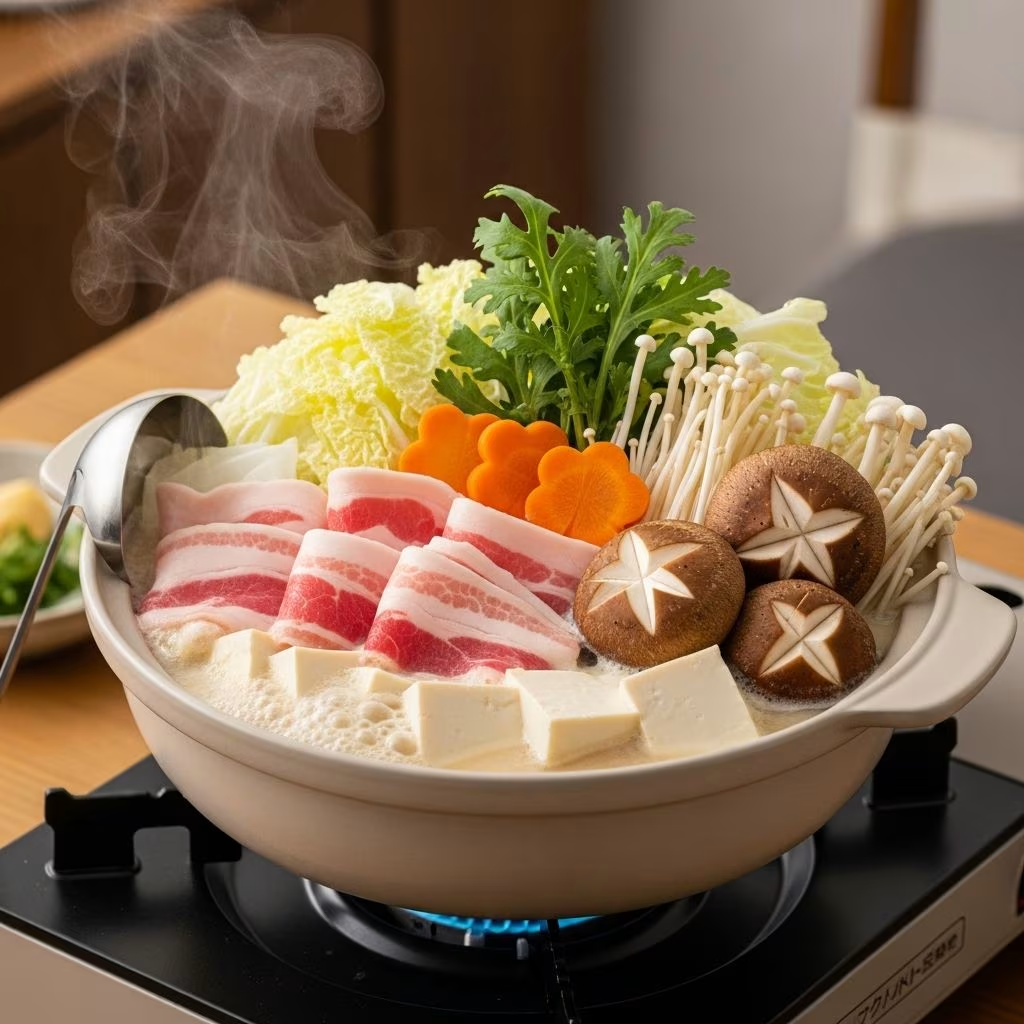
Tonyu Nabe, or soy milk hot pot, stands out in Japanese cuisine for its velvety texture and deep umami flavors. This dish transforms simple ingredients like unsweetened soy milk, dashi, and fresh vegetables into a comforting communal meal ideal for cold evenings. Unlike traditional clear broth nabes, the soy milk creates a mild, creamy base that’s both nourishing and subtly sweet.
Origins and Appeal of Tonyu Nabe
Tonyu Nabe emerged as a modern twist on classic Japanese hot pots, popularized in tofu specialty shops and ryokans. The use of soy milk highlights Japan’s soybean heritage, offering a plant-based alternative rich in protein. Its appeal lies in the balance of creaminess from soy milk and savory notes from miso, sesame, and mushrooms, making it versatile for vegetarians and omnivores alike.
Commonly enjoyed during winter, this hot pot fosters shared dining experiences where diners cook ingredients directly in the pot at the table. The broth evolves as vegetables and proteins release their flavors, culminating in a thickened, flavorful finale perfect over rice.
Essential Ingredients for Authentic Flavor
Building a great Tonyu Nabe starts with high-quality staples. Unsweetened soy milk forms the creamy foundation, while dashi provides umami depth. Key additions like mirin, sake, and miso ensure balance.
- Broth Base: Unsweetened soy milk (2-3 cups), kombu or dashi stock (3-4 cups), sake (2-4 tbsp), mirin (2-4 tbsp), white miso (2-3 tbsp), soy sauce (1-2 tbsp).
- Mushrooms: Shiitake (4-6), enoki (1 package), shimeji (1 package) for varied textures and earthiness.
- Vegetables: Napa cabbage (1/4-1/2 head), carrots (1), daikon (1/2), green onions, leafy greens like spinach or mizuna.
- Proteins: Firm tofu (1 block), aburaage (fried tofu sheets, 2-4), optional chicken, pork, or salmon slices.
- Finishes: Toasted sesame seeds (2-4 tbsp, ground), sesame oil (1 tsp), ponzu for dipping.
Glass noodles or udon can absorb the broth, adding heartiness. For vegan versions, skip animal proteins and use vegetable dashi.
Step-by-Step Recipe for Classic Tonyu Nabe
Prepare for 4 servings using a donabe or large pot. Total time: 45 minutes.
- Prepare Broth: In a pot, combine dashi, sake, and mirin. Bring to a boil, then add warmed soy milk off heat to prevent curdling. Stir in dissolved miso, soy sauce, ground sesame seeds, and salt. Simmer gently.
- Prep Ingredients: Slice napa cabbage into chunks, separating thick stems from leaves. Trim and cluster mushrooms. Cut tofu into cubes, aburaage into strips, carrots and daikon into thin diagonals for quick cooking.
- Layer and Cook: Add sturdy veggies (cabbage stems, carrots, daikon) first. Simmer 5-7 minutes. Follow with mushrooms, tofu, and aburaage. Add leafy greens last to wilt.
- Serve: Ladle into bowls with ponzu on the side. Enjoy with rice, togarashi, and extra sesame.
| Ingredient | Quantity | Prep Tip |
|---|---|---|
| Napa Cabbage | 1/2 head | Cut thick parts first |
| Enoki Mushrooms | 200g | Separate clusters |
| Firm Tofu | 400g | Cube 1-inch pieces |
| Soy Milk | 2 cups | Unsweetened only |
Vegetarian and Vegan Adaptations
Tonyu Nabe shines in plant-based forms. Use kombu-shiitake dashi for vegan broth. Gastroplant’s version emphasizes enoki, napa, bean sprouts, and glass noodles in a miso-free simmered soy milk base. Okonomi Kitchen adds roasted sesame seeds and sesame oil for nutty depth.
Aburaage and ganmodoki provide chewy protein. Skip meat entirely or replace with tempeh for variety. These adaptations maintain creaminess while boosting nutrition—soy milk offers complete plant protein.
Meat and Seafood Variations
For non-vegetarians, thinly sliced pork loin or chicken thighs absorb the broth beautifully. RecipeTin Japan’s chicken version clusters proteins with cabbage stems. Seafood lovers can try salmon chunks, as in soy-and-pepper donabe styles, paired with lotus root and negi.
Arrange meats in sections for even cooking. Simmer until just opaque to preserve tenderness. Ponzu dipping enhances these richer profiles.
Pro Tips to Avoid Common Mistakes
- Prevent Curdling: Add soy milk to hot—not boiling—broth and heat gently below simmer.
- Ingredient Order: Dense veggies first, delicate greens last to retain crunch and color.
- Broth Balance: Taste and adjust miso/soy before adding proteins. Skim yuba (soy film) if desired—it’s edible and flavorful.
- Pot Choice: Donabe retains heat ideally; any large pot works.
- Make-Ahead: Prep veggies and broth separately; assemble at table.
Pairing Suggestions and Serving Ideas
Serve Tonyu Nabe family-style with steamed rice to soak up the final broth. Top with scallions, togarashi, or extra sesame. Pair with sake or chilled green tea. For dessert, matcha ice cream complements the savory notes.
Dipping sauces like ponzu or sesame-miso elevate bites. End with karage rice—pour thickened broth over rice for a risotto-like finish.
Nutritional Benefits of Tonyu Nabe
This hot pot is nutrient-dense: soy milk provides isoflavones and protein (about 7g per cup). Mushrooms offer vitamins D and B, while cabbage delivers fiber and vitamin C. A serving yields roughly 400-500 calories, low in saturated fats, supporting heart health and immunity.
FAQ
What is Tonyu Nabe?
A Japanese hot pot with creamy soy milk broth, loaded with veggies, mushrooms, and tofu.
Can I use regular milk instead of soy milk?
No—soy milk’s neutral flavor and stability are key; dairy may curdle and alter taste.
Is Tonyu Nabe gluten-free?
Yes, if using tamari instead of soy sauce and gluten-free noodles.
How do I store leftovers?
Refrigerate broth and ingredients separately up to 2 days; reheat gently.
What’s the best pot for cooking?
Donabe or cast iron for even heat; ensure it’s large enough for 4 servings.
Experiment with seasonal veggies like lotus root or burdock for regional twists. Tonyu Nabe’s adaptability makes it a staple for cozy nights.
References
- Vegan Soy Milk Hot Pot (Tonyu Nabe) — Gastroplant. Accessed 2026. https://gastroplant.com/vegan-soy-milk-hot-pot-tonyu-nabe/
- Soy Milk Hot Pot with Chicken (Tōnyū Nabe) — RecipeTin Japan. Accessed 2026. https://japan.recipetineats.com/soy-milk-hot-pot-with-chicken-tonyu-nabe/
- Soy Milk Hot Pot (Tonyu Nabe) — Okonomi Kitchen. Accessed 2026. https://www.okonomikitchen.com/soy-milk-hot-pot-tonyu-nabe/
- Soy Milk Hot Pot 豆乳鍋 — Just One Cookbook. Accessed 2026. https://www.justonecookbook.com/soy-milk-hot-pot-tonyu-nabe/