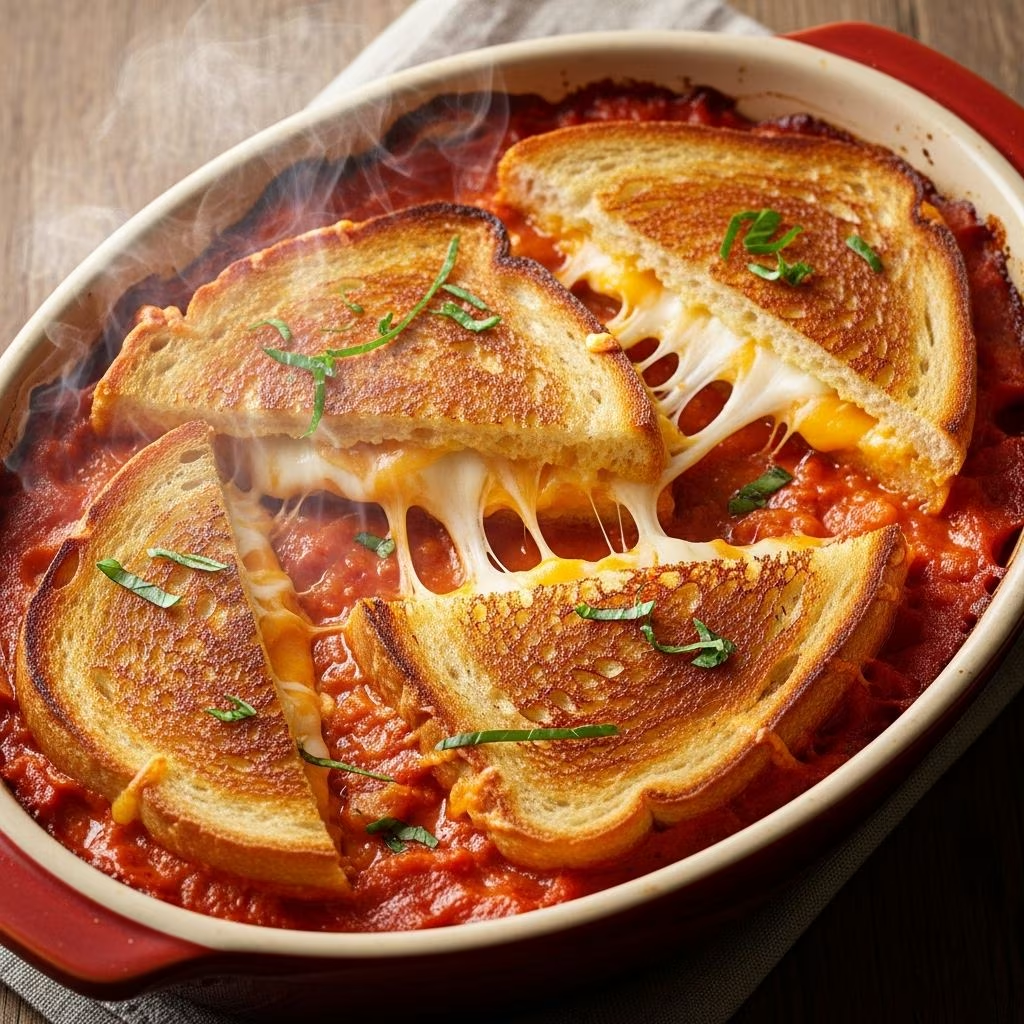
The pairing of tomato soup and grilled cheese represents one of the most beloved comfort food combinations in culinary tradition. This time-tested duo has delighted generations of families seeking warmth and satisfaction, particularly during cooler months. However, a modern twist on this timeless favorite elevates the experience even further: combining these two elements into a single, unified casserole dish creates a more efficient, equally delicious alternative that simplifies meal preparation while delivering the same nostalgic flavors.
The tomato soup and grilled cheese casserole represents an innovative approach to weeknight dinner planning. Rather than preparing two separate components—one requiring stovetop attention and the other demanding careful pan-frying—this recipe consolidates everything into a single baking dish. The result is a streamlined cooking process that produces restaurant-quality results with minimal effort. Whether you’re feeding a family of four or preparing portions for a smaller household, this casserole offers flexibility and consistent, satisfying outcomes.
Understanding the Appeal of Casserole-Style Comfort Food
Casserole dishes have held a special place in contemporary cooking for decades, evolving from their utilitarian origins into sophisticated comfort food expressions. The fundamental appeal of the tomato soup and grilled cheese casserole lies in its accessibility and the emotional resonance it carries. These ingredients evoke memories of childhood lunches, sick days at home, and simple pleasures that required minimal preparation yet delivered maximum satisfaction.
The beauty of transforming a beloved sandwich-and-soup pairing into casserole form extends beyond nostalgia. The baking process creates unique textural elements that wouldn’t exist in the traditional serving method. Bread edges become crispy and golden, creating a textural contrast with the creamy interior layers. Cheese melts uniformly throughout the dish rather than concentrating in isolated pockets. The tomato soup permeates every component, creating a cohesive flavor profile that develops and intensifies as the casserole bakes.
Essential Components and Ingredient Selection
Creating an exceptional tomato soup and grilled cheese casserole begins with understanding each ingredient’s role in the final product. The foundation of this dish rests on four primary components: bread, cheese, tomato soup, and butter. While these elements appear straightforward, intentional selection of specific varieties significantly influences the finished casserole’s quality.
Bread Varieties and Preparation
The bread selection establishes the casserole’s structural integrity and textural foundation. Sturdy bread varieties such as sourdough, French bread, or ciabatta provide sufficient substance to withstand the liquid components without disintegrating into an unpalatable mush. These bread types possess dense crumbs and a robust crust that maintains its form through the baking process, creating distinct layers rather than a homogeneous blend.
Bread preparation techniques vary depending on specific recipe approaches. Some preparations involve pre-toasting bread cubes on a separate baking sheet before incorporating them into the casserole dish, while others suggest buttering bread slices and arranging them directly in the baking vessel. Pre-toasting creates a firmer foundation that resists moisture absorption, while direct arrangement preserves a softer interior with crispy exterior edges. Both methods produce satisfactory results; the choice depends on personal textural preferences.
Cheese Selection and Layering Strategy
Cheese represents the casserole’s primary flavor component and textural character. Cheddar cheese appears most frequently in traditional recipes due to its melting properties, distinctive flavor, and accessibility. Cheddar’s natural tanginess complements tomato soup’s acidity, creating a balanced flavor profile that neither overwhelms nor underwhelms the palate. Some recipes incorporate mozzarella as a secondary cheese, contributing additional creaminess and a slightly milder flavor profile.
The quantity of cheese typically ranges from one to two and one-half cups in standard casserole recipes. This amount ensures sufficient melting to coat all bread components while avoiding an overwhelmingly heavy final dish. Strategic cheese layering—distributing portions between bread layers and atop the casserole—creates more even melting and prevents excessive concentration in any single area.
Tomato Soup and Liquid Components
Condensed tomato soup serves as the casserole’s moisture provider and primary flavor foundation. Commercial condensed tomato soup offers convenience and consistent results, though homemade varieties can substitute if preferred. The typical quantity ranges from one to two cans, depending on the recipe’s proportions and desired moisture level. Many recipes combine tomato soup with additional liquids such as milk or heavy cream, creating a richer sauce that distributes more evenly throughout the casserole.
The ratio between tomato soup and additional liquids significantly influences the final texture. Recipes using undiluted condensed soup create a thicker, more concentrated result, while those incorporating milk or cream produce a lighter, saucier consistency. Neither approach is inherently superior; the choice reflects individual preference regarding the casserole’s moisture content and sauce consistency.
Butter and Seasoning Considerations
Butter serves dual purposes within this casserole: providing richness and facilitating even browning of bread surfaces. Most recipes call for four to eight tablespoons of softened butter, applied to bread slices before arranging them in the baking dish. This application method ensures even distribution across all bread surfaces and promotes golden, crispy exterior development during baking.
Basic seasoning typically includes salt and black pepper to taste. Some recipes incorporate garlic salt or Italian seasoning for additional flavor complexity. However, restraint is advisable since tomato soup and cheddar cheese already provide substantial flavor. Additional seasonings should enhance rather than overpower the dish’s inherent character.
Step-by-Step Preparation and Assembly Process
Successful casserole preparation requires methodical attention to component organization and timing. While the process remains straightforward, understanding each step’s purpose contributes to optimal results.
Preparation Phase
Begin by preheating the oven to temperatures typically ranging between 350 and 425 degrees Fahrenheit, depending on specific recipe instructions. Simultaneously, gather all ingredients and equipment to facilitate streamlined preparation. Measure the tomato soup and any supplementary liquids into a mixing bowl, stirring thoroughly to combine. If incorporating milk or cream, add these liquids to the soup and blend until achieving a uniform consistency. Set this mixture aside temporarily.
Butter a nine-by-thirteen-inch baking dish using either softened butter or cooking spray. This prevents casserole adhesion and facilitates easier serving. If your recipe calls for pre-toasting bread, spread cubed or sliced bread on a separate baking sheet, drizzle with melted butter, and bake for approximately ten minutes at the dish’s specified temperature. Remove when edges become golden but the bread hasn’t fully hardened.
Assembly Sequence
Arrange the first bread layer directly in the prepared baking dish, placing pieces closely together to create a unified base. Distribute approximately half of the cheese mixture across this bread layer, ensuring relatively even coverage. If incorporating bacon or other add-ins, distribute these evenly at this stage. Place the second bread layer atop the cheese, pressing gently to ensure secure positioning.
Pour the tomato soup mixture evenly across the assembled layers, allowing the liquid to distribute throughout the casserole and saturate the bread. The liquid level should reach approximately three-quarters up the bread layers; excessive liquid creates a soupy final product while insufficient liquid results in dry bread. Top the casserole with remaining cheese, creating a final layer that will melt and brown during baking.
Baking Parameters and Temperature Management
Baking temperatures typically range between 350 and 425 degrees Fahrenheit, with most recipes suggesting 400 degrees as an effective compromise. Baking duration varies accordingly: lower temperatures require thirty to thirty-five minutes, while higher temperatures complete cooking in twenty-five to thirty minutes. The casserole reaches doneness when cheese has fully melted, liquid is bubbling around the edges, and bread surfaces achieve golden-brown coloration.
Monitoring the casserole’s progress during the final five minutes of baking prevents excessive browning. If the top appears to be browning too rapidly, loosely cover with aluminum foil to shield the surface while allowing interior cooking to continue. This technique maintains visual appeal while preventing burnt cheese or overly-darkened bread.
Customization Possibilities and Flavor Variations
The basic tomato soup and grilled cheese casserole framework accommodates numerous modifications that expand its versatility and appeal to various dietary preferences and flavor preferences.
Protein Additions
Bacon represents the most traditional protein enhancement, contributing smoky richness that complements both tomato and cheese components. Cook bacon until crisp, crumble into bite-sized pieces, and distribute evenly throughout the casserole layers. Canadian bacon offers a leaner alternative with similar flavor impact. Ground beef or sausage can be browned separately and incorporated, though these additions create a notably more substantial, meat-forward dish.
Vegetable Enhancements
Spinach, caramelized onions, or roasted garlic add nutritional value and flavor complexity without significantly altering the casserole’s essential character. Incorporate these components raw or pre-cooked, distributing them evenly between bread and cheese layers. Diced mushrooms provide umami depth, particularly when briefly sautéed before addition.
Cheese Variations
While cheddar remains the classic choice, experimenting with alternative cheeses yields interesting results. Sharp cheddar intensifies cheese flavor, while mild cheddar creates a more subtle profile. Gruyère adds subtle nuttiness, while fontina contributes creamy richness. Consider combining multiple cheese varieties to develop more complex flavor layers.
Storage, Reheating, and Make-Ahead Strategies
This casserole accommodates advance preparation, making it valuable for meal planning scenarios. Assemble the casserole completely, cover tightly with plastic wrap, and refrigerate for up to twenty-four hours before baking. Slightly extend baking time by five to ten minutes to account for the chilled starting temperature. For longer storage, freeze the unbaked casserole for up to three months. Thaw overnight in the refrigerator before baking as directed.
Leftover casserole keeps refrigerated for three to four days in an airtight container. Reheat individual portions in the microwave by covering loosely with a damp paper towel and heating for two to three minutes, or reheat larger portions in a 350-degree oven covered with foil for ten to fifteen minutes.
Troubleshooting Common Preparation Challenges
Several common issues may arise during preparation or baking. If the casserole appears too dry upon serving, insufficient tomato soup was incorporated, or the baking time exceeded the recommended duration. Conversely, excessive moisture suggests either too much liquid was added or the baking temperature was too low, preventing proper liquid reduction.
Bread that becomes soggy rather than maintaining texture indicates the casserole was allowed to sit too long before serving, or the bread was insufficiently sturdy to withstand the moisture level. Selecting denser bread varieties or pre-toasting bread before assembly resolves this issue. If cheese isn’t melting properly, the oven temperature may be inaccurate; verify with an oven thermometer and adjust as needed.
Nutritional Considerations and Dietary Adaptations
The tomato soup and grilled cheese casserole is inherently a rich, calorie-dense dish due to cheese and butter content. Each serving typically contains between 400 and 600 calories, depending on portion size and specific ingredient quantities. To lighten the dish, consider using reduced-fat cheese varieties, whole wheat bread, or decreasing overall butter application. These modifications maintain essential flavor while reducing overall caloric density.
For gluten-free diets, substitute appropriate gluten-free bread varieties, ensuring they possess sufficient structural integrity to withstand the baking process. For dairy-free adaptations, utilize cashew-based cheese alternatives or nutritional yeast for cheese-like flavor and richness.
Serving Suggestions and Complementary Dishes
Serve the tomato soup and grilled cheese casserole directly from the baking dish, allowing casserole to cool for three to five minutes following removal from the oven. Individual portions maintain structural integrity better immediately after baking while the cheese remains warm and pliable. Accompany with fresh salad, steamed vegetables, or a simple side dish to balance the richness.
A crisp green salad with vinaigrette provides refreshing contrast to the casserole’s richness. Roasted vegetables such as broccoli or Brussels sprouts offer nutritional balance and textural variety. For dessert accompaniments, light citrus-based options complement the meal without overwhelming already-satisfied palates.
Why This Casserole Represents Modern Comfort Food
The tomato soup and grilled cheese casserole embodies contemporary approaches to traditional comfort food. It streamlines preparation without sacrificing the essential qualities that make these foods beloved. The dish bridges generational preferences, appealing equally to those seeking nostalgic familiarity and those discovering the combination for the first time. Its adaptability accommodates various dietary needs, ingredient preferences, and skill levels, making it accessible regardless of cooking experience.
This casserole exemplifies how traditional recipes can evolve while maintaining their core appeal. By combining two complementary elements into a unified dish, we create something greater than the sum of its parts—a meal that satisfies physical hunger while delivering emotional comfort.
References
- Tomato Soup & Bacon, Grilled Cheese Casserole (Small Batch) — The English Kitchen. December 2024. https://www.theenglishkitchen.co/2024/12/tomato-soup-bacon-grilled-cheese.html
- Grilled Cheese & Tomato Soup Bake — Picky Palate. https://picky-palate.com/grilled-cheese-tomato-soup-bake/
- Grilled Cheese Tomato Soup Casserole — Sweet ReciPEAs. March 2020. https://www.sweetrecipeas.com/2020/03/18/grilled-cheese-tomato-soup-casserole/
- Grilled Cheese & Tomato Soup Bake — MrFood.com. https://www.mrfood.com/Casseroles/Grilled-Cheese-Tomato-Soup-Bake