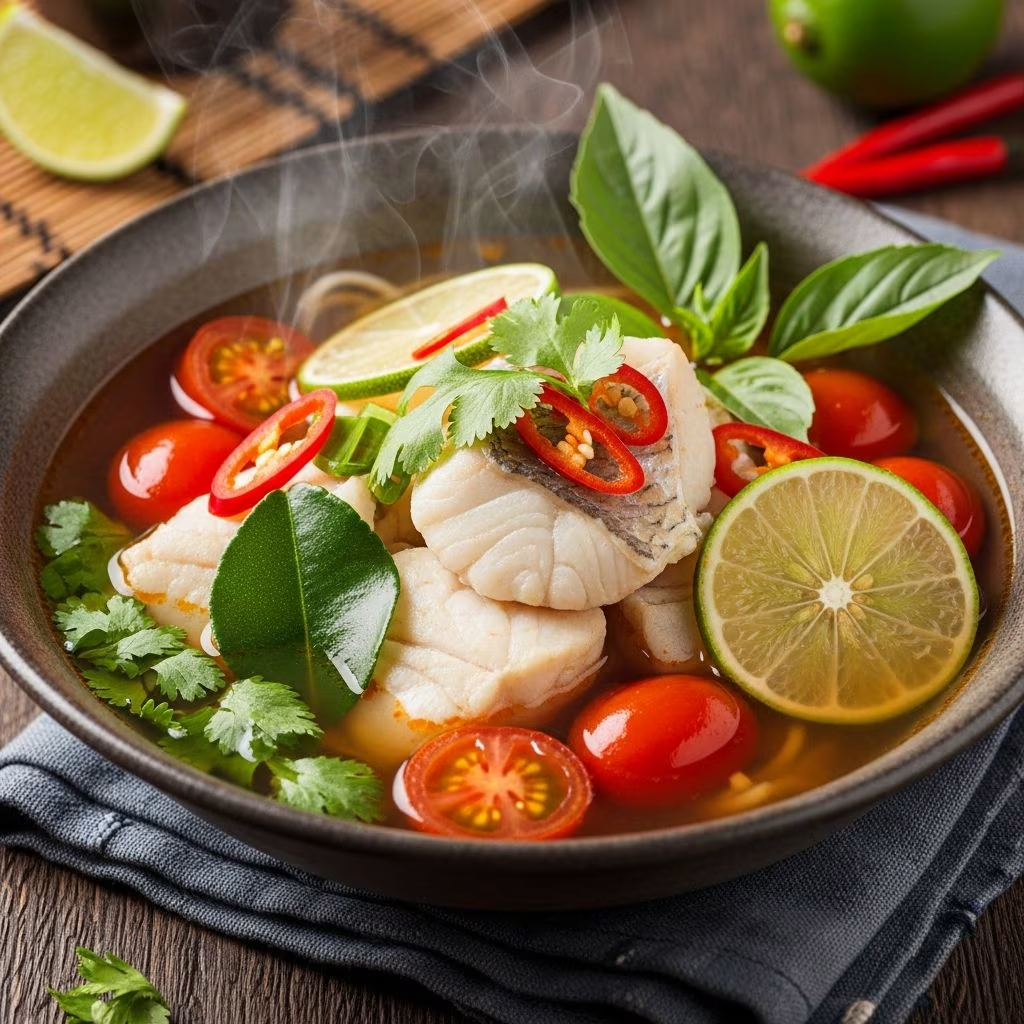
Fish soups represent some of the most beloved comfort dishes across global cuisines, particularly in regions with strong seafaring traditions. The combination of delicate white fish with bright, acidic notes creates a naturally balanced dish that feels both nourishing and sophisticated. This particular preparation brings together Southeast Asian flavor principles with the elegant simplicity of a classic broth, resulting in a dish that celebrates the purity of its ingredients.
The appeal of such broths lies in their versatility and relative ease of preparation. Unlike heavier cream-based soups or complex stews that demand hours of slow cooking, this style of broth comes together in under an hour while still delivering complex, layered flavors. The technique relies on building flavor through aromatic foundations rather than extended cooking times.
The Foundation: Understanding Aromatic Building Blocks
Every exceptional broth begins with a carefully constructed base of aromatics. The trinity of shallots, garlic, and lemongrass forms the aromatic backbone that defines Southeast Asian cuisine. These three ingredients work synergistically to create depth without overwhelming the delicate nature of the fish itself.
Shallots provide a subtle sweetness and sophisticated onion flavor that differs distinctly from regular onions. Their natural sugars caramelize gently during the initial sauté, adding complexity to the broth base. Garlic contributes pungency and earthiness, while lemongrass introduces a distinctive floral, citrusy note that cannot be replicated by any other ingredient.
The preparation method for aromatics significantly impacts the final broth. Finely chopping shallots and garlic allows them to release their essential oils and flavors more completely during cooking. For lemongrass, using only the bottom third of the stalk—where the flavor compounds concentrate most densely—and removing the tough outer layers ensures a more refined, less stringy texture in the finished broth.
Building Complexity Through Layered Techniques
The cooking process employs a time-honored technique where aromatics are bloomed in oil before other ingredients join. This initial sauté, lasting just a few minutes, allows the volatile compounds in garlic, shallots, and lemongrass to dissolve into the oil, creating a flavor-infused base. This step is crucial—rushing through it or omitting it results in a flatter, less developed tasting soup.
Once aromatics have released their fragrances and begun to soften, tomato products enter the equation. Canned tomatoes provide consistent quality and convenience, while fresh tomatoes offer seasonal vibrancy. The choice depends on availability and personal preference, though both approaches yield satisfying results. Tomatoes contribute natural acidity, umami depth, and a beautiful color to the broth.
The liquid component transforms this mixture into actual broth. Chicken or vegetable stock provides the foundation, though some cooks prefer seafood stock for additional depth. The ratio of liquid to solid ingredients determines the final consistency—a true broth should be relatively clear and lightweight rather than thick or stew-like.
Incorporating the Protein: Fish Selection and Technique
The choice of fish matters considerably in broths, as the delicate cooking method and clear broth demand a fish that maintains its integrity and texture. White-fleshed fish varieties work best, particularly those with firm but not dense texture. Hake, halibut, cod, and similar fish hold together beautifully during poaching and don’t overpower the broth with strong fishiness.
Fish enters the broth near the end of cooking, requiring only a few minutes of gentle simmering to cook through completely. Overcooking results in dry, flaky fish that falls apart into the broth. The timing window is narrow—usually between two and four minutes depending on fish thickness and the temperature of the surrounding liquid. The residual heat continues cooking the fish even after removal from direct heat.
Cutting fish into uniform pieces ensures even cooking throughout the batch. Pieces roughly 4 to 5 ounces each cook through at approximately the same rate, preventing some portions from being overdone while others remain undercooked.
Brightness from Citrus: The Role of Lime
Lime juice serves as the final piece in the flavor puzzle, providing the acidic brightness that lifts and balances all other elements. Adding lime near the end of cooking preserves its volatile aromatic compounds and fresh flavor. If cooked for extended periods, lime juice becomes muted and less impactful.
Both juice and zest contribute distinctly different qualities. The juice provides sharp acidity and subtle bitterness, while the zest offers concentrated lime flavor with floral notes and essential oils. Many preparations benefit from including both, along with perhaps a few extra lime wedges or slices served at the table for diners to customize their bowl’s acidity level.
The brightness of citrus becomes especially important in light broths where other flavor elements remain deliberately subtle. The acid cuts through the richness of any fat in the broth and helps flavors register more clearly on the palate.
Essential Components and Their Functions
| Component | Primary Function | Flavor Contribution |
|---|---|---|
| Vegetable Oil | Conducts heat and dissolves aromatics | Neutral base for flavor development |
| Shallots | Aromatic foundation | Sweet, subtle onion complexity |
| Garlic | Umami and pungency provider | Savory, earthy depth |
| Lemongrass | Signature aromatic identifier | Floral, citrusy, distinctly Southeast Asian |
| Tomatoes | Acid and color provider | Natural sweetness with tangy acidity |
| Stock | Liquid foundation | Umami and chicken or vegetable notes |
| White Fish | Primary protein | Delicate, subtle seafood character |
| Lime | Brightness and balance | Sharp citrus acidity and floral notes |
Practical Execution: Step-by-Step Assembly
Initial Preparation: Begin by gathering all ingredients and preparing them before cooking begins. This mise en place approach prevents scrambling during the actual cooking process. Chop shallots into small, even pieces. Mince garlic finely. Trim lemongrass stalks to the bottom third, remove tough outer layers, and chop into small segments.
Blooming Aromatics: Pour vegetable oil into a large pot or Dutch oven and warm over medium heat. Add shallots and allow them to soften and begin developing color, approximately 3 to 4 minutes. The shallots should become translucent and fragrant. Add garlic and lemongrass, stirring constantly for about 1 minute until the mixture becomes extremely aromatic.
Building the Broth: Add canned tomatoes with their juice and stock to the aromatics. Stir thoroughly to combine all elements. Bring the mixture to a gentle boil, then reduce heat to maintain a simmer. Allow the broth to simmer for 15 to 20 minutes, which permits flavors to meld and develop. Season carefully with salt and pepper.
Adding Fish: Return the broth to a gentle simmer if it has cooled. Carefully place fish pieces into the hot liquid. Maintain a gentle simmer—avoid aggressive boiling, which can cause the fish to break apart. Cook for 2 to 4 minutes, depending on thickness, until the fish is just opaque throughout and flakes easily.
Final Adjustments: Remove from heat and stir in fresh lime juice. Taste and adjust seasoning as needed. Some diners prefer additional lime, salt, or even a touch more heat.
Serving and Presentation Considerations
A beautiful presentation elevates this humble broth into something worthy of special occasions. Ladle broth and fish into wide, shallow bowls rather than deep ones. Wide bowls showcase the clarity of the broth and the individual pieces of fish. Serve immediately, as the broth cools quickly.
Garnishing options enhance both flavor and visual appeal. Fresh cilantro or Thai basil adds herbal brightness. Thin slices of lime, lime zest, or perhaps a few red chili slices provide color contrast. Some preparations include crispy fried shallots or garlic, which add textural interest.
Consider serving with accompaniments that complement rather than compete with the delicate broth. Steamed rice, rice noodles, or crispy toast provide vehicles for enjoying the broth and fish without overwhelming the dish’s inherent simplicity.
Common Questions About Fish Broths
Can this broth be prepared in advance?
The broth base—everything except the fish—can be prepared up to three days ahead. This makes the recipe convenient for entertaining. Store the cooled broth in the refrigerator in an airtight container. When ready to serve, gently reheat the broth and add fresh fish just before serving. Never cook the fish in advance, as it deteriorates quickly and becomes dry and unappetizing.
What if fresh lemongrass is unavailable?
While lemongrass provides an unmistakable Southeast Asian character, substitutes exist for cooks without access. A combination of lime zest and a small amount of citrus juice can approximate some of the bright notes, though the distinctive floral quality will be absent. Frozen lemongrass, though slightly less fragrant, works reasonably well. Dried lemongrass requires rehydration and produces a more concentrated flavor—use about one-third the amount of dried as you would fresh.
Which fish varieties work best?
Any white-fleshed fish with firm texture performs well. Recommended options include halibut, cod, hake, sea bass, flounder, and snapper. Avoid very delicate fish like sole, which disintegrates easily in broth. Darker-fleshed fish like salmon or mackerel have flavors that compete with the delicate broth rather than complement it. Consistency matters more than the specific species—choose whatever firm white fish looks freshest at your market.
Can shellfish replace the white fish?
Absolutely. Shrimp, scallops, clams, and mussels all work beautifully in this preparation. Each requires slightly different cooking times—shrimp needs about 2 minutes, scallops require 1 to 2 minutes, while clams and mussels need 3 to 5 minutes until they open. Many cooks combine several types of seafood in a single pot, adjusting addition times so everything finishes cooking simultaneously.
How does one prevent an oily broth?
Use a measured amount of vegetable oil—typically 3 tablespoons is sufficient for 4 to 6 servings. Avoid the temptation to add more oil after cooking begins. If excess oil appears during cooking, skim it off using a spoon or ladle. The fish and broth should feel light rather than coating your mouth with grease.
Variations and Creative Adaptations
While the classic preparation provides a perfect starting point, experimentation yields interesting results. Some cooks add heat with fresh chilies or chili paste. Others incorporate aromatics like ginger or galangal for additional complexity. Coconut milk, stirred in just before serving, transforms the broth into something richer while maintaining its essential character.
Vegetable additions might include snap peas, bok choy, mushrooms, or asparagus, though these should be tender enough to cook in 2 to 3 minutes to avoid becoming mushy. Herbs beyond cilantro—Thai basil, Vietnamese coriander, or sawtooth coriander—offer different cultural inflections to the same basic framework.
The broth also works beautifully as a base for other seafood preparations, poured over steamed fish or used as a poaching liquid for other proteins entirely.
Nutritional Perspective and Dietary Considerations
Fish broths offer excellent nutritional profiles for health-conscious cooks. White-fleshed fish provides lean protein without excessive calories. The broth-based cooking method requires minimal added fat, resulting in a naturally light dish. The aromatic vegetables contribute fiber and various phytonutrients. Lime juice aids in iron absorption from the fish, while lemongrass offers potential anti-inflammatory compounds.
The dish naturally accommodates various dietary preferences. It is naturally gluten-free when served without starchy accompaniments. For those following low-sodium diets, using low-sodium stock and minimizing added salt keeps sodium levels in check. The high protein-to-calorie ratio makes it particularly suitable for those seeking satisfying meals without excessive calories.
References
- Chunky Tomato and Lime Broth with Poached Fish — Le Creuset UK. 2024. https://www.lecreuset.co.uk/en_GB/chunky-tomato-and-lime-broth-with-poached-fish/
- Smoky Tomato and Seafood Soup — Food City Recipes. 2024. https://www.foodcity.com/index.php?vica=ctl_recipes&vicb=showRecipeDetails&vicc=p&recipeID=190864
- Brothy Tomato And Fish Soup With Lime — Cooked.wiki. 2024. https://cooked.wiki/saved/09857c88-ab7e-47f8-a677-8e4a4cddf1d1