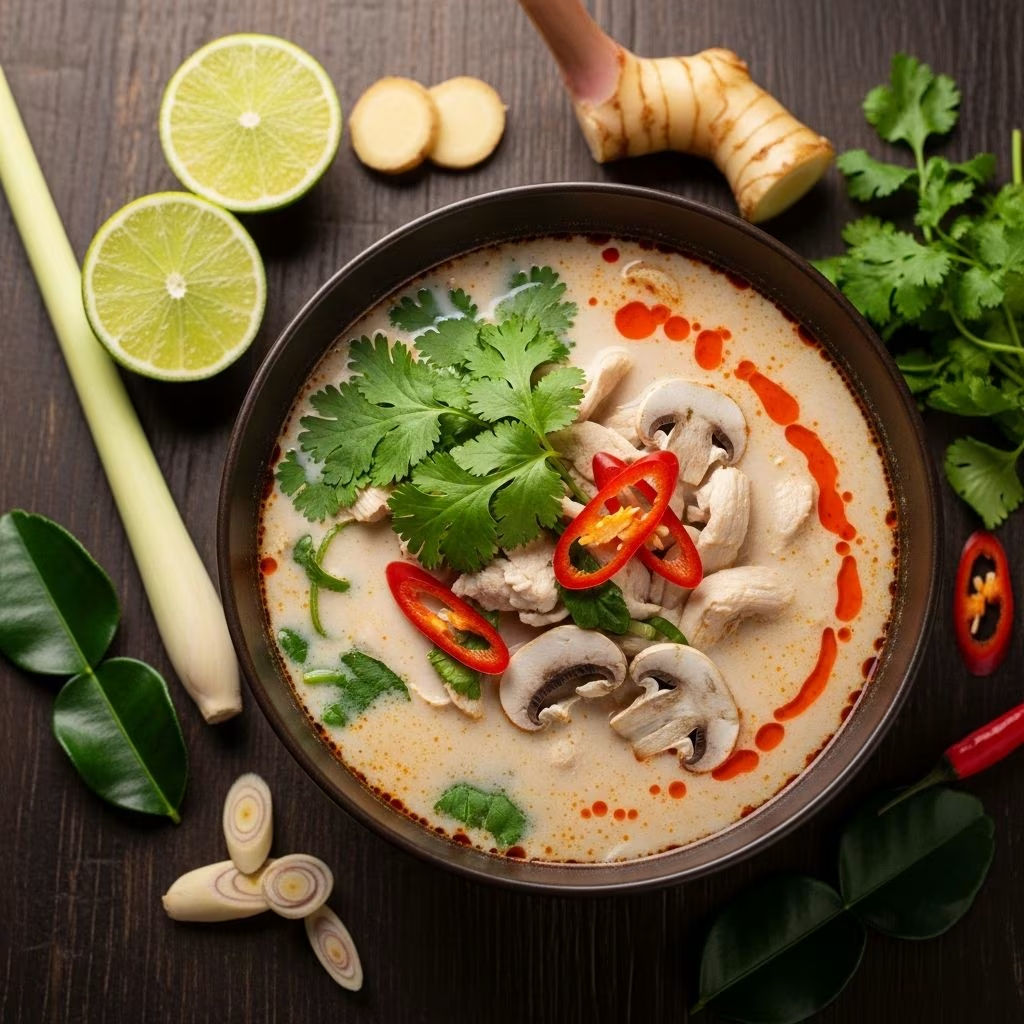
Tom Kha soup, known as Tom Kha Gai when made with chicken, stands out as one of Thailand’s most beloved dishes. This creamy coconut-based soup balances rich, savory notes with bright citrus and subtle heat, creating a comforting yet refreshing meal. Unlike its spicier cousin Tom Yum, Tom Kha emphasizes the silky texture of coconut milk infused with aromatic herbs like lemongrass, galangal, and makrut lime leaves.
Origins and Cultural Significance of Tom Kha
Originating from central Thailand, Tom Kha has deep roots in Thai culinary traditions where fresh herbs and coconut play central roles. ‘Tom’ means boil, ‘kha’ refers to galangal, and ‘gai’ indicates chicken, highlighting the dish’s key ingredient. It’s often enjoyed as a starter in multi-course meals or as a light main dish paired with jasmine rice. The soup’s versatility allows adaptations for various dietary needs while preserving its authentic essence.
Traditionally served in Thai homes and street stalls, this soup reflects the harmony of flavors central to Thai cooking: sweet from coconut, salty from fish sauce, sour from lime, spicy from chilies, and bitter from herbs. Its popularity has spread globally, with home cooks recreating it using accessible ingredients.
Essential Ingredients for Authentic Flavor
To achieve true Tom Kha taste, focus on fresh, quality components. Here’s a breakdown of must-haves:
- Coconut milk or cream: Full-fat canned varieties provide the creamy base. Shake well before use to blend the rich cream with liquid.
- Lemongrass: Use the tender bottom stalk, bruised and cut into pieces to release citrusy oils.
- Galangal: This rhizome offers a peppery, piney note distinct from ginger; substitute ginger if unavailable but expect milder flavor.
- Makrut lime leaves: Torn or bruised for their unique floral-citrus aroma; lime zest works as a backup.
- Protein: Chicken thighs or breasts sliced thinly for tenderness; tofu or shrimp for variations.
- Mushrooms: Oyster or shiitake add earthy umami.
- Seasonings: Fish sauce for saltiness, palm sugar for subtle sweetness, fresh lime juice for tang, and Thai chilies or curry paste for heat.
These elements create the soup’s signature profile, with coconut tempering the bold aromatics.
Step-by-Step Recipe for Classic Tom Kha Gai
This recipe serves 4-6 and takes about 45 minutes. Adjust spice to preference.
Ingredients Table
| Ingredient | Quantity | Notes |
|---|---|---|
| Coconut oil | 1 tbsp | Or neutral oil |
| Onion or shallot, sliced | ½ medium | Thin slices for quick cooking |
| Garlic, minced | 2 cloves | Fresh for best aroma |
| Galangal or ginger, sliced | 3-4 slices (¼-inch thick) | Galangal preferred |
| Lemongrass stalk | 1, bottom half, bruised | Cut into 2-inch pieces |
| Red Thai curry paste | 2 tsp | Optional for extra depth |
| Chicken broth | 4 cups | Low-sodium |
| Full-fat coconut milk | 4 cups | Or 2 cans |
| Chicken thighs, bite-sized | 1 lb | Boneless, skinless |
| Oyster mushrooms | 8 oz | Torn into pieces |
| Fish sauce | 2-3 tbsp | To taste |
| Palm sugar or brown sugar | 1 tsp | For balance |
| Lime juice | 3-4 tbsp | Freshly squeezed |
| Thai chilies | 1-3 | Smashed, to taste |
| Cilantro and green onions | For garnish | Chopped |
Cooking Instructions
- Heat coconut oil in a large pot over medium heat. Sauté onion, garlic, galangal, lemongrass, and chilies for 4-5 minutes until fragrant and softened.
- Stir in curry paste if using, then pour in chicken broth. Bring to a boil, reduce to simmer, and cook uncovered for 20-30 minutes to infuse flavors.
- Strain out solids (discard or reserve for stock). Return broth to pot, add coconut milk, chicken, and mushrooms. Simmer gently 5-10 minutes until chicken is cooked.
- Season with fish sauce, sugar, and lime juice. Taste and adjust—add more lime for sour, fish sauce for salty, or chilies for heat.
- Ladle into bowls, garnish with cilantro and green onions. Serve hot with rice.
Customizing Tom Kha for Different Diets
Tom Kha’s adaptability makes it ideal for various preferences.
- Vegan version: Swap chicken broth for vegetable, use tofu or chickpeas, and replace fish sauce with soy sauce or coconut aminos.
- Seafood twist: Add shrimp or fish fillets in the final simmer to avoid overcooking.
- Low-carb: Skip sugar, use fewer mushrooms if needed.
- Spice levels: Mild for kids by omitting chilies; fiery with extra curry paste.
For Whole30 compliance, ensure sugar-free coconut aminos and no added sugars.
Pro Tips for Restaurant-Quality Results
- Prep aromatics: Bruise lemongrass and galangal with a knife’s side to maximize flavor release without bitterness.
- Don’t boil coconut milk: Simmer gently to prevent separation and curdling.
- Thin slicing: Cut chicken across the grain for quick, tender cooking.
- Fresh vs. frozen: Frozen lemongrass or lime leaves work well if fresh unavailable.
- Straining option: For smoother texture, strain after infusing; keep chunks for rustic style.
Balance is key—taste iteratively as flavors develop.
Nutrition and Health Benefits
One serving (about 2 cups) offers approximately 350 calories, 28g fat (mostly healthy coconut saturated fats), 20g protein, 10g carbs. Rich in anti-inflammatory compounds from galangal and lemongrass, vitamin C from lime, and immune-boosting properties of garlic and chilies. Coconut provides medium-chain triglycerides for quick energy. Moderation advised due to calorie density.
Storage, Freezing, and Reheating
Store in airtight containers in the fridge for up to 4 days. Reheat gently on stovetop with a splash of broth to restore creaminess. Freezes well for 2 months—thaw overnight and simmer without boiling. Avoid repeated freezing.
Perfect Pairings and Serving Ideas
Pair with steamed jasmine rice to soak up broth. Complement with fresh Thai salads, stir-fried vegetables, or grilled meats for a full meal. For drinks, try iced Thai tea or sparkling water with lime.
Frequently Asked Questions (FAQs)
What if I can’t find galangal?
Use fresh ginger, but add a pinch of white pepper for closer approximation.
Can I make Tom Kha in an Instant Pot?
Yes: Sauté aromatics on sauté mode, add broth and simmer 10 minutes on high pressure, quick release, then add coconut and protein.
Is Tom Kha gluten-free?
Naturally, if using tamari instead of soy in vegan versions.
How spicy is it?
Mild to medium; control with chili quantity.
Can I use light coconut milk?
Yes, but soup will be thinner and less rich.
Common Mistakes to Avoid
- Overcooking chicken leads to toughness—add late.
- Boiling coconut milk causes oil separation.
- Skipping strain if desiring clear broth.
- Not tasting before serving—flavors need adjustment.
References
- Best Ever Tom Kha Gai Soup (Better Than Takeout) — 40 Aprons. 2023. https://40aprons.com/tom-kha-soup-whole30/
- Tom Kha Soup Recipe — Feasting At Home. 2023. https://www.feastingathome.com/tom-kha-gai/
- Authentic Tom Kha Gai (Thai coconut chicken soup) — Hot Thai Kitchen. 2022. https://hot-thai-kitchen.com/tom-ka-gai/
- Tom Kha Gai (Thai Coconut Chicken Soup) — The Woks of Life. 2023. https://thewoksoflife.com/tom-kha-gai-thai-coconut-chicken-soup/
- Authentic Tom Kha Gai – If You Can Only Make ONE Dish — Pailin’s Kitchen (YouTube). 2022. https://www.youtube.com/watch?v=qQ_G0LVzaCI