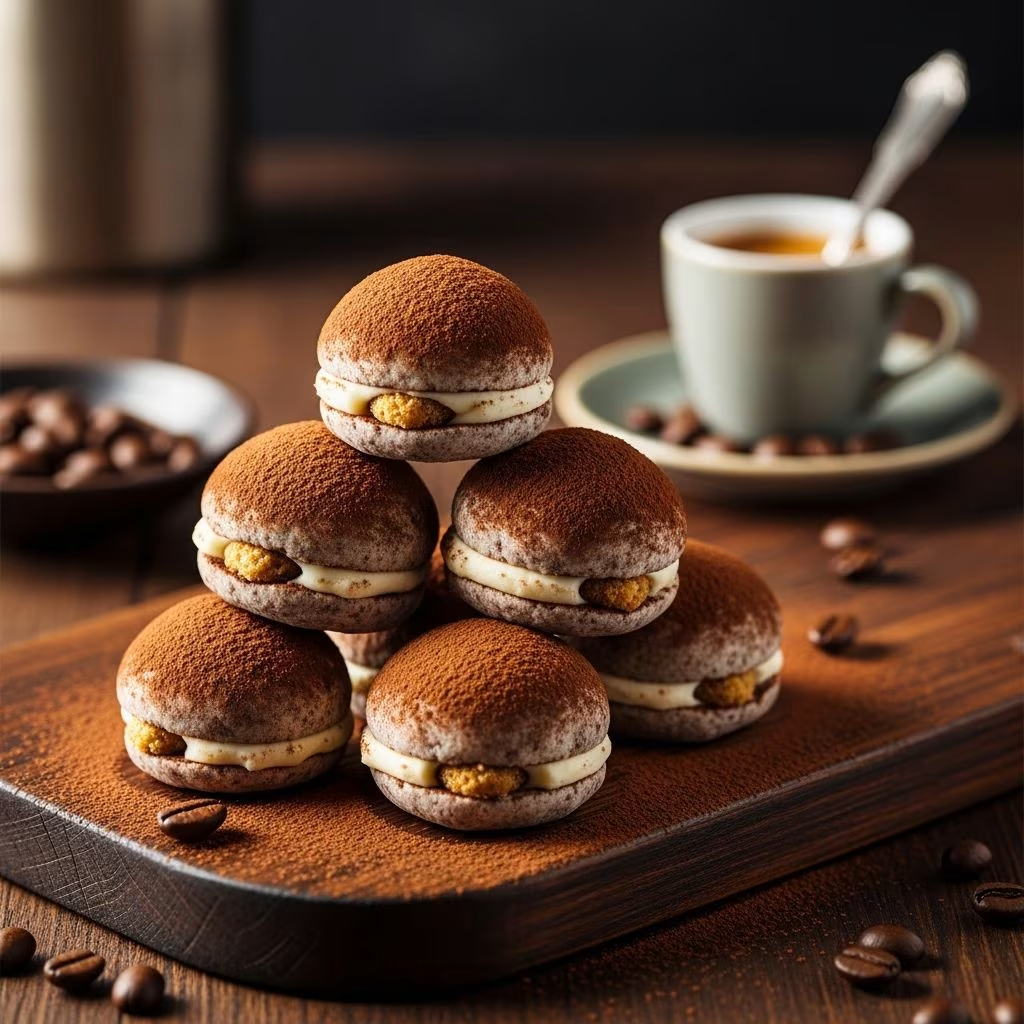
When two culinary traditions converge, magic often happens in the kitchen. Tiramisu snowball cookies represent precisely this kind of innovation—merging the delicate, buttery appeal of traditional snowball cookies with the sophisticated espresso and mascarpone flavors that define tiramisu, one of Italy’s most celebrated desserts. These bite-sized confections offer a unique textural experience: a tender crumb that yields to gentle pressure, complemented by layers of powdered sugar and a hint of cocoa that evoke the essence of their tiramisu inspiration.
The beauty of this recipe lies in its ability to capture complex flavor profiles within a small, portable package. Unlike the layered structure of traditional tiramisu, which requires assembly and refrigeration, these cookies deliver comparable taste satisfaction with considerably less effort. Whether you’re planning a holiday gathering, seeking an elegant addition to a dessert spread, or simply craving something indulgent yet refined, understanding how to prepare tiramisu snowball cookies equips you with a versatile baking skill that impresses consistently.
Understanding the Core Ingredients and Their Roles
Success in baking depends fundamentally on comprehending what each ingredient contributes to the final product. The foundation of tiramisu snowball cookies rests on several key components that work synergistically to create the desired texture and flavor profile.
The Fat Component: Unsalted Butter and Mascarpone
Unsalted butter serves as the primary fat, providing both structure and the rich, mouthfeel that characterizes these cookies. Room temperature butter is essential because it incorporates air more efficiently during the creaming stage, resulting in a lighter crumb structure. The temperature matters considerably—cold butter resists smooth blending, while slightly warm butter can become greasy and fail to hold air pockets.
Mascarpone cheese introduces a secondary fat source with subtle differences from butter alone. This Italian cream cheese, available at most grocery stores in the specialty section, adds silky richness and a barely perceptible tanginess that complements the coffee notes. If mascarpone proves unavailable, a practical substitute combines cream cheese with heavy cream in a one-to-one ratio by weight, though the flavor profile will shift slightly toward more pronounced tang.
Sweetening Elements and Structure Builders
Powdered sugar—sometimes labeled as confectioners’ sugar or icing sugar—serves dual purposes in this recipe. Approximately three-quarters becomes incorporated into the dough itself, where its fine crystal structure and cornstarch content contribute to tender crumbs and a delicate mouthfeel. The remaining portion coats the finished cookies after baking, creating the signature snowy exterior. For optimal results, sift the powdered sugar before measuring to eliminate lumps that could create uneven texture or visible specks in the final product.
All-purpose flour provides the structural backbone, while crushed ladyfinger biscuits (also called Savoiardi) introduce authentic tiramisu character. These Italian cookies, when reduced to fine powder, distribute subtle flavor and delicate texture throughout. Ladyfingers create a lighter crumb than flour alone would produce, aligning with tiramisu’s characteristically airy consistency.
Flavor Foundations: Coffee and Cocoa
Espresso or strong brewed coffee forms the flavor core of these cookies, capturing tiramisu’s essential character. Freshly brewed espresso provides superior flavor to instant powders, though the latter offers convenience and consistent results when the former isn’t available. Some recipes incorporate coffee liqueur such as Kahlúa, which adds depth and subtle complexity beyond simple coffee flavor.
Cocoa powder, preferably Dutch-process varieties, contributes both flavor and visual appeal. Dutch-process cocoa undergoes alkalization, resulting in darker color and more complex taste compared to natural cocoa powder. The final dusting creates the cookies’ distinctive appearance while reinforcing chocolate notes that tie the recipe to traditional tiramisu.
Detailed Preparation and Baking Methodology
Mixing Technique and Sequence
The order in which ingredients combine significantly impacts cookie texture and flavor distribution. Begin by creaming room-temperature butter and mascarpone together until the mixture lightens noticeably in color and becomes fluffy in consistency. This process typically requires one to two minutes of vigorous mixing and serves to incorporate air that later leavening agents can expand.
Gradually incorporate the initial portion of powdered sugar, continuing to beat until the mixture becomes pale and voluminous. This step establishes the foundation for the cookies’ tender crumb. Add vanilla extract and cooled coffee mixture next, stirring until complete incorporation. The mixture will appear slightly grainy at this stage—this is expected and represents properly suspended butter and mascarpone particles rather than inadequate mixing.
Combine dry ingredients separately before introducing them to the wet mixture. Whisk together flour, crushed ladyfingers, salt, cinnamon if using, and baking powder to ensure even distribution of leavening agents and flavorings. Add this dry mixture in two additions, folding gently between additions to avoid overworking the dough. Excessive mixing at this stage develops gluten, resulting in tougher, less tender cookies.
Dough Chilling and Shaping
After dry ingredients are incorporated, allow the dough to chill for 15 to 20 minutes in the refrigerator. This resting period accomplishes multiple objectives: it firms the dough enough to hold shape when rolled, allows flour to fully hydrate for better texture, and prevents excessive spreading during baking. The dough should remain soft enough to shape easily; if it becomes too firm, brief room-temperature resting will restore workability.
Portion the dough using a tablespoon measure or small cookie scoop to ensure consistent sizing. Roll each portion between your palms into smooth spheres approximately one inch in diameter. Consistent sizing ensures even baking—smaller cookies may over-dry while larger ones might remain underbaked at their centers.
Baking Parameters and Visual Cues
Preheat your oven to 350°F (175°C) and arrange racks to allow air circulation around the baking sheets. Space shaped cookies approximately two inches apart on parchment-lined baking sheets to prevent spreading contact. Bake for 10 to 15 minutes, depending on your oven’s characteristics and cookie size.
Watch for the edges to develop light golden color while the centers remain pale. The cookies will appear slightly underbaked when removed from the heat—this is appropriate because they continue cooking on the hot baking sheet during the cooling period. Overbaking results in dry, crumbly texture that detracts from the intended melt-in-your-mouth quality.
Coating and Finishing Techniques
The final presentation and texture of tiramisu snowball cookies depend heavily on proper coating application. While cookies are still warm from the oven, dip or roll each one in powdered sugar to create an even, generous coating. The warmth helps the sugar adhere and begin melting slightly, creating a semi-crackled surface that becomes more pronounced as the cookies cool.
After the initial sugar coating and a brief cooling period, apply a second layer of powdered sugar for enhanced visual impact and additional sweetness. This double-coating technique creates the cookies’ characteristic snowball appearance and ensures complete surface coverage. Finally, dust each cookie with cocoa powder using a fine-mesh sieve. This final layer should be applied just before serving to prevent moisture from the powdered sugar from causing the cocoa to darken or clump.
Ingredient Substitutions and Adaptations
| Original Ingredient | Substitution Option | Impact on Final Product |
|---|---|---|
| Mascarpone Cheese | Cream cheese mixed with heavy cream | Slightly tangier flavor, less silky texture |
| Ladyfinger Biscuits | Graham crackers or vanilla wafers | Less authentic tiramisu character, altered texture |
| Freshly Brewed Espresso | Instant espresso powder dissolved in water | Acceptable results, slightly less complex coffee flavor |
| Dutch-Process Cocoa | Natural unsweetened cocoa powder | Sharper cocoa taste, lighter color |
| All-Purpose Flour | Cake flour | More tender crumb, cookies may spread more |
Troubleshooting Common Baking Challenges
Dough Consistency Issues
If your dough appears too soft to shape easily, extend the chilling time to 25 to 30 minutes rather than proceeding with difficult-to-handle dough. Conversely, overly firm dough that cracks when rolled needs brief room-temperature resting to restore plasticity. Humidity levels in your kitchen affect flour hydration; on humid days, you may need slightly less liquid or additional flour.
Spreading During Baking
Excessive spreading indicates either insufficiently chilled dough or oven temperature that’s too high. Ensure adequate chilling and verify your oven temperature with an independent thermometer, as many home ovens deviate from their displayed settings by 10 to 25 degrees.
Dry or Crumbly Texture
Overbaking represents the most common cause of undesirable dryness. Remove cookies when they’re just beginning to show golden edges; they’ll firm as they cool. If your cookies consistently overbake, consider reducing the oven temperature by 10 degrees and increasing baking time slightly.
Storage, Shelf Life, and Make-Ahead Strategies
Properly stored tiramisu snowball cookies maintain quality for four to five days in an airtight container at room temperature. Layer cookies between parchment sheets to prevent sticking and protect their delicate coatings. Avoid storing in humid environments, as excess moisture will soften the powdered sugar coating and potentially cause clumping.
For extended storage, freeze unfrosted baked cookies in an airtight container for up to three months. Thaw at room temperature before applying the powdered sugar and cocoa coating. Alternatively, freeze the prepared dough in portioned balls for up to two months, baking directly from the freezer with a 2-3 minute increase to baking time.
For make-ahead preparation, mix and chill the dough up to 48 hours in advance, covered with plastic wrap in the refrigerator. Shape and bake when ready to serve. This approach allows you to present freshly baked cookies with minimal last-minute effort.
Frequently Asked Questions
Can I prepare tiramisu snowball cookies without mascarpone cheese?
Yes, combine cream cheese with heavy cream in equal proportions by weight as a substitute. The flavor will be noticeably more tangy, which some bakers find acceptable or even preferable. Alternatively, use all butter and slightly increase the vanilla extract to 1.5 teaspoons for enhanced flavor depth.
What’s the best way to achieve the perfect snowball appearance?
The double-coating technique proves essential: coat warm cookies once, cool them for 5 minutes, then apply a second generous layer of powdered sugar. The initial coating melts slightly into the cookie surface, while the second coat remains on the exterior, creating the characteristic snowy finish.
How do I prevent the cocoa powder from clumping on the powdered sugar coating?
Apply cocoa powder using a fine-mesh sieve immediately before serving, after the powdered sugar has fully set. If cocoa is applied too far in advance, moisture from the powdered sugar will cause it to darken and potentially clump. For parties, dust cookies 30 minutes before serving.
Are these cookies suitable for dietary restrictions?
Traditional recipes contain gluten and dairy, making them unsuitable for celiac or vegan diets without modification. Gluten-free all-purpose flour blends work with slight texture adjustments, while vegan versions require plant-based butter and dairy-free cream cheese alternatives, though results will differ from traditional versions.
Can I make larger versions of these cookies?
Yes, portion dough using two-tablespoon measures instead of one, and increase baking time to 15-18 minutes. Larger cookies may develop uneven browning, so monitor closely and rotate the baking sheet halfway through baking.
References
- Tiramisu Snowball Cookies recipe — Spices N Flavors. 2024. https://spicesnflavors.com/tiramisu-snowball-cookies/
- Easy Tiramisu Snowball Cookies — Stephanie Mormina. 2023-12-12. https://stephaniemormina.com/2023/12/12/easy-tiramisu-snowball-cookies/