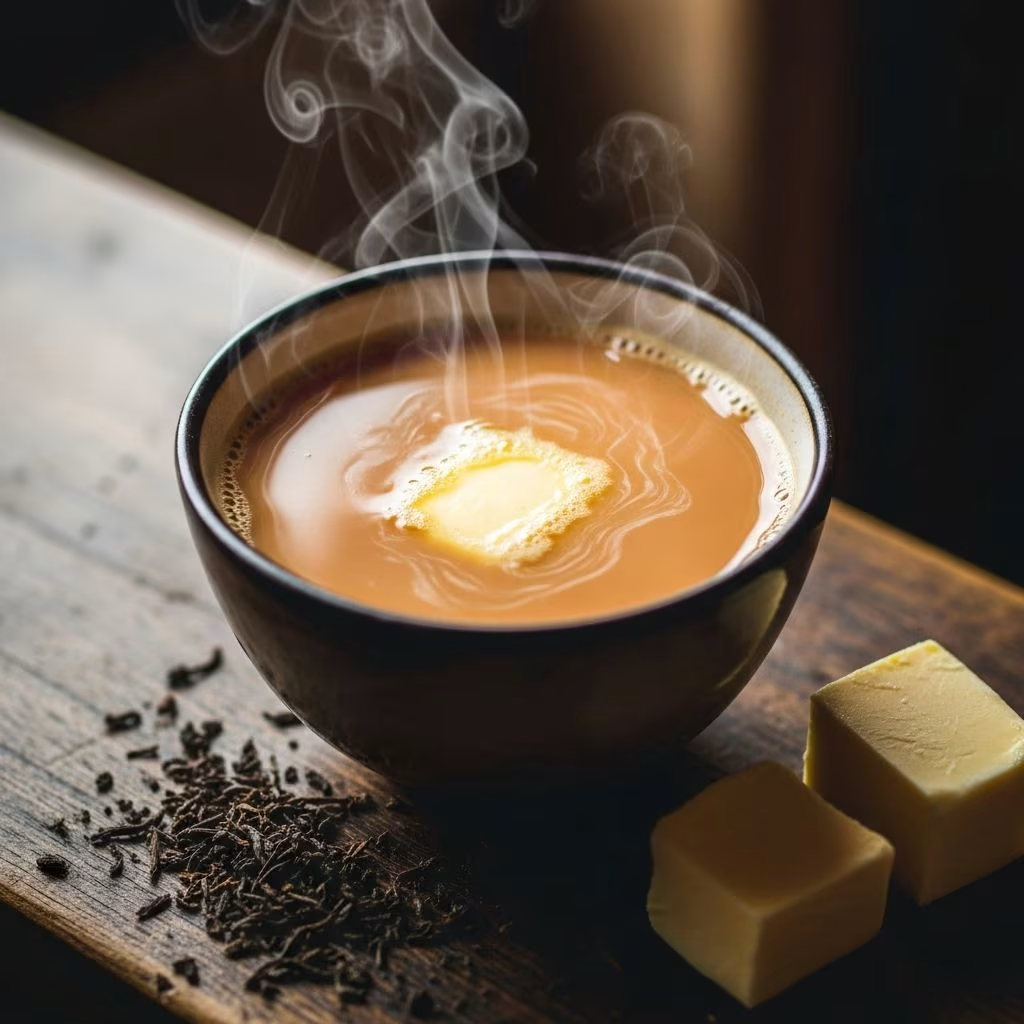
Deep in the rugged landscapes of the Tibetan Plateau, where thin air and biting winds challenge daily life, one beverage stands as both sustenance and ritual: po cha, or Tibetan butter tea. Unlike the sweetened infusions common in other cultures, this salty concoction of black tea, yak butter, and milk delivers a creamy, umami-rich profile that provides essential calories and warmth. Originating from nomadic herders who needed portable, high-energy fuel, po cha has sustained generations through its unique blend of fats and salts.
The Origins and Cultural Essence of Po Cha
Po cha emerged from the necessities of Tibetan pastoral life, where yaks roam vast grasslands providing milk turned into butter—a shelf-stable fat source vital in regions without abundant vegetation. Traditionally brewed in long wooden churns called chandong, the tea was a communal affair, shared during gatherings or offered to guests as a symbol of hospitality. In monasteries, monks sip it throughout the day to maintain focus during long prayer sessions, its fats offering steady energy without sugar crashes.
Historically, po cha’s recipe evolved from practical alchemy: tea bricks imported from regions like Yunnan were boiled into a strong base, emulsified with butter for calories, and salted to enhance flavor and replace electrolytes lost at high altitudes. Today, it remains a cornerstone of Tibetan identity, even among diaspora communities adapting it with modern tools.
Why Po Cha Thrives in Extreme Environments
At elevations over 4,000 meters, the body burns calories rapidly to stay warm and oxygenated. Po cha’s high fat content—often from yak butter rich in CLA (conjugated linoleic acid)—provides dense energy, while salt aids hydration by countering altitude-induced diuresis. Nutritionists note its similarity to a light broth, delivering proteins, fats, and minimal carbs ideal for low-oxygen conditions.
- Energy Density: 2 tablespoons of butter add ~200 calories per serving, crucial for nomads covering miles on foot.
- Thermoregulation: Fats insulate against cold, raising core temperature.
- Hydration Balance: Salt promotes fluid retention in dry, windy climates.
For visitors to Tibet, adapting to po cha helps acclimatize, mimicking local diets that prevent acute mountain sickness.
Essential Ingredients for Authentic Po Cha
Recreating po cha at home requires simple, accessible items that echo Tibetan staples. Focus on full-fat components for creaminess.
| Ingredient | Quantity (for 4 cups) | Notes |
|---|---|---|
| Water | 4 cups | Fresh, for boiling base. |
| Black Tea | 2 teabags or 2 tbsp loose | Lipton or plain Assam; avoid flavored varieties. |
| Salt | ¼ tsp | Adjust to taste; sea salt mimics mineral-rich yak butter. |
| Butter | 2 tbsp | Unsalted or yak butter if available; ghee as substitute. |
| Milk or Half-and-Half | ⅓ cup | Full-fat for emulsion; powdered milk for authenticity. |
Yak butter, with its grassy tang, is ideal but cow butter works well. For vegans, coconut oil and plant milk approximate the profile.
Step-by-Step Guide to Brewing Po Cha
Preparation takes 10-15 minutes and yields 2 hearty servings. Serve piping hot for peak flavor.
- Boil Water: Bring 4 cups to a rolling boil in a saucepan.
- Steep Tea: Add 2 teabags or 2 heaping spoons loose black tea. Simmer 2-3 minutes for medium strength—stronger for bolder taste.
- Season: Stir in ¼ tsp salt. Remove tea bags or strain leaves.
- Add Dairy: Pour in ⅓ cup milk or half-and-half. Turn off heat.
- Emulsify: Transfer to blender with 2 tbsp butter. Blend 2-3 minutes until frothy. (Traditionally churned; shake in lidded jar if no blender.)
- Serve Immediately: Pour into handleless cups, sipping from rims to savor foam.
Pro Tip: Longer blending yields silkier texture, mimicking Tibetan churns.
Variations and Modern Twists on Po Cha
While purists stick to basics, adaptations suit global palates.
- Light Version: Use 1 teabag and skim milk for milder intro.
- Rich Indulgence: Double butter with heavy cream.
- Herbal Infusion: Add ginger or cardamom for warmth.
- Vegan Po Cha: Coconut milk + oil, pinch of miso for umami.
- Iced Adaptation: Rare, but chilled with soda water for summer.
Experiment, but salt remains non-negotiable for authenticity.
Tools of the Trade: From Chandong to Blender
Traditional chandong—a tall wooden cylinder with plunger—aerates tea perfectly but is rare outside Tibet. Modern proxies excel:
- Blender: Fastest, creates microfoam.
- French Press: Plunge for emulsion.
- Mason Jar: Shake vigorously 2 minutes.
Invest in a Tibetan-style churn online for cultural flair.
Health Benefits Backed by Tradition
Po cha’s profile aligns with endurance nutrition: fats for ketosis-like energy, tea’s antioxidants (catechins) for immunity, salt for electrolyte balance. In Tibet, it’s linked to lower heart disease rates among herders, per anecdotal reports. Consume moderately—its calories add up.
Po Cha in Tibetan Daily Life and Rituals
From dawn offerings at home altars to fueling butter lamp rituals in temples, po cha punctuates life. Nomads carry dried butter tea bricks, rehydrating on treks. In urban Lhasa cafes, it’s paired with tsampa (barley flour) for breakfast.
Guests receive three pours: sip once, leave some—refusal signals disrespect. This etiquette fosters bonds in harsh terrains.
Common Mistakes and Troubleshooting
Avoid these pitfalls for success:
- Insufficient Churning: Results in oily separation—blend longer.
- Over-Sweetening: No sugar; salt only.
- Cold Serving: Reheats poorly; brew fresh.
- Weak Tea: Use strong black varieties.
Pairing Po Cha with Tibetan Foods
Enhance with:
- Tsampa dough balls.
- Momos (dumplings).
- Dried yak cheese.
- Thukpa noodle soup.
Its savoriness cuts richness, balancing meals.
Global Appeal: Why Try Po Cha Today
Beyond novelty, po cha offers keto-friendly fuel, warming comfort, and cultural immersion. Home brewers rave about its brothy satisfaction, bridging worlds.
Frequently Asked Questions (FAQs)
What does po cha taste like?
Salty, creamy, with buttery umami—like light soup meets tea. Acquired but addictive.
Can I use green tea?
No; black tea’s robustness is key. Green wilts under butter.
Is yak butter necessary?
Preferred for flavor, but cow butter suffices.
How much caffeine?
Medium—about 40-60mg per cup, steady release.
Storage tips?
Best fresh; refrigerate 1 day, re-blend before reheating.
References
- Butter Tea — Recipe to Make Tibetan Tea: Po Cha — YoWangdu. Accessed 2026. https://www.yowangdu.com/tibetan-food/butter-tea.html