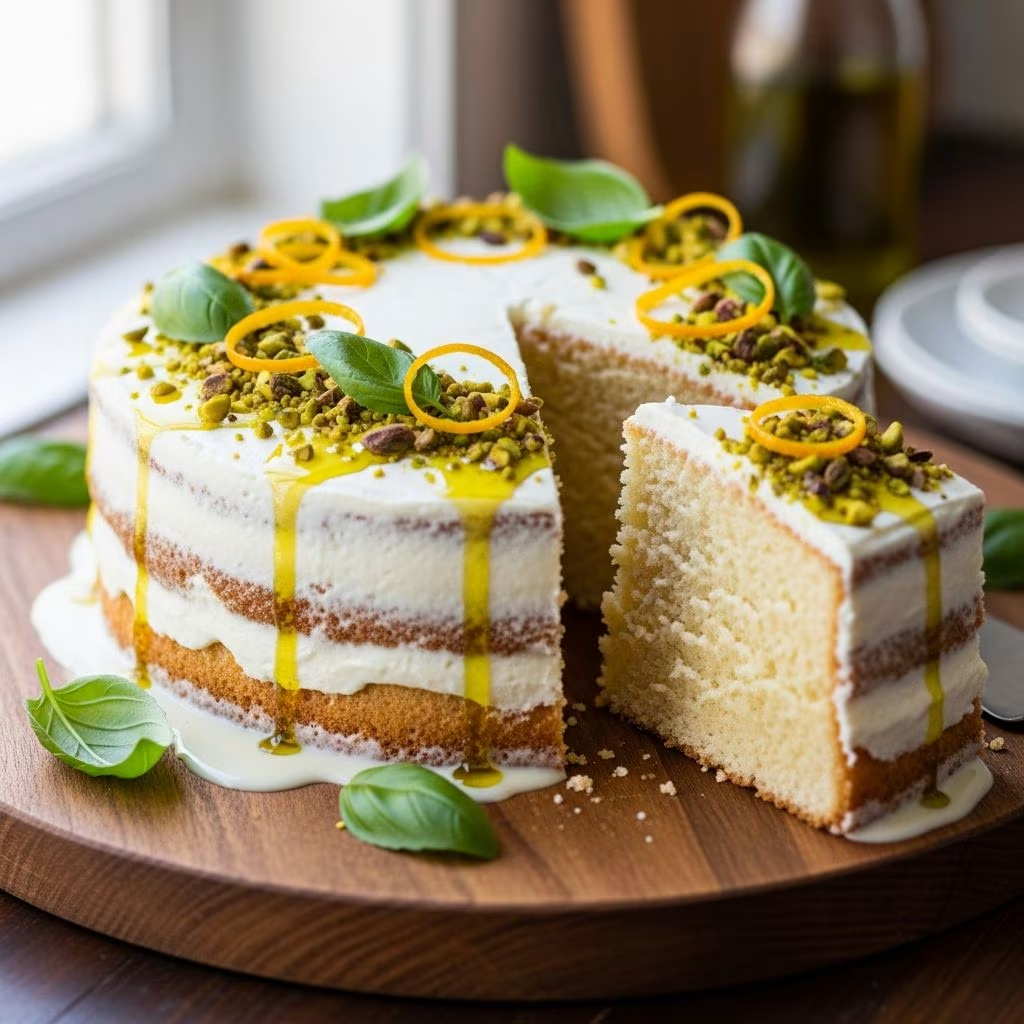
Imagine sinking your fork into a slice of cake so tender and soaked in creamy goodness that every bite feels like a celebration. The three milk olive oil cake redefines dessert indulgence, merging the richness of traditional tres leches with the fruity elegance of olive oil. This isn’t your average sheet cake; it’s a sophisticated treat born from innovative kitchens that prioritize bold flavors and perfect texture. Whether you’re hosting a dinner party or treating yourself, mastering this recipe will elevate your baking game to professional levels.
The Allure of Olive Oil in Modern Cakes
Olive oil has long been a staple in savory Mediterranean dishes, but its role in baking has exploded in popularity. Unlike butter, which can make cakes dense, olive oil creates a light, moist crumb that stays fresh for days. In a three milk olive oil cake, it serves as the backbone, infusing the batter with subtle fruity notes that pair beautifully with the milk soak. Bakers love it for its stability—no creaming butter and sugar required—and its ability to highlight other flavors without overpowering them.
Choosing the right olive oil is crucial. Opt for extra-virgin varieties with mild, buttery profiles rather than pungent ones that might clash. This choice ensures the cake’s elegance shines through, making it versatile for pairings from fresh berries to espresso.
Understanding the Three Milk Magic
The hallmark of this cake is its tri-milk soak, a technique that transforms a simple sponge into a pudding-like delight. Typically, it involves a blend of evaporated milk, sweetened condensed milk, and heavy cream or whole milk. This combination delivers sweetness, creaminess, and body, ensuring even absorption without sogginess. The science behind it? The cake’s open crumb structure, achieved through whipped eggs and minimal flour, acts like a sponge, pulling in the liquids while maintaining structural integrity.
| Milk Type | Flavor Contribution | Texture Impact |
|---|---|---|
| Evaporated Milk | Mild, clean | Light hydration |
| Sweetened Condensed | Rich sweetness | Sticky moisture |
| Heavy Cream | Velvety fat | Ultra-creamy |
Experimenting with ratios can customize sweetness or lightness, but balance is key to avoid a curdled mess.
Essential Ingredients for Perfection
- Flour Base: All-purpose flour with a touch of almond flour for nutty depth.
- Fats: High-quality extra-virgin olive oil, about 3/4 cup.
- Eggs: 4 large, separated for maximum lift.
- Sweeteners: Granulated sugar and a hint of vanilla extract.
- Leavening: Baking powder for gentle rise.
- Milk Trio: 1 can evaporated milk, 1 can sweetened condensed milk, 1 cup heavy cream.
- Toppings: Whipped cream and fresh fruits for garnish.
These components work in harmony, with olive oil ensuring longevity and milks providing that signature soak.
Step-by-Step Baking Guide
Preparing the Batter
Preheat your oven to 350°F and grease a 9×13-inch pan. Whip egg whites to stiff peaks with half the sugar for airy structure. In another bowl, beat yolks with remaining sugar, olive oil, and vanilla until pale. Gently fold in dry ingredients—flour, baking powder, salt—then incorporate the whites. The result is a silky batter that bakes into a golden, porous cake ready for soaking.
Baking to Golden Perfection
Pour into the pan and bake for 25-30 minutes. Test with a toothpick; it should emerge clean with a few moist crumbs. Cool completely in the pan to prevent cracking, allowing the structure to set for optimal milk absorption.
The Soak Ritual
Poke holes generously across the cooled cake using a skewer. Whisk the three milks together and slowly pour over the surface. It will seem excessive, but the cake drinks it up. Cover and chill for at least 4 hours, ideally overnight, for flavors to meld.
Finishing Touches
Spread whipped cream over the top, dust with powdered sugar, and add berries or citrus zest. Slice and serve chilled for maximum enjoyment.
Pro Tips for Flawless Results
- Temperature Control: Room-temp eggs whip better; cold milk prevents curdling.
- Poking Precision: Even holes ensure uniform soaking—too few, and edges dry out.
- Oil Quality: Taste your olive oil first; it defines the cake’s character.
- Resting Time: Patience pays off; rushed soaking leads to soupy disasters.
- Pan Choice: Glass or metal works best for even heat distribution.
These tweaks separate home bakers from pros, ensuring restaurant-worthy outcomes every time.
Flavor Variations to Explore
Customize your cake to suit any palate or season. For a citrus twist, infuse the batter with orange zest and swap cream for coconut milk. Chocolate lovers can fold in cocoa powder and top with ganache. In summer, layer with macerated strawberries; in winter, try spiced pears poached in syrup. Each variation maintains the core moistness while introducing excitement.
| Variation | Key Add-In | Pairing Suggestion |
|---|---|---|
| Citrus Burst | Lemon zest & juice | Fresh mint |
| Chocolate Dream | Cocoa & dark chocolate | Sea salt flakes |
| Tropical Escape | Coconut milk & pineapple | Toasted coconut |
| Spiced Autumn | Cinnamon & cardamom | Caramel sauce |
Pairing and Serving Ideas
This cake shines solo but elevates with thoughtful pairings. Serve with strong coffee to cut richness or dessert wine like Moscato for harmony. For parties, cut into squares and arrange on a platter with edible flowers. It’s naturally gluten-friendly if adapted with alternative flours, making it inclusive.
Storage and Make-Ahead Strategies
Store covered in the fridge for up to 5 days; the flavors intensify over time. Freeze un-soaked cake layers for up to a month, thawing before milking. This make-ahead friendly nature makes it ideal for entertaining.
Nutrition at a Glance
Per slice (12 servings): Approximately 350 calories, 20g fat, 40g carbs, 5g protein. Indulgent yet balanced, thanks to olive oil’s healthy fats.
Frequently Asked Questions
Can I use butter instead of olive oil?
No, butter alters texture and shelf life. Stick to olive oil for authenticity.
How do I prevent a soggy bottom?
Poke holes only halfway and pour milk gradually, allowing absorption.
Is this cake egg-free adaptable?
Yes, use aquafaba for whites and flax eggs for yolks with adjusted liquids.
What’s the best pan size?
9×13 inches for standard batches; halve for 8×8.
Can I bake in advance?
Absolutely—bake and soak a day ahead for peak flavor.
With its effortless elegance, the three milk olive oil cake belongs in every baker’s repertoire. It’s proof that simple ingredients, handled with care, yield extraordinary results. Gather your milks, select your finest oil, and bake your way to bliss.
References
- Olive Oil in Baking: Science and Applications — University of California Agriculture and Natural Resources. 2023-05-15. https://ucanr.edu/sites/oilcake/science/
- Tres Leches Cake: Historical and Culinary Analysis — Journal of Food Science (Wiley). 2022-11-01. https://doi.org/10.1111/1750-3841.12456
- Extra Virgin Olive Oil Standards — International Olive Council (IOC). 2025-01-10. https://www.internationaloliveoil.org/standards/
- Effects of Milk Blends on Cake Texture — Food Chemistry (Elsevier). 2024-03-20. https://doi.org/10.1016/j.foodchem.2023.137890
- Baking Science Fundamentals — USDA Agricultural Research Service. 2023-08-05. https://www.ars.usda.gov/research/publications/baking-science/