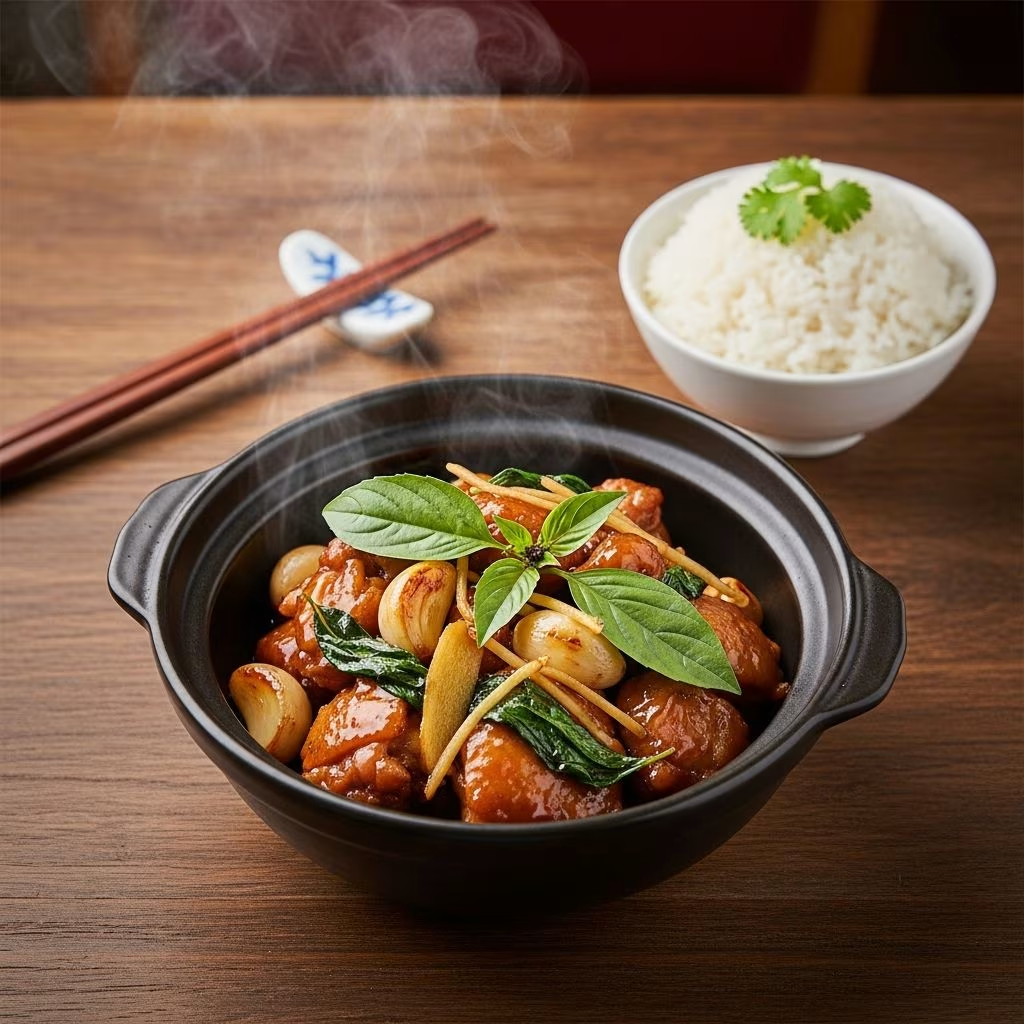
Three Cup Chicken, known as San Bei Ji in Chinese, stands as one of Taiwan’s most cherished culinary treasures. This dish captivates with its intense aromas and harmonious blend of savory, sweet, and herbal notes, all achieved through a simple braising process. Despite its name suggesting equal volumes of three key elements—one cup each of sesame oil, soy sauce, and rice wine—modern recipes wisely scale down these amounts to prevent overwhelming richness while preserving the essence.
Origins and Cultural Significance
The roots of Three Cup Chicken trace back over 700 years to Jiangxi province in mainland China, where it emerged as a rustic home-cooked meal. It later evolved into a staple in Taiwanese cuisine, reflecting the island’s vibrant food culture influenced by Minnan heritage. Legend attributes its creation to a clever cook who improvised with pantry staples during scarcity, combining chicken with sesame oil, soy sauce, and rice wine to yield profound flavor. Today, it graces family tables, street stalls, and upscale restaurants across Taiwan, often served with steamed rice to soak up the glossy sauce.
In Taiwanese tradition, San Bei Ji embodies balance—umami from soy, depth from wine, and nuttiness from sesame oil—mirroring philosophical ideals of harmony. It’s a dish that invites communal eating, with its bold scents drawing everyone to the table. Variations exist regionally, but the core trio remains constant, making it accessible yet endlessly adaptable.
Essential Ingredients Breakdown
At its heart, Three Cup Chicken relies on fewer than ten ingredients, emphasizing quality over quantity. Here’s a detailed look at what makes this dish shine:
- Chicken: Bone-in, skin-on thighs or wings are ideal for juiciness and flavor absorption. Thighs mimic traditional whole-chicken chunks without extra chopping; wings offer crispiness.
- Sesame Oil: The aromatic base, used generously for frying and finishing. Its toasty profile defines the dish—choose pure, unrefined for authenticity.
- Shaoxing Rice Wine: Adds complexity and tenderizes meat. This fermented wine from China deglazes and balances saltiness; substitute dry sherry if unavailable.
- Soy Sauces: Light soy for saltiness and dark soy for color and molasses-like depth. The combo creates a glossy, clinging sauce.
- Aromatics: Ginger slices, whole garlic cloves, scallions, and Thai basil. Ginger caramelizes for sweetness, garlic infuses mellow warmth, basil delivers a fresh, anise-like punch at the end.
- Extras: Sugar for caramelization, white pepper for subtle heat, and optional bell peppers or chilies for color and spice.
Pro tip: Prep everything mise en place style, as the cooking unfolds rapidly in one wok.
Step-by-Step Cooking Guide
Cooking Three Cup Chicken takes about 25 minutes, blending stir-frying and braising for tender meat coated in a sticky glaze. Use a wok or deep skillet for even heat.
Infuse the Oil: Heat 3 tablespoons sesame oil over low. Add ginger slices, smashed garlic, and scallion whites. Fry until fragrant and garlic spots brown—about 3 minutes. This builds the flavor foundation.
Brown the Chicken: Crank heat to medium. Nudge aromatics aside, add chicken in a single layer. Sear undisturbed until golden, then flip and stir until mostly opaque. Crowded? Stack aromatics atop chicken.
Braise: Pour in Shaoxing wine, soy sauces, sugar, and pepper. Toss to coat, cover, and simmer on high for 5 minutes (adjust: 3 for breasts, 8 for wings, 12 for drumsticks). Steam builds tenderness.
Thicken the Sauce: Uncover, add bell pepper and scallion greens. Boil vigorously, stirring, until sauce reduces to a syrupy cling—5 minutes. Off heat, stir in extra sesame oil and basil to wilt.
Serve hot over rice. The sauce should coat each piece lusciously.
Pro Tips for Perfection
Elevate your San Bei Ji with these insights:
- Chicken choice matters: Skin-on retains moisture; bone-in amplifies taste. Avoid overcooking breasts.
- Oil temperature is key—low for aromatics prevents burning, medium for searing locks in juices.
- Sauce consistency: Reduce until it clings like honey but doesn’t burn. If too thick, splash water; too thin, simmer longer.
- Basil timing: Add last to preserve vibrancy. Thai basil is traditional; Italian works in a pinch.
- Freshness rules: Use live aromatics for peak perfume.
| Chicken Cut | Braising Time | Texture Outcome |
|---|---|---|
| Thighs (boneless, skin-on) | 5 minutes | Tender, juicy |
| Wings | 8 minutes | Crispy, sticky |
| Drumsticks | 12 minutes | Meaty, fall-off-bone |
| Breasts | 3 minutes | Moist if not overdone |
Common Mistakes to Avoid
Even seasoned cooks falter here—sidestep these pitfalls:
- Rushing Aromatics: High heat burns ginger and garlic, turning bitter.
- Skimping on Oil: Sesame oil isn’t just fat; it’s flavor. Measure generously.
- Overcrowding: Steam instead of sear? Cook in batches.
- Skipping Reduction: Watery sauce dilutes magic—boil it down.
- Basil Too Early: It wilts to mush; stir in off-heat.
Variations and Adaptations
While classic San Bei Ji is pork-free, tweak for preferences:
- Vegetarian: Swap chicken for tofu or mushrooms; same method.
- Spicy Kick: Add dried chilies with aromatics for heat.
- Whole Bird: Chop a small chicken into chunks for tradition.
- Gluten-Free: Use tamari instead of soy.
- Air Fryer Hack: Sear wings in air fryer, then braise on stovetop.
For kids, reduce soy and basil; adults love extra garlic.
Nutritional Profile
A 4-serving batch (using thighs) offers balanced macros: ~350 calories per serving, 25g protein, 20g fat (mostly healthy sesame), 10g carbs. Rich in iron, B vitamins from chicken; antioxidants from basil and ginger. Pair with veggies for a complete meal.
Pairing Suggestions
Steamed jasmine rice is non-negotiable. Complement with stir-fried greens, cucumber salad, or pickled radish to cut richness. Beer like Taiwan Beer or light white wine pairs beautifully.
Frequently Asked Questions (FAQs)
What if I can’t find Thai basil?
Italian basil or holy basil substitutes well; add a pinch of anise seed for authenticity.
Can I make this ahead?
Yes, refrigerate up to 3 days. Reheat gently with a splash of water to revive sauce.
Is Shaoxing wine alcoholic?
It cooks off mostly, but use cooking wine or sherry for alcohol-free.
How spicy is it naturally?
Mild; chilies are optional for heat control.
Freezer-friendly?
Freeze cooked dish up to 1 month; thaw and reheat on stove.
Why Three Cup Chicken Captivates Home Cooks
Beyond simplicity, San Bei Ji delivers restaurant-level results with everyday ingredients. Its quick prep suits weeknights, while flavors linger like a banquet. Experiment confidently—each tweak refines your mastery of this timeless recipe. Invite friends over; the aromas alone will impress.
References
- Three cup chicken (San Bei Ji, 三杯鸡) — Red House Spice. 2023-05-12. https://redhousespice.com/three-cup-chicken/
- Three Cup Chicken (三杯鸡) — Omnivore’s Cookbook. 2022-08-15. https://omnivorescookbook.com/three-cup-chicken/