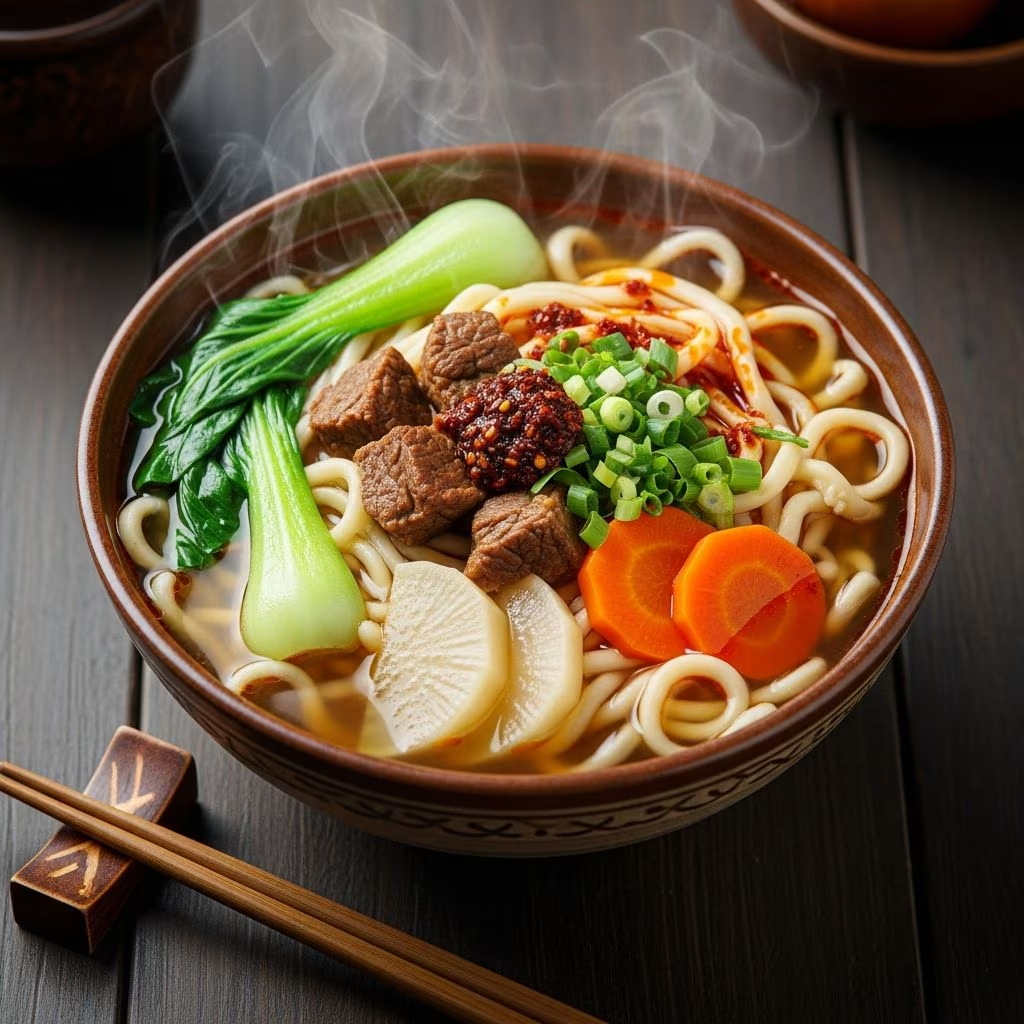
Thenthuk stands as a cornerstone of Tibetan culinary tradition, a steaming bowl of hand-pulled noodles simmered in a savory broth that warms the body and soul against the harsh Himalayan winters. This dish, beloved by nomads and settled communities alike, embodies simplicity and sustenance, with its name deriving from the Tibetan words for “pull” (then) and “noodle” (thuk).
Origins and Cultural Significance in Tibetan Cuisine
Rooted in the rugged landscapes of Amdo in eastern Tibet, Thenthuk emerged as a practical meal for herders facing extreme cold. Traditionally crafted with yak or mutton, it provided essential energy from carbs and proteins. Today, it thrives among Tibetan diaspora communities worldwide, adapting to local ingredients while preserving its hand-pulled essence.
In Tibetan food culture, noodle soups like Thenthuk fall under the broader category of thukpa, but the distinctive pulling technique sets it apart. Families gather to prepare it during festivals or daily meals, fostering bonds through shared labor and flavors that evoke home.
Key Ingredients for Traditional Thenthuk
Thenthuk’s appeal lies in its straightforward components, allowing fresh, seasonal produce to shine. Core elements include a simple dough for noodles, aromatic base vegetables, and a light broth enhanced by soy and herbs.
- Dough: All-purpose flour, water, pinch of salt, and oil for flexibility.
- Broth Base: Onion, ginger, garlic, tomatoes, carrots, and greens like spinach or cilantro.
- Protein (Optional): Beef, yak, mutton, or skip for vegetarian.
- Seasonings: Soy sauce, bouillon, salt, pepper.
For a serving of 2-4, scale flour to 1-2 cups and broth to 4-6 cups stock or water.
Step-by-Step Guide to Making Thenthuk at Home
Preparing Thenthuk demands patience, especially for the noodles, but yields profound rewards. Begin with dough, then broth, culminating in the thrilling “throw-down” of pulled strips.
1. Preparing the Hand-Pull Noodle Dough
Mix 1 heaping cup flour with ½ cup water, ¼ tsp salt, and 1 tsp oil. Knead 4-5 minutes into a smooth, elastic ball that stretches without tearing. Rest covered 15-20 minutes to relax gluten.
Divide into fist-sized portions, roll into banana-shaped logs, coat lightly with oil, and cover to prevent drying. This resting ensures pliable dough for pulling.
2. Building the Flavorful Broth
Heat 2-3 tbsp oil in a pot. Sauté chopped onion, minced ginger (1 tbsp), garlic (1 clove), and carrots until fragrant, 3-4 minutes. Add sliced meat if using (¼-½ lb beef), cooking until browned.
Stir in chopped tomato, then pour in 4-5 cups water or stock. Season with bouillon pinch, soy sauce dashes, salt, and pepper. Simmer 10-15 minutes for depth.
3. The Art of Pulling and Adding Noodles
Once broth boils vigorously, take a dough log, flatten slightly, and pinch off thumb-sized flat pieces, stretching and tearing directly into the pot. Work quickly to avoid clumping; Amdo locals pull with lightning speed.
Cook noodles 2-4 minutes until they float and firm up—no doughy taste. Add spinach handful, chopped green onions, and cilantro last, wilting 30 seconds. Adjust seasoning and serve piping hot.
Vegetarian and Meat Variations
Thenthuk’s versatility shines in adaptations. For vegetarian, load up on zucchini, peas, pumpkin, or sweet potato, caramelizing veggies for richness.
| Variation | Key Additions | Prep Tips |
|---|---|---|
| Vegetarian | Carrots, zucchini, spinach, peas | Sauté longer for umami; use veg stock. |
| Beef Thenthuk | Thin beef slices, daikon | Brown meat first; simmer 20 mins. |
| Chicken or Yak | Poultry chunks or sub yak | Traditional Amdo style; add chili optional. |
Experiment with local greens or proteins, maintaining the pull-noodle ritual.
Pro Tips for Perfect Thenthuk Every Time
- Dough Texture: Aim for thick, stretchy—not sticky or brittle. Add water sparingly.
- Broth Balance: Taste iteratively; soy adds depth without overpowering.
- Pulling Technique: Practice on floured hands; tear unevenly for authenticity.
- Don’t Overcook: Noodles toughen quickly—serve immediately.
- Make-Ahead: Prep dough and broth separately; pull fresh.
High altitude? Increase simmer time as water boils faster.
Health Benefits and Nutritional Profile
Thenthuk fuels with complex carbs from handmade noodles, vitamins from veggies, and lean protein. A bowl (approx. 500 calories) offers fiber, iron, and hydration—ideal post-hike or in winter. Vegetarian versions boost antioxidants via greens.
Pairing Suggestions and Serving Ideas
Serve in deep bowls with chopsticks and spoon. Pair with butter tea or tsampa for full Tibetan experience. Spice with chili sauce for heat.
Common Mistakes to Avoid
- Skipping dough rest: Leads to tearing.
- Pre-cutting noodles: Defeats hand-pull charm.
- Weak broth: Always sauté aromatics well.
Frequently Asked Questions (FAQs)
What makes Thenthuk different from other thukpa?
Thenthuk specifically uses hand-pulled, irregular noodles, unlike sliced or extruded types in other thukpas.
Can I use a pasta machine?
Traditionalists say no—pulling by hand is key—but for ease, roll thin and cut strips.
Is Thenthuk gluten-free?
No, uses wheat flour. Substitute rice flour for approximation.
How long does it store?
Best fresh; refrigerate broth+noodles 1 day, reheat gently.
Where did Thenthuk originate?
Primarily Amdo region, Tibet, as nomad sustenance.
Exploring Thenthuk in Modern Kitchens
Beyond tradition, Thenthuk inspires fusion: add mushrooms, bok choy, or miso. Cooking classes and YouTube demos demystify it for global audiences.
This dish not only nourishes but connects eaters to Tibetan resilience. Master it to bring plateau warmth home.
References
- Thenthuk: Tibetan pull noodle soup, a recipe for comfort! — YoWangdu. Accessed 2026. https://www.yowangdu.com/tibetan-food/thenthuk.html
- Recipe for Tibetan Noodle Soup, Thenthuk — Tibet Nature Project. Accessed 2026. https://tnp.org/recipe-for-tibetan-noodle-soup-thenthuk/
- Thenthuk Soup Recipe – Tibetan Style Noodle Soup — Archanas Kitchen. 2023-05-22. https://www.archanaskitchen.com/recipe/thenthuk-soup-recipe-tibetan-style-noodle-soup
- Thenthuk: Tibetan pulled noodles with vegetables — Faraway Worlds. Accessed 2026. https://www.farawayworlds.com/recipes/thenthuk-tibetan-pulled-noodles