The story of frozen waffles is one of ingenuity, timing, and transformation. What began as a labor-intensive treat has evolved into a cornerstone of modern breakfasts, thanks to pioneering inventors who harnessed freezing technology to deliver convenience without sacrificing flavor. This journey spans centuries, from ancient cooking methods to the household name that dominates freezer aisles today.
Ancient Roots of the Waffle
Waffles trace their lineage back to ancient civilizations. In Greece, Athenians prepared flat cakes known as obelios, cooked between heated metal plates to create a crisp texture. These early versions laid the groundwork for what would become a beloved food across cultures.
During the Middle Ages, waffles took on new forms in Europe. Cooks used ornate irons imprinted with family crests, religious symbols, or honeycomb patterns—evoking the interlocking crosses of Christian iconography. These tools not only cooked the batter but also branded the waffles with distinctive designs, turning them into festive treats for fairs and holidays.
The connection to wafers is no coincidence; the term ‘waffle’ derives from ‘wafer,’ thin biscuits used in religious ceremonies. This evolution from sacred to secular highlights how everyday foods often blend tradition with innovation.
Arrival in America and Early Popularity
Waffles crossed the Atlantic with European settlers. Pilgrims encountered them in Holland during their voyage to the New World, bringing the concept to American shores. By the late 18th century, Thomas Jefferson popularized the waffle iron after acquiring one in France around 1789, sparking ‘waffle parties’—social gatherings centered around these griddle-cooked delights.
Initially, making waffles at home was a chore. It involved mixing batter from scratch and operating stovetop irons, which demanded skill and time. Electric waffle irons, invented in the early 20th century, simplified the process but still required fresh preparation each morning.
The Dorsa Brothers: Pioneers of Convenience
In the 1930s, amid the Great Depression, three brothers—Frank, Tony, and Sam Dorsa—set out to ease kitchen burdens in San Jose, California. Starting in their mother’s kitchen, they developed a waffle mix for restaurants, allowing quick preparation of fresh waffles.
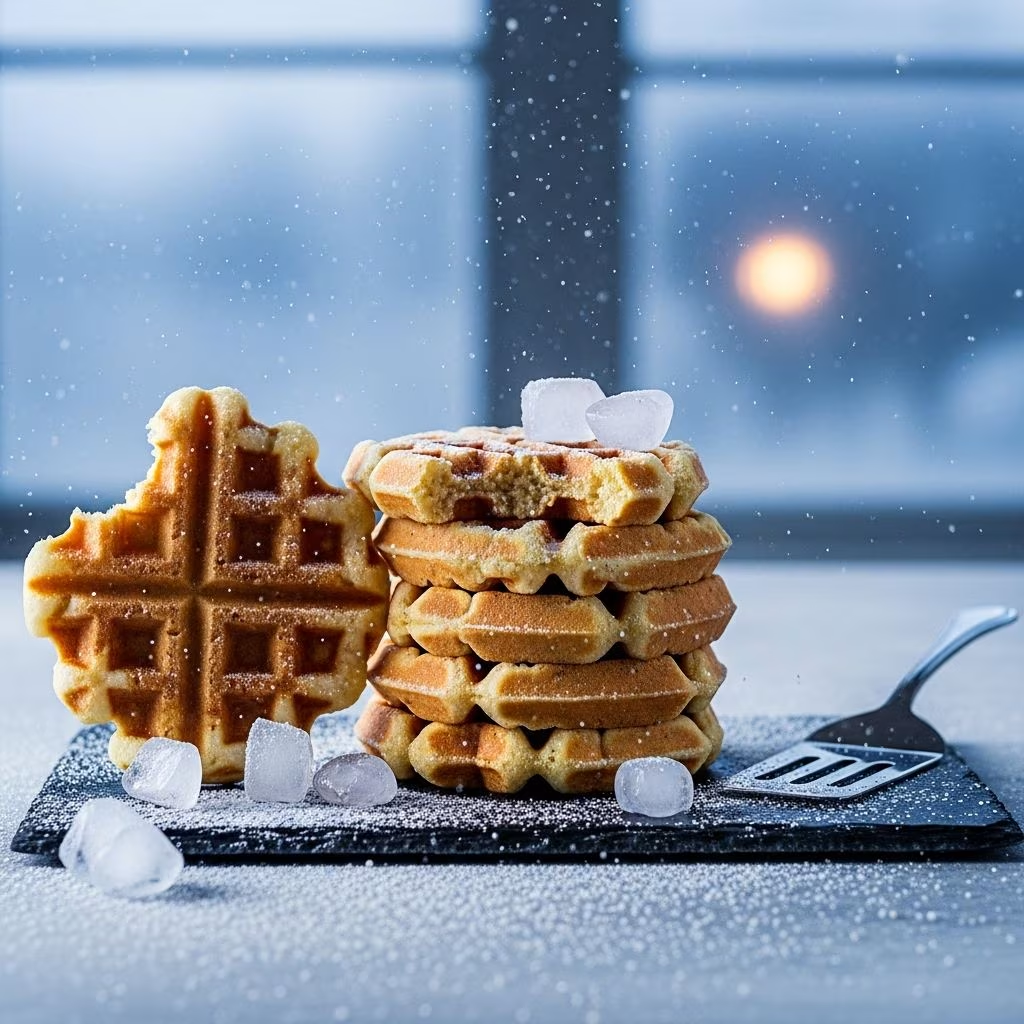
Frank Dorsa, the visionary, expanded into home use. He cooked waffles on standard irons and flash-froze them, creating a product ready for toasters. This innovation addressed the demands of busy families who craved homemade taste without the hassle.
The brothers’ ventures weren’t limited to waffles. Their company, initially named Eggo, produced mayonnaise—hence the brand name—and later potato chips and dry waffle mixes. Eggo mayonnaise predated waffles, but the frozen product would eclipse all others.
Birth of the Frozen Waffle: From Froffles to Eggo
By 1953, the Dorsas launched their breakthrough: precooked, frozen waffles. Initially dubbed ‘Froffles’—a portmanteau of ‘frozen’ and ‘waffles’—the name didn’t stick. Consumers noted the eggy flavor, leading to ‘Eggo,’ a nod to the batter’s richness.
This timing coincided with America’s frozen food boom. Post-World War II households embraced refrigeration, and the Dorsas’ carousel machine churned out thousands of waffles hourly for freezing and distribution. Eggo became the first frozen waffle in stores, hitting freezer aisles in 1953.
| Milestone | Year | Details |
|---|---|---|
| Early Experiments | 1936 | Dorsa brothers create waffle mix in mother’s kitchen |
| Frozen Innovation | 1953 | First ‘Froffles’ launched, rebranded as Eggo |
| Corporate Shift | 1962-1970 | Sold to Fern International, then Kellogg’s |
| Iconic Slogan | 1972 | ‘L’eggo My Eggo’ debuts |
Kellogg’s Takeover and Market Dominance
In the 1960s, the Dorsas sold Eggo to Fern International, which Kellogg’s acquired in 1970. Under Kellogg’s, production scaled massively. The 1972 slogan ‘L’eggo My Eggo’ captured the product’s appeal—quick, fun, and possessive of morning routines.
Eggo waffles surged in popularity, becoming North America’s top-selling frozen waffle—a position it holds today. Challenges arose, like the 2009 shortage from listeria issues, flooding, and plant repairs, but the brand rebounded strongly.
Expansions included Eggo-themed cereals shaped like mini waffles in flavors like maple syrup and cinnamon toast, launched in 2006, paused, and revived in 2019.
Technological and Cultural Impact
Frozen waffles democratized breakfast. No more batter mixing or iron heating—just pop in the toaster. Frank Dorsa’s inventions, including an automatic potato peeler, showcased his knack for efficiency.
Culturally, Eggo transcended food. It starred in Stranger Things, inspired holiday recipes like egg nog waffles, and became a symbol of convenience for working parents. The product’s success spurred competitors, but Eggo remains synonymous with frozen waffles.
Modern Variations and Global Reach
Today, Eggo offers diverse flavors: blueberry, chocolatey, homestyle, and gluten-free. Nutritional tweaks cater to health-conscious consumers, with options low in sugar or fortified with vitamins.
- Classic Original: Buttery, golden perfection.
- Flavored Varieties: From strawberry to pumpkin spice.
- Specialty Lines: Keto-friendly, whole grain, and mini formats.
Globally, frozen waffles have inspired adaptations, blending local tastes while retaining the core appeal of speed and crispiness.
Why Frozen Waffles Endure
Their longevity stems from solving real problems: time scarcity in fast-paced lives. Data shows frozen breakfasts now comprise over 20% of U.S. morning meals, with waffles leading the category. Innovations in freezing preserve texture, ensuring toaster results rival fresh-made.
Frequently Asked Questions (FAQs)
What year were frozen waffles invented?
Frozen waffles debuted in 1953, created by Frank Dorsa and brothers.
Why is it called Eggo?
The name originated from their earlier Eggo mayonnaise, later applied to the eggy-flavored waffles.
Who owns Eggo today?
Kellanova (formerly Kellogg’s) owns the brand since 1970.
Were frozen waffles always popular?
Initial sales grew slowly; Kellogg’s marketing in the 1970s propelled them to dominance.
Can you make frozen waffles without a toaster?
Yes, use a conventional oven or microwave, though toasting yields the best crispiness.
References
- About Us – Leggo My Eggo — Kellogg’s. Accessed 2026. https://www.leggomyeggo.com/en_US/about-us.html
- Eggo – Wikipedia — Wikipedia contributors. 2026-04-08. https://en.wikipedia.org/wiki/Eggo
- A Brief History of Waffles — TIME. 2016-04-20. https://time.com/3957420/waffles/
- The Story Behind Eggo Waffles’ Name — YouTube (History of Food). Accessed 2026. https://www.youtube.com/watch?v=FF6N2a1zQZ4
- The Origins Of Eggo Have Nothing To Do With Waffles — The Daily Meal. 2023-01-15. https://www.thedailymeal.com/1127961/the-origins-of-eggo-have-nothing-to-do-with-waffles/
- Froffles! a.k.a. L’eggo my eggo — It’s Borderline Genius. 2019-12-01. http://www.itsborderlinegenius.com/2019/12/froffles-aka-leggo-my-eggo.html?m=0