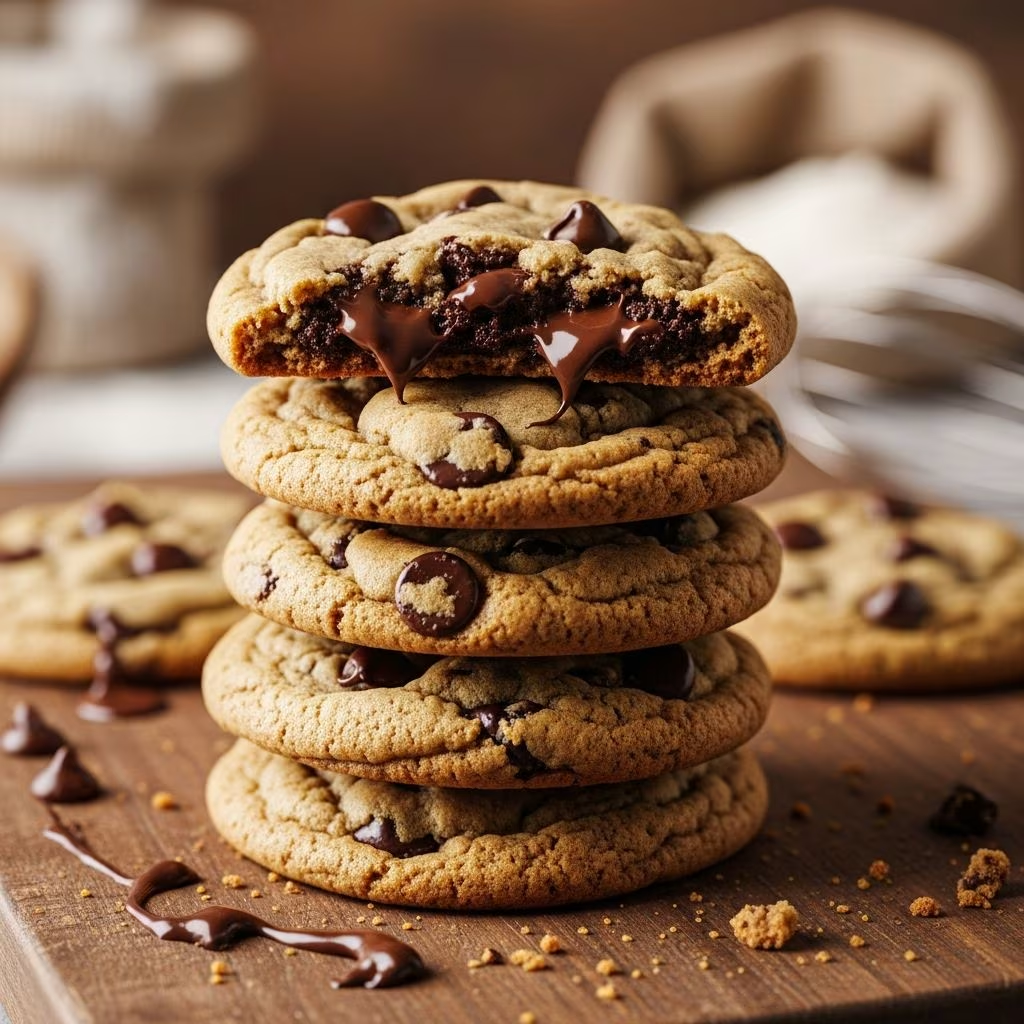
America’s beloved chocolate chip cookie has a rich backstory filled with innovation, culinary science, and endless adaptability. Far from a simple snack, this treat embodies creativity in the kitchen and has evolved into countless forms enjoyed worldwide.
The Ingenious Origin Story
The chocolate chip cookie emerged in the late 1930s at the Toll House Inn in Whitman, Massachusetts, thanks to Ruth Wakefield, a skilled dietitian and innkeeper. Contrary to the popular tale of an accidental discovery, Wakefield intentionally chopped a Nestlé semi-sweet chocolate bar into her butter cookie dough, anticipating the pieces would create distinct bursts of chocolate flavor rather than fully melting.
Wakefield’s expertise as a trained professional meant she understood ingredient behavior under heat. Baker’s chocolate melts smoothly, but semi-sweet bar pieces retain their shape, softening just enough to deliver molten centers. This deliberate experiment transformed standard butter cookies into something revolutionary.
Guests at the inn raved about these new “Toll House Chocolate Crunch Cookies,” prompting Wakefield to package them for sale and feature the recipe in her 1938 cookbook, Tried and True. Local press coverage amplified their fame, turning a regional delicacy into a national sensation.
A Partnership That Changed Baking Forever
Nestlé quickly recognized the potential. In 1939, the company launched chocolate morsels—tiny, uniform chips engineered not to melt completely during baking. This innovation stemmed directly from Wakefield’s recipe, which popularized the need for such a product.
In exchange, Wakefield received a lifetime supply of Nestlé chocolate, forgoing patents or royalties. This deal fueled the cookie’s mass appeal, embedding it in American culture by the 1940s. During World War II, care packages to soldiers often included these cookies, solidifying their status as comfort food.
Understanding the Science of Texture
Perfecting chocolate chip cookies hinges on balancing ingredients for desired outcomes: chewy, crispy, or somewhere in between. Brown sugar, rich in molasses, retains moisture for a soft, chewy bite, while white sugar promotes crispiness by drawing out water during baking.
Butter provides fat for tenderness and flavor; softening it correctly ensures even mixing. Overmixing develops gluten in flour, leading to toughness, so gentle incorporation is key. Baking time and temperature also matter—shorter bakes at moderate heat yield chewiness, while longer exposure crisps edges.
| Texture Goal | Key Ingredients | Baking Adjustments |
|---|---|---|
| Chewy | More brown sugar, extra butter | Lower temp (325°F), 10-12 min |
| Crispy | More white sugar, less butter | Higher temp (375°F), 12-15 min |
| Balanced | Equal sugars, chilled dough | 350°F, 11-13 min |
Chilling dough firms butter, preventing excessive spread for thicker cookies. These principles allow home bakers to customize results reliably.
Record-Breaking Feats and Global Appeal
Chocolate chip cookies inspire monumental achievements. In 2003, The Immaculate Baking Company in Flat Rock, North Carolina, baked the world’s largest at 40,000 pounds and 101 feet in diameter, using massive quantities of ingredients. Another record cites 38,000 pounds with 30,000 eggs, showcasing the recipe’s scalability.
- These giants highlight engineering challenges like even baking in industrial ovens.
- They draw crowds and media, celebrating the cookie’s cultural dominance.
- Smaller feats, like quarter-sized originals, contrast modern oversized bakery versions.
Globally, names vary: “koekje” (Dutch for small cake), biscuits in the UK, galletas in Spain, keks in Germany. National Cookie Day on December 4 honors this versatility.
Modern Twists and Dietary Adaptations
Today’s bakers innovate endlessly. Vegan versions swap butter for plant-based fats and eggs for flax or aquafaba, maintaining texture without animal products. Gluten-free flours like almond or oat blends mimic wheat’s structure.
Flavor experiments include lavender-infused white chocolate, chili-spiced dark chips, or lemon zest for brightness. Nuts like walnuts add crunch, while sea salt sprinkles enhance contrast.
These adaptations cater to health trends, allergies, and preferences, proving the recipe’s flexibility since Wakefield’s era.
Essential Baking Techniques
Mastery comes from precision. Measure flour by spooning into cups and leveling—scooping packs too much, yielding dry cookies. Use room-temperature ingredients for emulsion.
- Cream butter and sugars until light and fluffy (3-5 minutes).
- Add eggs one at a time, beating well.
- Mix dry ingredients separately before folding in.
- Incorporate chips last to avoid melting from warmth.
- Scoop uniform portions onto parchment-lined sheets.
Cool on trays 5 minutes post-bake to set. Store airtight; chewy cookies freeze dough balls for fresh-baked convenience.
Historical Evolution Timeline
| Year | Milestone |
|---|---|
| 1938 | Ruth Wakefield creates recipe at Toll House Inn. |
| 1939 | Nestlé introduces chocolate chips. |
| 1940s | Becomes WWII comfort food staple. |
| 2003 | World’s largest cookie baked (40,000 lbs). |
| Today | Vegan/gluten-free versions proliferate. |
Common Myths Debunked
- Myth: Pure accident. Wakefield planned the chunks for texture.
- Myth: First cookies were huge. Originals were quarter-sized, crispy bites.
- Myth: Chips always melt. Designed to hold shape.
FAQs
What is the original chocolate chip cookie recipe from Ruth Wakefield?
It featured butter dough with chopped Nestlé bar, baked small and crispy. Published in her 1938 cookbook.
How do I make chocolate chip cookies chewy?
Increase brown sugar and butter; chill dough and bake briefly at lower heat.
Are there vegan chocolate chip cookies?
Yes, using plant butters, flax eggs, and dairy-free chips for authentic taste.
What’s the biggest chocolate chip cookie ever?
40,000 pounds, 101 feet wide, made in 2003.
Why are they called chocolate chip cookies?
Nestlé’s 1939 morsels popularized the term post-Wakefield.
Conclusion
From Toll House Inn to global icon, chocolate chip cookies blend history, science, and joy. Experiment to create your signature version.
References
- Something You May Not Know About Chocolate Chip Cookies — The Music Soup. N/D. https://www.themusicsoup.com/post/something-you-may-not-know-about-chocolate-chip-cookies
- Facts about Chocolate Chip Cookies — Angelic Free From. N/D. https://angelicfreefrom.co.uk/interesting-facts-about-chocolate-chip-cookies/
- Facts About Chocolate Chip Cookies — Taylor Chip. N/D. https://taylorchip.com/blogs/news/facts-about-chocolate-chip-cookies
- 10 Things You Didn’t Know About Chocolate Chip Cookies — Strawberries.com. 2014-05-15. https://www.strawberries.com/Blog/post/ten-things-you-didnt-know-about-chocolate-chip-cookies.aspx