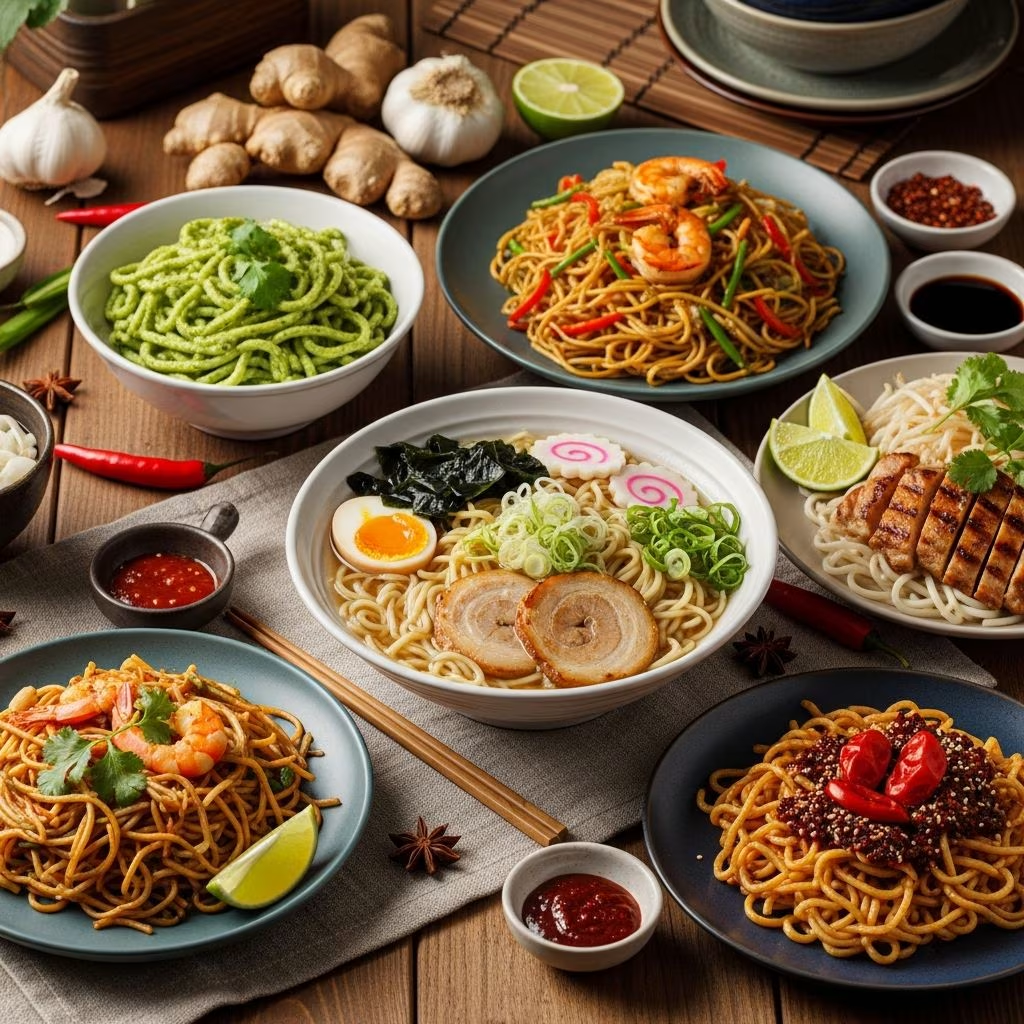
Asian noodles represent a vibrant tapestry of culinary traditions, offering endless possibilities for soups, stir-fries, and salads. Unlike uniform wheat-based Italian pasta, these noodles vary widely in ingredients like rice flour, mung beans, or wheat with alkaline water, creating distinct textures from springy to slippery.
The Foundations of Asian Noodle Diversity
At their core, Asian noodles fall into three primary categories: wheat-based, rice-based, and glass noodles made from starches like mung bean or sweet potato. Wheat noodles provide chewiness, rice versions deliver delicacy, and glass types offer translucency and slipperiness. This diversity stems from regional ingredients and techniques, allowing home cooks to select the perfect match for any dish.
Understanding these basics helps demystify grocery store aisles. Fresh, dried, or frozen options abound, with dried being most accessible. Always check labels for cooking times, as overcooking can ruin textures.
Mastering Wheat-Based Noodles
Wheat noodles form the backbone of many Japanese, Chinese, and Taiwanese dishes. They share similarities with pasta but cook faster and boast varied chew due to ingredients like kansui (alkaline mineral water).
Udon: The Chewy Powerhouse
Thick and cylindrical, udon noodles from Japan feature a neutral flavor and satisfying bounce. Made from wheat flour, salt, and water, they excel in hot soups or stir-fries with robust sauces. Boil for 6-8 minutes until al dente, avoiding overcooking to preserve chewiness. Rinse briefly to stop cooking.
- Best uses: Meaty broths, tempura toppings, or cold salads.
- Substitution: Whole wheat spaghetti mimics texture in pinches.
Ramen: Wavy and Versatile
Ramen noodles, slightly thinner and often wavy, get their signature spring from kansui, giving a salty edge that pairs with rich broths. Cook in unsalted boiling water for 2-4 minutes, as they contain salt. Separate gently post-cook for even slurping.
- Best uses: Tonkotsu ramen, spicy miso bowls, or quick stir-fries.
- Substitution: Fresh or instant varieties; avoid over-softening.
Somen: Delicate Threads
Ultra-thin somen noodles, hand-stretched and oiled, cook in under 3 minutes. Rinse in cold water post-boil to remove oil and enhance slip. Ideal for chilled dipping sauces or light broths.
- Best uses: Summer salads, tsuyu dips.
- Substitution: Angel hair pasta, though less slippery.
Delicate Rice Noodles and Their Secrets
Rice noodles, primarily rice flour and water, dominate Southeast Asian fare like pho and pad Thai. They’re gluten-free and soften via soaking rather than boiling, preventing mushiness.
Rice Sticks (Pad Thai Noodles)
Flat and available in widths from thin to wide, these Chinese-origin noodles spread across Asia. Soak in hot water for 5-10 minutes until pliable, then stir-fry. Undercook slightly for wok cooking.
- Best uses: Pad Thai, stir-fries with pork, Vietnamese pho.
- Substitution: Fettuccine for texture, not flavor.
For stir-fries, press soaked noodles to separate, as shown in preparation guides.
Glass Noodles: Transparent and Slippery
Made from mung bean, potato, or yam starch, glass noodles turn translucent when hydrated. They’re naturally gluten-free with a neutral taste.
Bean Thread Vermicelli
These fine strands hydrate in minutes via hot water soak. Gentle handling prevents breakage; they’re perfect for salads or hot pots.
- Best uses: Spring rolls, Thai salads, soups.
- Substitution: Thin rice noodles.
Cooking Techniques by Noodle Type
Proper prep elevates dishes. Here’s a comparison:
| Noodle Type | Prep Method | Time | Tips |
|---|---|---|---|
| Wheat (Udon, Ramen) | Boil in water | 6-8 min | Al dente; rinse lightly |
| Rice Sticks | Hot water soak | 5-10 min | Stir occasionally; under-soak for stir-fry |
| Glass (Bean Thread) | Hot water soak | 2-5 min | Press to separate |
Always follow package instructions, adjusting for dish integration.
Pairing Noodles with Dishes and Sauces
Match noodle texture to sauce weight. Thick udon handles creamy peanut sauces; delicate somen suits light soy dips. Experiment with broths: miso for ramen, nuoc cham for rice noodles.
Recipe Ideas
- Udon with veggies and peanut sauce.
- Pad Thai with shrimp and tamarind.
- Cold somen with ginger-soy.
- Ramen in chicken broth.
Shopping and Storage Tips
Find dried noodles in mainstream stores; fresh or frozen at Asian markets. Store dried in cool, dry places; refrigerate fresh up to 3 days. Freeze portions for convenience.
Common Mistakes and Fixes
- Overcooking: Leads to mush; test early.
- Not rinsing: Causes stickiness; cold rinse for rice/glass.
- Wrong soak temp: Hot for rice, boiling for wheat.
FAQs
Are Asian noodles gluten-free?
Rice and glass varieties are; wheat ones aren’t. Check labels.
How do I prevent rice noodles from breaking?
Soak gently and handle with tongs.
Can I use Italian pasta as substitutes?
Yes, for texture in binds, but flavors differ.
What’s the best noodle for beginners?
Udon or rice sticks—forgiving and versatile.
Expanding Your Noodle Repertoire
Start simple, then explore regional twists like Taiwanese yangchun wheat noodles for everyday soups. Visit Asian eateries for inspiration before home cooking.
References
- The Beginners Guide to Types of Asian Noodles — The Gingered Whisk. 2023-01-15. https://thegingeredwhisk.com/the-beginners-guide-to-types-of-asian-noodles/
- How to Cook & Prepare Asian Noodles — Marion’s Kitchen (YouTube). 2022-05-10. https://www.youtube.com/watch?v=PIkQJ-r2UfM
- Types of Asian Noodles — WebstaurantStore. 2024-03-22. https://www.webstaurantstore.com/blog/3914/types-of-asian-noodles.html
- The Ultimate Guide to Asian Noodles — Choo Choo Ca Chew. 2023-07-08. https://www.choochoocachew.com/ultimatenoodleguide/
- A Beginner’s Guide to Asian Noodles — All The Noodles. 2024-01-12. https://allthenoodles.com/guide-to-asian-noodles/