Sweet potatoes have become a staple component of the American Thanksgiving table, offering both nutritional value and distinctive flavor that complements traditional holiday meals. Whether you prefer the classic approach or want to experiment with contemporary variations, understanding the fundamentals of sweet potato preparation ensures your dish becomes a memorable part of the celebration.
Understanding Your Ingredient Foundation
The quality of your final dish begins with selecting appropriate sweet potatoes. Look for specimens that are firm, free from soft spots, and uniform in size to ensure even cooking throughout your preparation process. Medium to large sweet potatoes work best for most traditional recipes, as they provide adequate flesh for slicing or mashing while maintaining proper structural integrity during cooking.
Before beginning any recipe, thoroughly wash and dry your sweet potatoes to remove any soil or debris. The skin protects the flesh during cooking, and proper preparation at this stage prevents complications later in the cooking process. If your recipe calls for peeling, do so just before cooking to minimize oxidation and preserve the natural color of the flesh.
The Classic Candied Approach
Candied sweet potatoes represent one of the most beloved preparations for holiday tables. This method transforms the natural sweetness of the vegetable through caramelization, creating layers of complex flavor. The foundation of this approach involves slicing peeled sweet potatoes into uniform thickness—typically one-quarter inch—which allows for consistent cooking and even caramelization of the surfaces.
The syrup base for candied preparation typically combines butter, maple syrup, and water, creating a glossy coating that develops rich, caramelized notes during baking. The ratio of these components matters significantly: proper balance ensures that the resulting glaze neither overwhelms the potato’s natural flavor nor leaves the dish underseasoned. A standard preparation uses approximately one-half cup of butter, one-quarter cup of maple syrup, and one tablespoon of water for five to six medium sweet potatoes, seasoned with salt to enhance sweetness perception.
Baking occurs at moderate temperatures, allowing the syrup to reduce gradually and coat the potatoes evenly. This low-and-slow approach prevents burning while encouraging the Maillard reaction that creates the characteristic caramelized appearance and deep flavor development.
Sophisticated Glazing Techniques
Contemporary preparations often incorporate additional flavor dimensions through specialized glazes that combine fruit juices with warm spices. These sophisticated variations maintain the sweetness Thanksgiving guests expect while introducing complexity that elevates the dish beyond traditional preparations.
Citrus-based glazes represent an excellent direction for experimentation. Orange juice combined with warm spices like cinnamon, nutmeg, and cloves creates brightness that cuts through richness while maintaining seasonal appropriateness. Adding pomegranate juice introduces tartness and visual interest through colorful juice penetration, while orange zest provides aromatic intensity that complements the sweet potato’s natural earthiness.
The preparation technique for glazed preparations involves creating a smooth liquid mixture before adding it to the casserole dish. Combining juice, spices, maple syrup, vanilla extract, and a small amount of cornstarch as a thickening agent ensures the glaze achieves proper consistency. This mixture then pours over carefully sliced sweet potatoes arranged in a buttered baking dish, creating an even distribution of flavor.
Texture and Topping Considerations
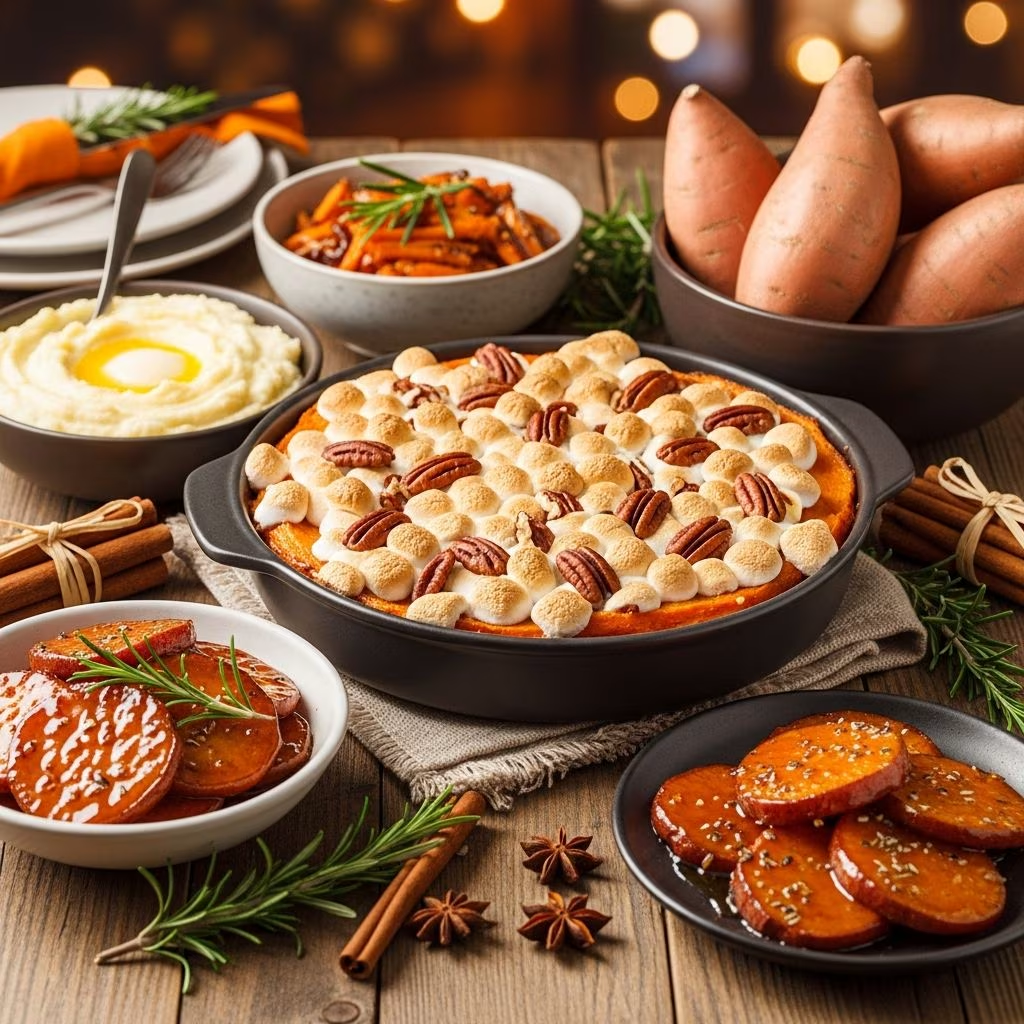
The choice of topping dramatically influences both flavor and textural experience. Traditional marshmallow toppings provide nostalgic sweetness and create interesting textural contrasts when properly browned. However, alternative toppings expand the culinary possibilities significantly.
Popular topping options include:
- Pecan crumbles made with oats, nuts, brown sugar, and butter for a hearty, crunchy texture
- Candied pecans or glazed walnuts that add sophistication and visual appeal
- Sugared cranberries for tartness and festive color
- Savory herb-infused crumbles incorporating fresh rosemary, sage, and thyme
- Toasted marshmallows browned under the broiler for dramatic presentation
The timing of topping application matters significantly. Delicate toppings like marshmallows should be added only during the final minutes of baking, while sturdy toppings like nut crumbles can withstand longer cooking times. For best results, add fragile toppings—such as candied nuts or sugared cranberries—after removing the dish from the oven to preserve their quality.
Mashed Versus Sliced Preparations
Two distinct approaches dominate sweet potato preparation for Thanksgiving: sliced preparations and mashed variations. Understanding the advantages of each method allows you to choose based on your preferences and available equipment.
Sliced preparations maintain individual potato identity, creating visual interest and allowing diners to appreciate the natural texture and color gradations. These preparations eliminate the need for pre-cooking, as slices bake directly in the glaze until tender. This approach reduces preparation time and produces more rustic presentations that many contemporary cooks find appealing.
Mashed preparations create smooth, uniform textures that showcase the potato’s natural creaminess. This method typically involves baking whole sweet potatoes until very tender, then removing the flesh and blending with butter, milk, and seasonings. The resulting puree accepts toppings gracefully and creates familiar comfort-food presentations that resonate with traditional preferences.
Flavor Profile Development
Creating memorable sweet potato dishes requires thoughtful consideration of flavor balance. While sweetness remains central to traditional preparations, introducing complementary flavors prevents one-dimensional taste experiences.
Warm spices establish foundational flavor:
- Cinnamon provides familiar warmth associated with autumn celebrations
- Nutmeg adds slightly earthy complexity that deepens other flavors
- Cloves contribute subtle pungency that creates sophisticated undertones
- Ginger offers peppery warmth and assists flavor perception
Salt plays a critical role that many home cooks underestimate. Proper salting enhances sweetness perception while preventing the dish from tasting flat or one-note. Approximately three-quarters to one teaspoon of kosher salt works well for standard preparations serving eight to ten people.
Savory elements—such as fresh herbs, garlic, or cayenne pepper—create contrast that makes every bite more interesting. These elements need not dominate; subtle incorporation ensures traditional flavor expectations remain satisfied while adding depth that distinguishes your preparation from standard versions.
Cooking Methods and Temperature Management
Proper oven temperature ensures even cooking and appropriate caramelization. Most sweet potato dishes bake successfully between 350 and 425 degrees Fahrenheit, depending on preparation style and desired texture outcomes.
Lower temperatures (350-375°F) work well for dishes containing delicate toppings or those requiring extended cooking periods. These temperatures allow gradual flavor development while preventing burning of vulnerable components. Cooking times typically extend to 45-50 minutes at these lower temperatures.
Higher temperatures (400-425°F) accelerate cooking and promote surface caramelization, creating visual appeal and textural complexity. These temperatures work particularly well for sliced preparations where you want edges to develop color while interiors remain creamy. Cooking times typically compress to 30-40 minutes at these higher temperatures.
Regardless of temperature selection, positioning your baking dish in the center rack ensures even heat circulation from above and below. This placement prevents bottom burning while allowing adequate heat exposure for proper cooking throughout the dish.
Preparation Timeline and Make-Ahead Strategies
Thanksgiving’s time pressures necessitate strategic planning. Understanding which components can be prepared in advance simplifies day-of execution and reduces stress.
The glaze mixture can be prepared up to three days in advance and refrigerated in an airtight container. Bring it to room temperature before using, as this ensures even distribution throughout the dish during baking. Sweet potatoes can be washed, dried, and peeled up to one day in advance, though storing peeled potatoes in water prevents oxidation discoloration.
Most complete sweet potato casseroles can be assembled up to eight hours before baking, then covered tightly with plastic wrap or foil and refrigerated. Extend baking time by approximately ten minutes if cooking from refrigerated temperatures, allowing the center to heat through properly. Toppings should be added shortly before baking rather than significantly in advance, as moisture can compromise crunchiness.
Serving Suggestions and Portion Planning
Proper portion planning ensures adequate servings while minimizing waste. A nine-by-thirteen-inch baking dish of sweet potato casserole typically yields eight to ten generous servings as a side dish component. For larger gatherings, preparing multiple dishes provides flexibility and ensures adequate quantities.
Sweet potatoes pair harmoniously with traditional Thanksgiving proteins, particularly turkey and ham. The dish’s natural sweetness complements savory mains while providing textural contrast to softer side dishes. Serving sweet potatoes as one component of a balanced plate—alongside vegetables, grains, and proteins—creates satisfying meals.
Temperature presentation matters for optimal enjoyment. Serve sweet potato casseroles warm but not piping hot, as this temperature range allows flavors to be fully appreciated. Dishes can be held warm for up to two hours in a 200°F oven without quality deterioration, making this approach practical for managing multiple dishes.
Common Preparation Questions
Can sweet potato casseroles be frozen for later use?
Yes, prepared sweet potato casseroles can be frozen up to three months before serving. Cool completely before transferring to freezer-safe containers or wrapping tightly with plastic wrap and foil. Thaw overnight in the refrigerator before reheating at 350°F for approximately thirty minutes, covered with foil.
What substitutions work for traditional marshmallow toppings?
Pecan crumbles, candied nuts, sugared cranberries, and herb-infused breadcrumb mixtures all provide excellent alternatives. These options often resonate with contemporary palates while maintaining seasonal appropriateness and textural interest.
How can I make sweet potato dishes less sweet for guests preferring savory flavors?
Reduce maple syrup and brown sugar quantities by approximately one-quarter, increase salt and spice amounts, and incorporate savory elements like fresh herbs, garlic, or even a pinch of cayenne pepper. These adjustments create balance without eliminating the dish’s inherent character.
Are there nutritional considerations for modified sweet potato preparations?
Sweet potatoes provide valuable nutrients including beta-carotene, fiber, and potassium. While holiday preparations typically include added fats and sugars, the underlying vegetable remains nutritionally beneficial. Using olive oil instead of butter and reducing added sweeteners maintains nutritional value while accommodating dietary preferences.
Conclusion
Sweet potato preparations offer flexibility for creative expression while honoring Thanksgiving traditions. Whether you choose classic candied approaches or contemporary variations with sophisticated glazes and toppings, understanding fundamental techniques ensures success. Proper ingredient selection, thoughtful flavor balancing, and careful attention to cooking temperatures and timing create dishes that become memorable highlights of holiday celebrations.
References
- Candied Sweet Potatoes Recipe — Sally’s Baking Addiction. https://sallysbakingaddiction.com/candied-sweet-potatoes/
- Sliced Sweet Potato Casserole with Pomegranate — Good Life Eats. https://www.goodlifeeats.com/baked-sweet-potatoes-with-pomegranate/
- Sweet Potato Casserole with Pecan Topping — Tastes Better From Scratch. https://tastesbetterfromscratch.com/sweet-potato-casserole/
- Sweet Potato Casserole with Maple Pecan Crumble — Love and Lemons. https://www.loveandlemons.com/sweet-potato-casserole/
- Best Sweet Potato Recipes for Thanksgiving — McCormick Spice Company. https://www.mccormick.com/blogs/how-to/level-up-thanksgiving-with-these-comforting-sweet-potato-recipes