The thandai masala represents one of India’s most cherished culinary creations, embodying centuries of tradition and regional wisdom. This aromatic mixture forms the foundation of thandai, a beloved beverage that graces tables across northern India, particularly during festive occasions. The name itself derives from the Hindi word “thanda,” meaning cool, reflecting the inherent cooling properties attributed to this meticulously balanced blend. Understanding the nuances of creating authentic thandai masala opens doors to both traditional preparation and innovative culinary applications.
Understanding the Essence of Thandai Masala
Thandai masala transcends the boundaries of a simple spice mixture; it represents a carefully calibrated balance of textures, flavors, and perceived health benefits accumulated through generations of Indian culinary practice. The blend combines dry spices with ground nuts and seeds, creating a versatile ingredient that can transform ordinary milk into an extraordinary beverage or enhance various desserts and savory dishes. This multifaceted ingredient bridges the gap between medicinal traditions and contemporary cooking, making it relevant across different culinary contexts.
The traditional preparation methodology emphasizes the importance of individual ingredient selection and proportioning. Each component contributes distinct flavor notes and textural qualities, from the warming spiciness of black peppercorns to the delicate floral undertones of rose petals. The interplay between these elements creates a complex flavor profile that evolves on the palate, revealing new dimensions with each sip or taste.
Essential Components and Selection Criteria
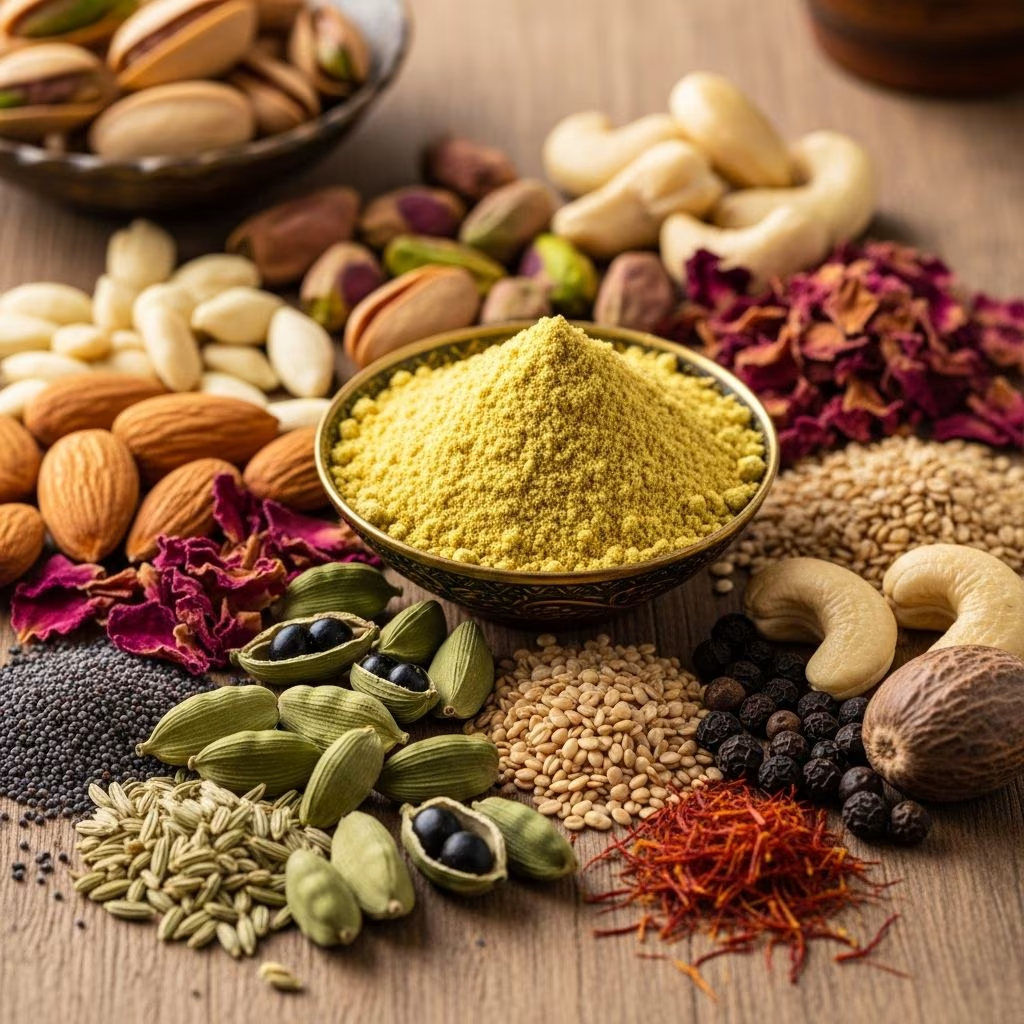
Creating authentic thandai masala requires sourcing quality ingredients that will ensure both flavor authenticity and optimal shelf stability. The ingredient list typically includes a carefully measured selection of nuts, seeds, dried botanicals, and whole spices that must be combined with precision.
Core Nuts and Seeds
- Almonds serve as the primary nut component, providing richness and a creamy base when ground into powder form
- Cashews contribute a naturally sweet undertone and help create a smooth texture throughout the blend
- Pistachios add subtle earthiness and distinctive flavor complexity
- Poppy seeds provide texture variation and contribute traditional authenticity
- Melon seeds (magaz) deliver a unique mild flavor that has been used in Indian preparations for centuries
- Watermelon seeds appear in some regional variations, offering slight nutritional differentiation
Spice Elements
The spice foundation relies on several key components that have been standardized through generations of use. These spices provide warming qualities and complex flavor layering that prevents the blend from tasting one-dimensional.
- Black peppercorns introduce subtle heat without overwhelming the other flavors
- Green cardamom pods contribute aromatic floral qualities that define the overall character
- Fennel seeds provide a mild anise-like sweetness that balances the pepper
- Cinnamon pieces add warmth and slight natural sweetness
- Saffron strands impart precious color and delicate floral notes
- Rose petals deliver traditional botanical elegance and subtle perfumed qualities
- Nutmeg powder appears in smaller quantities to prevent overwhelming the blend
- Turmeric powder adds mild earthiness and traditional health associations
Proportioning and Measurement Strategies
While thandai masala recipes vary across regions and households, certain proportional guidelines have emerged through common practice. A standard batch yields approximately one and one-half cups of finished powder, sufficient for multiple servings of thandai or other culinary applications.
| Ingredient | Quantity (Standard Batch) | Measurement Type |
|---|---|---|
| Almonds | ½ | Cup |
| Cashews | ½ | Cup |
| Pistachios | ¼ | Cup |
| Poppy Seeds | 2 | Tablespoons |
| Melon Seeds | 2 | Tablespoons |
| Fennel Seeds | 1½ | Teaspoons |
| Black Peppercorns | 10-12 | Whole |
| Green Cardamom Pods | 12 | Whole |
| Saffron Strands | 10-12 | Strands |
| Dried Rose Petals | 2 | Tablespoons |
| Nutmeg Powder | ⅛ | Teaspoon |
Step-by-Step Preparation Methodology
Creating thandai masala from whole ingredients requires attention to sequence and technique. The order of operations significantly impacts the final flavor profile and texture consistency.
Phase One: Whole Spice Grinding
Begin by assembling all whole spices in a dedicated spice grinder or mill. This includes black peppercorns, green cardamom pods, fennel seeds, saffron strands, and rose petals. Pulse these ingredients together until they achieve a fine, uniform powder consistency. The grinding action should be controlled and deliberate to prevent overheating the spices, which could compromise their aromatic qualities. The resulting powder should appear relatively homogeneous with a slightly granular texture.
Phase Two: Nut and Seed Processing
Transfer the spice powder to a bowl and set aside. Return the grinder to its original state and add all nuts and seeds: almonds, cashews, pistachios, poppy seeds, and melon seeds. Pulse these ingredients until they transform into a fine powder, being careful not to over-process into a paste. The oils naturally present in nuts and seeds can release during excessive grinding, creating an undesirable texture that compromises the blend’s utility.
Phase Three: Combination and Final Adjustments
Combine the spice powder with the nut and seed powder in a clean, dry bowl. Stir thoroughly using a fork or small whisk to ensure even distribution throughout the mixture. At this point, taste-test a small pinch to verify flavor balance. Some practitioners prefer slightly adjusting proportions at this stage, though purists maintain that established measurements reflect accumulated wisdom and should not be altered.
Traditional Preparation Versus Modern Convenience
Authentic thandai preparation has historically utilized stone mortar and pestles (silbatta) to grind ingredients by hand. This labor-intensive method, while time-consuming, offered practitioners greater control over texture gradation and allowed for minimal heat exposure to delicate aromatics. Modern home cooks typically employ electric spice grinders, which significantly reduce preparation time while maintaining acceptable quality outcomes. Some purists argue that hand-grinding produces superior flavor complexity, though contemporary equipment produces results that satisfy most contemporary consumers.
The choice between traditional and modern methods ultimately depends on available time, equipment accessibility, and personal preferences regarding the cooking experience. Both approaches yield functional thandai masala suitable for beverage preparation and culinary applications.
Storage Protocols and Shelf Life Optimization
Proper storage directly impacts the longevity and flavor preservation of homemade thandai masala. The high oil content in nuts and seeds makes the blend vulnerable to oxidation and rancidity if exposed to heat, light, or moisture.
- Store thandai masala in an airtight glass container with a secure lid
- Maintain storage in a cool, dark location away from direct sunlight
- Refrigerate for extended shelf life, potentially maintaining quality for three to four weeks
- Freezer storage extends viability to several months with minimal degradation
- Avoid storing in plastic containers, which can absorb odors and potentially leach substances into the blend
- Label containers with preparation dates to track freshness systematically
Beverage Preparation Using Thandai Masala
Converting the prepared masala into finished thandai requires minimal additional ingredients and straightforward technique. The standard formula combines one heaped tablespoon of thandai masala with one cup of whole milk, though proportions adjust based on desired intensity and personal preference.
Begin by pouring chilled milk into a serving glass or mixing vessel. Add the measured thandai masala and stir vigorously using a spoon, breaking up any clumps that may have formed during storage. Continue mixing until the powder fully incorporates into the milk, creating a uniform, lightly colored beverage. Add sweetener (sugar, honey, or alternative sweeteners) according to taste preferences, stirring until completely dissolved.
For enhanced flavor development, some practitioners prefer preparing thandai several hours in advance or overnight, allowing the ingredients to fully hydrate and flavors to meld cohesively. This resting period enables the spices to gradually release their essential oils into the milk base, creating a more rounded, integrated flavor profile than immediate consumption would provide.
Culinary Applications Beyond Traditional Beverages
Contemporary chefs and home cooks have expanded thandai masala applications well beyond its traditional beverage context. The blend’s complex flavor profile and creamy texture when mixed with liquids make it suitable for various creative culinary endeavors.
- Incorporate into oatmeal or other breakfast cereals for festive morning preparations
- Blend with yogurt to create flavored dessert bases or dips
- Mix into ice cream bases for traditional-inspired frozen treats
- Combine with cream cheese or mascarpone for innovative cheesecake variations
- Dust over roasted nuts with complementary spice blends for enhanced snacking options
- Incorporate into traditional Indian sweets like burfi or fudge preparations
- Add to smoothies or protein shakes for unexpected flavor complexity
- Combine with chaat masala or garam masala for novel seasoning applications
Health Perspectives and Traditional Beliefs
Indian culinary traditions have long associated thandai masala with specific health properties, attributing cooling effects to many component ingredients. While contemporary scientific validation remains limited, these traditional perspectives have influenced its continued use and cultural significance. The blend’s nutritional composition—featuring nuts rich in healthy fats, seeds providing minerals, and spices offering bioactive compounds—supports the ingredient choice from modern nutritional perspectives.
The digestive support traditionally attributed to fennel seeds and other spice components aligns with ethnobotanical research patterns, though individual responses vary based on personal constitution and digestive capacity. The cooling sensation many experience after consuming thandai relates partly to specific ingredient interactions and partly to cultural expectation and context, reflecting the complex interplay between physiological response and tradition.
Regional Variations and Adaptations
While a standardized version of thandai masala has achieved broad recognition across India, regional preferences and family traditions have generated meaningful variations. Northern Indian preparations, particularly in states like Uttar Pradesh, Bihar, and Madhya Pradesh, represent the most widely recognized iterations, though local adaptations reflect available ingredients and cultural preferences.
Some regions include slightly more floral elements through increased rose petals or additional botanical additions. Others emphasize nutty qualities through modified nut ratios or inclusion of alternative nuts suited to local agriculture. These variations demonstrate how culinary traditions maintain core identity while accommodating regional nuance and availability.
Frequently Asked Questions
Can I prepare thandai masala without using a spice grinder?
Yes, though the process requires more time and physical effort. A traditional stone mortar and pestle can accomplish the same outcome, though multiple batches may be necessary to process all ingredients. Hand-grinding allows for better control over particle size and can reduce heat exposure to delicate aromatics.
Are there suitable substitutions for ingredients I cannot source?
While ingredient substitutions compromise authenticity to varying degrees, melon seeds represent the most easily substitutable component; watermelon seeds or additional poppy seeds can provide textural replacement. Sourcing specialty Indian grocers online typically provides access to most traditional ingredients without requiring substitutions.
How can I adjust thandai masala flavor intensity?
Increase or decrease the amount of thandai masala per serving of milk according to personal preference. Begin with standard measurements and incrementally adjust upward or downward based on desired intensity. More masala creates richer, spicier beverages, while reduced quantities produce lighter, more subtle flavors.
Does homemade thandai masala offer advantages over commercial versions?
Homemade preparations allow control over ingredient quality and permit adjustment of component ratios to personal taste preferences. Many commercial preparations contain additives or preservatives for extended shelf stability, while homemade versions remain free of such additions. The flavor complexity of fresh homemade preparations often exceeds commercially packaged alternatives.
Can thandai masala accommodate dietary restrictions?
The blend relies naturally on plant-based ingredients, making it suitable for vegetarian and vegan diets. Those with nut allergies should avoid this preparation or substitute available alternatives. Individuals with seed sensitivities should assess each component carefully before consumption.
References
- Ethnobotanical Survey of Spices Used in Traditional Indian Medicine — Journal of Ethnopharmacology. 2024. https://www.sciencedirect.com/journal/journal-of-ethnopharmacology
- Fennel Seed and Digestive Health: Traditional Use and Contemporary Evidence — Phytotherapy Research. 2023. https://onlinelibrary.wiley.com/journal/10991573
- Indian Culinary Traditions and Food Preservation Methods — Indian Journal of Traditional Knowledge. 2024. https://nopr.niscair.res.in/handle/123456789/1