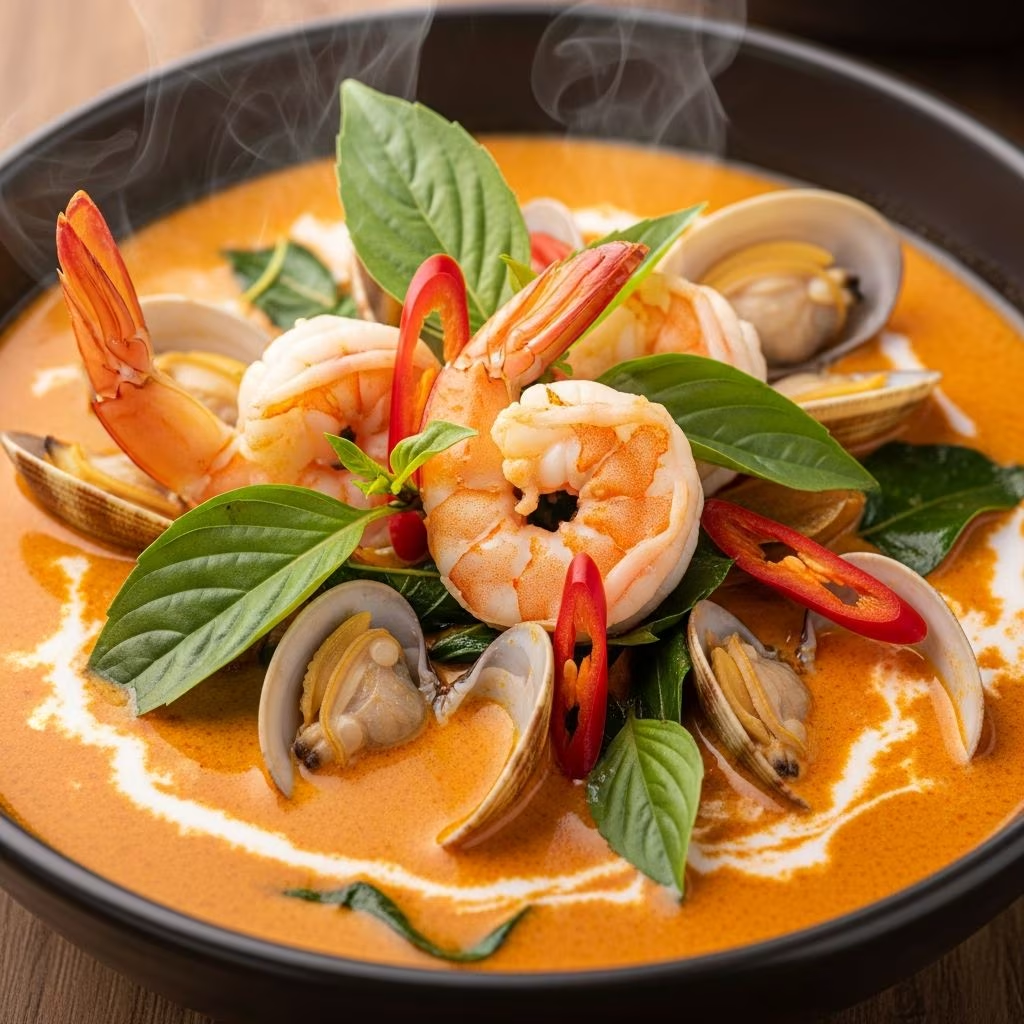
Thai cuisine offers some of the most captivating flavor combinations found in global cooking, and seafood curries represent a pinnacle of this culinary tradition. When shrimp and clams come together in a fragrant coconut-based sauce infused with aromatic spices and fresh herbs, the result is a sophisticated yet approachable dish that brings restaurant-quality sophistication to your home kitchen.
Understanding the Foundation: Essential Curry Components
The backbone of any authentic Thai seafood curry begins with understanding its core building blocks. Each element plays a crucial role in creating the layered, complex flavors that define this cuisine.
Curry paste serves as the flavor foundation, with red curry paste being the most versatile choice for seafood applications. This concentrated paste combines chilies, garlic, galangal, lemongrass, and shrimp paste into a potent seasoning that requires minimal cooking time to release its full aromatic potential.
Coconut milk transforms the curry paste into a luscious sauce while adding subtle sweetness and richness that balances spice and acidity. Full-fat coconut milk creates the most authentic texture and mouthfeel.
Aromatic elements including garlic, ginger, and scallions form the flavor trinity that elevates the overall dish. These ingredients are typically added early in the cooking process to bloom and release their essential oils.
Fish sauce provides umami depth and complexity, counteracting any fishiness while rounding out the flavor profile. Though pungent on its own, fish sauce becomes integrated and essential once cooked with other ingredients.
Preparing Your Seafood: The Critical First Steps
Success with this dish begins long before you start cooking. Proper seafood preparation ensures optimal texture and flavor.
Shrimp should be peeled, deveined, and pat-dried before cooking. This moisture removal prevents steaming rather than properly cooking the shrimp, which would result in a rubbery texture. Medium to large shrimp work best, as they maintain their integrity during the brief cooking time required.
Clams require thorough scrubbing under cold running water to remove any sand or debris. Discard any clams with cracked shells or those that remain open when tapped, as these indicate the clams are dead or compromised.
Allowing shrimp to marinate for 10 minutes in salt, pepper, and lime juice before cooking adds preliminary seasoning that penetrates the protein. This step is optional but yields noticeably improved results.
Building Layers of Flavor: The Cooking Sequence
The technique for constructing authentic Thai curry flavor relies on a specific sequence that allows each component to properly develop and integrate.
Step One: Aromatic Base Development
Begin by heating oil in a large skillet or sauté pan over medium-high heat. Once shimmering, add the scallion whites and curry paste. Cooking these together for 1-2 minutes allows the paste’s spices to bloom and perfume the oil, creating a fragrant base that will permeate the entire dish.
Step Two: Secondary Aromatics
Add minced garlic and ginger to the curry paste mixture, cooking for another minute to release their volatile compounds. At this point, the kitchen should be filled with a distinctive Thai aroma—your signal that the aromatics are properly activated.
Step Three: Liquid Integration
Pour in coconut milk along with fish sauce and broth (chicken or vegetable broth adds depth without overpowering delicate seafood). Bring the mixture to a gentle simmer rather than a rolling boil. Aggressive boiling can cause coconut milk to separate and result in a grainy texture.
Step Four: Vegetable Incorporation
Add supporting vegetables such as bell peppers and snap peas approximately 2-3 minutes into simmering. These vegetables provide textural contrast and additional flavor dimensions while maintaining a slight crunch when properly timed.
Step Five: Seafood Addition
Add shrimp and clams to the simmering curry, gently stirring to ensure even distribution. The residual heat of the curry sauce will cook both proteins simultaneously—shrimp typically requires 3-4 minutes until they turn from translucent gray to opaque pink and curl slightly, while clams need 5-8 minutes until their shells open.
Never discard unopened clams before cooking, as they may still be alive; however, discard any that refuse to open after the specified cooking time.
Flavor Refinement and Finishing Techniques
The final moments of cooking determine whether your curry achieves balanced, sophisticated flavors or remains one-dimensional.
Lime juice adds essential brightness and acidity that cuts through the richness of coconut milk. Add lime juice gradually, tasting between additions to achieve your preferred balance. Fresh lime juice produces superior results compared to bottled alternatives.
Fresh herbs including cilantro, Thai basil, and scallion greens introduce aromatic freshness that contrasts beautifully with the curry’s cooked spices. Add these immediately before serving to preserve their vibrant qualities.
Sauce consistency adjustment can be achieved through several methods. For a thicker sauce, prepare a slurry by mixing cornstarch with water and stirring it in during the final minute of cooking. Conversely, additional broth thins the sauce if it becomes too concentrated.
Ingredient Quality and Substitution Guidelines
| Ingredient | Primary Options | Substitution Notes |
|---|---|---|
| Oil | Avocado, olive, or coconut oil | Avocado oil provides the highest smoke point |
| Curry Paste | Red or green curry paste | Red is milder; green is more assertive and herbaceous |
| Coconut Milk | Full-fat, canned | Lite versions produce thinner sauce and less flavor |
| Fish Sauce | Traditional or anchovy-based | No adequate substitute; essential for authentic flavor |
| Clams | Manila, littleneck, or topneck | Smaller clams cook faster; larger clams are meatier |
Timing and Service Recommendations
This curry reaches completion in approximately 25-30 minutes from start to finish, making it ideal for weeknight dining. The actual cooking time for seafood comprises only 5-10 minutes of this total, with the remainder dedicated to building the sauce foundation.
Serve the curry over jasmine rice, which absorbs the flavorful sauce while its subtle fragrance complements Thai spices. Garnish each serving with fresh lime wedges, allowing diners to adjust acidity to their preference. Thai basil leaves and crispy shallots add textural elements and visual appeal.
Commonly Asked Questions About Thai Shrimp and Clam Curry
Can I prepare this curry in advance?
The sauce base can be prepared several hours ahead and refrigerated. Add seafood only immediately before serving, as overcooked shrimp and clams become rubbery and tough. Reheat the sauce gently before adding proteins.
What seafood alternatives work well in this curry?
Tilapia, mussels, scallops, or squid can replace or supplement shrimp and clams. Adjust cooking times based on protein size and thickness—thinner proteins require less time than clams.
How do I know when clams are properly cooked?
Properly cooked clams open their shells completely. Any clams that fail to open after 8-10 minutes should be discarded, as they may contain unsafe bacteria or were already dead before cooking.
Does this curry freeze well?
Freeze only the sauce base without seafood. Thaw overnight in the refrigerator and reheat gently before adding fresh shrimp and clams. Frozen-then-thawed seafood becomes mushy and is best reserved for stock applications.
Is red or green curry paste better for this dish?
Red curry paste offers mild heat with balanced flavor, making it more accessible to diverse palates. Green curry paste delivers more intense herbaceous and spicy notes, appealing to adventurous eaters who prefer bolder flavors.
Nutritional Profile and Health Considerations
This dish provides significant protein from both shrimp and clams, supporting muscle maintenance and satiety. The omega-3 fatty acids present in seafood contribute to cardiovascular and cognitive health. Coconut milk contains medium-chain triglycerides, though full-fat versions are calorically dense. Incorporating abundant vegetables and serving over brown rice increases fiber content and overall nutritional density.
Conclusion: Elevating Your Home Cooking
Thai shrimp and clam curry represents the intersection of approachability and sophistication in home cooking. By understanding the fundamental techniques, respecting ingredient quality, and appreciating the importance of timing, you can consistently produce restaurant-caliber results in your own kitchen. The flexibility of this recipe accommodates ingredient preferences and dietary needs while maintaining its essential character. Whether preparing this dish for casual weeknight meals or impressing dinner guests, mastering this curry expands your culinary repertoire significantly.
References
- Easy Thai Shrimp Curry (Ready in 25 Minutes) — Once Upon a Chef. Accessed April 2026. https://www.onceuponachef.com/recipes/thai-shrimp-curry.html
- Thai Coconut Curry Shrimp — Garnish & Glaze. Accessed April 2026. https://www.garnishandglaze.com/thai-coconut-curry-shrimp-recipe/
- Red Thai Coconut Curry Shrimp Recipe — Pamela Salzman. Accessed April 2026. https://pamelasalzman.com/red-thai-coconut-curry-shrimp-recipe/
- Easy Thai Shrimp Curry — Salt & Lavender. Accessed April 2026. https://www.saltandlavender.com/easy-thai-shrimp-curry/
- Steamed Clams With Thai Red Curry — Foodland Super Market. Accessed April 2026. https://foodland.com/recipe/steamed-clams-with-thai-red-curry/
- Thai Seafood Curry Recipe – with THREE Types of Seafood — Show Me The Yummy. Accessed April 2026. https://showmetheyummy.com/thai-seafood-curry-recipe/