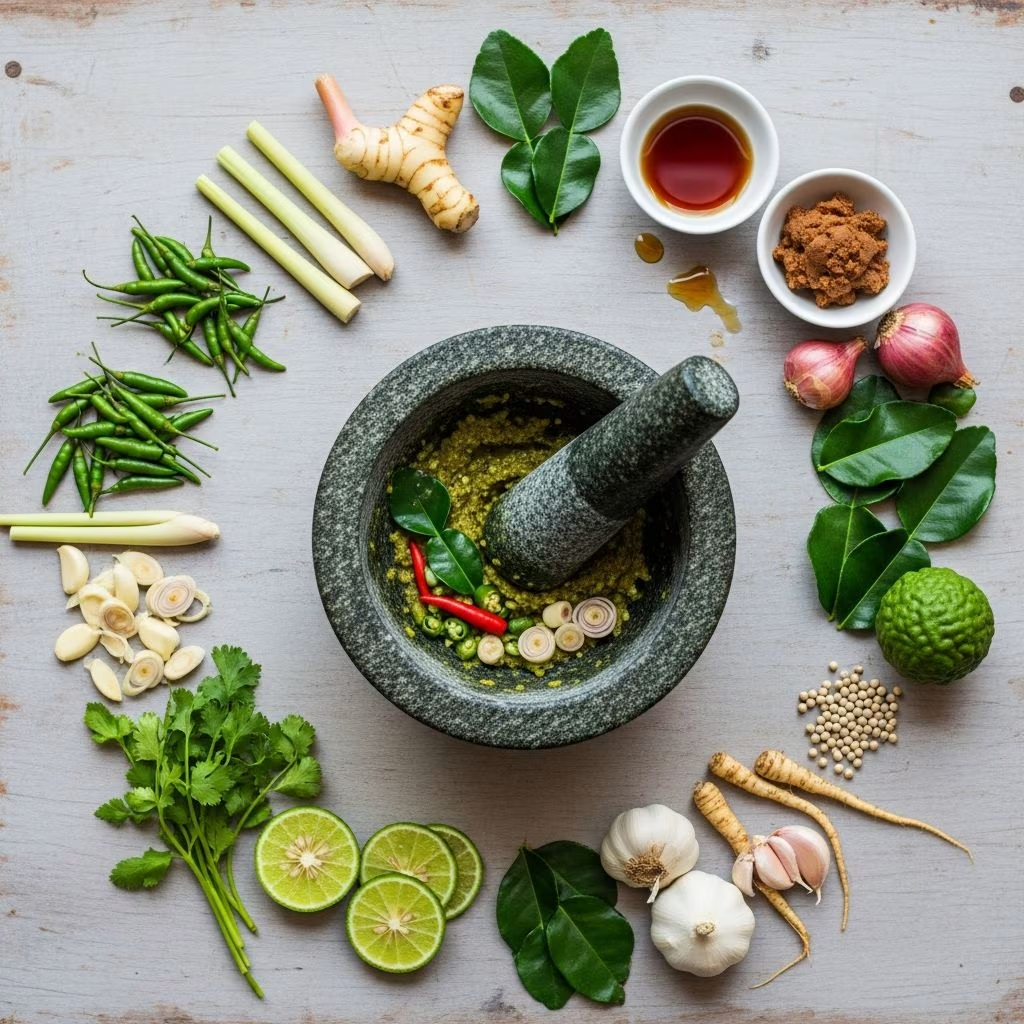
Thai green curry paste represents one of the foundational elements of Southeast Asian cuisine, offering a complex interplay of flavors that form the backbone of countless traditional dishes. Rather than relying on store-bought versions, learning to prepare this aromatic condiment from scratch allows home cooks to control ingredient quality and customize heat levels according to personal preferences.
Understanding the Essence of Green Curry Paste
Green curry paste, known in Thai as prik gaeng keow waan, serves as a paste base composed of an intricate combination of fresh herbs, aromatic spices, and vegetables. What distinguishes green curry paste from its red and yellow counterparts is the fundamental use of fresh green chiles rather than dried red chiles, which imbues the mixture with its characteristic vibrant hue and distinctive spicy profile.
The flavor composition of this essential paste creates a sophisticated balance between multiple taste dimensions. The experience begins with spicy heat derived primarily from fresh green chiles, which provides the foundational intensity. This heat is complemented by herbaceous notes—particularly the grassy, fresh qualities contributed by cilantro, especially when using cilantro roots. The addition of bright citrus undertones emerges from makrut lime zest and lemongrass, while aromatic warmth comes from ginger, garlic, and shallots. The resulting flavor profile achieves what many consider an ideal balance: fresh-tasting yet deeply spiced, with no single component overwhelming the others.
Essential Ingredients and Their Roles
Creating an authentic green curry paste requires careful selection of quality ingredients, each contributing specific flavor dimensions to the final product:
The Primary Heat Components
Green Thai chiles form the backbone of the paste’s spicy character. Approximately 50 grams of these peppers—with stems removed—provide the intense heat that defines green curry. For those preferring less aggressive spice levels, incorporating milder green peppers or partially deseeded jalapenos offers a practical solution without sacrificing the essential green color.
White pepper adds additional spicy notes while contributing a subtle gingery finish that complements the overall flavor profile. Unlike black pepper, white pepper provides heat with a more refined, less peppery character.
Aromatic Base Elements
Fresh garlic—typically 12 large cloves—provides pungent, layered aromatics. Shallots, approximately 1/4 cup when peeled, contribute subtle sweetness and onion-like depth without dominating the mixture. Fresh galangal, or ginger as a substitute, adds warming spice and distinctive aromatic properties. Approximately 2 inches of fresh galangal, peeled and grated, introduces the necessary complexity.
Lemongrass stalks—two stalks with outer leaves removed, pounded, and chopped into smaller pieces—infuse the paste with bright citrus notes and floral undertones. Makrut lime zest, approximately 1 tablespoon, provides intense citrus brightness that distinguishes authentic preparations from simplified versions.
Herbal Components
Cilantro appears in two forms: the stems (approximately 1 cup) or three whole cilantro roots. The roots and stems offer more concentrated flavor than leaves, providing the grassy quality characteristic of quality green curry paste. Thai basil, about 1 cup of fresh leaves, serves dual purposes: it intensifies the green color without adding excessive heat from additional chiles, and it contributes aromatic complexity. While some of the basil’s distinctive aroma diminishes during cooking, the contribution to both color and initial flavor remains valuable.
Dry Spices
Ground coriander (2 teaspoons) or coriander seeds (1 1/2 teaspoons) provide warm, slightly citrusy spice notes. Ground cumin (1 teaspoon) or cumin seeds (3/4 teaspoon) add earthy warmth and depth. These dry spices work synergistically with fresh ingredients, creating complexity without obscuring the fresh herb qualities.
Flavor Enhancers
Sea salt, approximately 1/2 tablespoon, serves a crucial function beyond simply seasoning—it enhances the flavors of all other ingredients and helps tie the diverse components together into a cohesive paste. Fish sauce, typically 1/2 tablespoon, provides umami depth and traditional authenticity. For those with shellfish allergies or dietary restrictions, shrimp paste (1 tablespoon) offers the traditional alternative, delivering similar umami characteristics with a more concentrated shrimp flavor.
Preparation Methodology
The traditional approach to creating green curry paste involves systematic layering of ingredients, beginning with the hardest items and progressing to softer components. This methodology ensures even distribution and complete integration of flavors.
Step-by-Step Preparation
Start by processing dry spices first if using seeds rather than ground versions. Toast coriander and cumin seeds briefly in a dry pan to activate their essential oils, then grind them using a mortar and pestle or spice grinder. This step dramatically enhances their flavor contribution compared to using pre-ground versions.
Begin pounding with Thai basil leaves, working them into a fine paste using a mortar and pestle. This initial step establishes the green base. Add the lemongrass, galangal, makrut lime zest, and cilantro roots or stems, continuing to pound until these ingredients form a fine, uniform paste.
Incorporate the shallots, garlic, and any remaining dry spices, pounding these aromatics into the developing paste until well combined. Finally, add either shrimp paste or fish sauce, pounding thoroughly to ensure even distribution throughout the mixture.
Alternative Processing Methods
While traditional mortar-and-pestle methods offer superior texture and allow for better control, modern electric processing options provide convenience. An immersion blender or standard food processor can effectively combine ingredients, though the resulting texture may differ slightly—electric methods typically produce a smoother paste with less perceptible texture variation.
Storage and Preservation Strategies
Properly stored green curry paste maintains quality for extended periods, making batch preparation practical. Store prepared paste in airtight glass containers within the refrigerator for up to two weeks, or freeze in ice cube trays for convenient portioning that lasts several months. The paste’s shelf life depends on storage conditions, container type, and whether preservatives like additional salt have been incorporated.
Customization and Flavor Adjustment
One significant advantage of homemade curry paste involves the ability to modify recipes according to personal preferences and dietary requirements. Those sensitive to heat can reduce green chiles while adding mild green peppers to maintain color and volume. Cilantro aversion can be addressed by increasing Thai basil proportions. Vegetarians can omit fish sauce and shrimp paste entirely, substituting additional salt and perhaps miso paste for umami depth.
Regional variations and family recipes often inspire modifications. Some preparations emphasize lemongrass for brighter citrus notes, while others prioritize galangal’s warming properties. Experimenting with these ratios allows development of personal curry paste preferences reflecting individual taste sensibilities.
Utilizing Homemade Green Curry Paste
Once prepared, this versatile paste serves as the foundation for numerous dishes beyond traditional green curry. The paste can be incorporated into soups, providing Thai-inspired flavor to pea soup or vegetable broths. It works effectively in stir-fries with crunchy vegetables like sugar snaps, asparagus, and broccolini, creating a braised effect within the curry-flavored coconut broth. Creative applications include using the paste in noodle dishes, egg preparations, or as a sauce component for various proteins.
The key preparation step when using the paste involves briefly frying it with a small amount of coconut milk before adding remaining liquid. This crucial technique reduces the raw spice intensity and develops deeper flavors through gentle cooking. This preliminary step transforms the paste’s character, mellowing sharpness while intensifying complexity.
Frequently Asked Questions
Can store-bought curry paste substitute for homemade versions?
Store-bought curry paste offers convenience and consistency, making it practical for quick weeknight meals. However, homemade versions provide superior freshness, customizable spice levels, and the satisfaction of knowing exact ingredients. Many experienced cooks recommend freshening store-bought paste by frying it with fresh ginger and coconut milk to enhance flavors.
What makes green curry paste different from red curry paste?
The primary distinction involves the chile type: green curry uses fresh green chiles, while red curry relies on dried red chiles. This difference creates distinct flavor profiles—green curry tastes fresher and more herbaceous, while red curry presents a deeper, more complex heat.
How should I handle excessive heat?
Reduce green chiles in the initial recipe and compensate with additional mild green peppers to maintain volume and color. Deseeded jalapenos or Korean green peppers offer milder alternatives. Additional coconut milk in finished dishes also helps balance intense spice levels.
Can I prepare curry paste in advance?
Yes. Prepared paste stores safely in refrigerated airtight containers for two weeks. Freezing in ice cube portions extends storage for several months, allowing convenient single-serving portions for future use.
What equipment works best for paste preparation?
Traditional mortar and pestle methods provide optimal texture control and flavor development. For convenience, food processors or immersion blenders effectively combine ingredients, though results may lack the slight texture variation of hand-pounded versions.
Ingredient Quality Considerations
The final paste quality directly reflects ingredient freshness and quality. Seek the freshest possible green chiles, herbs, and aromatics—aged or frozen alternatives compromise both flavor and color. Thai markets often provide superior cilantro roots and Thai basil compared to conventional supermarkets. When makrut limes prove unavailable, regular lime zest provides acceptable substitution, though the distinctive kaffir lime character will be absent.
Purchasing whole spices and grinding them immediately before use significantly enhances the paste’s aromatic profile compared to pre-ground alternatives. This single adjustment measurably improves the final product’s complexity and authenticity.
Flavor Pairing Applications
Understanding flavor principles helps maximize the paste’s potential across diverse applications. The paste’s inherent brightness pairs exceptionally well with rich components like coconut milk and fatty proteins—the acidity and herbs cut through richness, creating balanced dishes. The spice complements mild vegetables effectively, energizing otherwise subdued flavors. Lime juice and cilantro garnishes amplify the paste’s best qualities in finished dishes.
Green curry paste works across unexpected ingredient combinations. The robust spice handles strong flavors like eggplant without being overwhelmed. The fresh herbaceous qualities provide counterpoint to heavier ingredients like chicken thighs. This versatility explains why green curry paste remains a staple throughout Thai and Southeast Asian cuisines.
References
- Authentic Thai Green Curry Paste Recipe — An Edible Mosaic. https://www.anediblemosaic.com/thai-green-curry-paste-recipe/
- Green Curry Paste Recipe & Video Tutorial — Hot Thai Kitchen. https://hot-thai-kitchen.com/green-curry-paste/
- Thai Green Curry Recipe — Love and Lemons. https://www.loveandlemons.com/thai-green-curry/
- Green Thai Chicken Coconut Curry — Averie Cooks. https://www.averiecooks.com/green-thai-chicken-coconut-curry/
- Thai Green Curry — RecipeTin Eats. https://www.recipetineats.com/thai-green-curry/
- 9 Ways To Use Thai Green/Red Curry Paste — Fuss Free Cooking. https://www.fussfreecooking.com/4-ways/recipes-9-ways-to-use-thai-greenred-curry-paste/
- Recipes with Red Curry Paste, Green and More — Marion’s Kitchen. https://www.marionskitchen.com/article/recipes-with-thai-curry-paste-red-green-massaman/