Thai cuisine offers numerous light and refreshing dishes that balance flavors through the interplay of sour, sweet, salty, and spicy elements. One such classic preparation is the cucumber salad, a staple side dish found throughout Thailand and Southeast Asian restaurants worldwide. This particular salad exemplifies the culinary philosophy of Thai cooking, where simplicity in ingredients translates to complexity in taste. The dish requires minimal cooking knowledge and takes approximately 10 to 15 minutes from start to finish, making it an accessible option for both beginners and experienced home cooks.
Understanding the Core Components
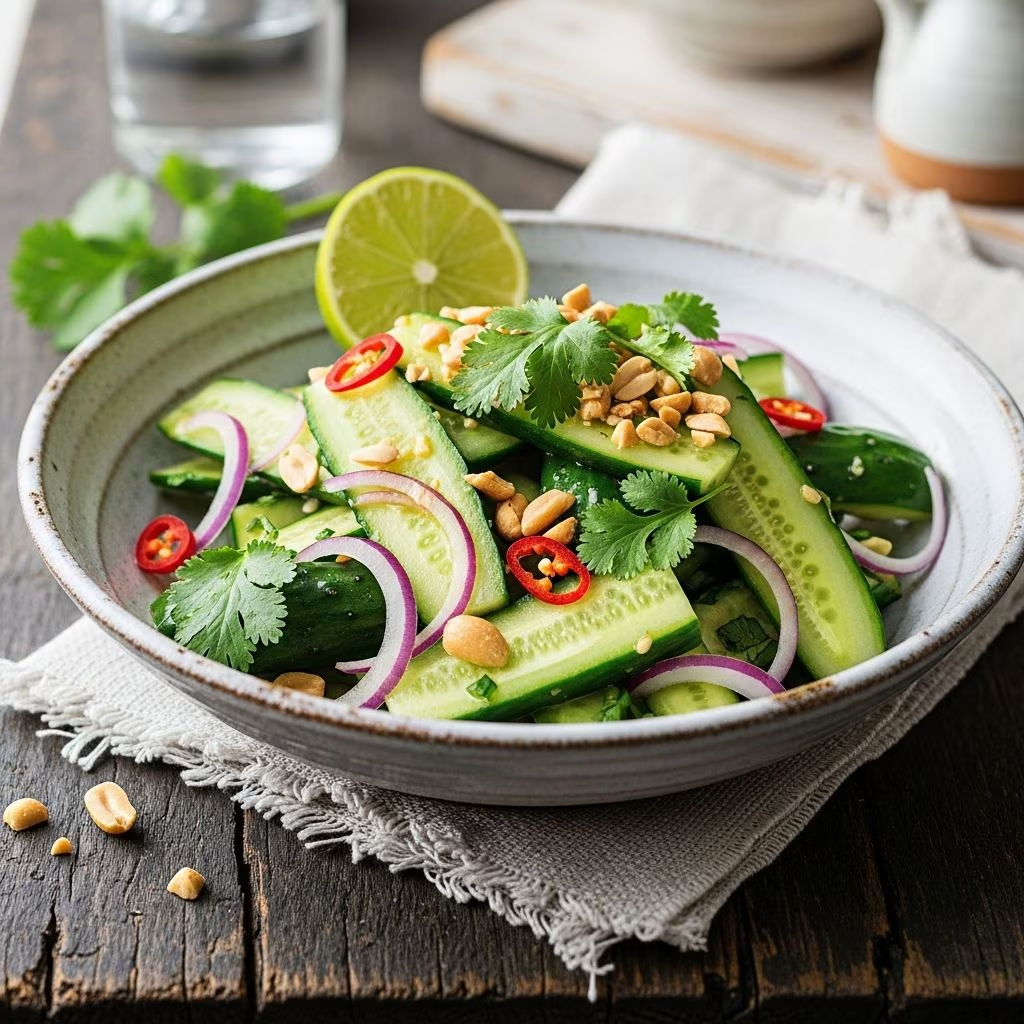
A traditional Thai cucumber salad consists of several key elements that work together harmoniously. The foundation begins with crisp, cool cucumbers that provide textural contrast and a neutral base for the other flavors. Accompanying vegetables such as red onions contribute a sharp, peppery quality that adds complexity. The dressing, built around rice vinegar as its primary acid component, creates the characteristic tangy backbone of the dish. Additional proteins and aromatics, including peanuts, cilantro, and chili peppers, layer in complementary flavors and sensations.
Selecting and Preparing Cucumbers
The choice of cucumber significantly impacts the final dish’s texture and flavor profile. Many Thai salad preparations call for English cucumbers, also referred to as hothouse or seedless varieties, as they offer a milder flavor and fewer large seeds compared to standard slicing cucumbers. Persian cucumbers present another excellent option, particularly when cut into thin, uniform slices using a mandoline or sharp knife. The cucumber preparation technique affects the salad’s overall appeal—diagonal slicing creates visually interesting pieces, while lengthwise halving followed by quarter-inch slicing produces uniform portions that absorb the dressing evenly.
One important preparation step involves drawing out excess moisture from the cucumber slices. This technique, common in many Asian cuisines, prevents the finished salad from becoming watery as it sits. To accomplish this, place sliced cucumbers in a colander and sprinkle with salt. Allow them to rest for approximately 10 minutes, which encourages the release of excess water through osmosis. Gently blot the cucumber slices with paper towels to remove surface moisture without damaging their delicate structure.
Red Onion’s Role and Preparation
Red onions provide more than just visual appeal to this salad. Their peppery, slightly sweet character creates a flavor dimension that balances the acidity of the vinegar dressing. The thinness of the onion slices dramatically influences the eating experience—thicker pieces retain more of the raw onion’s assertive bite, while paper-thin slices become more tender and integrate seamlessly with other components. Slicing technique matters greatly; a sharp knife or mandoline ensures clean cuts that won’t bruise the delicate layers of the onion.
Crafting the Perfect Dressing
The dressing represents the heart of this dish, delivering the signature Thai flavors that make this salad distinctive. Unlike heavy, creamy dressings common in Western cuisines, Thai cucumber salad dressing maintains a light, liquid consistency that allows the vegetables to retain their crispness rather than becoming soggy or weighed down.
Essential Dressing Ingredients
Rice vinegar forms the acidic foundation of the dressing, providing the characteristic tangy quality that defines the dish. This specific vinegar variety, milder than distilled vinegar and less assertive than wine vinegars, creates a balanced acidity that doesn’t overpower the delicate cucumber flavor. The typical ratio calls for approximately one-half cup of rice vinegar combined with complementary sweetening agents.
Sugar or agave nectar balances the vinegar’s acidity, creating the sweet-and-sour profile central to Thai flavor construction. The amount of sweetener can be adjusted based on personal preference and the specific vegetables being used. Some preparations incorporate fish sauce, a fermented condiment that adds umami depth and savory complexity. While optional, fish sauce creates an authentically Thai flavor profile that cannot be fully replicated through other ingredients.
Sesame oil, when included, contributes a toasted, nutty dimension that enriches the overall flavor profile. This oil should be used sparingly, as its potent aroma and flavor can easily dominate other elements. A single tablespoon of toasted sesame oil in a dressing serving multiple people provides sufficient depth without overwhelming the other ingredients.
Heat and Spice Elements
Fresh Thai chili peppers or dried chili flakes introduce the spicy component that characterizes many traditional Thai dishes. Fresh chilis offer superior flavor and the ability to control heat intensity through seed removal—most of the capsaicinoid compounds that create heat reside in the seeds and internal membranes. Finely mincing fresh chilis distributes their flavor and heat more evenly throughout the dressing compared to slicing or leaving them whole.
For those preferring milder preparations, red pepper flakes offer a convenient alternative that provides heat without the fresh vegetable’s pronounced chili flavor. These dried flakes can be added directly to the dressing or sprinkled on individual servings, allowing diners to customize their preferred heat level.
Dressing Preparation Methods
Two primary approaches exist for preparing the dressing. The first involves whisking together room-temperature ingredients in a small bowl until combined, then allowing them to meld briefly before pouring over the vegetables. The second method calls for heating the rice vinegar and sugar together until the sugar completely dissolves, creating a more homogeneous mixture that coats the vegetables more effectively. After heating, the mixture must cool to room temperature or near room temperature before adding heat-sensitive ingredients like fresh herbs or fish sauce.
| Dressing Method | Temperature | Texture | Best Used With |
|---|---|---|---|
| Cold whisked | Room temperature | Thin, liquid | Quick serving, fresh herbs |
| Heated and cooled | Warm to room temperature | Slightly thick, syrupy | Extended marinating, deeper flavor |
Incorporating Complementary Ingredients
Peanuts for Textural Contrast
Roasted peanuts provide crucial textural contrast to the crisp vegetables and liquid dressing. These legumes contribute protein, healthy fats, and a rich, toasted flavor that balances the bright acidity of the dressing. Chopped peanuts distribute their flavor throughout the salad, while larger pieces create occasional crunchy surprises with each bite. Some preparations call for crushing roasted peanuts into finer pieces that distribute more evenly, while others prefer leaving them relatively whole for maximum textural impact.
The timing of peanut addition significantly affects the final texture. When added well before serving, peanuts gradually absorb moisture from the dressing and vegetables, softening slightly over time. Adding them immediately before service preserves maximum crunchiness, a technique preferred by those prioritizing textural contrast.
Fresh Herbs and Aromatics
Cilantro contributes a bright, herbal quality that elevates the salad from simple to sophisticated. This controversial herb—some people’s taste receptors perceive a soapy quality—can be easily omitted for those who find it objectionable. The leaves and tender stems both add flavor, while coarser stems should be removed before chopping. Thai basil, when available, offers an excellent alternative or complement to cilantro, providing anise-like notes and a slightly peppery finish.
Assembly and Serving Techniques
Combining Components
The sequence of combining ingredients affects how flavors meld and how the salad’s texture develops over time. Begin by placing prepared cucumbers and red onions in a serving vessel or mixing bowl. Pour the prepared dressing evenly over the vegetables, ensuring adequate coverage so that all pieces come into contact with the flavorful liquid. Gently toss the mixture using a spoon or fork, taking care not to bruise the delicate cucumber slices. Add the majority of the cilantro and any other fresh herbs, reserving a small portion for garnish, and toss once more.
Timing and Marination
This salad offers flexibility regarding when it should be consumed. Immediate consumption preserves maximum crispness in the vegetables, creating a refreshing contrast with the liquid dressing. Alternatively, allowing the salad to marinate in the refrigerator for 15 to 20 minutes permits the dressing flavors to infuse the vegetables and develop greater complexity. Extended marination periods of one to two hours create additional flavor integration, though the vegetables gradually soften as they absorb more moisture from the dressing.
The salad maintains quality when covered and refrigerated for up to 24 hours, making it an excellent make-ahead option for meal planning. When held beyond a few hours, reserve peanuts for addition immediately before serving to maintain optimal crunchiness.
Presentation and Garnish
Proper presentation enhances both the visual appeal and eating experience of this dish. Serve the salad in a bowl or on a platter, garnished with reserved cilantro leaves, additional peanuts, or a light sprinkle of sesame seeds. The bright green of cilantro and the warm brown tones of peanuts create appealing visual contrast against the pale green of the cucumber slices.
Flavor Variations and Customizations
While the traditional preparation offers a well-balanced combination, numerous variations allow for personalization. Some cooks introduce lime juice into the dressing, creating brightness that complements the rice vinegar’s tanginess. Others incorporate shallots in place of or alongside red onions for a more delicate onion flavor. Heat tolerance varies widely among diners—those preferring mild preparations can reduce or eliminate chili peppers, while spice enthusiasts might increase the heat through additional fresh chilis or chili sauce.
Regional variations reflect local ingredient availability and taste preferences. Coastal preparations might incorporate diced red bell peppers for sweetness and color, while versions from northern regions sometimes include peanut sauce as a dressing base rather than pure vinegar.
Frequently Asked Questions
Can This Salad Be Made in Advance?
Yes, this salad is an excellent make-ahead option. Prepare the components separately—cut vegetables, prepare dressing, crush peanuts—and store them in separate, covered containers in the refrigerator. Combine everything 15 to 30 minutes before serving, or up to one hour in advance if you prefer more deeply infused flavors. Reserve peanut garnish until immediately before serving to preserve crunchiness.
What If I Don’t Have Rice Vinegar?
White vinegar can substitute for rice vinegar, though it delivers a sharper, more assertive acidity. Begin with a slightly smaller quantity and adjust to taste, as white vinegar’s stronger flavor profile requires proportional reduction. Apple cider vinegar offers a fruity undertone that some find appealing, though it introduces different flavor characteristics than traditional versions.
How Can I Adjust the Heat Level?
Control spice intensity through multiple variables: reduce fresh chili peppers or remove seeds and internal membranes before mincing, decrease red pepper flakes quantity, or omit chili elements entirely for a mild version. Diners can always add additional heat through sriracha or chili sauce served on the side, allowing individual customization.
What Proteins Pair Well with This Salad?
This crisp, refreshing salad serves as an ideal accompaniment to numerous proteins. Grilled chicken, particularly Thai-marinated varieties, provides complementary flavors. Seafood such as shrimp or white fish benefits from the salad’s bright acidity. Beef preparations, including traditional Thai beef salad bases, gain balance from this cooling side dish. Even vegetarian or vegan mains find harmony with this flavor profile.
Can I Use Regular Cucumbers Instead of English Varieties?
Regular slicing cucumbers work, though they contain more seeds and water than English or Persian varieties. Remove large seed centers before slicing to improve the final texture. The higher water content necessitates more aggressive salting and blotting to prevent excessive liquid accumulation in the finished salad.
Conclusion
Thai cucumber salad represents one of Southeast Asia’s most approachable fresh dishes, offering restaurant-quality flavor through simple ingredients and straightforward techniques. The balance of crisp vegetables, tangy dressing, textural peanuts, and aromatic herbs creates a refreshing accompaniment to numerous main courses. Whether served immediately for maximum crispness or allowed to marinate for enhanced flavor integration, this salad demonstrates the sophistication achievable through thoughtful ingredient selection and proper preparation. With minimal time investment and readily available ingredients, home cooks can confidently recreate this authentic Thai favorite.
References
- Thai Cuisine: An Introduction to Thai Food Culture and Cooking Techniques — Institute of Thai Studies, Chulalongkorn University. 2023. https://www.chula.ac.th
- Rice Vinegar: Composition, Properties, and Culinary Applications — Journal of Food Science and Technology, Springer. 2022. https://link.springer.com/journal/13197
- Capsaicinoids in Fresh and Dried Chili Peppers: Distribution and Stability — Food Chemistry Journal, Elsevier. 2023. https://www.sciencedirect.com/journal/food-chemistry
- Fish Sauce: Traditional Production, Nutritional Content, and Food Safety — International Journal of Gastronomy and Food Science. 2024. https://www.sciencedirect.com/journal/international-journal-of-gastronomy-and-food-science
- Sesame Oil: Composition, Health Benefits, and Culinary Uses — Nutrition Reviews, Oxford University Press. 2023. https://academic.oup.com/nutritionreviews