The Texas chocolate sheet cake stands as one of America’s most beloved desserts, cherished for its simplicity, speed, and absolutely irresistible combination of flavors. This shallow-pan cake has earned its place in family recipe collections across the nation, becoming a staple for potlucks, celebrations, and everyday indulgences. What makes this dessert truly special is its ability to deliver restaurant-quality results with minimal effort and readily available ingredients.
The beauty of this particular cake lies in its efficiency. From mixing bowl to serving plate, you can have a finished, frosted cake in roughly half an hour. This remarkable speed doesn’t compromise on taste or texture—instead, the quick preparation method creates a distinctly moist, tender crumb that stays fresh for days. The generous frosting layer adds another dimension of chocolate richness that transforms a simple cake into a show-stopping dessert.
Understanding the Foundation: Why This Cake Works
The Texas sheet cake represents a masterclass in baking chemistry. The secret to its legendary moisture comes from the innovative technique of combining hot chocolate-butter mixture with dry ingredients, which hydrates the flour and creates an incredibly tender crumb structure. This method prevents the dense, dry texture that can sometimes plague homemade cakes.
The inclusion of sour cream or buttermilk adds another layer of sophistication to the batter. These acidic dairy products react with the baking soda, creating lift and contributing to the cake’s characteristically moist texture. The eggs bind everything together while providing richness, and the vanilla extract rounds out the chocolate flavor with subtle warmth.
What truly elevates this cake is the timing of the frosting application. Unlike conventional cakes where frosting is added after cooling, the Texas sheet cake receives its chocolate topping while still hot from the oven. This technique allows the frosting to partially sink into the warm cake, creating a fudgy layer that’s neither quite frosting nor quite cake—something entirely its own and absolutely irresistible.
Ingredient Selection and Preparation
Creating an exceptional Texas chocolate sheet cake begins with understanding each ingredient’s role and selecting quality versions when possible.
The Dry Base
Begin with two cups of all-purpose flour as your foundation. This quantity is sufficient to create the proper structure without creating a dense cake. The flour should be measured by spooning into a cup and leveling off, rather than scooping directly from the bag, as this prevents compacting and ensures accurate ratios.
Sugar—approximately one and three-quarters to two cups, depending on your preferred sweetness level—provides sweetness and helps tenderize the cake. A quarter teaspoon of salt enhances all the flavors and balances the sweetness, making each bite more complex and satisfying.
The Chocolate Component
Cocoa powder forms the backbone of this cake’s chocolate flavor. You’ll need approximately four to six tablespoons for the batter and additional cocoa for the frosting. Dutch-processed cocoa offers slightly deeper, more sophisticated chocolate notes, though natural cocoa powder works beautifully as well.
The Wet Ingredients
Butter—approximately one cup for the batter and three-quarters cup for the frosting—should be room temperature or slightly warmer for easy mixing. The butter creates the richness and tender crumb structure essential to the cake’s appeal.
Water serves a critical function: when heated with butter and cocoa, it creates the hot chocolate mixture that gets poured over the dry ingredients. This technique is what makes the Texas sheet cake distinctive and foolproof. Use boiling or near-boiling water straight from a kettle for best results.
Sour cream or its substitute adds tang and moisture. A full cup of sour cream creates a noticeably moister cake than some variations, though buttermilk offers a lighter alternative with slightly different flavor notes.
Two large eggs provide structure and richness. Vanilla extract—one teaspoon—adds depth to the chocolate flavor without making the cake taste vanilla-forward.
Step-by-Step Baking Process
Preparation and Oven Setup
Begin by preheating your oven to 350°F. This moderate temperature ensures even baking without browning the edges too quickly. Grease your baking vessel thoroughly—a half-size sheet pan (approximately 13 x 9 inches) is traditional, though any similar-sized rectangular pan works well. Some bakers prefer parchment paper for easy removal, while others rely on thorough greasing and flouring.
Combining Dry Ingredients
In a large mixing bowl, whisk together your flour, sugar, and salt. Whisking instead of simply stirring incorporates air and ensures even distribution of the salt and other dry components. This step takes only a minute but significantly impacts the final texture.
Creating the Hot Chocolate Mixture
In a medium saucepan over medium-high heat, melt your butter, then add the cocoa powder. Whisk these together thoroughly, ensuring no cocoa lumps remain. The mixture should be smooth and fragrant.
Pour boiling water into the cocoa mixture and allow it to come to a gentle boil for approximately thirty seconds. This brief boiling ensures the cocoa fully dissolves and the mixture reaches the proper temperature. Remove from heat immediately—you don’t want this to reduce significantly.
Combining Wet and Dry
Carefully pour the still-hot chocolate mixture over the flour mixture. The batter will seem loose at this stage—this is exactly what you want. Stir everything together with a whisk or sturdy spoon until just combined. The batter will be thinner than traditional cake batter, resembling more of a thick soup.
In a separate small bowl, whisk together the sour cream, beaten eggs, vanilla, and baking soda. This mixture will bubble slightly once the baking soda combines with the sour cream—this is the leavening agent doing its job. Stir this mixture into the chocolate batter thoroughly but gently.
Baking
Pour the batter into your prepared pan. It should spread relatively easily due to its thinner consistency. Bake for twenty to twenty-five minutes, depending on your oven’s characteristics. The cake is done when a toothpick inserted in the center comes out clean or with just a few moist crumbs clinging to it.
Creating the Signature Frosting
Frosting Preparation Timeline
The magic happens when you prepare your frosting while the cake bakes. This timing ensures the frosting is ready to pour over the cake the moment it emerges from the oven.
Frosting Method
In a saucepan over medium heat, melt three-quarters cup of butter. Add four to six tablespoons of cocoa powder and whisk until completely smooth. Remove from heat and gradually whisk in four to six tablespoons of milk, creating a smooth, pourable consistency.
Remove from heat and whisk in powdered sugar—typically one box, or approximately three and one-quarter cups. The mixture should become glossy and thick but still pourable. Add vanilla extract and stir until combined.
The Critical Step: Immediate Application
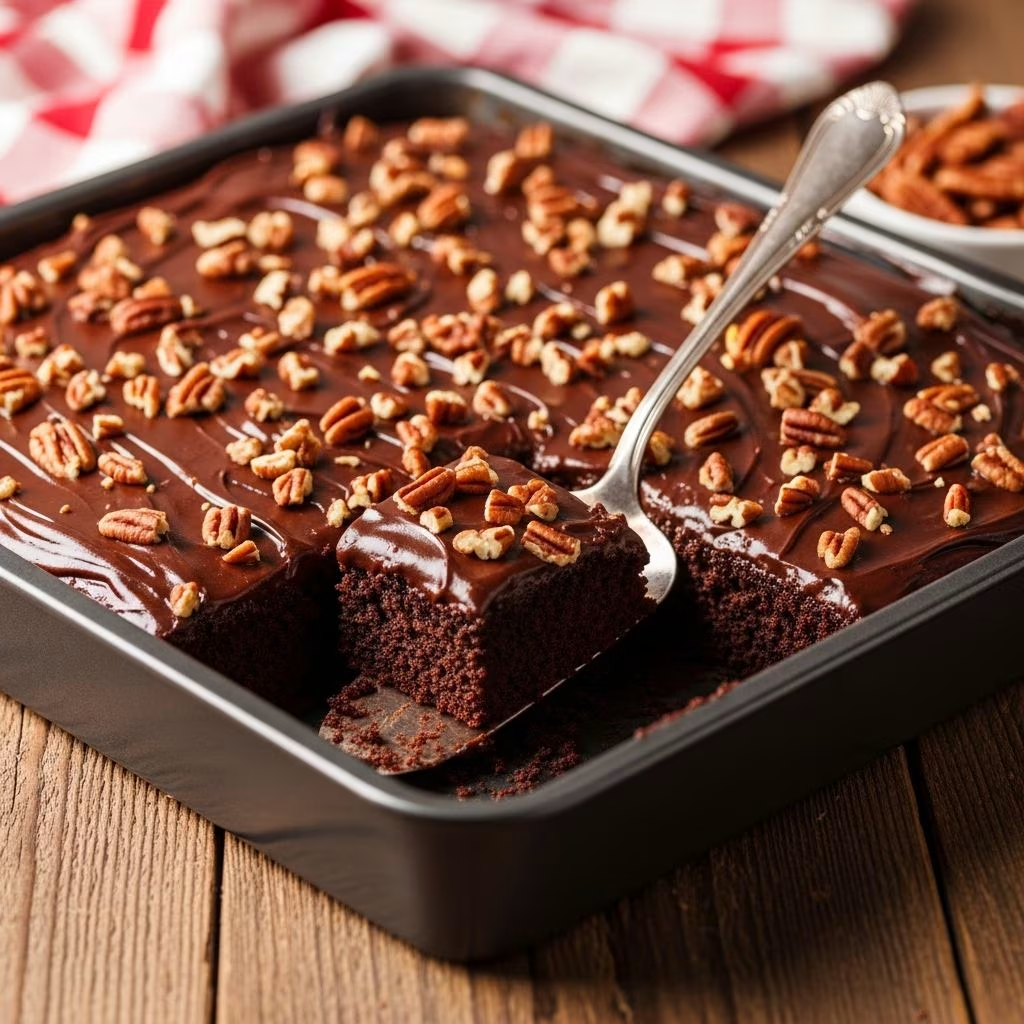
Pour the warm frosting over the hot cake immediately upon removing it from the oven. Use an offset spatula or the back of a spoon to spread it evenly across the surface. The frosting will partially sink into the warm cake, creating that distinctive fudgy layer that makes this cake legendary.
For added texture and flavor, some bakers stir finely chopped pecans or walnuts into the frosting before pouring. This addition is entirely optional but adds a pleasant crunch that complements the soft cake and creamy frosting.
Variations and Customizations
Frosting Additions
| Addition | Quantity | Effect |
|---|---|---|
| Chopped Pecans | 1/2 cup | Adds crunch and nutty depth |
| Instant Coffee Powder | 1-2 teaspoons | Intensifies chocolate flavor |
| Espresso Powder | 1 teaspoon | Deepens chocolate complexity |
| Extra Cocoa Powder | 1-2 tablespoons | Creates richer, darker frosting |
Batter Modifications
While the classic recipe is nearly perfect as-is, minor adjustments can suit different preferences. Some bakers substitute part of the sour cream with Greek yogurt for a slightly tangier flavor. Others add an extra egg yolk for increased richness and a more tender crumb.
For those seeking deeper chocolate flavor, increasing the cocoa powder by one or two tablespoons in the batter creates a more intensely chocolatey cake. A small addition of instant coffee powder—just half a teaspoon—amplifies the chocolate notes without making the cake taste like coffee.
Storage and Make-Ahead Strategies
One of the Texas sheet cake’s greatest advantages is its excellent keeping ability. Properly stored, it remains moist and delicious for three to four days at room temperature, covered with plastic wrap or aluminum foil. This longevity makes it perfect for preparing ahead for events.
For longer storage, wrap individual portions in plastic wrap and refrigerate for up to one week. The cake actually improves slightly as it sits, with flavors melding and the frosting setting into a firmer fudgy texture.
The cake can also be frozen successfully for up to two months. Wrap the entire cake or individual slices tightly in plastic wrap, then place in an airtight container. Thaw at room temperature for several hours before serving. Some bakers prefer to freeze the unfrosted cake and add fresh frosting after thawing, though the pre-frosted version also freezes admirably.
Troubleshooting Common Issues
Cake Texture Problems
If your cake turns out dry, the most likely cause is overbaking. The next time, remove it from the oven one or two minutes earlier. Additionally, verify that you’re using the full amount of sour cream or buttermilk specified—these contribute significantly to moisture.
An overly dense cake usually results from overmixing the batter. Mix just until all ingredients are combined; the batter should look slightly lumpy. Overmixing develops gluten, which creates a tough, dense crumb.
Frosting Consistency Issues
If your frosting is too thick to spread, gently reheat it over low heat or add another tablespoon or two of milk. If it’s too thin and running off the cake, let it cool for a few minutes before application, or add a bit more powdered sugar to thicken it.
Frosting that doesn’t set properly usually indicates it was either applied to a cake that wasn’t hot enough, or the kitchen is extremely warm. Refrigerating the frosted cake for thirty minutes to an hour helps it set more firmly.
Serving Suggestions and Pairings
This cake shines when served warm with cold milk or strong coffee. The contrast between the warm cake and cold beverage creates a wonderful eating experience. For a more elegant presentation, serve it with vanilla ice cream, which melts into the warm frosting.
Dust individual slices with additional cocoa powder for visual appeal and an extra chocolate flavor boost. A dollop of whipped cream adds richness, though many argue the cake needs nothing beyond itself.
Why This Cake Endures
The Texas chocolate sheet cake has remained popular for generations because it delivers exceptional results every single time. Its forgiving nature means even novice bakers achieve professional-looking results. The combination of speed, simplicity, reliability, and absolutely delicious flavor has earned this dessert a permanent place in American baking tradition.
Whether you’re baking for a family gathering, a potluck contribution, or simply a Friday night indulgence, this cake never disappoints. Its generous size means it feeds a crowd, and its remarkable keeping ability means leftovers—should any remain—only get better.
Frequently Asked Questions
Can I make this cake in a different pan size?
Yes, though baking time will adjust accordingly. A 9×13-inch pan is standard and requires 20-25 minutes. If using a smaller, deeper pan, increase baking time slightly. Always check for doneness with a toothpick rather than relying solely on time.
What if I don’t have sour cream?
Buttermilk is an excellent substitute at a 1:1 ratio. You can also make a buttermilk substitute by adding one tablespoon of lemon juice or white vinegar to regular milk and letting it sit for five minutes.
Is it necessary to use boiling water?
Yes, the hot water is essential. It properly dissolves the cocoa powder and creates the signature moist texture. Using room-temperature water results in a different cake entirely.
Can this cake be made dairy-free?
Yes, substitute butter with coconut oil or dairy-free butter, use a non-dairy milk in the frosting, and replace sour cream with coconut cream or dairy-free sour cream. The results will be slightly different but still delicious.
How far in advance can I make this cake?
You can bake it up to three days ahead. Store it covered at room temperature. Don’t freeze if making just one day ahead, as room temperature storage actually improves the flavor as it develops.
References
- The Comprehensive Guide to Cake Baking Chemistry — America’s Test Kitchen. 2023. https://www.americastestkitchen.com
- Professional Baking Standards and Techniques — Culinary Institute of America. 2024. https://www.ciachef.edu
- Food Science and the Art of Cake Making — Institute of Food Technologists. 2023. https://www.ift.org
- Regional American Dessert Traditions — Smithsonian Magazine Food History Archive. 2022. https://www.si.edu