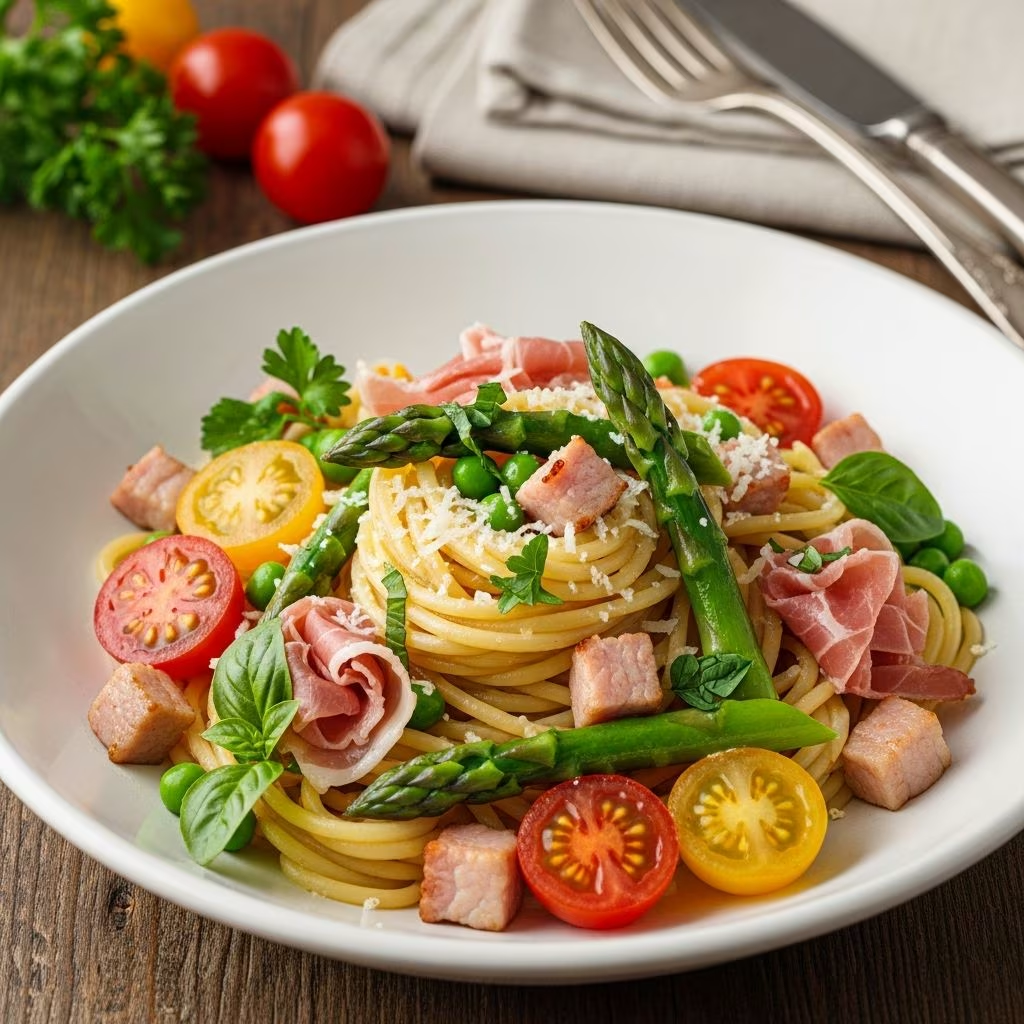
When weeknight cooking demands both simplicity and sophistication, few dishes deliver as reliably as tagliatelle dressed with prosciutto and fresh peas. This Italian-inspired creation merges the umami richness of cured pork with the delicate sweetness of springtime vegetables, all bound together by a silky cream sauce. The beauty of this preparation lies not in complexity but in the quality of its individual components and the technique that brings them together harmoniously.
Understanding the Foundation of This Classic Dish
This elegant pasta represents more than just a recipe—it embodies the Italian philosophy of letting quality ingredients shine without unnecessary embellishment. The combination of these three main elements creates a balanced flavor profile where each component plays a distinct role. The saltiness and depth of prosciutto provides an anchoring savory note, the peas contribute natural sweetness and textural interest, and the cream acts as a unifying medium that transforms individual elements into a cohesive whole.
The origins of this dish trace back to classic Italian home cooking, where resourceful cooks combined pantry staples with seasonal produce. What makes this preparation endure is its remarkable versatility—the basic formula can accommodate personal preferences while maintaining its essential character. Whether you prefer a lighter interpretation or a richer version, the fundamental technique remains consistent.
Selecting and Preparing Your Key Ingredients
The Role of Quality Prosciutto
Prosciutto serves as the flavor cornerstone of this dish, contributing both depth and complexity. When selecting prosciutto, look for thin, delicate slices that will incorporate seamlessly into your sauce. The meat requires two different preparations to maximize its impact: some pieces are minced finely to infuse the cream base with pork flavor, while larger strips are added near the end to provide textural contrast and visual interest.
The amount of prosciutto you use can range depending on your preference. Some preparations use as little as three ounces, while others call for up to six ounces. The difference lies in how prominent you want the pork flavor to be in the final dish. For a subtler approach, lean toward the lower end; for a more assertive flavor, increase the quantity.
Fresh Peas and Their Alternatives
Fresh English peas represent the ideal choice when they’re in season, offering bright flavor and delicate texture. Their natural sweetness provides essential balance against the salty prosciutto and rich cream. However, fresh peas require shelling, which demands time you may not always have on a busy evening.
Frozen petite peas offer a practical alternative that actually performs beautifully in this preparation. These peas are harvested and frozen at peak ripeness, preserving their flavor and nutritional value. The key distinction when using frozen peas involves timing—add them directly to the pasta water in the final minute of cooking if using fresh, or toss them in at the very end if using frozen, preventing the mushiness that can result from overcooking.
Cream and Cheese Considerations
Heavy cream forms the sauce base, though the quantity varies among different preparations from approximately half a cup to a full cup depending on desired richness. Some variations incorporate cheese directly into the cream base for extra depth, while others recommend adding it at serving time.
Parmigiano-Reggiano provides sharp, crystalline notes that cut through the richness of the cream. Certain contemporary interpretations include Gruyère as well, adding a subtle earthiness and melting quality that enriches the sauce texture. Mascarpone offers another option, creating an especially luxurious, velvety coating when incorporated into the pan off heat.
Mastering the Cooking Technique
Building the Cream Base
The foundation of this dish begins with melting butter in a medium skillet over gentle heat, creating an environment that prevents the dairy from breaking. Some preparations add a small amount of olive oil alongside the butter to prevent scorching and add flavor.
Once your fat has melted, introduce finely minced shallot or onion—typically half a shallot or one small yellow onion, depending on your preferred intensity. The key is gentle cooking until the aromatics become soft and fragrant but not colored, which should take approximately two to three minutes. This patient approach develops sweetness while preventing bitter, burnt flavors.
At this stage, introduce the minced prosciutto, stirring it into the fat to release its flavors into the oil and butter. This technique extracts maximum flavor from the meat before the cream goes in. After another minute, slowly pour in your heavy cream, stirring constantly to ensure smooth incorporation. The mixture should simmer gently for three to four minutes, reducing slightly to concentrate flavors and achieve the proper sauce consistency.
Cooking the Pasta and Peas
While your cream mixture develops, begin cooking your tagliatelle in generously salted water. Tagliatelle typically requires six to eight minutes for dried pasta or just a few minutes for fresh varieties. The critical timing point arrives approximately one minute before the pasta reaches al dente doneness—this is when you introduce your fresh peas directly into the boiling pasta water. This method gently cooks the peas and infuses the starch water with their subtle flavor.
Reserve one cup of the cooking water before draining your pasta and peas. This starchy liquid serves an essential function, allowing you to adjust sauce consistency to your preference without adding more dairy. The starch helps the sauce cling to the pasta while maintaining the proper texture.
The Final Assembly
Return your drained pasta and peas to the cooking pot, then add the warm cream mixture along with your reserved pasta water and prosciutto strips. Using gentle tossing motions, combine everything thoroughly, ensuring each strand of pasta gets coated with the silky sauce. The residual heat will warm the prosciutto strips and marry all the flavors together.
Taste the dish, adjusting seasoning with salt and freshly ground black pepper as needed. Add grated cheese while tossing to distribute evenly throughout. If the sauce seems too thick, add reserved pasta water a tablespoon at a time until reaching your desired consistency. Remember that the sauce will continue to thicken slightly as the pasta sits, so slightly looser is better than too thick at this stage.
Variations and Modern Interpretations
Incorporating Additional Vegetables
Contemporary versions expand the ingredient list beyond the classic trio. Snap peas offer a textural contrast, requiring similar treatment to fresh shelled peas. Cherry tomatoes, halved and added at the end, contribute brightness and visual appeal. Fresh arugula stirred in just before serving adds peppery notes and a nutritional boost. Nutmeg, used sparingly, bridges traditional and modern interpretations, adding subtle warmth without overwhelming the dish.
Cheese Variations
While Parmigiano-Reggiano remains the traditional choice, other cheeses can enhance the dish differently. Gruyère adds a subtle earthiness and superior melting quality. Mascarpone creates exceptional creaminess when incorporated off-heat. For an even lighter approach, reduce the cheese entirely, letting the cream and prosciutto carry the flavor profile.
Stock-Based Variations
Some contemporary preparations replace part or all of the heavy cream with chicken or vegetable stock, creating a lighter sauce while maintaining richness through cheese and mascarpone additions. This approach reduces calories while preserving the dish’s elegant character.
Nutritional Considerations and Benefits
Peas bring significant nutritional value to this dish, offering high fiber content, minimal fat, and substantial protein. Combined with the protein from prosciutto and the dairy components, this pasta provides a well-balanced meal that satisfies both hunger and culinary desires. The whole grain nature of many artisanal pasta varieties adds additional nutritional substance to the dish.
Practical Preparation Timeline
- Mise en place (5 minutes): Slice and mince prosciutto; mince shallot or onion; measure cream and reserve cheese
- Sauce preparation (5 minutes): Cook shallot, add minced prosciutto, incorporate cream, and simmer
- Pasta cooking (8 minutes): Bring water to boil, cook pasta, add fresh peas in final minute
- Final assembly (2 minutes): Combine all components and adjust seasoning
- Total time from start to table: approximately 20 minutes
Common Mistakes to Avoid
Overcooking the Peas
The most frequent error involves cooking peas too long, resulting in mushy texture rather than the desired slight crunch. Whether using fresh or frozen, add peas very near the end of cooking and check for doneness frequently.
Breaking the Cream Sauce
High heat can cause cream to separate and break. Maintain medium or medium-low temperature throughout, and add cream slowly while stirring constantly to ensure smooth incorporation.
Oversalting
Remember that prosciutto, cheese, and pasta cooking water all contribute salt. Taste before adding additional seasoning, as the dish may already contain sufficient salt.
Draining Pasta Too Aggressively
Excessive draining removes beneficial starch that helps sauce adhere to pasta. Allow some water to cling to the noodles when transferring to your serving pot.
Frequently Asked Questions
Can this dish be made ahead?
This recipe is best served immediately after assembly. However, you can prepare individual components ahead: cook pasta slightly underdone and toss with a little olive oil to prevent sticking; prepare the cream sauce and reheat gently when ready to serve; cook peas fresh or have frozen ones ready.
What pasta shapes work well for this preparation?
Tagliatelle remains the traditional choice, though fettuccine works equally well. Broader pasta ribbons capture sauce effectively. Smaller pasta shapes like penne can work, though they won’t provide the same elegant presentation.
How can I make this lighter without sacrificing flavor?
Replace half the heavy cream with chicken or vegetable stock. Use mascarpone instead of heavy cream for a lighter option. Reduce the cheese quantity slightly, or eliminate it entirely if desired.
What wine pairs well with this dish?
Light, crisp white wines complement the delicate flavors. Consider Pinot Grigio, Vermentino, or Verdicchio, which provide acidity to balance the cream without overwhelming the subtle flavors.
Conclusion: A Timeless Weeknight Solution
Tagliatelle with prosciutto and peas represents the intersection of simplicity and sophistication—a dish achievable in under thirty minutes yet elegant enough for entertaining. The formula combines quality ingredients with straightforward technique to create something greater than the sum of its parts. Whether you follow the classic preparation or adapt it with modern additions, this dish exemplifies how thoughtful cooking need not be complicated. For busy weeknights when you want something special without stress, this preparation deserves a permanent place in your regular rotation.
References
- Tagliatelle with Prosciutto and Fresh Peas — Entertablement. 2016. https://entertablement.com/2016/08/tagliatelle-with-prosciutto-and-fresh-peas/
- Tagliatelle with Prosciutto and Peas — Cooking with Julian. 2020. https://cookingwithjulian.blogspot.com/2020/11/tagliatelle-with-prosciutto-and-peas.html
- Tagliatelle with Prosciutto and Peas — Travel Gourmet. 2011. https://travel-gourmet.com/2011/10/03/tagliatelle-with-prosciutto-and-peas/
- Recipe: Tagliatelle with Prosciutto and Snap Peas — Life. Food. Wine. https://lifefoodwine.com/recipe-tagliatelle-with-prosciutto-and-snap-peas/
- Tagliatelle With Prosciutto and Peas — Hallmark Channel. https://www.youtube.com/watch?v=TtPIDClAFHM
- Fettuccine with Peas and Prosciutto — Blue Kitchen. 2009. https://blue-kitchen.com/2009/05/13/pasta-with-peas-prosciutto-and-parmesan/