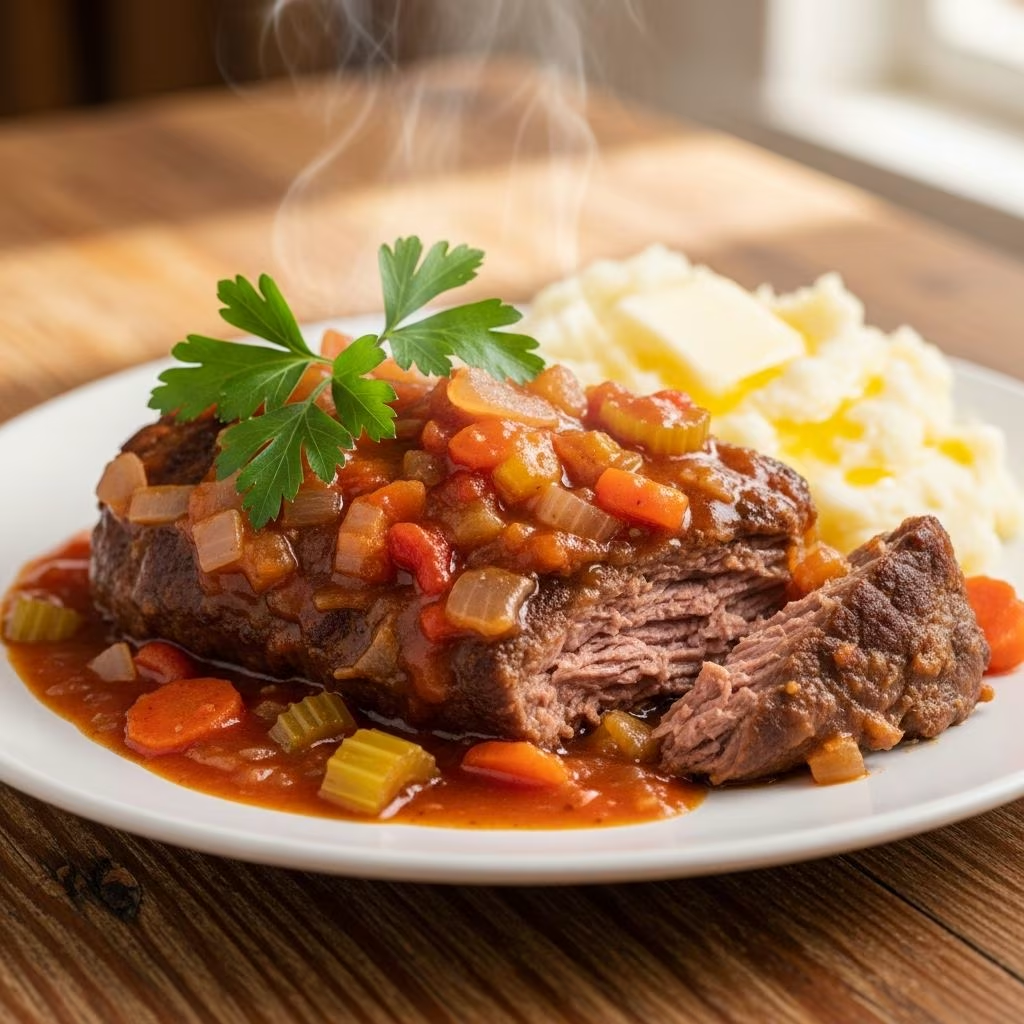
Swiss steak represents one of the most enduring comfort food traditions in American home cooking. This beloved dish transforms a modest cut of beef through gentle braising and slow cooking into something remarkably tender and flavorful. The technique itself dates back generations, passed down through family kitchens as a way to create an economical yet impressive meal that satisfies the entire family.
What makes Swiss steak particularly appealing is its simplicity combined with depth of flavor. The cooking method tenderizes tougher cuts of beef while allowing vegetables and seasonings to meld into a savory sauce. Whether you’re cooking for weeknight dinner or hosting guests, this dish delivers consistent, delicious results with minimal hands-on effort.
Understanding the Foundation of Swiss Steak
The essence of Swiss steak lies in understanding how heat and time work together to transform ingredients. The dish begins with a beef round steak—typically bottom or top round—which is pounded thin and then seared to develop a flavorful crust. This initial browning creates what chefs call the Maillard reaction, building complex flavors that will carry through the entire dish.
The term “Swiss steak” may seem misleading, as this dish has no direct connection to Switzerland. Rather, the name likely derives from the “swissing” technique—the process of pounding the meat with a mallet to break down muscle fibers and increase tenderness. This method has been fundamental to the recipe since its development in early American kitchens.
What distinguishes Swiss steak from simple stews is the careful layering of flavors and the attention to texture. The beef remains in distinct pieces rather than shredding apart, and the sauce maintains body without becoming overly thick or greasy. The combination of tomatoes, beef broth, and aromatic vegetables creates a savory foundation that complements rather than overwhelms the meat.
Essential Ingredients for Traditional Preparation
Creating exceptional Swiss steak begins with selecting quality ingredients, each playing a specific role in the final dish.
The Protein Foundation
The beef cut you choose determines both texture and cooking time. Round steak from the bottom or top of the round muscle provides excellent results because it contains sufficient connective tissue that converts to gelatin during slow cooking, creating natural body in the sauce. A 2-pound steak pounded to approximately half-inch thickness ensures even cooking and proper browning. Some cooks prefer chuck steak for its higher fat content, which adds richness, though cooking time may extend slightly.
Aromatics and Vegetables
The vegetable component extends beyond mere garnish. A large yellow onion sliced into half-moon pieces provides sweetness and body to the sauce as it breaks down during cooking. Carrots cut into one-inch chunks maintain some texture while adding natural sweetness. These vegetables should be chunky enough to remain identifiable when served, creating visual interest on the plate.
Garlic, minced fresh rather than powdered, adds aromatic depth. Three cloves provide background flavor without overwhelming more delicate palates. The timing of garlic addition matters significantly—adding it too early to hot oil can create bitterness, so it’s introduced after the heat reduces to low and cooked briefly with constant stirring.
The Sauce Components
Tomato products form the liquid base. Two tablespoons of tomato paste concentrate flavors and thicken the sauce naturally. Two cans of diced tomatoes—approximately 29 ounces total—provide acidity, sweetness, and texture. Two cups of low-sodium beef broth supply savory depth without overwhelming the palate. The low-sodium option allows you to control final salt levels rather than beginning with an oversalted base.
Worcestershire sauce contributes umami—the savory fifth taste that makes dishes more satisfying. One tablespoon is sufficient; more can create a harsh, vinegary note. This ingredient bridges the individual flavors, making them cohesive rather than separate.
Seasonings and Aromatics
Dried marjoram, thyme, and paprika create the spice profile. One teaspoon of marjoram and half a teaspoon of thyme provide herbal notes without dominating. One-quarter teaspoon of paprika adds mild pepper flavor and subtle color. These measurements reflect a refined approach—enough seasoning to be noticeable, but not so much that any single flavor overshadows others.
Other Essential Items
All-purpose flour, approximately one-half cup, creates a light coating that helps brown the meat while contributing to sauce body. Vegetable oil or canola oil, about three tablespoons total, facilitates browning without imparting strong flavors. Kosher salt and freshly ground black pepper season the meat before cooking and adjust the final sauce to taste.
Preparation Methods: Traditional to Contemporary
The Classic Oven Method
The traditional approach uses a Dutch oven—that workhorse of home cooking that moves seamlessly from stovetop to oven. Begin by tenderizing the steak with a meat mallet, using firm but controlled strikes across the surface. This breaks down connective tissue and widens the muscle fibers, allowing them to absorb the braising liquid more effectively.
Season both sides generously with salt and pepper. Spread the flour in a shallow bowl and dredge each piece, shaking away excess. This light coating assists browning and prevents sticking during initial searing.
Heat one and one-half tablespoons of oil in your Dutch oven over medium-high heat until shimmering. The oil should be hot enough that the meat sizzles immediately upon contact. Brown the beef in batches if necessary—crowding the pan reduces temperature and prevents proper crust development. Allow three to four minutes per side for deep browning, then transfer to a plate.
Add the remaining oil to the pot, reduce heat to medium, and add onion and carrots. These vegetables release their moisture and begin to soften, approximately five to seven minutes. Reduce heat further to low, add garlic, and cook while stirring for about one minute—this brief window allows the garlic flavor to infuse without burning.
Introduce the tomato paste, stirring to coat the vegetables and distribute throughout the pot. This step allows the tomato paste to concentrate and deepen in the hot oil before liquid dilutes it. Add the beef broth, diced tomatoes with their juices, Worcestershire sauce, marjoram, thyme, and paprika. Stir thoroughly, scraping the bottom of the pot to incorporate any browned bits—this fond contains intense flavor developed during the initial searing.
Return the browned beef to the pot, nestling it among the vegetables. The meat should be mostly submerged in the braising liquid. Cover the Dutch oven with its lid and transfer to a 350-degree oven. Cook for approximately two hours, checking at the one-hour-thirty-minute mark. The meat is done when it cuts easily with a fork and the sauce has thickened slightly from the natural reduction of liquids.
Stovetop Simulation for Modern Kitchens
For cooks without a Dutch oven, a heavy-bottomed pot with a tight-fitting lid works effectively. Follow the same browning and vegetable-cooking steps. After combining all ingredients, bring the mixture to a gentle simmer over medium-low heat. Maintain a barely perceptible bubble at the pot’s edge rather than a rolling boil—aggressive heat toughens meat rather than tenderizing it.
Cover and simmer for approximately one and one-half hours, stirring every thirty minutes to ensure even cooking and prevent sticking. Monitor the liquid level; if the sauce reduces too quickly, add additional broth in quarter-cup increments. The sauce should coat a spoon when ready, indicating proper thickening from natural collagen conversion and liquid reduction.
Slow Cooker Adaptation
Modern time-constrained cooks appreciate the slow cooker method. Complete the browning and initial vegetable cooking steps in a separate pot. Transfer all ingredients to the slow cooker, ensuring adequate liquid to prevent sticking. Cook on low for six to eight hours or high for four to five hours. The low setting produces more tender meat with better flavor development, though the high setting accommodates demanding schedules.
The slow cooker’s even, gentle heat particularly suits this dish. Liquid evaporation is minimal in a sealed slow cooker, so you may need to reduce the broth slightly—use one and one-half to one and three-quarter cups rather than two cups. Check after three hours on high or four hours on low to assess progress.
Serving Suggestions and Complementary Dishes
Swiss steak pairs beautifully with neutral-flavored starches that absorb the savory sauce. Mashed potatoes represent the classic choice—their creamy texture and mild flavor allow the steak and sauce to shine. Buttered egg noodles offer tender pasta that carries sauce elegantly. White or brown rice provides a lighter option that doesn’t compete with the main dish.
For contemporary presentations, cauliflower mash or cauliflower rice offer lower-carbohydrate alternatives without sacrificing satisfaction. Zucchini noodles work particularly well for those avoiding grains. The vegetable component within the sauce itself—onions, carrots, and tomatoes—provides sufficient nutrition that additional vegetables aren’t necessary, though a simple green salad with vinaigrette provides refreshing contrast.
Troubleshooting Common Challenges
Meat Remains Tough After Cooking
This typically indicates insufficient cooking time or heat that was too high. Increase cooking time by thirty minutes if the meat hasn’t reached fork-tender consistency. Verify that your oven temperature is accurate using a separate thermometer. Additionally, confirm that the steak was pounded sufficiently thin before cooking—thicker pieces require extended time to tenderize throughout.
Sauce Is Too Thin
If the sauce resembles soup rather than coating the meat, increase heat slightly and simmer uncovered for ten to fifteen minutes to allow additional evaporation. Alternatively, mix one tablespoon of cornstarch with two tablespoons of cold water to create a slurry, then stir into the sauce while simmering. The cornstarch will thicken the sauce within a few minutes.
Sauce Tastes Bland
Taste the sauce before serving and adjust seasonings incrementally. Add salt and pepper gradually, tasting between additions. If Worcestershire flavor seems absent, add one-half tablespoon more. Sometimes the tomato products dominate; in this case, increase beef broth slightly to balance. A squeeze of fresh lemon juice can brighten flavors, though add only one-quarter teaspoon initially.
Meat Shreds Instead of Remaining in Pieces
Excessive cooking time or extremely high heat causes muscle fibers to break apart. Reduce cooking time by fifteen to twenty minutes initially. Monitor more frequently toward the end of the cooking period, checking for doneness at earlier intervals.
Make-Ahead and Storage Considerations
Swiss steak improves with time as flavors continue developing. You can prepare this dish completely one to two days ahead, refrigerating in a covered container. The flavors meld and deepen overnight. When ready to serve, reheat gently over low heat on the stovetop or in a 325-degree oven, stirring occasionally to ensure even warming. Add a splash of broth if the sauce has thickened too much during storage.
Portions freeze beautifully for up to three months when stored in airtight containers or heavy-duty freezer bags. Thaw overnight in the refrigerator before reheating. This make-ahead capacity makes Swiss steak excellent for meal planning—prepare when time permits and reheat for quick dinners.
Frequently Asked Questions
Can I use a different beef cut?
Yes, though results vary. Chuck steak or chuck roast contains more intramuscular fat and creates a richer sauce but may require additional cooking time. Sirloin tip works but produces a leaner result. Flank steak cooks more quickly, requiring only one to one and one-half hours. Avoid tender cuts like ribeye or tenderloin, which become mushy with extended cooking.
How far in advance can I prepare ingredients?
Prepare vegetables up to one day ahead, storing cut pieces in separate covered containers in the refrigerator. Pound the meat the morning of cooking. Don’t salt and pepper until ready to cook, as salt draws out moisture. This preparation allows you to complete the dish in approximately thirty minutes when you’re ready to eat.
What if I don’t have fresh garlic?
Garlic powder can substitute at one-quarter teaspoon for three fresh cloves, though fresh provides superior flavor. Add garlic powder with the other seasonings rather than attempting to cook it separately, as powder burns easily in hot oil.
Can vegetables be modified for picky eaters?
Absolutely. Children who dislike mushrooms or bell peppers can enjoy versions without these ingredients. The core recipe—beef, onion, carrots, and tomato sauce—remains satisfying. Remove larger vegetable pieces before serving to finicky eaters while maintaining the sauce and meat portions.
Conclusion: A Timeless Dish Worth Mastering
Swiss steak transcends its humble origins as an economical weeknight dinner to become a dish worthy of special occasions and family gatherings. The combination of straightforward technique, accessible ingredients, and reliable results makes it an essential recipe for home cooks of all skill levels. Whether you prepare it using traditional oven methods or modern slow cooker adaptations, the outcome—tender, flavorful beef in a satisfying sauce—rewards the minimal effort required. Master this classic preparation and you’ve gained a versatile dish that nourishes body and soul.
References
- Mom’s Swiss Steak Recipe — Small Town Woman. 2024. https://www.smalltownwoman.com/swiss-steak/
- Mom’s Swiss Steak — Diane’s Food Blog. 2012. https://dianesfoodblog.com/2012/10/26/moms-swiss-steak/
- Mom’s Swiss Steak Recipe — Taste And See. 2024. https://tasteandsee.com/swiss-steak/