The cassoulet represents one of France’s most celebrated culinary traditions, known for its deep, complex flavors developed through patient slow-cooking of meat, legumes, and aromatic ingredients. However, this iconic dish need not remain bound to its traditional form. By adapting the fundamental principles of cassoulet preparation to showcase the bounty of summer produce, home cooks can create a lighter, more refreshing version that honors the original while celebrating seasonal ingredients at their peak.
Understanding Cassoulet: From Ancient Tradition to Modern Interpretation
The cassoulet emerged from the Occitanie region of southwestern France, where it developed as a peasant dish designed to use preserved meats and dried beans through the winter months. The traditional composition involves slow-simmered pork products, duck confit, and white beans, creating a rich, velvety texture and profound umami depth. The name itself derives from the earthenware cooking vessel, the cassole, in which it was traditionally prepared.
A summer vegetable iteration respects the cooking methodology and layered flavor development of the original while substituting fresh vegetables for the traditional protein-heavy base. This adaptation maintains the dish’s essential character—a slow-cooked, deeply flavored braise—while creating something more appropriate for warm weather dining and lighter appetites. The result is a sophisticated vegetable-forward dish that satisfies without overwhelming.
Key Components: Building Layers of Flavor
The Vegetable Foundation
The success of a summer vegetable cassoulet depends upon carefully selected produce that complements rather than competes with other elements. Eggplant provides a substantial base with natural umami qualities that replace some of the depth traditionally contributed by meat. Green beans (also called haricots verts when using the thinner French variety) contribute textural contrast and a subtle grassy quality. Cherry tomatoes deliver brightness and acidity while providing structural integrity when cooked gently. Together, these vegetables create a complex interplay of flavors that develops and intensifies during the baking process.
Additional vegetables such as carrots, onions, or artichoke hearts can be incorporated based on seasonal availability and personal preference. The key consideration involves selecting produce with varying textures and flavor profiles—some vegetables should maintain their shape while others soften into the sauce, creating textural diversity.
Aromatic Building Blocks
Cassoulet cuisine relies heavily on the interplay of complementary herbs and aromatics. Fresh parsley, marjoram, and thyme create a herbaceous framework that ties the dish together. These herbs are incorporated in stages—some early in cooking to build foundational flavors, others added later to provide bright, fresh notes that counterbalance the deep, developed flavors.
Garlic, when sliced thinly rather than minced, provides distinct pockets of flavor throughout the dish rather than diffusing uniformly. Oil-packed anchovy fillets, though not traditional in vegetable cassoulets, contribute deep savory complexity and natural salt that enhances overall palatability. Fennel seeds and crushed red pepper flakes add aromatic dimension and gentle heat without overwhelming the palate.
The Binding Elements
White beans—whether butter beans, cannellini beans, or corona beans—serve as the cassoulet’s essential binding ingredient. Beans contribute body, creaminess (particularly when some break down during cooking), and protein that makes the dish satisfying. Tomato paste, concentrated and deeply flavored, serves as an additional binder while adding umami intensity. Dry white wine introduces acidity and alcohol that evaporates during cooking, leaving subtle fruity notes and complexity.
The Technique: Preparing Your Cassoulet
Initial Preparation and Seasoning
Begin by preparing vegetables into uniform sizes, ensuring even cooking throughout. Peel eggplant and cut into two-inch pieces, promoting better flavor absorption and preventing an overly soft, mushy texture in the finished dish. Trim green beans and keep them whole or halve them, depending on preference. These preparatory steps, though seemingly minor, significantly impact the final dish’s quality and presentation.
Create a spice blend by combining fennel seeds and crushed red pepper flakes, which will bloom in hot oil, releasing volatile aromatic compounds that deepen flavor. Season vegetables initially with salt and freshly ground black pepper, allowing flavoring to penetrate before cooking begins.
The Cooking Process
Heat extra-virgin olive oil in a large, heavy-bottomed pot or Dutch oven. The quality of olive oil matters considerably, as it contributes flavor that cannot be replicated by neutral oils. Add the spice blend to the hot oil for thirty seconds to one minute, until fragrant but not browned.
Introduce eggplant and initial aromatics, cooking gently until the eggplant begins to soften and absorb the infused oil. This initial stage builds foundational flavors. Add sliced garlic and oil-packed anchovies, stirring until the anchovies dissolve into the oil, creating an invisible yet essential layer of umami.
Add green beans and continue cooking for several minutes, allowing them to warm through and absorb surrounding flavors. Incorporate tomato paste, stirring to distribute evenly and deepen the paste’s natural flavors through gentle cooking (a process called blooming).
Deglaze the pot with dry white wine, using a wooden spatula to scrape any flavorful browned bits from the pot’s bottom. These browned bits (called fond) contain concentrated flavors essential to the dish’s depth. Add cherry tomatoes, beans with their liquid, and additional fresh herbs. Bring to a gentle simmer, then transfer to a preheated oven for the final cooking stage.
The Golden Topping: Achieving Crispy Gruyere Perfection
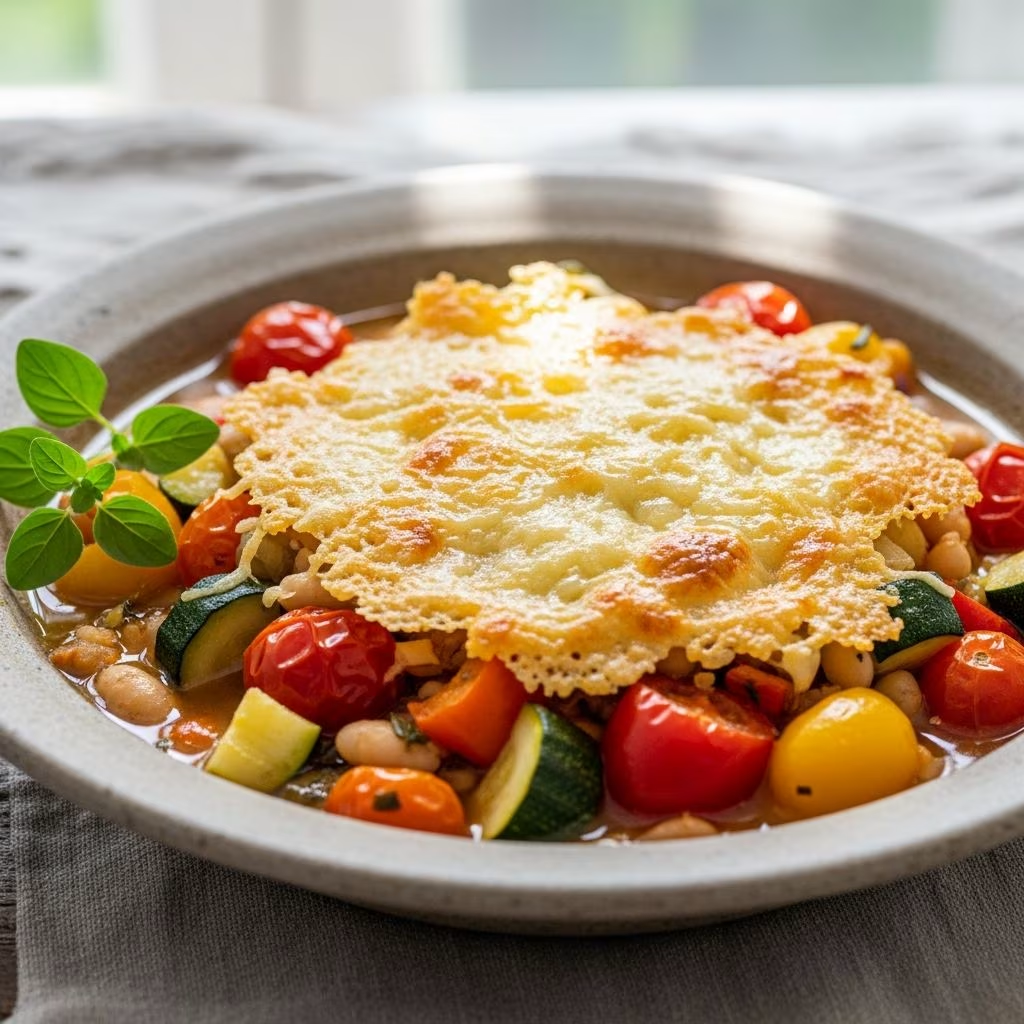
Gruyere cheese, with its complex nutty flavor and excellent melting properties, provides the essential textural contrast and rich finish. Coarsely grate the cheese—this texture promotes better crisping than finely grated varieties, which tend to clump and brown unevenly.
Spread grated Gruyere evenly across the cassoulet’s surface approximately fifteen to twenty minutes before the dish finishes cooking. The cheese will gradually melt, flow between vegetables, and develop a golden-brown crust. This timing allows the cheese to achieve desirable crispiness without burning or becoming overly dark.
If desired, finish under the broiler for thirty seconds to one minute to deepen the Gruyere’s color and crisping, though this step requires careful attention to prevent sudden browning.
Timing and Temperature Considerations
| Cooking Stage | Temperature | Duration | Purpose |
|---|---|---|---|
| Stovetop Preparation | Medium to Medium-High | 10-15 minutes | Build initial flavors and soften vegetables |
| Oven Cooking | 325-350°F | 45-60 minutes | Gentle cooking allows flavors to meld and deepen |
| Cheese Application | 325-350°F | 15-20 minutes | Melt and crisp Gruyere topping |
| Optional Broiler Finish | High | 30-60 seconds | Intensify Gruyere browning and crisping |
Ingredient Substitutions and Variations
The beauty of summer vegetable cassoulet lies in its adaptability to seasonal availability and personal preferences. Bell peppers, zucchini, or summer squash can replace or supplement the suggested vegetables. Artichoke hearts bring earthy sophistication and interesting texture. Mushrooms, particularly cremini or porcini varieties, add umami depth that enriches the overall flavor profile.
For those avoiding anchovies, additional garlic or soy sauce provides comparable umami intensity. Vegetable stock can augment the liquid if needed, though the vegetable-released moisture and bean liquid typically provide sufficient cooking liquid. Different bean varieties—cannellini, flageolet, or butter beans—each contribute slightly different flavor and texture characteristics.
Herb selections should reflect personal taste and what thrives in summer gardens. Oregano, savory, or basil can replace or supplement marjoram. The goal remains achieving herbaceous complexity without any single herb overwhelming others.
Serving Suggestions and Complementary Pairings
Summer vegetable cassoulet serves beautifully as a standalone main course, offering substantial satisfaction through its combination of vegetables, beans, and cheese. Crusty bread alongside allows guests to soak up the flavorful cooking liquid and sauce that develops during baking.
A crisp white wine—particularly one from southern France such as Vermentino or Picpoul de Pinet—complements the dish’s flavors without overwhelming the palate. Light rosé offers similar refreshment with additional fruitiness. These wines’ acidity helps cut through the cheese’s richness while echoing the wine incorporated into the dish itself.
A simple green salad dressed with vinaigrette provides textural and flavor contrast, particularly one featuring bitter greens such as radicchio or endive that balance the dish’s richness.
Make-Ahead and Storage Considerations
This cassoulet improves with time as flavors continue developing. The dish can be fully prepared through the stovetop stage, cooled, and refrigerated for up to two days. When ready to serve, transfer to the oven, add the Gruyere topping, and bake until heated through and the cheese crisps.
Leftover cassoulet keeps refrigerated for three to four days and can be gently reheated in a low oven, covered with foil, to prevent the topping from overbrowning. The dish also freezes well for up to two months—freeze before adding the cheese topping, then add fresh cheese when reheating for optimal texture and appearance.
Frequently Asked Questions
Can I prepare this dish without an oven?
Yes, the cassoulet can be completed entirely on the stovetop, covered, at a gentle simmer for approximately one hour. The oven method provides more even, gentle cooking and easier cheese crisping, but stovetop preparation produces comparable results with careful temperature monitoring.
What type of pot works best?
A heavy-bottomed Dutch oven or large pot with a tight-fitting lid conducts heat evenly and promotes consistent cooking. Cast iron or enameled cast iron works particularly well. Avoid thin-bottomed pots that may create hot spots and uneven cooking.
How do I know when the cassoulet is finished cooking?
Vegetables should be tender but not falling apart, and beans should be completely soft. The sauce should have thickened somewhat, clinging to vegetables rather than pooling at the bottom. The Gruyere topping should be melted and golden brown, with crispy edges if desired.
Can I use canned beans?
Absolutely. One fifteen-ounce can of beans (drained and rinsed) provides approximately one and a half cups cooked beans. Canned beans save significant preparation time while delivering consistent results. Rinse thoroughly to remove excess sodium and starch.
What if I don’t have fresh marjoram?
Oregano serves as an excellent substitute with slightly different flavor nuances but comparable herbaceous quality. Dried marjoram or oregano can replace fresh in a one-to-three ratio (one teaspoon dried equals approximately three teaspoons fresh).
References
- Summer Vegetable Cassoulet Recipe — Bon Appétit / Clay Coyote. 2025. https://www.claycoyote.com/summer-vegetable-cassoulet/
- Vegetarian Cassoulet Recipe — Cooking On The Weekends. 2024. https://cookingontheweekends.com/vegetarian-cassoulet-recipe/
- Vegetarian Cassoulet Recipe — Vegetarian Times. 2023. https://www.vegetariantimes.com/recipes/vegetarian-cassoulet/
- Incredible Vegetable Cassoulet — Not Eating Out in New York. 2011. https://noteatingoutinny.com/2011/01/10/incredible-vegetable-cassoulet/