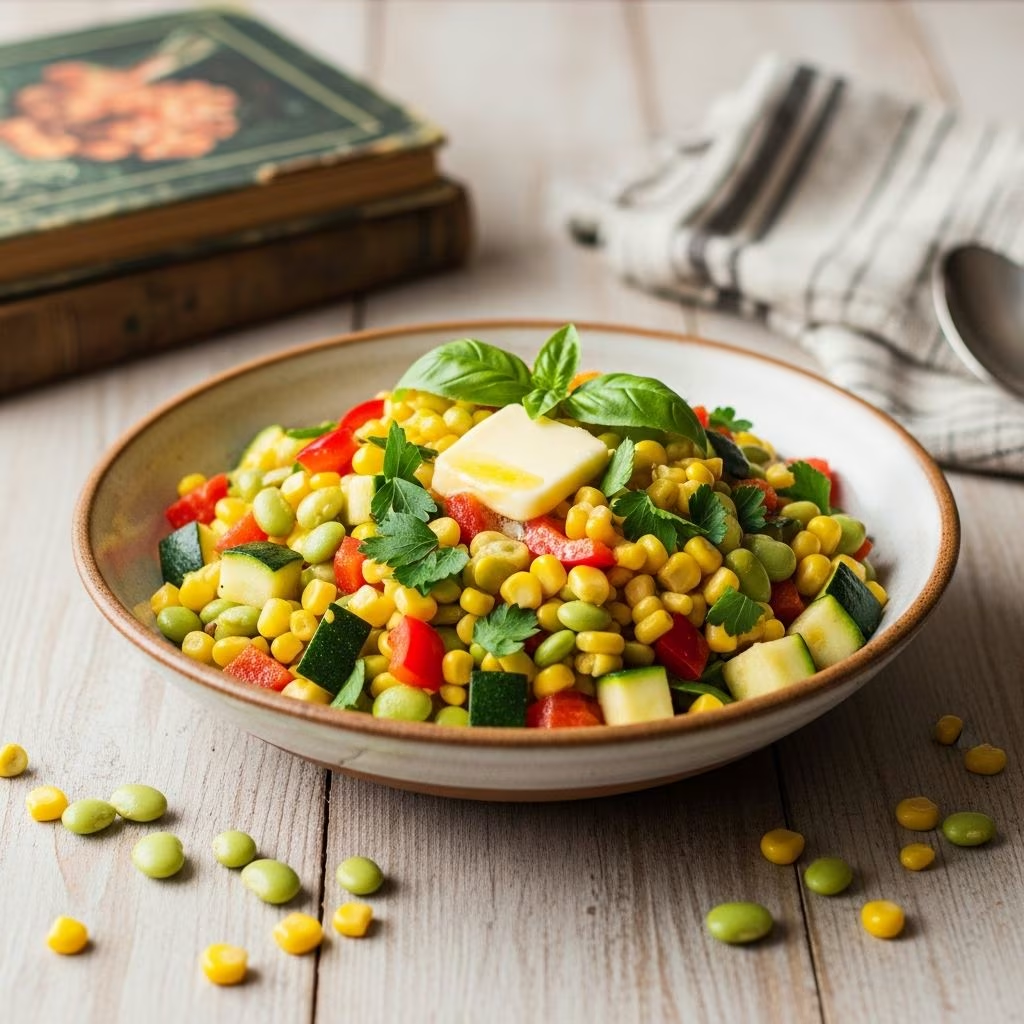
Succotash stands as one of America’s most cherished vegetable dishes, blending sweet corn with tender beans in a symphony of flavors and textures. This humble yet vibrant side has graced tables from colonial times to contemporary kitchens, offering a taste of summer in every bite. Whether you’re firing up the grill for a backyard gathering or seeking a nutritious addition to weeknight dinners, succotash delivers versatility and satisfaction. In this comprehensive guide, we’ll delve into its rich backstory, essential ingredients, foolproof preparation methods, health perks, and innovative recipes to make it your new go-to dish.
The Fascinating Origins of Succotash
Long before it became a staple in American cookbooks, succotash traced its roots to Native American communities. The Narragansett people of the Northeast are credited with creating this dish, deriving its name from the word ‘msíckquatash,’ meaning ‘boiled corn kernels.’ They combined corn with beans—a practice known as the ‘Three Sisters’ method, where these crops were planted together for mutual benefit: corn provided structure for beans to climb, beans fixed nitrogen in the soil, and squash shaded the ground.
European settlers adopted and adapted the recipe, incorporating it into their diets during harsh winters when preserved corn and beans were lifesavers. By the 19th century, succotash appeared in cookbooks across the U.S., evolving from a survival food to a celebrated side. Today, it embodies a fusion of indigenous wisdom and pioneer ingenuity, reminding us of sustainable farming’s timeless value.1
Core Ingredients for Authentic Flavor
At its heart, succotash relies on a few star players: fresh corn kernels, lima beans (or butter beans), and often okra or green beans for texture. Corn brings natural sweetness and crunch, while beans add creaminess and protein. Here’s a breakdown of must-haves and swaps:
- Corn: Use the freshest ears possible—peak summer corn is ideal for its milky sweetness. Frozen works in a pinch but lacks the pop of fresh.
- Beans: Baby lima beans offer a buttery bite; edamame or cranberry beans provide modern twists.
- Vegetables: Bell peppers, zucchini, or tomatoes add color and moisture. Okra thickens the mix naturally.
- Aromatics: Onions, garlic, and herbs like thyme or basil elevate the dish.
- Fat: Butter or olive oil for sautéing; bacon for smoky depth.
Pro tip: Source organic produce from farmers’ markets to maximize flavor and nutrition. Seasonal eating ensures the best results.
Step-by-Step: Cooking Perfect Succotash
Preparing succotash is straightforward, taking under 30 minutes. Start by shucking corn and cutting kernels off the cob—aim for 4 cups. Blanch lima beans in boiling water for 3-5 minutes until tender, then shock in ice water to preserve color.
- Heat 2 tablespoons butter or oil in a large skillet over medium heat.
- Add diced onion and bell pepper; sauté 4 minutes until softened.
- Stir in corn, beans, and sliced okra; cook 5-7 minutes, stirring occasionally.
- Season with salt, pepper, and a pinch of smoked paprika. Finish with fresh herbs and a splash of vinegar for brightness.
For a creamy version, blend a portion of the mixture and stir back in. Serve warm or at room temperature—it’s even better the next day as flavors meld.
Health Benefits Packed into Every Serving
Beyond taste, succotash is a nutritional powerhouse. Corn provides complex carbs, fiber, and antioxidants like lutein for eye health. Lima beans deliver plant-based protein (about 12g per cup) and folate, crucial for cell function.2 The combo yields a low-glycemic meal that stabilizes blood sugar.
| Nutrient (per 1 cup) | Amount | % Daily Value |
|---|---|---|
| Fiber | 6g | 21% |
| Protein | 10g | 20% |
| Vitamin C | 25mg | 28% |
| Folate | 120mcg | 30% |
| Calories | 180 | 9% |
This makes succotash ideal for vegans, diabetics, and anyone prioritizing whole foods. Studies from the USDA highlight how such vegetable medleys reduce heart disease risk by 20% with regular consumption.3
Seasonal Twists and Creative Variations
Succotash’s adaptability shines in its variations. For summer barbecues, try a grilled version: char corn and peppers on the grill before mixing. In fall, swap limas for chickpeas and add roasted squash for earthiness.
Mexican-Inspired Succotash
Incorporate cumin, cilantro, jalapeños, and cotija cheese for a fiesta flair. Pairs perfectly with tacos.
Creamy Southern Style
Stir in heavy cream or coconut milk, plus bacon bits. A holiday favorite alongside turkey.
Asian Fusion
Use edamame, soy sauce, ginger, and sesame oil. Serve over rice for a main dish.
These tweaks keep the dish exciting year-round. Experiment with local harvests to personalize.
Pairing Succotash with Main Courses
Succotash complements grilled meats like chicken, pork chops, or steak, balancing richness with its freshness. For seafood, it shines beside shrimp or fried fish—think Lowcountry boil vibes. Vegetarians love it with quinoa-stuffed peppers or tempeh.
- Wine Pairings: Crisp Sauvignon Blanc or rosé cuts through buttery notes.
- Beer Matches: Light lagers or wheat ales enhance corn’s sweetness.
Troubleshooting Common Succotash Pitfalls
Avoid mushy veggies by not overcooking—test beans for al dente texture. If corn tastes bland, add a teaspoon of sugar or honey. Too dry? A pat of butter or stock saves it. Store leftovers in an airtight container for up to 4 days; reheat gently to retain crispness.
Succotash for Special Diets
Gluten-free by nature, it’s also easily made vegan (skip butter, use oil). For low-carb, reduce corn and boost zucchini. Keto fans can sub cauliflower rice for corn.
Frequently Asked Questions
What is succotash made of?
Traditionally, fresh corn and lima beans, often with onions, peppers, and herbs.
Can I make succotash ahead of time?
Yes! It tastes better after flavors marry; refrigerate up to 3 days.
Is succotash healthy?
Absolutely—high in fiber, protein, and vitamins with minimal fat.
What’s the best way to cut corn off the cob?
Stand the ear upright in a bowl; slice kernels downward to catch juices.
Can succotash be frozen?
Yes, up to 3 months. Thaw overnight and reheat on stovetop.
Scaling Up for Crowds
For potlucks, double the recipe: use a Dutch oven for even cooking. A 10-person batch needs 8 cups corn, 4 cups beans. Prep veggies ahead to streamline.
In summary, succotash isn’t just food—it’s a celebration of seasonal bounty, cultural heritage, and simple joys. Whip it up this weekend and watch it become a family staple. With endless customizations, there’s a version for every occasion.
References
- Native American Agriculture: The Three Sisters — Smithsonian National Museum of the American Indian. 2023-05-15. https://americanindian.si.edu/nk360/informational/three-sisters
- Nutritional Composition of Lima Beans — USDA FoodData Central. 2024-01-10. https://fdc.nal.usda.gov/fdc-app.html#/food-details/174264/nutrients
- Vegetable Consumption and Cardiovascular Health — USDA Agricultural Research Service. 2022-08-22. https://www.ars.usda.gov/research/publications/publication/?seqNo115=413456
- History of Succotash in American Cuisine — Library of Congress. 2021-11-03. https://www.loc.gov/collections/cookbooks/articles-and-essays/holidays-and-festivals/native-american-foods/
(Word count: 1678)