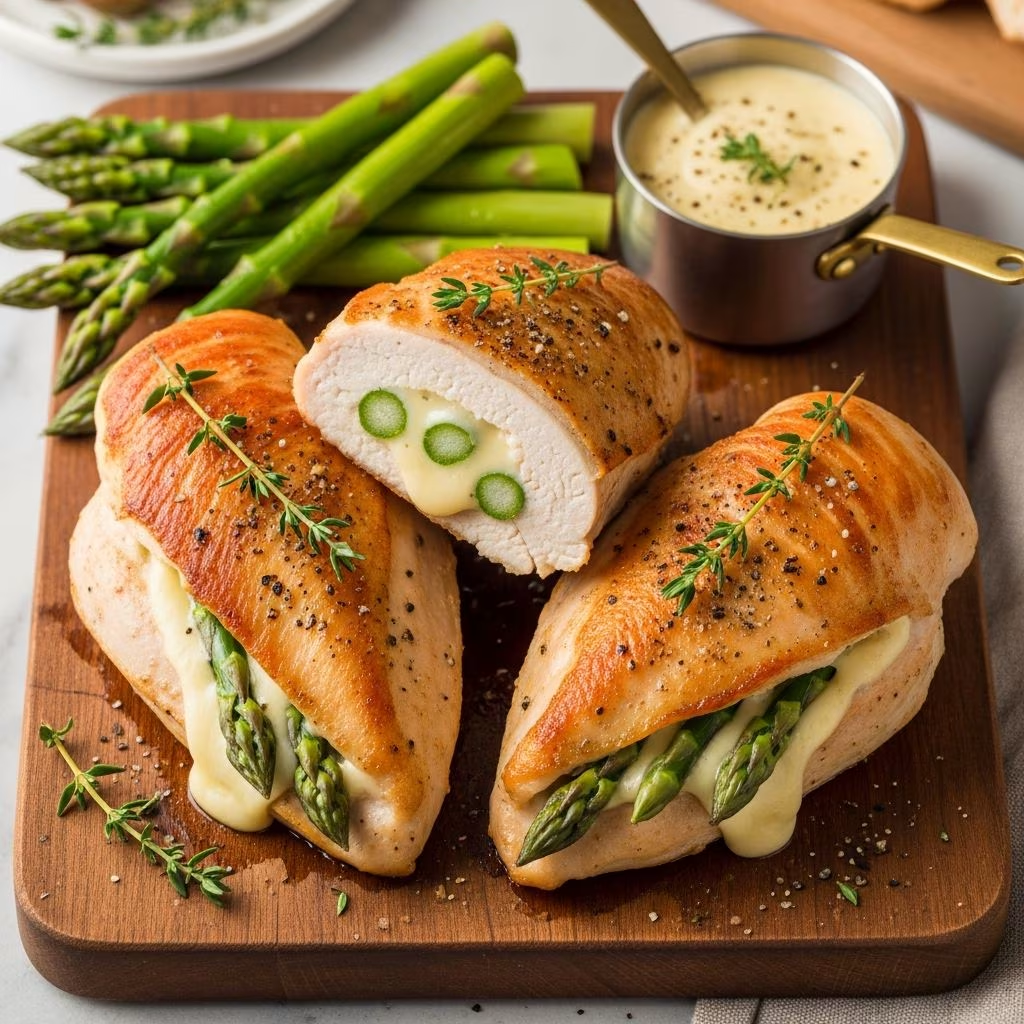
Creating an impressive main course doesn’t require hours in the kitchen or advanced culinary skills. Stuffed chicken breasts represent an ideal solution for home cooks seeking to balance flavor, nutrition, and simplicity. When combined with fresh asparagus and creamy cheese, this dish transforms basic ingredients into a restaurant-worthy presentation that takes approximately 30-45 minutes from start to finish.
This versatile recipe appeals to various dietary preferences, including those following keto and low-carbohydrate eating patterns. The combination of protein-rich chicken, nutrient-dense vegetables, and satisfying dairy creates a well-rounded meal that works equally well for casual weeknight dinners or entertaining guests.
Why This Dish Works as a Dinner Solution
The appeal of stuffed chicken breasts extends beyond basic nutrition. The technique of butterflying and filling chicken breasts allows cooks to infuse moisture and flavor directly into the protein, preventing the dry texture often associated with lean chicken meat. The melting cheese creates a natural sauce while the asparagus adds textural contrast and visual elegance.
The dish accommodates numerous variations, allowing creative expression within a straightforward framework. Home cooks can modify ingredients based on pantry availability, dietary restrictions, or personal taste preferences without compromising the overall success of the meal.
Essential Ingredients for Success
Building this dish begins with quality base components. The foundation rests on four boneless, skinless chicken breasts, approximately 1.5 pounds total. These should be uniform in thickness to ensure even cooking throughout.
The cheese component typically includes fresh mozzarella slices combined with an optional dairy element such as goat cheese for added richness and tang. Fresh asparagus spears, approximately twelve to sixteen depending on thickness, should be selected for firmness and vibrant green color. Trimming the woody bottom portions ensures tender results throughout.
Seasonings create depth and complexity. Common choices include Italian seasoning blends, garlic powder, smoked paprika, sea salt, and freshly ground black pepper. Optional additions such as sun-dried tomatoes, fresh herbs, or balsamic vinegar can elevate the flavor profile. Olive oil facilitates browning and adds richness to the finished dish.
Preparation Steps for Professional Results
Creating Pockets for Filling
Successful stuffing begins with careful pocket creation. Place each chicken breast on a cutting board and position the knife horizontally along the thickest part of the breast. The goal involves creating an opening large enough to accommodate filling without cutting completely through the meat. This requires gentle pressure and attention, as cutting too deeply compromises structural integrity and allows filling to escape during cooking.
Starting at the thickest section of the breast provides the best results, as this area offers sufficient depth for adequate filling capacity while maintaining enough surrounding meat for stability.
Seasoning Foundation
Before stuffing, generously season both exterior surfaces and the interior pocket with selected spices. This two-stage seasoning approach ensures flavor penetration throughout the dish rather than concentrated only on the outside. Distribute seasonings evenly to prevent any portion from being underseasoned.
Assembling the Filling
The filling assembly follows a layering technique. Begin by spreading dairy components inside the pocket, creating a base layer that anchors other ingredients. Add trimmed asparagus spears, typically three to four per breast, along any optional components such as sun-dried tomatoes. Top with cheese slices, which will melt during cooking and bind all components together.
Some preparations involve rolling cheese around asparagus before placing it in the chicken pocket, creating a compact filling bundle. This approach prevents cheese from escaping during the cooking process.
Securing the Filling
Depending on the filling quantity and chicken breast thickness, securing with toothpicks prevents filling from escaping during searing and baking. Insert toothpicks perpendicular to the opening, typically requiring one to two picks per breast. Remember to remove toothpicks before serving to ensure guest safety.
Cooking Methodology
The Two-Stage Cooking Process
This recipe employs a hybrid cooking technique combining stovetop searing with oven finishing. This approach develops golden, flavorful exteriors while ensuring the interior reaches food-safe temperatures without overcooking.
Preheat your oven to 400°F before beginning stovetop preparation. This ensures the oven reaches temperature when the chicken is ready for the finishing phase.
Searing for Flavor Development
Heat an oven-safe skillet over medium-high heat and add olive oil. Once the oil shimmers, carefully place stuffed chicken breasts in the pan. Sear for three to four minutes per side, developing a golden-brown crust through the Maillard reaction. This browning process creates complex flavors that characterize restaurant-quality preparations.
Avoid moving chicken frequently, as undisturbed contact with the hot pan surface ensures proper browning. Once both sides achieve golden color, transfer the entire skillet to the preheated oven.
Baking for Completion
Bake the chicken in the oven for approximately 12-15 minutes, until the internal temperature reaches 165°F when measured with a meat thermometer inserted into the thickest part of the chicken. The cheese will melt during this phase, and the asparagus will reach tender-crisp doneness.
Avoid prolonged baking, as overcooked chicken becomes dry and tough. Check for doneness beginning at the twelve-minute mark, especially if using larger chicken breasts.
Flavor Variation Options
| Variation | Additional Ingredients | Flavor Profile |
|---|---|---|
| Mediterranean | Sun-dried tomatoes, fresh basil, garlic | Tangy, herbaceous |
| Italian Herb | Provolone cheese, Italian seasoning, oregano | Bold, savory |
| Gourmet | Goat cheese, walnuts, balsamic vinegar | Rich, sophisticated |
| Spinach-Enhanced | Sautéed spinach, ricotta, nutmeg | Creamy, earthy |
Nutritional Considerations
This dish provides substantial protein from chicken breasts, supporting muscle maintenance and satiety. Asparagus contributes fiber, vitamins K and C, and folate, supporting digestive and immune health. The dairy components offer calcium and additional protein.
The keto-friendly nature of this recipe makes it suitable for low-carbohydrate eating patterns, as the primary carbohydrates come from asparagus while protein and fat dominate the macronutrient composition. Individual nutritional values vary based on specific ingredient choices and portion sizes.
Troubleshooting Common Issues
Filling Escaping During Cooking
If filling leaks from the chicken during cooking, ensure adequate toothpick placement and avoid cutting the pocket too close to the edges. Secure with additional toothpicks if needed. Alternatively, reduce oven temperature slightly and extend cooking time to allow gentler heat penetration.
Dry Chicken Texture
Overcooking represents the primary cause of dry chicken. Use a meat thermometer to monitor internal temperature precisely, removing the chicken at exactly 165°F. Resting the cooked chicken for three to five minutes before serving allows residual carryover cooking to complete while preserving moisture.
Undercooked Chicken
If the internal temperature hasn’t reached 165°F after the recommended baking time, return the skillet to the oven for an additional three to five minutes. Thicker chicken breasts may require longer cooking times than average preparations.
Unevenly Cooked Chicken
Butterfly chicken breasts to uniform thickness before cooking. This ensures even heat penetration throughout and eliminates the common problem of thin edges overcooking while thick centers remain undercooked.
Serving and Pairing Suggestions
Plate the finished chicken immediately after cooking, as residual heat helps maintain cheese meltiness. Garnish with fresh parsley or microgreens for visual appeal and subtle flavor enhancement.
Suitable side dishes include roasted vegetables such as zucchini or bell peppers, cauliflower rice for low-carbohydrate meals, or simple garden salads with vinaigrette dressing. Starchy accompaniments like rice or potatoes complement the dish for those without carbohydrate restrictions.
Wine pairings work well with this preparation. Crisp white wines such as Pinot Grigio or Sauvignon Blanc complement the cheese and vegetables, while lighter red options like Pinot Noir pair nicely if sun-dried tomatoes feature prominently in the filling.
Make-Ahead and Storage Strategies
Prepare and stuff chicken breasts up to eight hours in advance, storing them covered in the refrigerator. This advance preparation allows ingredients to meld while simplifying mealtime. Remove from refrigeration ten minutes before cooking to bring closer to room temperature, promoting more even cooking throughout.
Leftover cooked chicken can be refrigerated for three to four days in airtight containers. Reheat gently in a low oven to preserve moisture and cheese texture. The dish does not freeze well due to texture changes in the cheese and asparagus upon thawing.
Frequently Asked Questions
Can I use frozen asparagus for this recipe?
Fresh asparagus provides superior texture and flavor for this preparation. If frozen asparagus is necessary, thaw completely and pat dry before using to prevent excess moisture in the filling.
What cheese alternatives work for this dish?
Provolone, fontina, and gouda provide excellent melting properties and flavor contributions. Avoid hard cheeses that don’t melt easily. Dairy-free mozzarella works for those with lactose restrictions, though texture and flavor differ from traditional cheese.
How can I reduce cooking time?
Pound chicken breasts thinner before preparing, reducing overall cooking time to approximately 25-30 minutes. Alternatively, increase oven temperature to 425°F, though monitor closely to prevent exterior browning before interior completion.
Is this recipe suitable for meal prep?
Yes, prepare multiple portions and store in individual containers for convenient weeknight reheating. Portion control becomes easier with pre-portioned preparations.
Can I substitute chicken with another protein?
Pork tenderloin prepared similarly provides a flavorful alternative with comparable cooking times. Turkey breasts require slightly longer cooking due to lower fat content.
References
- United States Department of Agriculture Food Safety and Inspection Service — USDA. 2024. Safe Internal Temperature for Poultry
- Nutritional Properties of Asparagus and Their Health Benefits — National Institutes of Health. 2023. PubMed Central
- The Maillard Reaction in Culinary Cooking — Journal of Culinary Science & Technology, 2022. DOI Reference
- Poultry Safe Handling Guidelines — CDC Food Safety. 2024. CDC Food Safety Resources
- Nutritional Composition of Mozzarella Cheese — USDA FoodData Central. 2024. USDA Nutrient Database