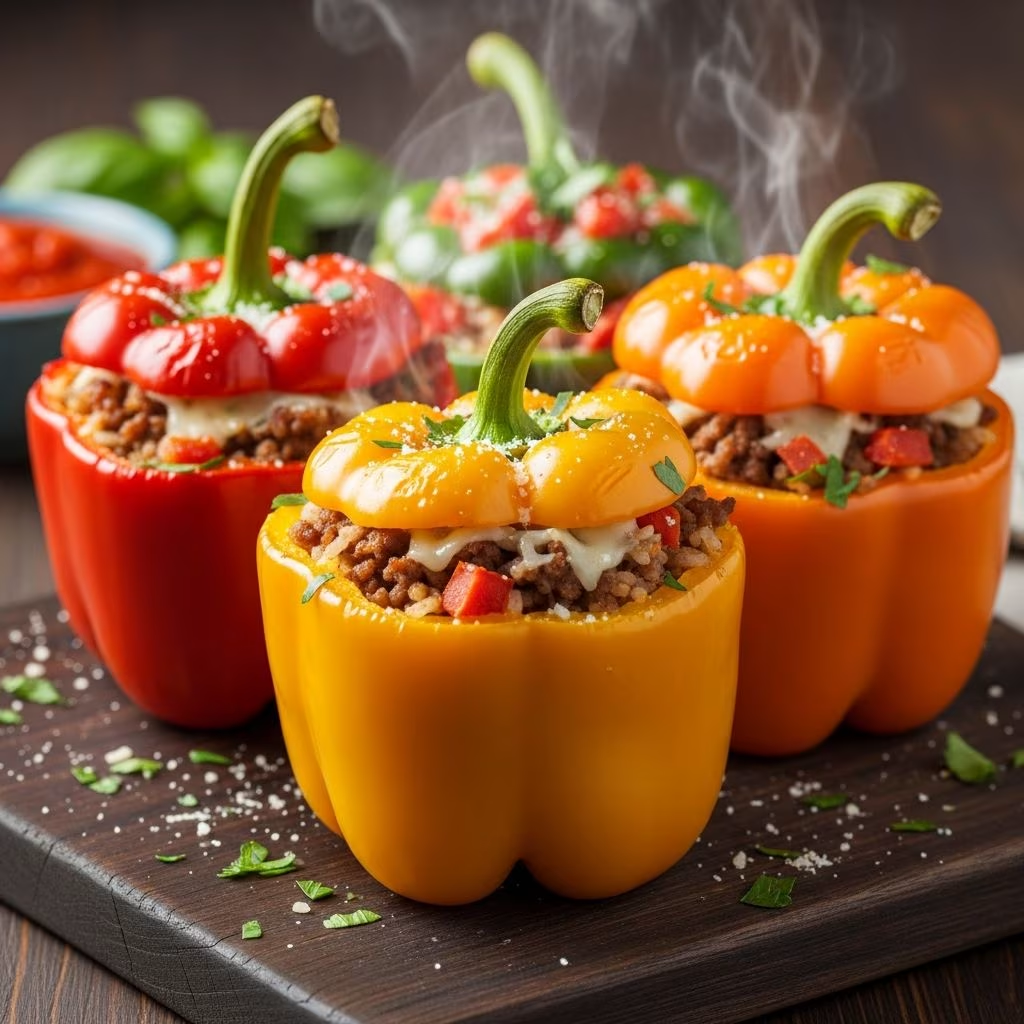
Stuffed bell peppers represent one of the most versatile and satisfying dishes in the American home cooking repertoire. This Mediterranean-inspired preparation combines lean ground beef, Italian sausage, fluffy rice, and aromatic seasonings nested inside roasted bell pepper halves. The result is a balanced, protein-rich meal that works equally well for casual weeknight dinners or more formal entertaining occasions.
Understanding the Foundation: Essential Ingredients
The foundation of this dish rests on carefully selected components that work in harmony. The protein base consists of one pound of lean ground beef combined with one-quarter pound of hot Italian pork sausage. This dual-protein approach creates a more complex flavor profile than ground beef alone, with the sausage contributing spice and moisture to the filling.
The grain component features one cup of uncooked long-grain white rice that cooks separately before being incorporated into the filling mixture. This approach ensures the rice reaches the proper tenderness without becoming mushy from the pepper’s moisture during baking.
The Sauce Components
The braising medium that surrounds the peppers during cooking consists of several layered elements:
- Two cups of marinara sauce or prepared pasta sauce serves as the primary acidic component
- One cup of beef broth adds savory depth and moisture
- One tablespoon of balsamic vinegar provides subtle sweetness and complexity
- One-quarter teaspoon of crushed red pepper flakes delivers gentle heat
These ingredients create a rich, balanced sauce that keeps the peppers moist during the extended baking process while preventing the filling from drying out.
Cheese and Aromatics
Finely grated Parmigiano-Reggiano cheese—approximately one cup—provides both richness and browning potential during the final baking stage. Fresh Italian parsley, minced garlic, salt, black pepper, and a pinch of cayenne pepper round out the seasoning profile. A single diced onion split between the sauce and filling components adds sweetness and depth throughout the dish.
Selection and Preparation of Bell Peppers
The choice of bell peppers significantly impacts the final dish. Traditional recipes call for four large green bell peppers, which are halved lengthwise rather than cut horizontally. This modification doubles the serving quantity while creating a more favorable ratio between the filling and pepper flesh.
The lengthwise cutting technique offers several advantages:
- Creates stable, flat-bottomed halves that sit securely in the baking dish
- Provides ample surface area for cheese topping and browning
- Ensures even cooking throughout the pepper flesh
- Doubles the number of attractive individual servings
When selecting peppers, choose specimens that are boxy in shape with flat sides rather than rounded varieties. This shape characteristic ensures that both halves cook at the same rate and present an attractive presentation on the dinner plate. Ensure all peppers are approximately the same size to promote uniform cooking.
The Rice Cooking Process
Preparing rice separately before incorporating it into the filling guarantees proper texture and moisture control. Bring one cup of uncooked white rice and two cups of water to a rolling boil over high heat. Once boiling, reduce the heat to medium-low, cover the saucepan tightly, and allow the mixture to simmer undisturbed for twenty to twenty-five minutes until all liquid absorbs and the grains become tender.
This timing is crucial—cooking the rice until just tender but not soft prevents the grains from becoming mushy when combined with other ingredients and subjected to oven heat. Once the rice reaches the proper consistency, set it aside in a separate bowl to cool slightly before mixing into the filling.
Building the Filling Components
The filling construction involves multiple stages of ingredient combination. Begin by cooking one diced onion in one tablespoon of olive oil over medium heat. Stir occasionally until the onion becomes translucent and begins to soften, approximately five minutes. This initial cooking step removes the raw bite from the onion while releasing its sweet compounds.
Divide the cooked onion in half, transferring one portion to a large bowl reserved for the filling mixture. Leave the remaining onion in the skillet to become the base of the braising sauce. Add the marinara sauce, beef broth, balsamic vinegar, and red pepper flakes to the skillet with the reserved onion. Stir well and allow to simmer for one minute before pouring this sauce mixture into the bottom of your nine-by-thirteen-inch baking dish.
In the reserved bowl containing the cooked onion, combine the ground beef, Italian sausage with casing removed, one ten-ounce can of diced tomatoes, chopped fresh Italian parsley, minced garlic, salt, freshly ground black pepper, and a pinch of cayenne pepper. Mix these ingredients thoroughly using your hands or a sturdy spoon, ensuring the meat becomes evenly distributed throughout.
Add the cooked rice and one cup of grated Parmigiano-Reggiano cheese to this mixture, folding gently to incorporate without compressing the ingredients. The filling should be moist but not soggy, with all components evenly distributed.
Stuffing and Baking Procedure
Preheat your oven to three hundred seventy-five degrees Fahrenheit before beginning the stuffing process. This temperature provides sufficient heat for thorough cooking of the meat filling while allowing the peppers to become tender without burning their exterior surfaces.
Halve each pepper lengthwise and carefully remove all seeds and white membranes from inside. Stuff each pepper half firmly with the filling mixture, mounding slightly if needed to accommodate all the filling. The peppers should be generously filled but not bursting.
Arrange the stuffed pepper halves in the prepared baking dish containing the sauce, placing them cut-side up over the liquid. Sprinkle the remaining Parmigiano-Reggiano cheese evenly over the top of each pepper half. Cover the entire baking dish tightly with aluminum foil and transfer to the preheated oven.
Bake for forty-five minutes while covered with foil. This initial phase allows the peppers to soften while the filling cooks through in a moist environment protected by the foil covering.
After forty-five minutes, remove the aluminum foil covering and return the baking dish to the oven for an additional twenty to twenty-five minutes. During this final baking phase, the meat should lose all pink coloration, the pepper flesh should become fully tender, and the cheese topping should brown to a golden color. The sauce should be bubbling at the edges, and the peppers should yield easily to fork pressure.
Variations and Customization Options
This foundational recipe accepts numerous modifications to suit dietary preferences and taste preferences. Consider these alternatives:
| Variation Type | Substitution Options | Impact on Flavor |
|---|---|---|
| Pepper Selection | Red, yellow, or orange peppers; mixed varieties | Sweeter taste; less bitterness than green peppers |
| Grain Options | Brown rice, wild rice, or farro | Nuttier flavor; increased texture variation |
| Protein Adjustments | Ground turkey, lamb, or combination meats | Lighter taste; different fat content |
| Cheese Alternatives | Asiago, Romano, or mozzarella blend | Varied nutty or sharp notes; different browning characteristics |
| Heat Additions | Jalapeños, serrano peppers, or hot sauce | Increased spiciness; layered heat complexity |
Serving Recommendations and Pairings
Present stuffed peppers directly from the baking dish to maintain their temperature and visual appeal. Spoon additional sauce from the bottom of the pan over each serving to add moisture and flavor. A simple green salad dressed with vinaigrette provides a refreshing contrast to the richness of the stuffed peppers, while crusty bread serves to soak up the flavorful sauce surrounding the peppers.
These peppers work equally well as a main course or casual lunch option when paired with simple accompaniments. The complete meal provides substantial protein and carbohydrates from the meat and rice filling, while the peppers themselves contribute important vitamins and fiber.
Storage and Make-Ahead Strategies
Stuffed peppers store well in the refrigerator for up to four days when properly covered. Allow the dish to cool to room temperature before transferring to an airtight container. Reheat gently in a three-hundred-fifty-degree oven, covered with foil, for approximately fifteen to twenty minutes until warmed through, or microwave individual portions at reduced power to prevent tough meat texture.
The recipe also freezes successfully for up to three months. Cool completely before wrapping individual or multiple portions in heavy-duty plastic wrap and aluminum foil, or transfer to freezer containers. Thaw overnight in the refrigerator before reheating using the methods described above.
Frequently Asked Questions
Can I prepare the filling ahead of time?
Yes, prepare the filling mixture up to twenty-four hours in advance. Store it covered in the refrigerator, then stuff and bake the peppers on your preferred serving day.
What if my peppers are different sizes?
Select peppers as uniformly sized as possible. If some are significantly larger, they may cook slightly longer than smaller ones. You can arrange them strategically in the baking dish to promote more even cooking.
Can I use rice that has already been cooked?
Yes, use approximately two cups of cooked rice from your rice cooker or leftover rice. Cold rice actually works well in the filling, as it maintains its texture better than freshly cooked warm rice.
Is it necessary to use Italian sausage?
You may substitute with additional ground beef if preferred, though the sausage contributes distinctive seasoning and spice. For a milder dish, reduce the sausage quantity or omit it entirely.
How do I prevent watery peppers?
Ensure the rice is fully cooked and not overly moist before mixing into the filling. Additionally, avoid cutting peppers until immediately before stuffing them, as this minimizes moisture loss from the cut surfaces.
Can I make this dish vegetarian?
Substitute the ground beef and sausage with additional cooked grains, legumes such as lentils or beans, and hearty vegetables like mushrooms and zucchini. Maintain the same quantity for proper filling consistency.
Conclusion: Mastering the Technique
Stuffed bell peppers represent an accessible yet impressive dish that combines simple ingredients into a memorable meal. Understanding the role of each component—from the protective sauce to the seasoned filling to the cheese topping—allows home cooks to execute this recipe with confidence while feeling comfortable adapting it to personal preferences and available ingredients. The technique rewards careful attention to timing and ingredient preparation while remaining forgiving enough for casual kitchen experimentation.
References
- Chef John’s Stuffed Peppers Recipe — AllRecipes. 2023. https://www.allrecipes.com/recipe/222002/chef-johns-stuffed-peppers/
- Food Wishes Recipes – How to Make Stuffed Peppers — Food Wishes. 2010. https://foodwishes.blogspot.com/2010/05/new-math-for-stuffed-bell-peppers-half.html
- USDA Food Safety and Inspection Service – Safe Minimum Internal Temperature Chart — U.S. Department of Agriculture. 2024. https://www.fsis.usda.gov/food-safety/safe-food-handling-and-preparation/food-safety-basics/safe-minimum-internal-temperature-chart