The challenge of preparing dinner after a demanding day affects millions of households worldwide. Whether you’re juggling work commitments, managing household responsibilities, or simply feeling uninspired in the kitchen, weeknight cooking can feel overwhelming. The good news is that satisfying, homemade meals don’t require hours of preparation or complicated techniques. By embracing streamlined approaches to dinner preparation, you can create nourishing dishes that your family will enjoy without the stress and frustration that often accompanies weeknight cooking.
Understanding the Philosophy Behind Quick Weeknight Cooking
Modern dinner preparation has evolved beyond the traditional expectation of elaborate multi-course meals taking several hours to complete. Today’s approach to weeknight cooking emphasizes efficiency, practicality, and maintaining quality without excessive time investment. This philosophy recognizes that people want to eat well-prepared food but need solutions that fit realistically into their daily schedules.
The foundation of stress-free weeknight cooking rests on several key principles: selecting recipes with minimal ingredient lists, choosing cooking methods that reduce active preparation time, and planning meals that use pantry staples already available in most kitchens. These strategies allow home cooks to produce restaurant-quality results without requiring advanced culinary skills or specialized equipment.
Essential Strategies for Simplifying Dinner Preparation
Successful weeknight cooking begins with understanding which techniques save the most time while maintaining flavor quality. The following strategies have proven effective for reducing stress and increasing cooking confidence:
- Sheet pan cooking methods: These one-tray approaches combine proteins and vegetables for simultaneous roasting, eliminating multiple pots and reducing cleanup time significantly
- One-pot and skillet meals: Dishes prepared entirely in a single vessel minimize dishwashing and allow flavors to develop through ingredient layering
- No-recipe approaches: Building confidence to cook intuitively by understanding basic flavor combinations and cooking principles enables flexibility when ingredients vary
- Strategic pantry stocking: Maintaining essential ingredients like quality oils, spices, canned proteins, and shelf-stable vegetables enables quick meal assembly any evening
- Advance preparation components: Pre-cutting vegetables, marinating proteins, or cooking grains during weekend prep sessions accelerates weeknight assembly
The Power of Protein-Forward Dishes
Organizing meals around quality protein sources provides structural simplicity to weeknight cooking. Rather than beginning with complicated technique-heavy recipes, starting with a chosen protein and then building surrounding components creates natural progression and reduces decision fatigue. Different proteins suit various quick-cooking methods effectively.
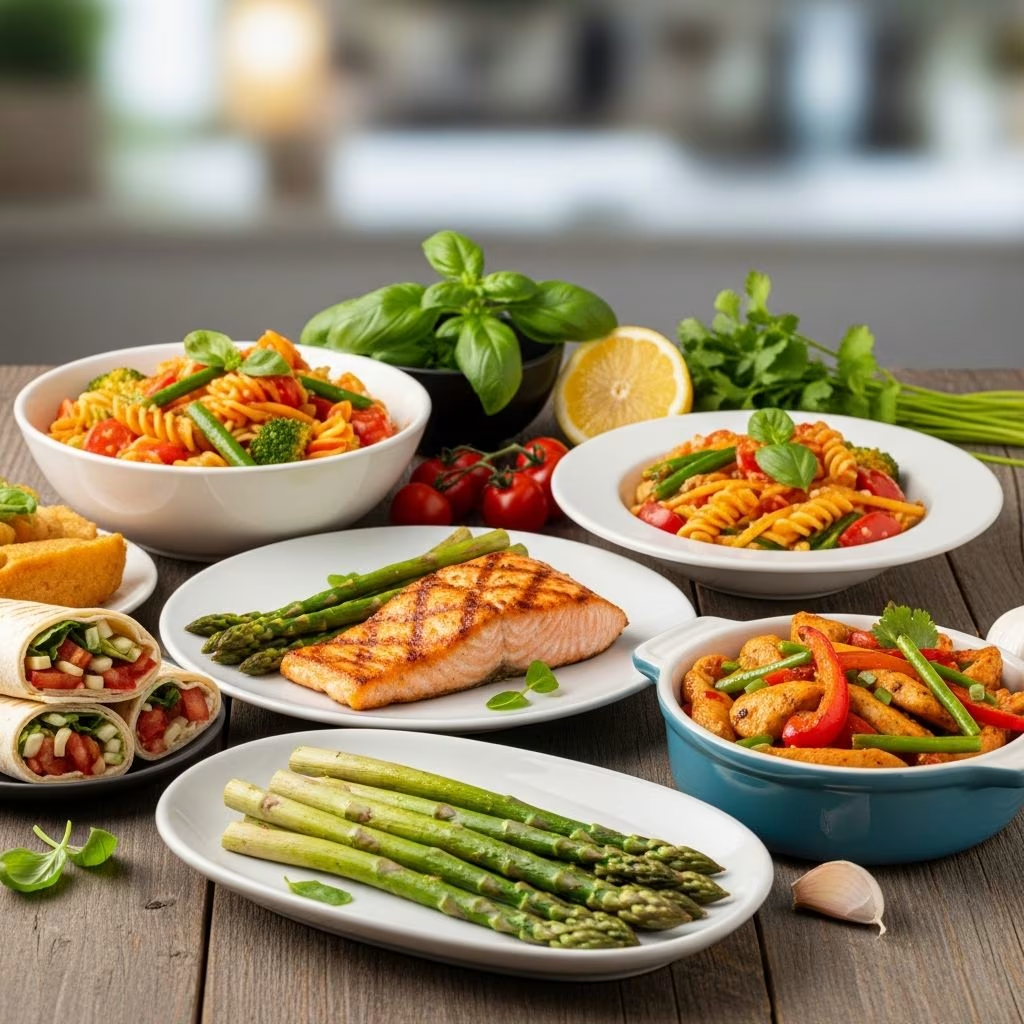
Chicken serves as the foundation for numerous efficient weeknight options, whether prepared through air-frying, pan-searing, or baking. Fish and seafood varieties cook remarkably quickly, requiring only 10-15 minutes for perfectly cooked results. Ground meats enable rapid preparation through browning and mixing with complementary ingredients. Lean cuts of pork and beef respond well to high-heat cooking methods that develop flavor while maintaining tender textures.
Building Flavor Without Extended Cooking Times
One misconception about quick cooking involves the assumption that speed necessarily means sacrificing flavor complexity. However, understanding flavor-building techniques enables cooks to create satisfying, layered dishes within abbreviated timelines. Several approaches accomplish this effectively:
Bold seasonings applied directly to proteins create immediate flavor impact without requiring lengthy marinating periods. Fresh herbs and aromatic vegetables like garlic, ginger, and onions release flavor compounds rapidly when exposed to heat. Acid components including citrus juice, vinegar, and tomato products brighten dishes and create perception of complexity. Umami-rich ingredients such as soy sauce, fish sauce, Parmesan cheese, and quality broths deepen flavor profiles substantially.
Time-Efficient Cooking Methods That Deliver Results
Modern cooking equipment and techniques have revolutionized speed-focused meal preparation. Understanding which methods work best for specific ingredients helps cooks make strategic choices that align with available time and desired outcomes.
| Cooking Method | Best For | Typical Time | Cleanup Level |
|---|---|---|---|
| Sheet Pan Roasting | Vegetables, chicken, salmon, mixed proteins | 20-30 minutes | Minimal |
| Skillet Cooking | Ground meats, vegetables, quick-cooking proteins | 15-25 minutes | Minimal |
| Air Frying | Chicken, fish, vegetables, frozen items | 10-20 minutes | Very minimal |
| One-Pot Methods | Pasta dishes, soups, rice-based meals | 20-30 minutes | One pot |
| Slow Cooker Prep | Best used for planned-ahead meals | 4-8 hours active time minimal | One pot |
Each method offers distinct advantages depending on your specific circumstances. Sheet pan roasting simultaneously cooks proteins and vegetables while producing minimal cleanup. Skillet cooking allows responsive flavor adjustments while ingredients cook, providing creative flexibility. Air fryers have become valuable tools for achieving crispy textures without oil-heavy cooking. One-pot approaches consolidate preparation and cooking into a single vessel, significantly reducing dishwashing burden.
Strategic Ingredient Selection for Quick Assembly
The foundation of stress-free weeknight cooking involves maintaining a well-stocked kitchen with ingredients that facilitate rapid meal assembly. Rather than requiring specialty items or exotic ingredients, effective weeknight cooking relies on intelligent choices among commonly available products.
Canned beans provide immediate protein and fiber without requiring overnight soaking or extended cooking. Quality canned tomatoes serve as the foundation for countless dishes from pasta sauce to soup bases. Pre-cooked grains available commercially reduce cooking time for rice, quinoa, and farro-based meals. Frozen vegetables maintain nutritional value while eliminating prep time associated with fresh produce. Shelf-stable broths and stocks provide flavor foundations for soups, grains, and braised dishes.
Building Meal Variety Without Complexity
Concern about repetitive meals often discourages weeknight cooking enthusiasm. However, achieving variety doesn’t require mastering numerous complicated recipes. Instead, using similar components with different flavor profiles and cooking methods creates perceived diversity while maintaining practical simplicity.
The same protein can transform dramatically through varied cooking techniques, sauce accompaniments, and grain pairings. For example, chicken prepared with Mediterranean seasonings alongside couscous presents entirely differently from the same chicken paired with Asian-inspired flavors over rice. Ground beef transitions from taco filling to pasta sauce to skillet grain base through simple adjustments. These flexible approaches maintain efficiency while satisfying the desire for meal diversity throughout the week.
Practical Solutions for Common Weeknight Challenges
Most home cooks encounter consistent obstacles when preparing weeknight meals. Identifying solutions for these predictable challenges improves overall cooking experience and reduces stress substantially.
- Decision fatigue: Planning several dinner options in advance reduces daily decision-making burden and enables better ingredient preparation
- Ingredient availability: Maintaining a functional pantry with versatile basics enables meal creation even when fresh produce hasn’t been purchased recently
- Timing coordination: Understanding which components require longest cooking times enables strategic sequencing that results in simultaneous completion
- Family preferences: Building meals around customizable components allows individual preferences without requiring separate cooking efforts
- Cleanup concerns: Prioritizing one-pot methods and sheet pan approaches dramatically reduces post-meal dishwashing requirements
Frequently Asked Questions About Weeknight Cooking
How can I prepare dinner in 30 minutes or less?
Focus on proteins that cook quickly such as fish, thin chicken cutlets, or ground meats. Pair with pre-cooked grains or quick-cooking vegetables. Select one-pan methods that allow simultaneous cooking. Use bold seasonings and sauces rather than relying on extended cooking times to develop flavor.
What if I forget to plan meals in advance?
A well-stocked pantry enables improvisation using available ingredients. Understanding basic flavor combinations and cooking principles allows intuitive meal assembly without following specific recipes. Having several go-to components enables quick decision-making even without advance planning.
How do I reduce cleanup from weeknight cooking?
Prioritize sheet pan meals, one-pot dishes, and skillet cooking over methods requiring multiple vessels. Select recipes that combine proteins and vegetables for simultaneous cooking. Consider using parchment paper or foil to line pans for minimal cleanup.
Can quick dinners still be nutritionally complete?
Yes. Incorporating quality proteins, vegetables, and whole grains creates balanced nutrition regardless of cooking time. Building meals around these components ensures adequate nutrients without requiring extended preparation time.
What equipment helps most with quick weeknight cooking?
A quality skillet, sheet pans, and one-large pot serve most needs effectively. Air fryers have become valuable for rapid cooking, though not essential. Sharp knives reduce prep time substantially. Most efficient weeknight cooking requires minimal specialized equipment.
Transforming Your Approach to Weeknight Dinners
Embracing stress-free weeknight cooking requires reframing expectations around what constitutes successful dinner preparation. Rather than measuring success through complexity or time investment, focus on efficiency, nutrition, and enjoyment. This perspective shift enables confidence in creating satisfying meals even when time feels limited.
Beginning with single techniques or recipes and gradually building your repertoire reduces overwhelm while developing practical skills. As comfort increases with basic approaches, experimentation becomes more natural, and menu variety expands organically. The goal isn’t becoming a professional chef but rather developing enough practical knowledge to feed your household well without excessive stress.
By implementing these strategies, understanding flavor-building techniques, and selecting appropriate cooking methods, you’ll find that weeknight cooking transforms from a source of stress into an achievable, even enjoyable part of your daily routine. Quality homemade meals don’t require hours in the kitchen or complicated techniques—they require intention, basic knowledge, and realistic expectations about what constitutes success in everyday cooking.
References
- Quick and Easy Dinner Ideas for Busy Weeknights — The Real Food Dietitians. 2024. https://therealfooddietitians.com/easy-dinner-ideas/
- 20-Minute Dinner Recipes That Deliver — Simple Home Edit. 2025. https://simplehomeedit.com/category/quick-easy/
- 5 Easy Dinners You Can Cook in 30 Minutes — Allrecipes. 2024. https://www.youtube.com/watch?v=06JDURvWPNI
- Easy One-Pan Dinners for Busy Nights — Half Baked Harvest. 2025. https://www.halfbakedharvest.com/one-pan-dinners-everyone-is-making/
- Quick and Easy Dinner Recipes — RecipeTin Eats. 2024. https://www.recipetineats.com