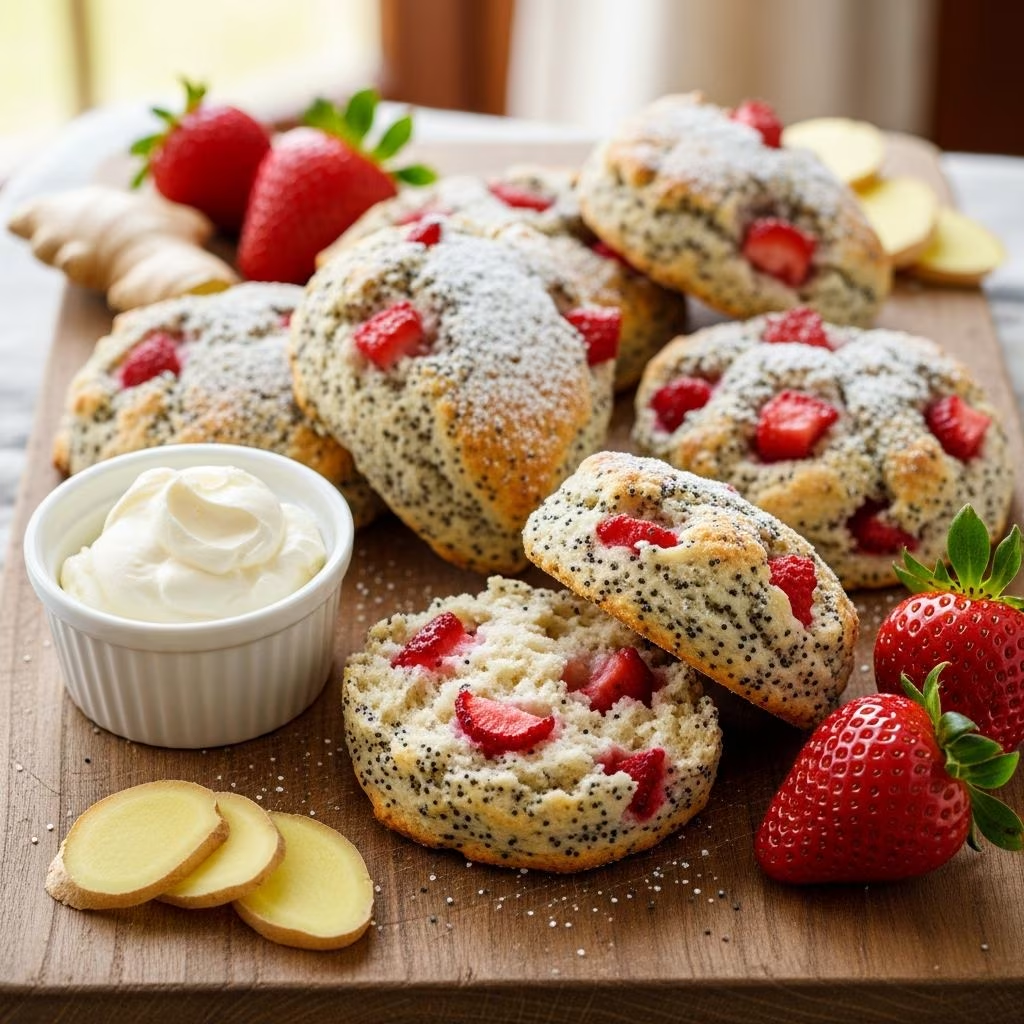
Scones represent one of the most beloved pastries in baking, offering a delicate balance between structure and tenderness. When combined with the bright tartness of fresh strawberries, the warm spiciness of ginger, and the subtle nuttiness of poppy seeds, these breakfast treats transform into something truly extraordinary. This comprehensive guide will walk you through every aspect of creating these delightful scones, from ingredient selection through final presentation.
Understanding the Foundation: Why These Ingredients Matter
The success of any scone recipe hinges on understanding the role each ingredient plays in the final product. Unlike cake or cookies, scones require a delicate touch and specific ingredient ratios to achieve their characteristic texture—crispy on the outside yet tender and flaky within.
The Dry Component Foundation
The dry ingredients create the structural backbone of your scones. All-purpose flour provides the essential gluten network, while baking powder serves as the leavening agent responsible for lift and rise. The combination of these elements must be balanced carefully; too much baking powder creates an unpleasant metallic taste, while insufficient amounts result in dense, heavy scones that lack the desired texture. Sugar not only adds sweetness but also contributes to browning and moisture retention. Salt enhances flavor perception and strengthens the gluten network, making it indispensable even in sweet preparations.
The Aromatic Elements
Ground ginger introduces warm, peppery notes that complement rather than overwhelm the delicate fruit flavors. This spice adds complexity and depth, transforming simple scones into something memorable. Poppy seeds contribute a subtle earthiness and pleasant visual appeal with their distinctive dark specks. These tiny seeds provide a gentle crunch and visual interest without adding competing flavors. Lemon zest (if included) brightens the overall flavor profile and harmonizes beautifully with strawberries and ginger.
The Crucial Role of Fat
Butter is paramount in scone-making because it creates the flaky layers that define quality scones. The key principle involves keeping butter cold and working it into the flour until the mixture resembles coarse meal with small pea-sized pieces remaining. These butter pieces create steam pockets during baking, which produces the desired flaky texture. When butter is too warm or overworked, these pockets collapse, resulting in dense scones. This is why many bakers prefer frozen butter and use a box grater to incorporate it evenly.
Selecting and Preparing Your Fresh Ingredients
The quality of your final product depends significantly on ingredient selection, particularly regarding fresh components.
Strawberry Selection Essentials
Fresh, ripe strawberries are absolutely essential for this recipe. Look for berries that are deeply colored and fragrant, indicating peak ripeness and flavor development. While frozen strawberries might seem like a convenient substitute, they release excessive moisture during baking because their cellular structure has been compromised by freezing. This excess liquid creates soggy, dense scones rather than the desired texture. The best strawberries for baking are those you’d happily eat fresh—sweet, flavorful, and structurally sound. Before incorporating strawberries into your dough, chop them into small, uniform pieces. This ensures even distribution throughout the scones and prevents large pockets of fruit that could create structural weak points.
Ginger Considerations
Ground ginger provides consistent flavor distribution throughout your scones, while crystallized ginger pieces offer bursts of intense ginger flavor and pleasant chewy texture. The choice between these depends on personal preference and family tastes. Ground ginger integrates seamlessly into the dough during mixing, while crystallized ginger remains visible and provides distinct textural contrast. Some bakers prefer using one or the other, while others combine both forms for layered ginger complexity.
Dairy Component Selection
Heavy cream serves as the primary liquid ingredient in these scones, distinguishing them from some other quick bread varieties. Heavy cream’s fat content contributes to richness and moisture, resulting in scones that stay fresh longer and maintain superior texture compared to recipes using milk or yogurt. Some recipes incorporate a beaten egg for additional binding and a beautiful golden exterior, though this remains optional depending on your specific recipe variation.
The Step-by-Step Baking Process
Preparation and Oven Readiness
Begin by preheating your oven to 400°F (200°C), allowing adequate time for it to reach target temperature. This ensures proper rise and browning from the moment scones enter the oven. Prepare your baking surface by either lining a baking sheet with parchment paper or using a specialized mini or standard scone pan. Many bakers prefer mini scone pans because they create uniform shapes and consistent baking results. If you don’t have a specialized pan, hand-shaping scones works perfectly well—simply form dough into wedges or rounds on a baking sheet positioned close together (which helps them rise upward rather than spreading outward).
Dry Ingredient Mixing
In a large mixing bowl, whisk together flour, sugar, baking powder, salt, and ground ginger. Whisking rather than simply stirring incorporates air and distributes leavening agents evenly. This step is crucial because uneven distribution of baking powder creates inconsistent rise throughout your batch.
Incorporating Cold Butter
Cut cold (or frozen) butter into small pieces and distribute them throughout the flour mixture. Using a pastry cutter, two forks, or your fingertips, work the butter into the flour until the mixture resembles coarse meal with pea-sized butter pieces remaining visible. This process requires patience and a light touch—the goal is to coat flour particles with butter without completely blending them together. Overworking at this stage is the most common mistake in scone-making, resulting in tough, dense products instead of flaky, tender ones. If your kitchen is warm, consider chilling the flour mixture for 15 minutes before proceeding.
Wet Ingredient Integration
In a separate bowl, whisk together heavy cream, egg (if using), and vanilla extract. Pour this mixture over your flour blend and gently stir with a spatula until the dough just begins forming. The key word here is “gently”—vigorous mixing develops gluten and creates tough scones. The dough will be somewhat sticky and shaggy at this stage, which is perfectly normal. Add the chopped fresh strawberries and any crystallized ginger pieces, folding them in with a gentle hand until evenly distributed.
Shaping and Final Preparation
Turn the dough out onto a lightly floured work surface and knead gently just a few times to bring it together into a cohesive mass. If using a scone pan, divide dough into equal portions and press firmly into each cavity. If hand-shaping, press the dough into an 8-inch disc and cut into 8-10 wedges using a sharp knife or bench scraper. For improved structure and less spreading during baking, consider chilling shaped scones in the freezer for 30 minutes before baking.
Finishing Touches Before Baking
Brush the tops of each scone with a small amount of heavy cream or milk, then sprinkle generously with coarse sugar. These finishing touches create a beautiful golden sheen and provide a pleasant sweet crunch that contrasts nicely with the tender interior. This step elevates homemade scones to bakery-quality appearance.
Baking and Cooling
Bake scones for 20-25 minutes, or until the tops achieve a light golden-brown color. The exact timing depends on your oven’s characteristics and scone size. Smaller scones bake faster than larger ones, so adjust timing accordingly. Remove from the oven and allow scones to cool in the pan for approximately 20 minutes before transferring to a wire rack for complete cooling. This gradual cooling process helps scones firm up and develop optimal texture.
Glazing and Serving Suggestions
While these scones shine beautifully on their own, many people enjoy the added sweetness and visual appeal of a light glaze. To prepare a simple glaze, whisk together confectioners’ sugar, milk, and vanilla extract until smooth. Drizzle generously over completely cooled scones. Serve warm or at room temperature, accompanied by fresh strawberries, clotted cream, butter, and jam if desired. The beauty of these scones lies in their versatility—they work equally well as a simple breakfast treat or as part of a more elaborate tea service.
Common Challenges and Solutions
| Problem | Likely Cause | Solution |
|---|---|---|
| Dense, Heavy Texture | Overworked dough or excessive mixing | Mix ingredients minimally; use gentle folding motions |
| Spreading Too Much During Baking | Warm butter or insufficient chilling | Freeze butter; chill shaped scones 30 minutes before baking |
| Soggy Interior | Excess moisture from wet ingredients or fruit | Use fresh strawberries; avoid frozen; reduce liquid slightly |
| Dry, Crumbly Texture | Insufficient fat or excessive baking time | Increase butter or cream slightly; check oven temperature |
| Uneven Rising | Uneven butter distribution or uneven oven temperature | Mix dry ingredients thoroughly; rotate pan halfway through baking |
Frequently Asked Questions
Can I prepare scone dough in advance?
Yes, scone dough can be prepared several hours ahead or even frozen for up to three months. Prepare dough through the shaping stage, wrap tightly, and refrigerate or freeze. Bake from frozen, adding a few minutes to the baking time. This makes scones an excellent option for entertaining.
What if I don’t have heavy cream?
While heavy cream produces the best results, you can substitute with a combination of milk and melted butter, though the texture and richness will differ slightly. For best results, stick with the original ingredient when possible.
Should I use crystallized ginger, ground ginger, or both?
This depends on personal preference. Ground ginger provides subtle, integrated warmth, while crystallized ginger offers distinctive chewy pieces and pronounced ginger flavor. Many bakers enjoy combining both for layered complexity.
How long do these scones stay fresh?
Properly stored scones remain fresh for 2-3 days when kept in an airtight container at room temperature. They also freeze beautifully for up to three months, making them an excellent make-ahead option.
Can I make these scones vegan?
Yes, substitute heavy cream with a high-fat plant-based alternative like oat cream, replace butter with vegan butter, and use a flax egg (ground flaxseed mixed with water) instead of a regular egg. Results will differ slightly but can be quite successful.
Professional Tips for Bakery-Quality Results
- Invest in a quality pastry cutter or bench scraper—these tools make a significant difference in achieving consistent texture
- Keep all ingredients and tools cold; a warm kitchen compromises scone structure
- Don’t skip the resting period before baking; this allows gluten to relax and prevents excessive spreading
- Rotate your baking sheet halfway through baking for even browning and rising
- Use an oven thermometer to ensure accurate temperature—ovens often run hot or cold, affecting results
- Consider using a food scale for precise ingredient measurements, which improves consistency between batches
- Fresh vanilla extract makes a noticeable difference in the final flavor profile
Variations and Adaptations
Once you master this classic combination, numerous variations become possible. Substitute strawberries with raspberries or blueberries for different seasonal offerings. Replace ginger with cardamom or cinnamon for alternative spice profiles. Add lemon zest for brightness or a touch of almond extract for additional depth. These scones also work beautifully with additions like white chocolate chips, candied fruit, or dried lavender. The fundamental techniques remain consistent regardless of flavor variations you choose to explore.
References
- Fresh Strawberry & Ginger Scones — Serendib Kitchen. 2022-02-25. https://serendibkitchen.com/2022/02/25/fresh-strawberry-ginger-scones/
- Strawberry Lemon Poppy Seed Scones — Sally’s Baking Addiction. 2024. https://sallysbakingaddiction.com/strawberry-lemon-poppy-seed-scones/
- Strawberry, Ginger, and Poppy Seed Scones Recipe — Epicurious. 2023-03-20. https://www.epicurious.com/recipes/food/views/strawberry-ginger-and-poppy-seed-scones
- The Violet Bakery Cookbook — Claire Ptak. 2015. Page 69.