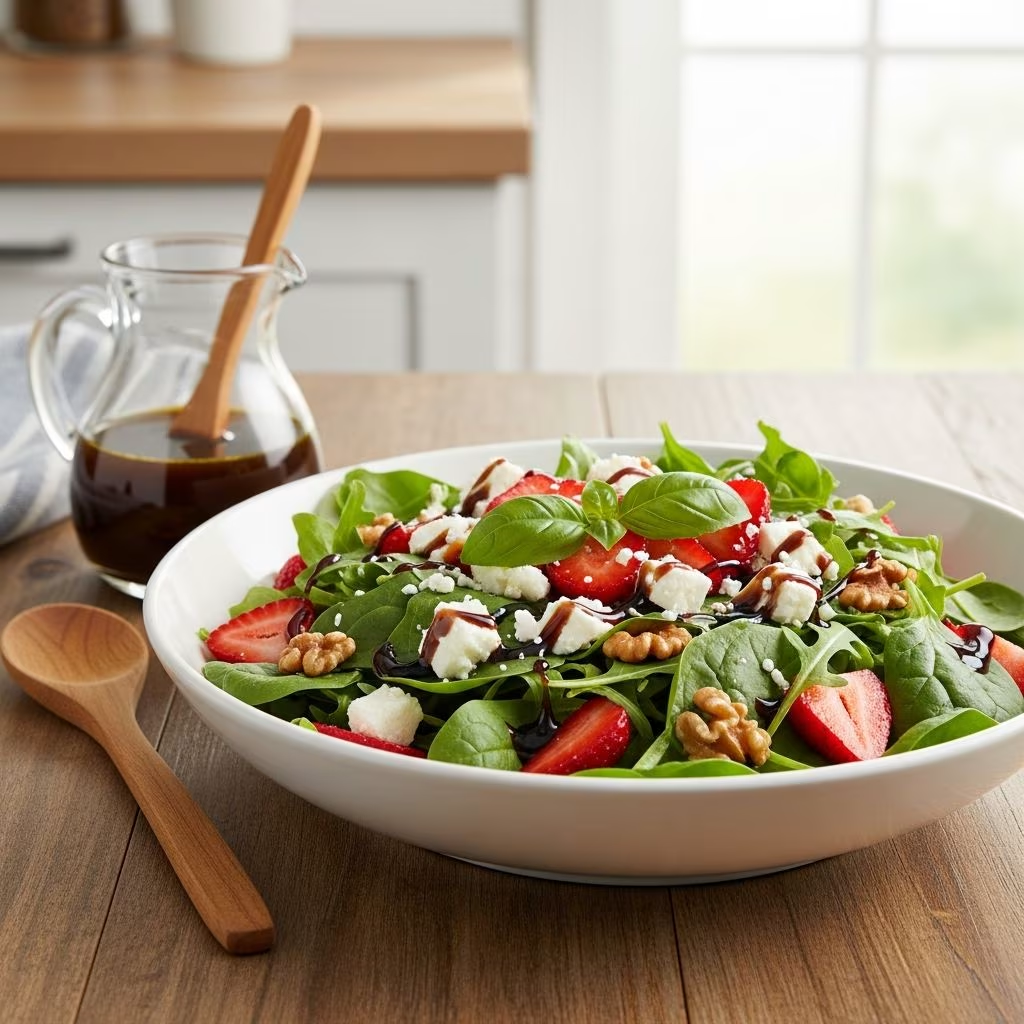
When seasonal produce reaches its peak, simple salads become extraordinary culinary experiences. A strawberry and feta composition represents one of the most elegant yet accessible ways to celebrate fresh ingredients. The interplay between sweet berries, creamy cheese, toasted nuts, and a sophisticated vinaigrette creates a dish that feels refined enough for entertaining while remaining straightforward enough for everyday enjoyment.
This style of salad bridges the gap between appetizers and main courses, functioning equally well as a lunch centerpiece or a refined side dish accompanying grilled proteins. The beauty of this particular preparation lies not in complexity but in the thoughtful balance of textures and flavors, where each component plays a distinct role in the overall composition.
Understanding the Dressing Foundation
The vinaigrette forms the backbone of this salad’s character. Rather than reaching for bottled options, creating a custom dressing transforms the dish from ordinary to exceptional. A well-constructed vinaigrette begins with quality balsamic vinegar, which provides deep, slightly sweet undertones that complement strawberries naturally. This aged vinegar, when combined with complementary ingredients, creates a dressing that enhances rather than masks the produce.
The emulsification process—where oil and acidic components bind together—requires attention to technique. Starting with aromatic elements ensures their flavors distribute evenly throughout. Shallots and garlic, when minced finely or processed into a paste, release their compounds gradually, infusing the entire dressing with subtle depth. A touch of Dijon mustard acts as a natural emulsifier while introducing a gentle sharpness that prevents the dressing from becoming one-dimensional.
Honey adds more than sweetness; it rounds out the flavors and helps stabilize the emulsion. The proper ratio of acid to oil determines the dressing’s mouthfeel and coating ability. Too much oil creates a greasy coating; too little acid leaves a harsh bite. The balance should feel velvety on the palate, clinging lightly to the greens without overwhelming them.
Step-by-Step Dressing Preparation
- Combine balsamic vinegar (1/4 cup), Dijon mustard (1 1/2 tablespoons), honey (1 tablespoon), minced shallot, and minced garlic in a food processor
- Pulse the mixture until the shallot and garlic break down into tiny pieces
- While pulsing continuously, slowly drizzle in olive oil (1/2 cup) to create an emulsion
- Continue processing until the dressing reaches a uniform, slightly thickened consistency
- Season with salt (1/2 teaspoon) and freshly ground black pepper (1/4 teaspoon)
- Taste and adjust seasoning or acid balance as preferred
- Transfer to a container and refrigerate until serving time
Making the dressing in advance allows flavors to marry and deepen. The garlic and shallot become more mellow over time, while the vinegar’s acidity gradually softens. This aging process improves the dressing’s overall balance, making advance preparation a strategic advantage rather than a mere convenience factor.
Selecting and Preparing Your Base Greens
The foundation of any salad deserves careful consideration. Red leaf lettuce, with its tender texture and mild flavor, provides an ideal canvas. Its delicate leaves don’t require aggressive chopping; tearing by hand maintains their structural integrity and creates an appealing, rustic appearance. The slight bitterness present in red varieties adds complexity that white iceberg lacks.
Proper washing and drying prove essential. Excess water dilutes the dressing and creates a limp final texture. After rinsing thoroughly under cool water to remove any soil or debris, gently pat the leaves dry using paper towels or a salad spinner. Dry greens allow the vinaigrette to coat evenly, creating better flavor distribution throughout each bite.
The size of torn pieces matters more than many realize. Pieces should be manageable with a fork yet substantial enough to provide textural presence. Overly small fragments disappear into the dressing, while oversized pieces prove difficult to consume gracefully. Aim for roughly 2 to 3-inch sections that maintain the lettuce’s natural structure.
Incorporating Textural Elements
Texture distinguishes a memorable salad from a forgettable one. The interplay between tender greens, crisp nuts, succulent fruit, and creamy cheese creates a dynamic eating experience that keeps the palate engaged throughout the meal.
The Role of Toasted Almonds
Sliced almonds, lightly toasted before assembly, contribute both crunch and richness. Toasting develops the nuts’ natural oils and deepens their flavor profile. Even five minutes in a dry skillet over medium heat transforms raw almonds into something substantially more interesting. The process releases aromatic compounds that wouldn’t be present in raw nuts, adding an additional layer of sophistication to the overall composition.
Beyond flavor, nuts provide nutritional benefits. They contain healthy monounsaturated fats that complement the olive oil in the dressing and add satiety to the dish. This small quantity (about 1/4 cup) offers sufficient textural contrast without overpowering the delicate greens.
Strawberry Selection and Treatment
Fresh strawberries represent the salad’s star ingredient. Selecting berries at peak ripeness—when they’re fully red throughout with no white or green patches—ensures maximum sweetness and flavor impact. Local, in-season berries from farmers markets generally surpass supermarket options in terms of intensity and complexity.
Preparation should be minimal. Rinsing under cool water and removing the leafy tops preserves the berries’ delicate structure. Slicing them just before assembly prevents premature oxidation and maintains their bright appearance and firm texture. The cut surfaces create visual interest and allow the berries to release their juices gradually, enhancing the overall dressing as the salad sits.
Aim for uniform slice thickness to ensure even distribution and consistent presentation. Roughly 1/4-inch slices balance the berry’s structural integrity with adequate surface area for flavor absorption.
Onion and Cheese Components
Red onion, sliced into thin slivers, introduces a subtle pungency that prevents the salad from becoming cloying. The sharp bite cuts through the sweetness of the strawberries and the richness of the cheese, creating a more complete flavor profile. Cutting the onion into half-inch-wide slivers ensures the pieces remain visible and contribute meaningful textural contrast without dominating.
Feta cheese, crumbled into small pieces, provides creamy contrast to the crisp and juicy components. Its salty, tangy character plays beautifully against the fruit’s sweetness. Approximately 1/2 cup of crumbled feta (roughly 2 to 3 ounces) distributes throughout six servings without overwhelming the palate.
Assembly and Serving Strategies
The order of assembly influences both appearance and flavor distribution. Begin by dividing the torn lettuce evenly among serving plates, creating a loose, welcoming bed that allows the other ingredients to nestle naturally. This approach creates more visual interest than tossing everything together in a bowl, as the individual components remain distinct and showcase their unique characteristics.
Distribute the remaining ingredients—onion slivers, toasted almonds, sliced strawberries, and crumbled feta—across the lettuce bed with intention. Rather than clustering all of one item in one location, scatter the components to ensure every bite includes a representative sample of each element.
Serving the dressing separately represents a critical decision. This approach allows each diner to control the amount of vinaigrette they prefer, accommodating individual taste preferences. Additionally, keeping the dressing separate prevents the greens from becoming soggy during the time between plating and consumption—a particular advantage if the salad sits for even brief periods.
Each diner should drizzle approximately 2 to 3 tablespoons of dressing over their portion, though personal preference should guide the final amount. The dressing should lightly coat the greens and pool slightly in the bottom of the plate, providing flavoring for each subsequent bite.
Storage and Make-Ahead Considerations
The dressing keeps well when stored in an airtight container in the refrigerator for up to five days. The flavors continue to develop and mellow, making older dressing sometimes preferable to freshly made batches. The emulsion may separate slightly over time; simply shake or whisk before using to recombine the components.
The individual salad components can be prepared separately and stored to streamline last-minute assembly. Cleaned and dried greens remain crisp when stored in sealed containers for up to three days. Pre-toasted almonds can be stored in an airtight container at room temperature for several days. Strawberries and onions should be prepared closer to serving time to maintain optimal texture and appearance.
The complete salad, when dressed, should be consumed within 15 to 20 minutes to maintain the greens’ crisp texture. If preparing for a gathering where you need longer holding times, maintain all components separately and assemble individual portions only as guests are ready to eat.
Variations and Flavor Explorations
This foundational recipe welcomes creative interpretation. Substituting goat cheese for feta introduces a tangier, creamier dimension. Candied walnuts or pecans replace almonds for a sweeter, more substantial crunch. Adding fresh mint leaves contributes aromatic brightness, while arugula or mixed spring greens work as alternatives to red leaf lettuce.
For those seeking additional protein, grilled chicken breast strips or shrimp can transform the salad into a complete meal. A handful of quinoa or farro adds hearty substance without compromising the dish’s essential character.
Nutritional Benefits and Wellness Considerations
Beyond its appealing flavors and textures, this salad provides genuine nutritional value. Strawberries deliver significant vitamin C content and beneficial antioxidants. The greens contribute fiber, minerals, and phytonutrients. Almonds provide healthy fats and plant-based protein. Feta cheese supplies calcium and probiotics. The olive oil in the dressing contains polyphenols and heart-healthy monounsaturated fats.
Together, these components create a nutritionally dense meal that satisfies both palate and body. The balance of carbohydrates, proteins, and healthy fats promotes satiety and steady energy levels throughout the afternoon.
Frequently Asked Questions
Can I make this salad without a food processor?
Yes. Mince the shallot and garlic as finely as possible by hand. Combine all dressing ingredients in a jar with a tight-fitting lid and shake vigorously for one to two minutes. The emulsion may be slightly less smooth, but the flavor remains excellent.
How can I prevent the dressing from becoming too thick when refrigerated?
Dressings naturally thicken as they chill. Before serving, remove from the refrigerator 10 to 15 minutes early to allow it to reach room temperature and regain a pourable consistency. Alternatively, thin the dressing slightly with additional olive oil or a splash of balsamic vinegar if it becomes too viscous.
What’s the best way to select ripe strawberries?
Choose berries that are completely red throughout with no white or pale patches. They should feel slightly soft when gently squeezed but not mushy. Avoid berries with mold or soft spots. If purchasing ahead of serving time, select berries that are just becoming ripe; they’ll reach peak ripeness by serving day.
Can I prepare the salad several hours in advance?
Keep all components separate until shortly before serving. Prepare the dressing, clean and dry the greens, toast the almonds, and slice the strawberries—all of which can be done hours ahead. Assemble the salad only 15 to 20 minutes before serving to maintain optimal texture.
What wine pairs well with this salad?
Light, crisp white wines complement the strawberry and feta combination beautifully. Sauvignon Blanc, Pinot Grigio, or a dry Riesling all enhance the salad’s fresh, fruity character without overwhelming the delicate flavors.
Conclusion: A Timeless Salad for Modern Tables
This strawberry and feta salad transcends the ordinary through the thoughtful combination of quality ingredients and proper technique. It proves that sophisticated cuisine doesn’t require complicated procedures or exotic components. Instead, it emerges from respecting the ingredients’ inherent qualities and allowing their flavors to shine without unnecessary embellishment.
Whether serving it as an elegant appetizer for dinner guests or enjoying it as a satisfying lunch, this salad delivers both visual appeal and genuine flavor satisfaction. The homemade vinaigrette elevates the dish beyond what bottled dressing could achieve, while the careful selection and preparation of each component ensures a cohesive, memorable eating experience that celebrates what fresh, seasonal produce can offer.
References
- Strawberry Nutrition Facts and Health Benefits — U.S. Department of Agriculture, Agricultural Research Service. 2024. https://fdc.nal.usda.gov/
- Olive Oil and Heart Health: Clinical Evidence Review — Harvard T.H. Chan School of Public Health, Department of Nutrition. 2025. https://www.hsph.harvard.edu/nutritionsource/
- Feta Cheese: Nutritional Content and Food Safety Guidelines — U.S. Food and Drug Administration. 2024. https://www.fda.gov/food/foodborneillnesscontaminants
- Nuts and Cardiovascular Health: Meta-Analysis of Clinical Trials — American Journal of Clinical Nutrition, published by Oxford Academic Press. 2023. https://academic.oup.com/ajcn
- Emulsification Science and Culinary Applications — Institute of Food Technologists, Scientific Research Division. 2024. https://www.ift.org/